STYLE & CULTURE: INTERVIEW
Covering Beauty: Alissa Everett
The Photographer on Capturing Grace In The Face of Human Tragedy
BY JOHN-PAUL PRYOR
Alissa Everett is a woman who has spent her life capturing strikingly beautiful images of humanity flowering amongst the ruin and wreckage that our species so often self-inflicts via war, abuse and, in the case of our increasingly aggressive climate, woeful neglect. And while the California-born documentarian has travelled alone in what are widely regarded as some of the most dangerous and war-torn places on the planet, from the likes of The Democratic Republic of Congo, to Syria, Iraq, Gaza and Afghanistan, the eye of her lens stands as testament not to the horrors of war, genocide, sexual violence and environmental catastrophe, but rather to the indomitable nature of the human spirit, and those chinks of light that shine so brightly through pitch-black darkness. Her solo-show Covering Beauty, showing at the European Cultural Centre, Venice, until November, provides the viewer with a rare opportunity to step outside of all too readily prescribed socio-political narratives, and witness hardship and conflict through a prism of strength, hope and empathy – one that suggests that we are all, in fact, quite extraordinary everyday people. Here, the Kenya-based image-maker, and founder of the non-profit organisation Exposing Hope, who counts the likes of UNHCR, Time Magazine, UNICEF and The Gates Foundation amongst her many clients, speaks to FUTURISTIC DRAGON about our species reaching the zenith of global inequality, and the art of capturing grace in the face of human tragedy.
What would you say drives you creatively, and how would you define beauty?
I just have that wandering adventurous spirit. I'm curious about the world, and I'll be out travelling and learning till the day I die. Someone said to me very early on in my career, figure out what you want to say about the world and how you want to say it. The way I’ve always wanted to say it has been through photography, and I think I'm quite fortunate in that I see beauty everywhere I go. It sounds cliché to say that beauty is in the eye of the beholder, but I think that's what my work is really about. If one is looking, then one can find beauty in human dignity, or courage, everywhere – but so often when we look at our record of the world, all we see is horror.
“I can always find moments of hope, incredible compassion and generosity of spirit”
Do you think that is politically motivated to some degree?
We certainly have this global consciousness that's formed by the news media agenda, and there's no contrary messaging going on. Don't get me wrong. It's important to photograph the terrible things that are happening in the world, for so many reasons. But I believe it's also important to photograph what good is happening at the same time. And what I hope for, really, is that, when I’m gone, these images will exist as records of the life that was happening at the same time. It feels almost like a responsibility to represent the places that I've been, and the people that I've encountered, and say to my own people, actually, you don't know what you're talking about when you say, for example, that all Iraqis hate us. Let me share with you some of the stories that I've come across. Let me show you some of the images. In fact, when I first got back from Iraq, I did an exhibition that had not a single image of war or of soldiers, and people were completely blown away by the fact the images had nothing to do with war.
You must have seen some of the most heart-breaking human experiences – do you ever feel overwhelmed or depressed when you are shooting?
I think you learn after some time to focus on making the most powerful images that you can with respect to the people that are experiencing what they're experiencing, but afterwards sometimes you just can't take it all in yourself. I definitely have my moments where I go home and cry, there's no doubt about it. But over the years, I've learned to separate myself a bit from that. Sometimes I actually find that I am more depressed the more distance I have from what's happening – if I'm at home reading news about something versus being in that place at that time. In my work, I can always find those moments of hope, incredible compassion and generosity of spirit, and that is always uplifting for me – no matter where you turn, you can always find incredible feats of self-sacrifice and generosity. So, the more time I get to spend in the world, the better I feel about the world. The more time I spend behind my desk reading about it, the more I feel disconnected from what's happening. And I feel like I can't quite get my head around how the world is being reported to me, because when I get there, a whole different landscape opens up.
Do you feel there is a common humanity that transcends both politics and national boundaries?
Absolutely. I think in most of the world, we don't feel represented by our governments. I come from a place where we're meant to feel represented by our government, but I frequently don't feel represented in terms of its actions, policies and rhetoric. I realise now that most of the world feels exactly the same. We as Americans have this idea that we are meant to be represented by our government, but in most of the world, people don’t even have that expectation. And, what I've often found when I go places, is that people don't mind that I'm American at all. We might end up having a conversation about politics, or what's happening, and they will all ask me how I feel about something, but nobody cares whether I'm American, or not.
“I do think we're seeing inequality now, unlike inequality in any time we've ever seen before”
You’ve seen real poverty. Do you think we are at the zenith of global inequality at this point in human history?
I'm not an economist, and I wouldn't profess to be one, but I do think we're seeing inequality now, unlike inequality in any time we've ever seen before. I mean, we have private individuals spending billions on space rockets. There is a perception in the world that growth is the ultimate metric for success, but, of course, it's just impossible for every company, and every entity, to continue growing forever. In just the same way that it's impossible for our population to continue growing forever. There has to be some sort of limit, but yet all of our financial markets rely on growth as a core metric. You just have to look at Amazon. How does Amazon continue to grow, and grow, and grow … what does that look like in the future? And what does it even mean? It's just about making money. I think that there has to be some sort of rebalancing, but I don't know what that looks like, or how that happens.
Introduction & Interview by John-Paul Pryor
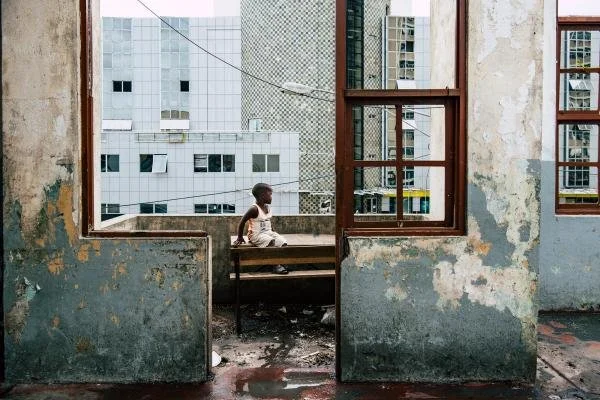
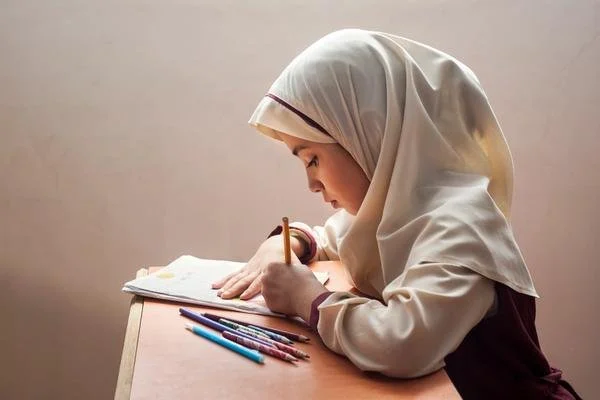
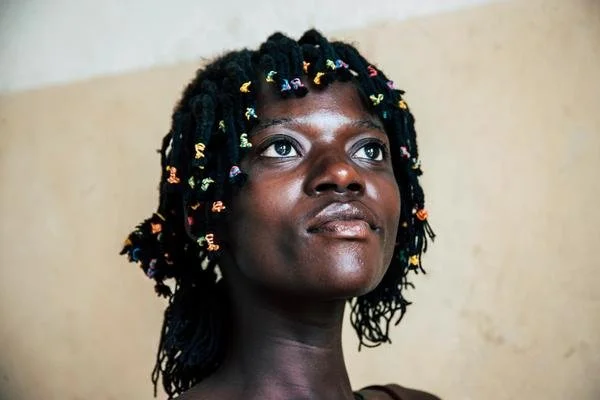
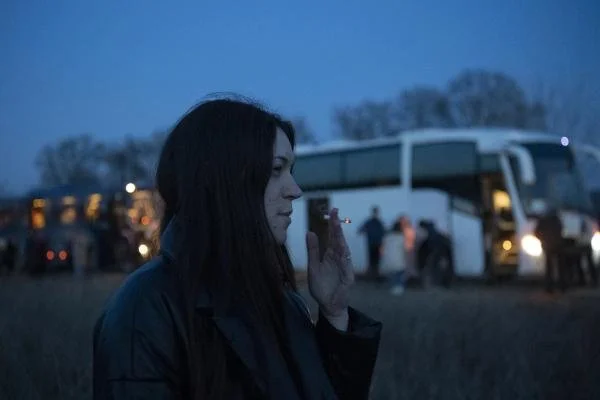
Images: School, After the Cyclone, Beira, Mozambique, 2019; Noora Studies, Herat, Afghanistan, 2013; Margaret, Survivor, Counsellor, Democratic Republic of Congo, 2008; Tanya, Cigarette Break, Moldova, 2022
Get up-close-and-personal with artists from all over the world and unlock the mysteries of the creative mind.
Read in-depth interviews with the most exciting cultural movers and shakers shaping the creative landscape.

Discover the actors, authors, designers, mavericks and entrepreneurs at the bleeding edge of cultural life.