Sublime Intimacy: Agata Przyżycka
Mental Health, Eroticism And The Eternal Quest For Beauty
ART: INTERVIEW
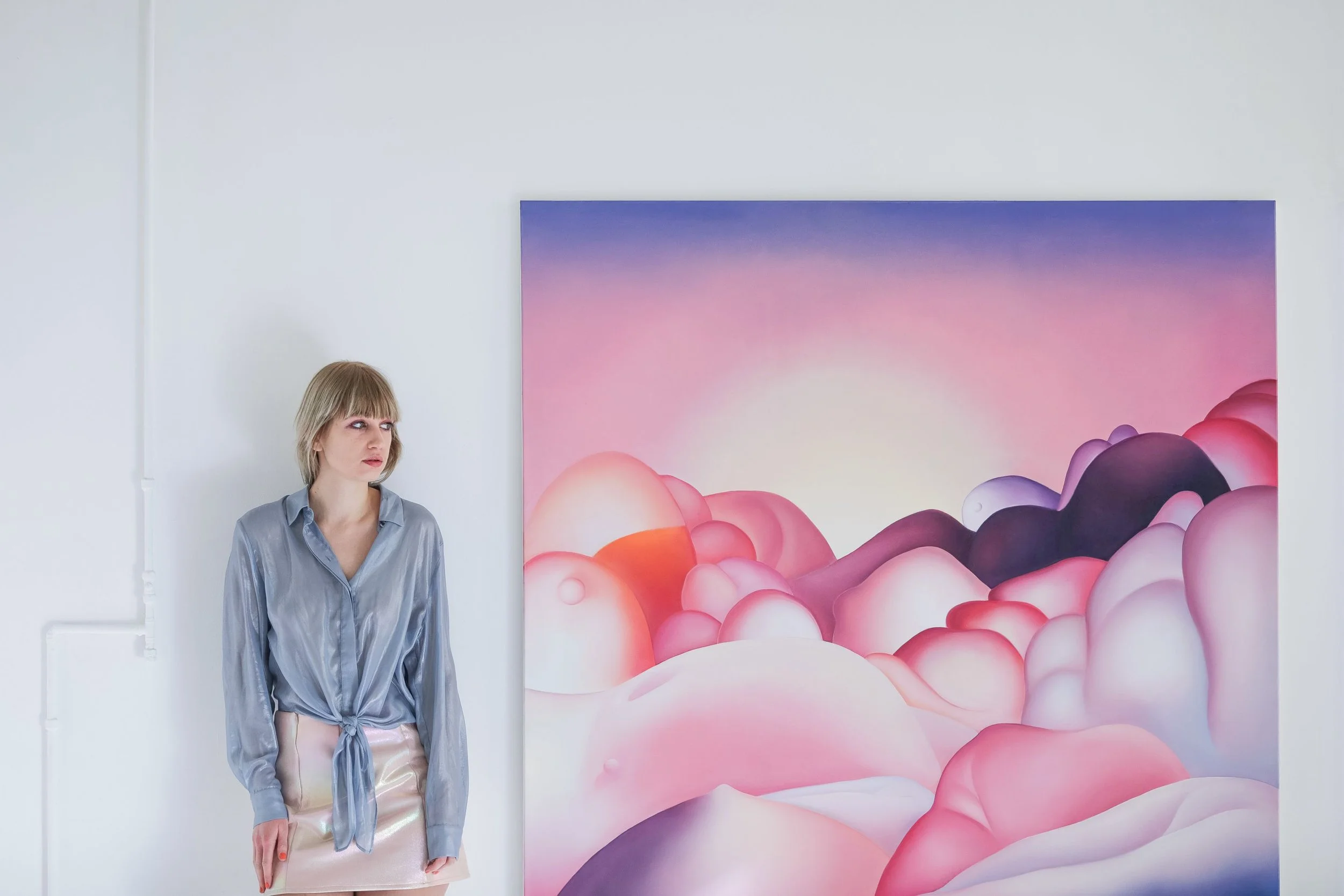
Agata Przyżycka is a young Polish painter whose work moves like a thought that has just become flesh. Her insistently sensual canvases treat the female body not as an object of display but as a field for experiments in perception, in which limbs and curves become topography – the body at once both organism and language, speaking to the viewer in gestures borrowed from landscape.
There are obvious parallels to Georgia O’Keefe in her work, and she describes her practice as a process that seeks to uncover sublime intimacy, with the starting point of each painting often being a photographic session with close friends or family members. These sessions provide an emotional jump-off point for the artist, who then radically alters the forms caught in the eye of her lens into sumptuous abstractions that are both dreamlike and imbued with subtle eroticism – inviting you to deep dive into unfettered reverie.
As such, her practice refuses simple allegory, preferring instead a poetics of relation — between what the eye recognises and what the eye must learn to read. In this interview with FUTURISTIC DRAGON, the artist—whose reputation grows quietly, like light through a shutter—speaks of art not as spectacle but as a means of attention and therapy, loosening the tightness of anxiety and opening a small room in which it becomes possible to breathe..
Talk to me about your childhood. Where does your interest in painting originally stem from?
I took painting classes from early childhood, and it has been very important for me my whole life. It was immediately a form of expression that I liked and understood. I remember that the first exhibition we had from our painting lesson made me really nervous, though, and I still get nervous showing other people my work. I also find it quite difficult to talk about my work. I think I am quite a reclusive person, really – I don’t like to talk with other people so much, and I love the solitude of painting. It’s almost a form of meditation for me, and I can happily spend a lot of time in my workshop alone. I think the first thing that really drew me to art was probably album artwork, because my parents absolutely loved music. I can also remember my parents taking me to Barcelona very young, and the Gaudi Park was just amazing to me – there was this very organic feeling I got from the sculptures. I suppose, even from a very young age, I knew that I wanted to go the academy of fine art, and the first really important thing I became interested in when studying was realist paintings and realist art.
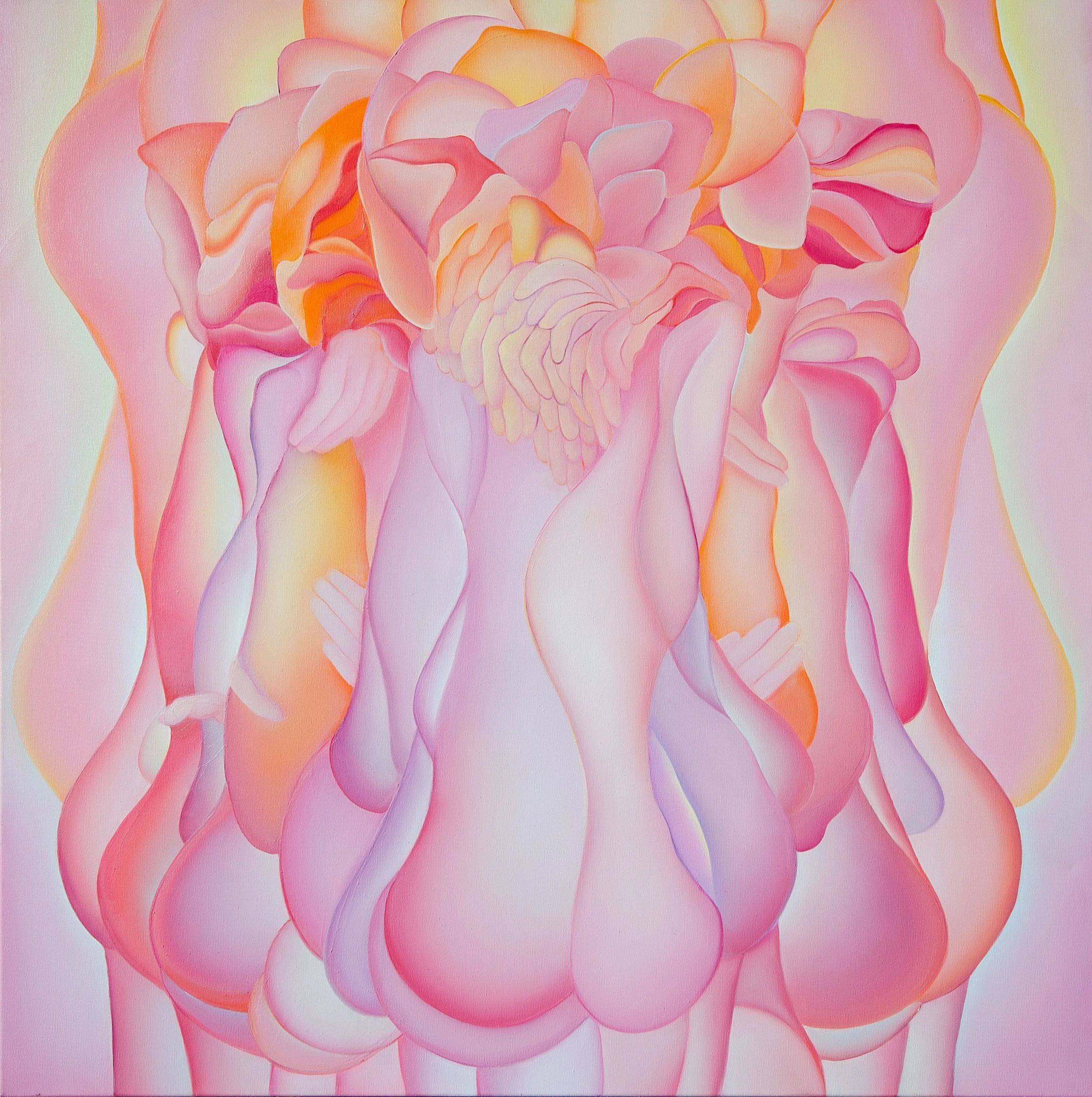
“Femininity is important to me. I consider woman as the source of creation, in a way – the bringer of life.”
Is that same organic feeling something you are seeking to communicate via your own art practice?
The first thing I wanted to do in my work was to show something that lies behind the everyday, and uncover a kind of erotic intimacy, but, lately, it hasn’t been so important to me. I think I have created my own aesthetic alphabet, and I use the female body as a sign. I do perceive my work as a process to look at nature, language, the body and femininity, and the main topic of my work is to capture the dynamics between those components. Working on a painting is an important and emotional process for me. Before I start, I will usually take a photograph of people I know from close friends and family, to kind of explore that notion of intimacy and the body, and I’m always seeking to go deeper into intimacy by taking the realistic form into abstraction and geometric shapes. I think abstraction has more value for me now than realism, because the viewer can kind of imagine something, without any pressure from me about how the painting should be received, or how they should feel.
How do you feel yourself when you view your work?
I paint a lot and always have a problem working out when to stop painting – it’s a long way for me to go conceptually and I am very much within the process.I actually think that the time I value most is that moment when I actually start the painting, and when I am thinking about it and am not sure what I will do. It’s good for me to have exhibition deadlines because it makes me stop painting when I need to. It also allows me to work on three or four paintings at once. I like doing that because it allows me to create the works as a series that correspond to each other.
Why does it feel so essential to you to approach womanhood and femininity in your art practice?
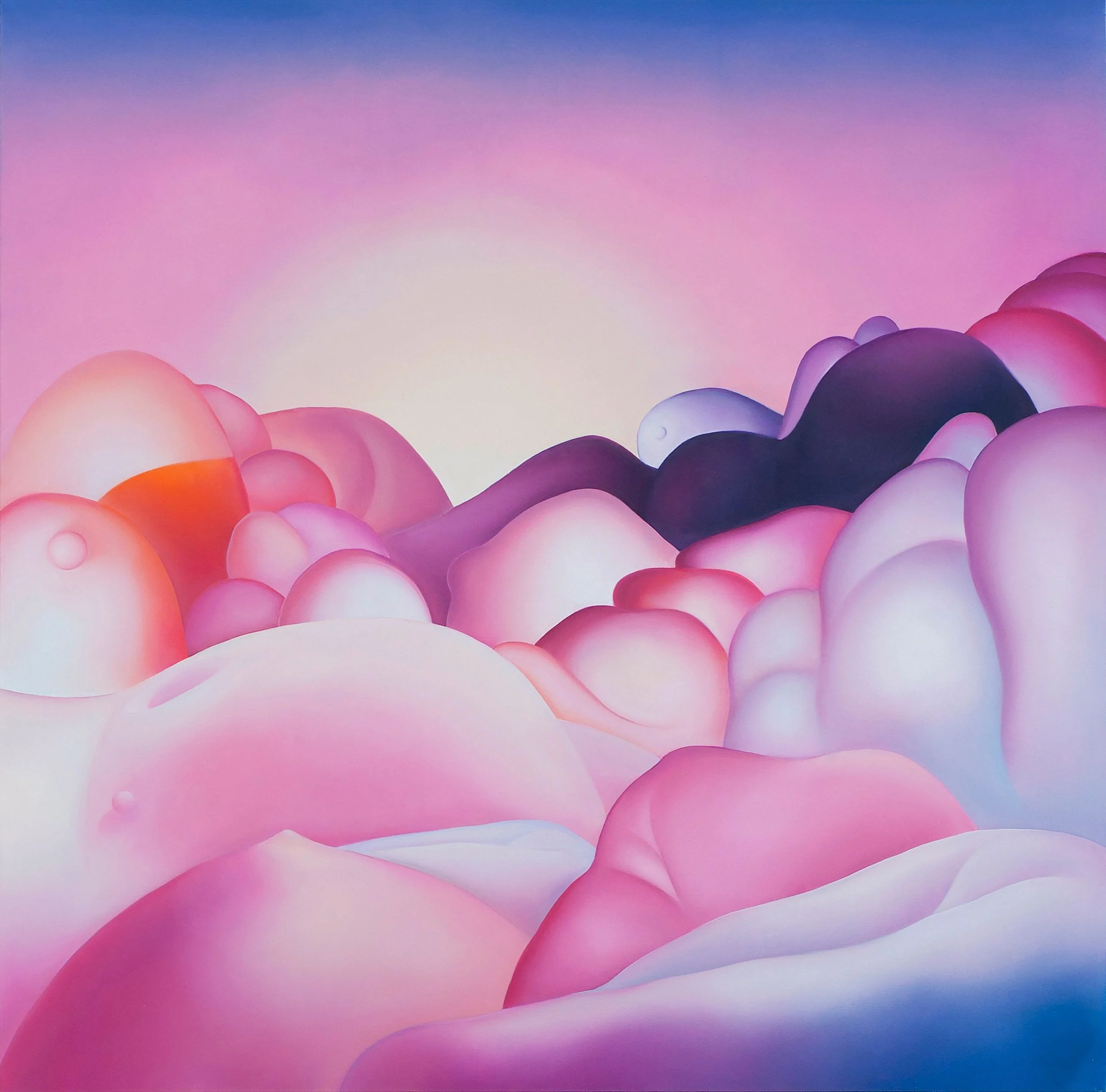
It’s actually true that I’ve only been painting women’s bodies lately, but in the past I have painted men as well. I’m not sure why I was drawn to focus mainly on women but maybe it’s because the female body is more associated with biology, nature and the sense of a landscape to me. The palette that I use in my painting is generally inspired by the colours of sunsets, or flowers, which I know are pretty common topics. Femininity is just very important to me – I consider woman as the source of creation in a way, the bringer of life. All of my paintings are very close to my heart and play a big emotional part in my everyday life, but, ultimately, I can’t explain why I always come back to the female figure.
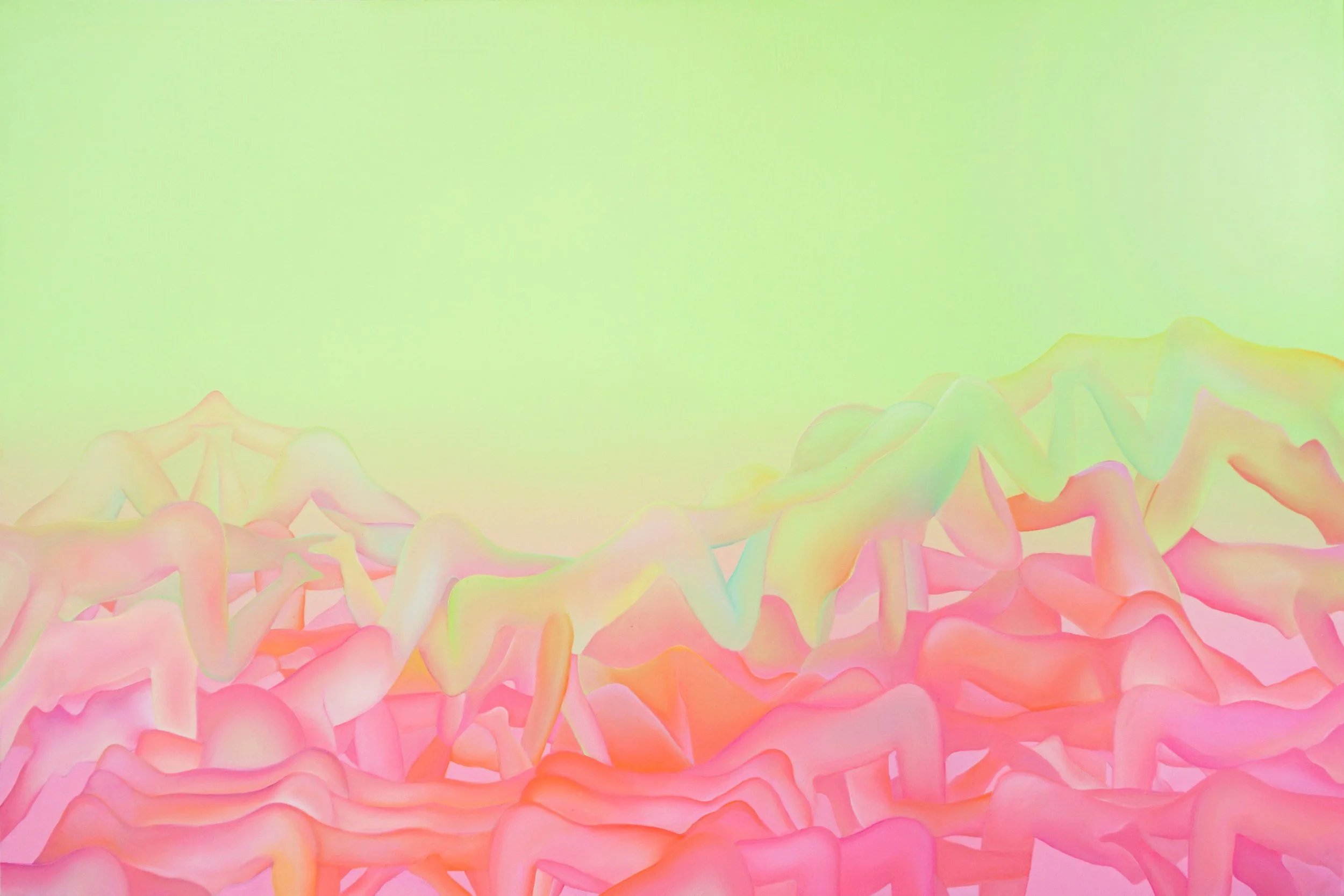
“Beauty is always there, every day in our lives, but we don’t look for it enough”
Does your art act as a kind of therapy for you?
Well, in a way, yoga and painting are very similar practices for me, and art has always been very important therapeutically for me. I can’t ever imagine stopping painting. I can find it difficult to go to work in the day-to-today, and I spend all of my free-time painting because it makes me feel better. I had therapy when I was younger, but my daily routine of painting is really the thing that makes me feel okay and calm, and makes me feel free. I don’t feel anxious or nervous when I paint; I feel that I can become anything on the canvas. I can’t really express why beauty is really so important for me, but I have always really been drawn to beauty, and I look for it every day in nature. Beauty is always there, every day in our lives, but we don’t look for it enough. I need that contact with nature, and my art is my connection to it. I like to spend time with other people, but I can’t ever predict what that will be like, but when I am alone, I am comfortable and I know that I can express myself freely.
Introduction & Interview by John-Paul Pryor
You can find out more about Agata Przyżycka here
Images (top to bottom): portrait of the artist at Kravitz Contemporary by Grzegorz Podsiadlik; Untitled, oil on canvas, 2021, Agata Przyżycka, courtesy of the artist; Trzymam świat Niepojęty, oil on canvas, 2021, Agata Przyżycka, courtesy of the artist; Untitled, oil on canvas, 2021, Agata Przyżycka, courtesy of the artist.
MARK TITCHNER
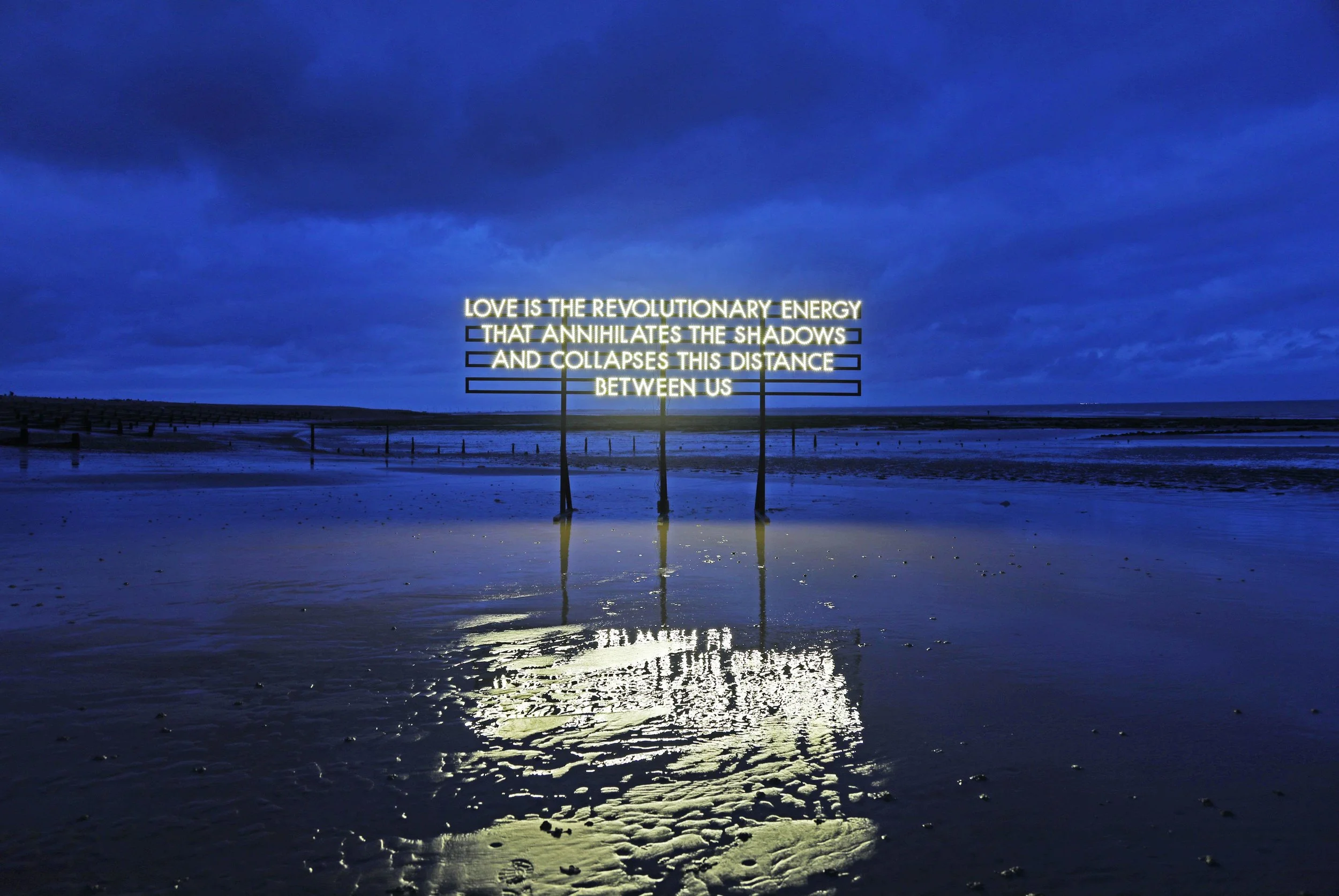
Iconic is an almost absurdly overused adjective in modern media communication. However, if an essential element of truly great art is its emotional impact and synchronous ability to pull the viewer into a present moment of radical contemplation, then there are few artists who can hold a candle to Mark Titchner. The British artist has been presenting ambiguous existential aphorisms for the populace to ponder upon for some two decades in a bold, and somehow Orwellian, typographic style that can, quite genuinely, be described as iconic. And believe us when we say, you know his work. Over the years, his thought-provoking reflections on the nature of being have graced public spaces that bear witness to a footfall of millions – elevating the London Underground commute into countless inner journeys of contemplation, with statements such as We Want Answers To The Questions of Tomorrow, and carrying us through the bleak days of the pandemic by transforming empty advertising spaces into the beautiful Please Believe These Days Will Pass. He is currently one of the artists in the group show Finding Family at The Foundling Museum, and his short looping film of statements and questions, such as Do You love Me? I Love You brilliantly explores the ways in which anything expressed can have a different meaning depending on the circumstances in which it is transmitted and received. In this interview with Culture Collective, he tells us what its like to communicate so directly with hordes of strangers, and explains why the aphorisms of the self-improvement industry might just be designed to make us feel worse, rather than better.
What would you say drives you to create these quite emotive statements in the public realm, and where did the desire to do that originally stem from?
I think it’s shifted over time. I was always very interested in lots of different things, and when I was young, and studying art, I didn't really know how to join them together – I mean, I was interested in science, philosophy, alternative technologies, counter culture … I was sort of scrabbling around when I left college, trying to find a way to work with this material and marry it with my interest in optical art, and playing with what is transmitted and received. I was looking at Jenny Holzer and Barbara Kruger – you know, the kind of artists you would probably imagine – but, fundamentally, I was always very interested in reading. There was this real wood for the trees moment for me, where I was just, like, oh, I need to focus the viewers back on themselves with my work, and I just thought, well, what happens if you write something? That’s when it became kind of interesting, because when you read, you sort of stop for a moment, and you really internalise something that is very specific to how you may be feeling at the time, and, of course, the writing can be about anything – so, I realised it could incorporate everything I was interested in.
Which pieces have had the most emotional impact for you – and which ones have people most responded to, in the sense that they have had a profound impact on their lives?
That’s a really interesting question, because a lot of the time you don't really know how something will be received. In 2006, I made a poster project on the London Underground. There was this poster all over London, and it said ‘If You Don't Like Your Life, You Can Change It’. And, even now, I still get requests for those posters. And normally people request them because something happened to them as a result of seeing the poster, or it reflected their state of mind, or somehow became part of their story– and that's really amazing, in a way, because that’s gone on now for a decade; people getting in touch and asking for those posters. And, honestly, I think what I'm always looking for is a genuine emotional response, rather than a sort of psychological or intellectual response. Because when I am seeing those kinds of things in advertising, I'm really thinking about, how is that intended to make me feel, and what is the undertow, or unseen element, of what is being said.
It’s interesting that you are playing with the manipulative nature of language, and yet your work is often received as a positive statement or aphorism. What were you trying to explore with the piece that appeared all over London during the pandemic?
That piece during the pandemic was amazing, you know? It was an amazing experience to see how that did chime with people. But you are right, because, again, I always thought the most interesting thing with that text was that the two first words were ‘please’ and ‘believe’ – because the idea of asking someone to ‘believe’ is to me sort of anachronistic. So, rather than being comforting, I saw the work as being something which was, like, well, you can't choose to believe in something – you either believe it, or you don't. It was sort of messing around with this idea as to whether it's possible to bring yourself to believe in something, or whether belief is something that is much more intrinsic and fundamental. But that project is also a great example of how something can have a life that goes far beyond your intention, because when you put stuff out into the public realm, in a way, it becomes about the death of the author – it takes on its own personality, and has its own personal meaning for everyone.
There’s often a very deliberate ambiguity at work then?
Yes. I guess I like to think about what's implied, and that’s often outside of what's being said directly – because, for me, what's most important is what is not being said. It’s interesting, because I think quite often my work does get taken as this very positive thing, but, for me, the ambiguity I place in the work is the critical element. Actually, I quite often see something as being demonstrative, or kind of almost Orwellian, and I think it's so interesting that our first take when we read things is to tend to look for something that must be meant as positive. And that is probably even more true now, because we are so used to this quite mechanised language of self-improvement, which, when you think about it, is actually almost kind of bullying in nature – it’s basically saying, you are not good enough, you must be better. There is a sort of emptiness to that, which I like to explore in my work – because a self-improvement aphorism is not going to change your life.
Tell me about the work you have created for the current show at The Foundling Museum …
They tasked me to explore family. And, from my point of view, I was like, well, okay, family – that's super complex, and it's entirely different for everyone. So, part of the context of the exhibition is really asking questions about what is family? Who are your family? What are family relationships? And, obviously, it is something that is extremely mutable, so I started thinking about how I could express that sense of mutability and flux. In the last few years, I've got really interested in creating a kind of dialogue in my work. I mean, I guess most of my work is seen as statement. But I've got more interested in how they can morph into dialogues, and in the work at The Foundling Museum, I was trying very much to think about how the work could almost be like a kind of conversation.
How did you set about trying to achieve a feeling of dialogue as opposed to statement?
I was quite sort of mechanistic about it, to be honest. There were certain elements I wanted to have, where I was using words, or questions, as a kind of call-and-response. And I was thinking about these ideas of what do we expect from family? Do we expect love, or belief or support – so, I kind of almost quite mechanically went through this set of things, such as ‘Do You Love Me? I Love You.’ And there’s a whole series of these call-and-response questions in a film that is about 14-minutes long. What I wanted to explore is how everything moves all the time in relationships – all these kinds of questions, or statements, take on new meanings at different stages of the relationship. I was trying to think about the kind of things that you might say when you are in love with someone at the beginning of a relationship, and how the same thing could mean something different at the end of a relationship, when someone's let you down, or the opposite, and the film continuously loops, so the journey becomes sort of endless, with the meaning constantly changing.
Finding Family exhibits at The Foundling Museum until August.
You can find out more here. All images courtesy of the artist.
Interview by John-Paul Pryor