PEOPLE & SOCIETY: INTERVIEW
Erotic Sanctuary: Betony Vernon
Sexual positivism, shameless desire and the healing power of solitude
BY JOHN-PAUL PRYOR
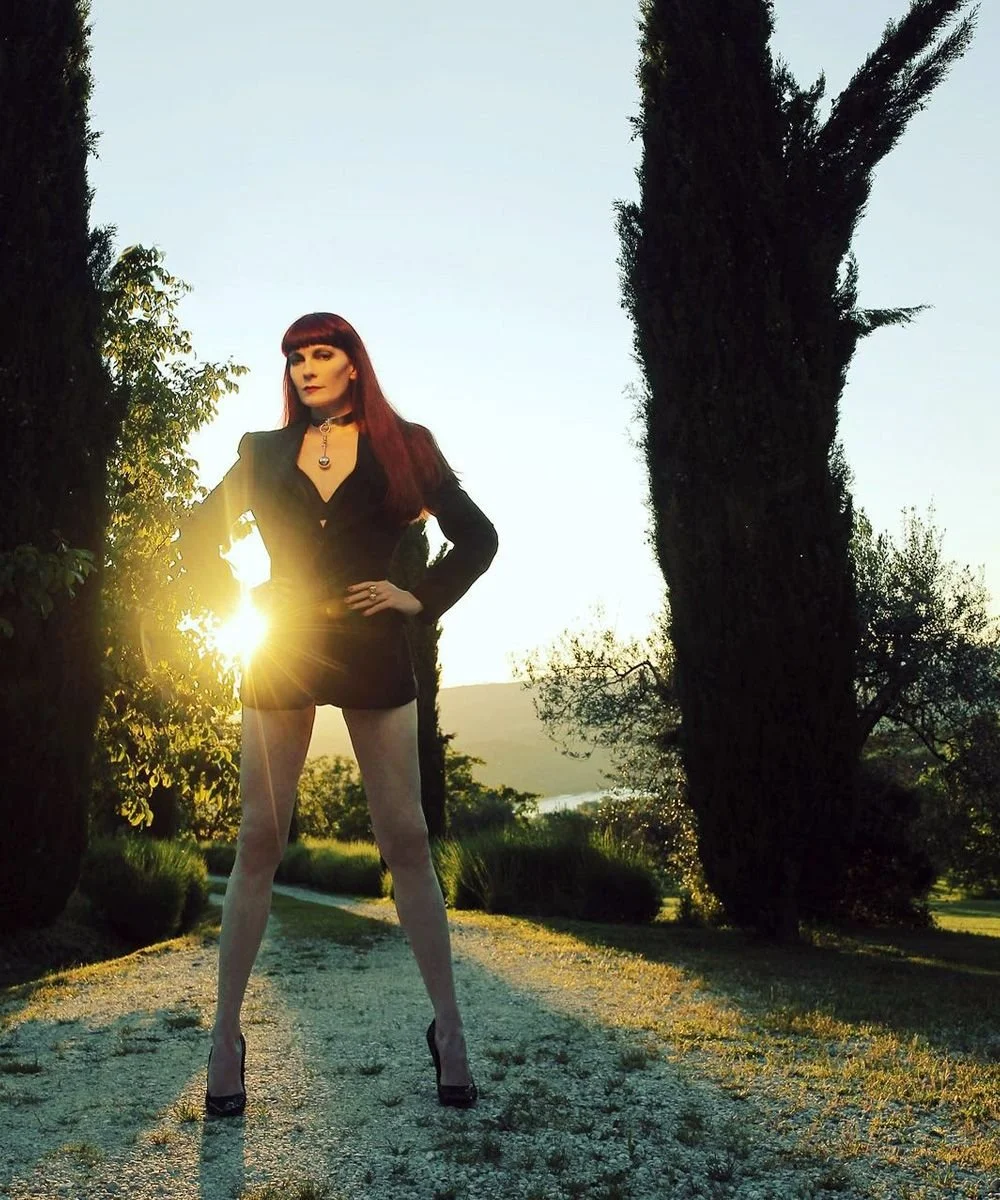
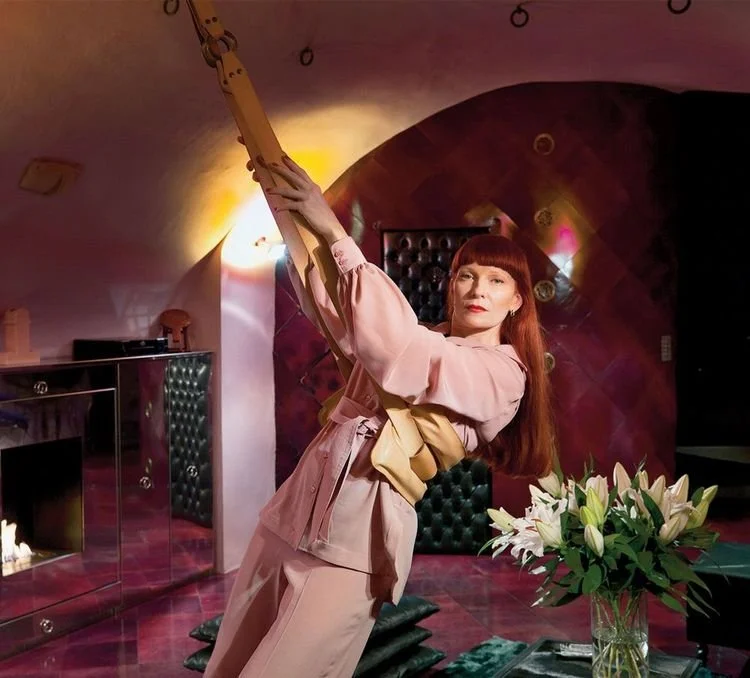
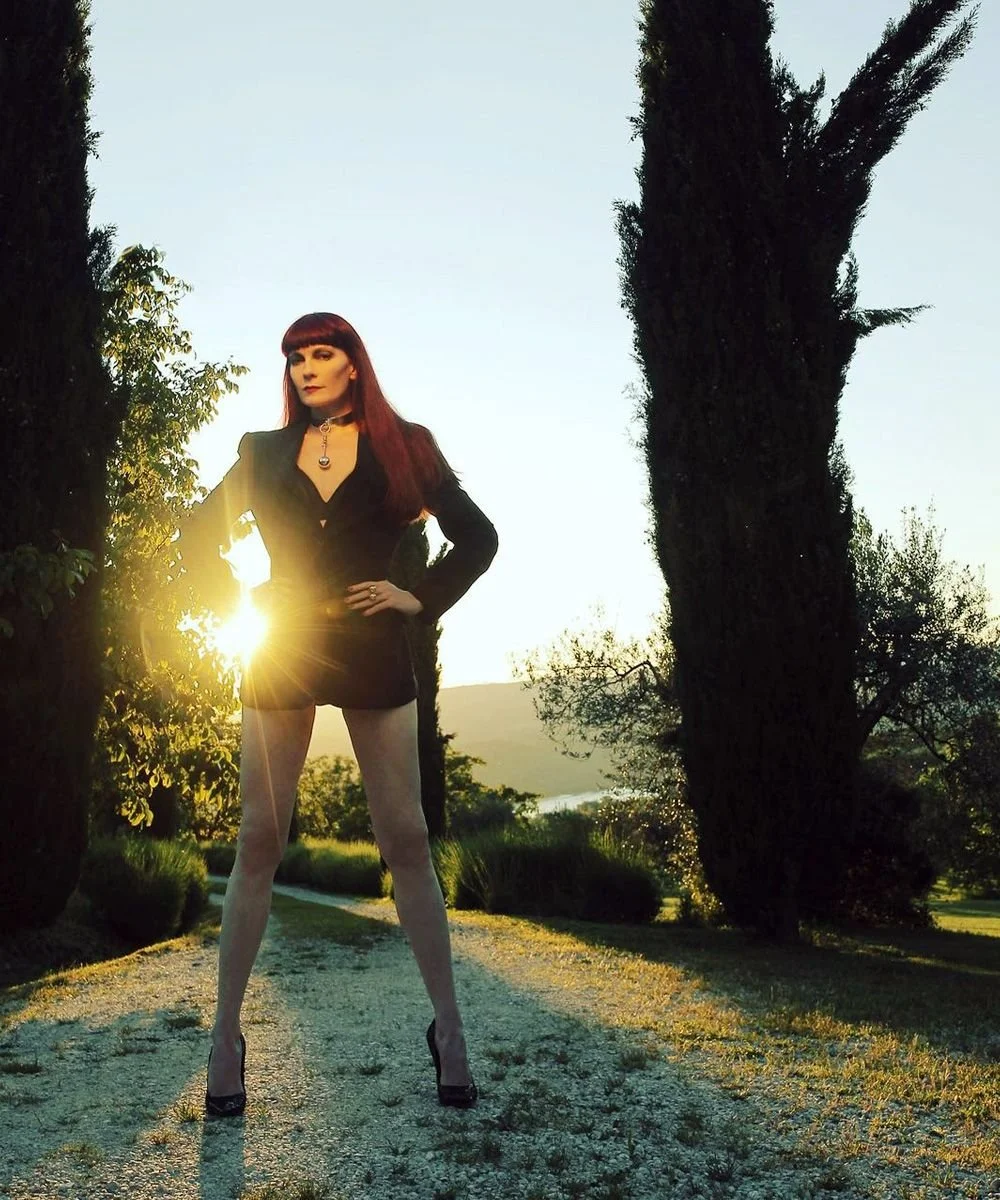
Provocateur of sexual anthropology Betony Vernon, has made a career out of treating the sensual body as both archival text and instrument of liberation. Whether through sado-chic objets d’art, the deliberate pages of The Boudoir Bible, or intimate therapeutic encounters, she insists that desire operates as a subversive and rigorously cognitive form of intelligence. For years her praxis centered on EDEN, an underground Marais atelier whose reputation approached the mythic. However, after the pandemic that shook the world, she shuttered that space, and relocated to Italy, establishing an invitation-only retreat in the Roman countryside devoted to privacy and experimental practice. The Roman sanctuary privileges attention over spectacle: a temperate terrain where ritual and improvisation intersect and consent is curated with the same meticulousness as any hand-wrought piece of her infamous jewellery.
Vernon speaks in a velvet, conspiratorial tone, answering questions with calm deliberation. She believes censorship creeps in as small bans that narrow possibility and that removing erotic life from view drains the social vocabulary for intimacy and desire. She urges reintroducing sexual knowledge via curiosity, art and responsible frameworks so pleasure becomes legible and secure, not mysterious or shameful. Relocating to rural Italy was then a recalibration for her, not retreat. In a quiet garden marked by a bell, Vernon develops therapeutic, aesthetic practices. The sessions are discreet, using objects that act as fetish and mnemonic – tools to spark memory and focus, helping subjects recognise their desires and translate self-knowledge into integrated, consistent ways of living.
There is generosity in her project and an insistence that pleasure, like good taste, is a form of social intelligence that can be taught and shared. But there is also an edge: Vernon understands that opening such lessons to a wider public invites backlash, commodification and dilution. Hence the invitation-only constraint of the sanctuary – an attempt to protect a pedagogy from both sensationalism and sanitisation. Vernon’s mission, presented without the invariable mystification, is to make the erotic a reliable instrument of wellbeing. In this rare interview with FUTURISTIC DRAGON, she speaks in the precise, persuasive tone of someone taught by habit and belief about sexual intelligence as a way of knowing – the ability to notice, name, and care for your pleasures without shame.
Your work is known and respected all over the world, what does travel mean to you?
I love to travel, and I have a global extended family I work with around the world. Travel is adventure and newness – it opens our eyes and allows us to truly see. It’s also about going home, of course, and I think that the notion of home has had a whole new meaning in recent years. I mean, I've always insisted on living in a place where I feel happy, and I think that has got to do with the brain needing newness, and our eyes having new things to look at, and experiences to absorb. I was actually living like a nomad as we came out of the pandemic, and I really got that down to a fine art – having a portable wardrobe that would work for everything. I tend to travel for long periods also – for instance, when I go to the States, I normally stay four-to-six weeks, and I don't just do New York. I do New York and then I do LA, and sometimes LA extends into San Francisco, depending on what is happening. I don’t believe in taking short trips that are terrible for the environment. We have to be so much more considerate in the way we move around, to lessen our carbon footprint – not just go bouncing back and forth. Now that my home country is Italy, again, I witnessed how positive the stop on mass-tourism during the pandemic was for the environment – mass package tourism is just super destructive; a Disneyland effect kicks in, and it destroys the real essence of the place.
After many years in Paris you have relacated to the Italian countryside – what spurred that change?
I think that psychologically, the slow-down of the pandemic required us to deal with ourselves, and it gave us all huge opportunities to rethink absolutely everything that we do. And I felt strongly when it ended that the idea of going back to pre-pandemic norms would be a huge error. As a society, we need to get a grip on the fact that growth is not only economical, and start to see how exciting the repopulation of the countryside can be. The return to rural living is happening everywhere, and I think it's super exciting. I believe that in a new economy, in an ideal world, our growth would be based much more on what we're not doing any more – do you see what I mean? I really do believe that the pandemic was a wake-up call. It's our last chance, and everyone needs to make a paradigm shift towards a more sustainable future.
There are certainly a lot more people on planet Earth than at any other time in human history …
Yeah. Absolutely. If you look to the ‘80s, when I was in my teens, there were 3.5billion people globally. It's just incredible that now we are more than 8billion. And while there's just not enough for everybody, we’re also over-producing useless items that make the environmental issues even more severe. I mean, fashion is a really great example because current estimates point towards about 85 per cent of all garments being produced ending up thrown in a landfill. That's absolutely crazy. That is really not okay. And people don't think about it, you know? In my personal life, I have made a radical move to go back to nature, and to the countryside outside of The Eternal City. I had my wonderful atelier in Paris for 14 years, but I felt instinctively that the biggest paradigm shift I had to make personally was to no longer live in a city. I just think it's the thing to do, and I know that I'm not going to be disconnected. I will be a point of connection for people who need to get away from it all and heal.
“I am happy because I know my work has in some way sparked a sexual liberation movement”
“Controlling our sexuality is a way to control us completely – this is why someone like me is considered dangerous. I'm a bad consumer”
Do you have any concerns you would miss the city?
In the past, I guess maybe my fear about living in a place that's not a city would have been loneliness. But now I understand that actually to instigate paradigm shifts, and to continue to be extremely creative, we actually have to be alone sometimes. We need to be alone without the noise. It's sort of like what Joan Didion said, which, to paraphrase, was something like, stop complaining, stop whining, and go be alone, and go to work. On a personal level, the space allowed me to work on my anniversary book with Rizzoli, and it feels amazing to be looking at 30 years of Paradise Found. Entitled Paradise Found: An Erotic Treasury for Sybarites, the book celebrates 30 years of collaborations with photographers and illustrators, and it’s principally an image book, featuring the likes of the late Douglas Kirkland, Terry Richardson, Nick Knight, Ellen von Unwerth, Jeff Burton … all of the photographers that I worked with over the years. I like to see this book as sort of like a ribbon around a body of work, and an insight into my design process, whether it is with jewellery, or an interior, or an object. I always used the jewellery to penetrate many different sectors. My aim is to offer the possibility to reconsider that objects for sexual play can also be luxurious.
Has the mission ever changed, or always remained the same?
I mean, it’s about elevating sensuality, and that's where we have always talked about mission – it’s always been about removing shame or taboo. That was where it was way back when I started in 1996. And I guess one of the biggest issues that I still have is projection, because we live in a society that doesn't speak freely about the importance of pleasure in our lives. I think that sexual intelligence is really critical. I am happy because I know my work has in some way sparked a movement – a neo-sexual liberation movement. And that is so important, because I'm concerned that the digital vehicles which now allow us to communicate have increasingly snuffed out those who speak about pleasure, or the erotic. For instance on Instagram, I have to self-censor to be able to stay present, but I am also shadow banned – so I'm not part of the general feed, you have to know me to find me. Instagram prevents me from growing my community, and this is really upsetting because what I do through my work is help others to build a more gratifying life in general.
Talk to me about sexual positivism …
Sexual positivism is my modus operandi. It is key to the overall health and happiness of any sexually mature adult. Great sex is always about dominating and submitting to each other, no matter how hard or soft you play. If someone takes charge of your pleasure, you can’t accept his or her generous offering if you don’t submit to it! Ecstasy is submission, and taking the control of someone’s pleasure is ecstatically empowering – providing pleasure is not only the most effective aphrodisiac in the world, it is also the best way to have the favour returned.
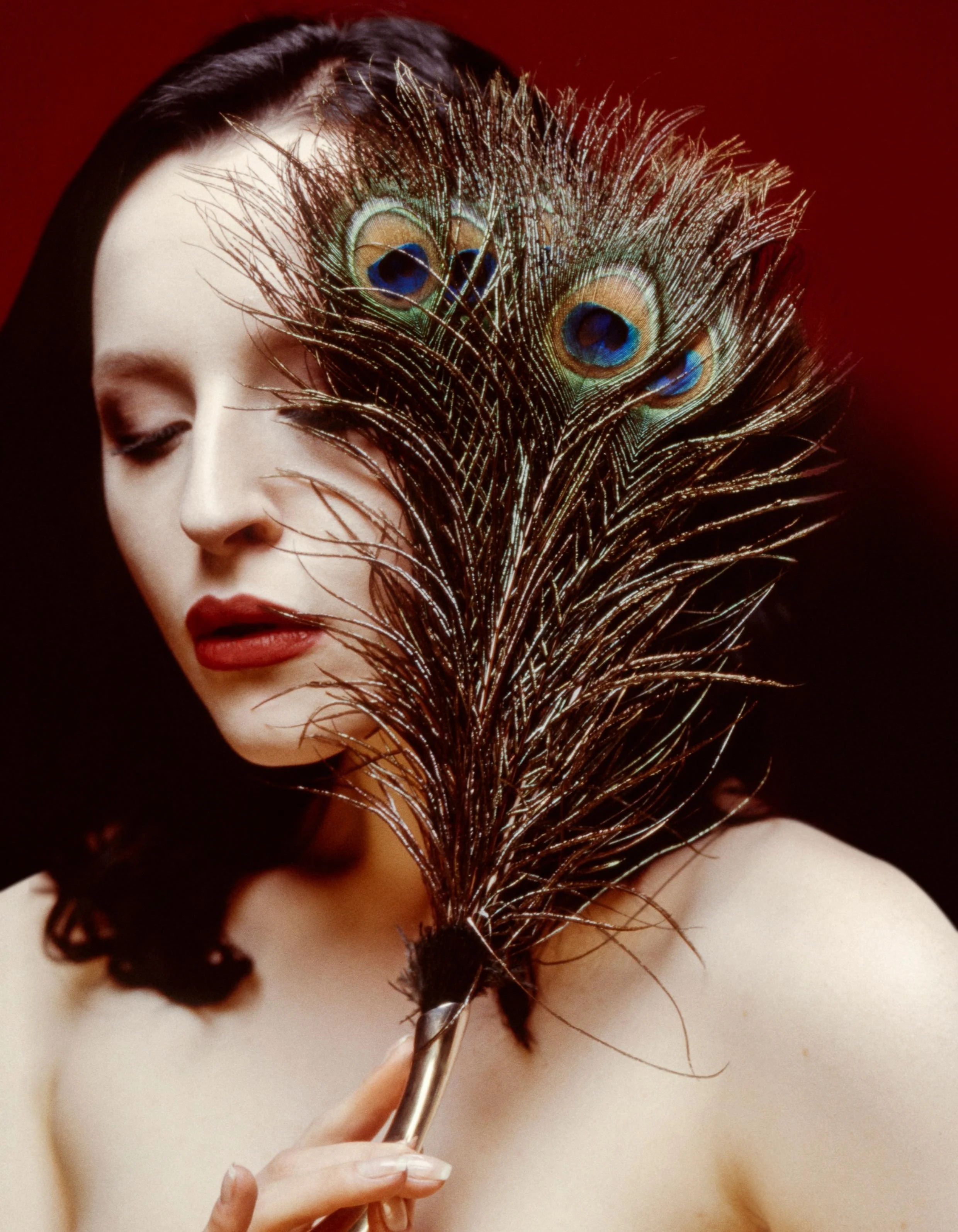
“Fundamentally, your sexuality is not an image. Your sexuality is actually the centre of your body, and the centre of your wellness”
Why do you think there is that level of censorship?
I have long asked myself that question in my soul– you know, why is this banned? Why is this continuing? And the answer that I got was that those who have their sexual intelligence in line are powerful beings and that kind of power is not what makes a consumer society go forward. The reason? It’s simple. Our consumer society thrives on unhappiness and when we are disconnected from our sexuality, there is very great unhappiness. In fact, controlling our sexuality is also used to break us – if we consider that over half of women and at least one in three men have experienced sexual abuse before the age of 12 then you can understand why we're living in a broken system. Controlling our sexuality is a way to control us completely – this is why someone like me is considered dangerous. I'm a bad consumer…
What is the tool-kit a sexually intelligent individual can draw on to fight-back against that paradigm?
I mean, we're talking about the body in an image-led consumer society, right? And fundamentally, your sexuality is not an image. Your sexuality is actually the centre of your body, and the centre of your wellness, in my opinion. If we look back at the father of psychology, then Freud even said that most forms of illness and neuroses are coming from a sexual source. And I believe we have never, ever been more sexually repressed than we are today, and statistically people are having less and less sex. There is this woke agenda that can lead to being afraid to approach someone, to be in contact, and afraid to hug and kiss another person, you know? It is setting us back 50 years. So, I almost feel like I have to start all over again. I just believe we have to teach people to fall in love with themselves. I'm not talking about egoistic or narcissistic forms of self-love, but just accepting and loving yourself, and taking real care of yourself– then everything else falls into place. That process requires solitude and not being afraid to be alone, you know? It brings me back to Joan Didion – stop whining, stop complaining, and spend some time on your own. In reality, that's the only way that you can get to know yourself.
Introduction & Interview by John-Paul Pryor
You can find out more about Betony Vernon here
All images courtesy of Betony Vernon
Get up-close-and-personal with artists from all over the world and unlock the mysteries of the creative mind.
Read in-depth interviews with the most exciting cultural movers and shakers shaping the creative landscape.
Discover the actors, authors, designers, mavericks and entrepreneurs at the bleeding edge of cultural life.