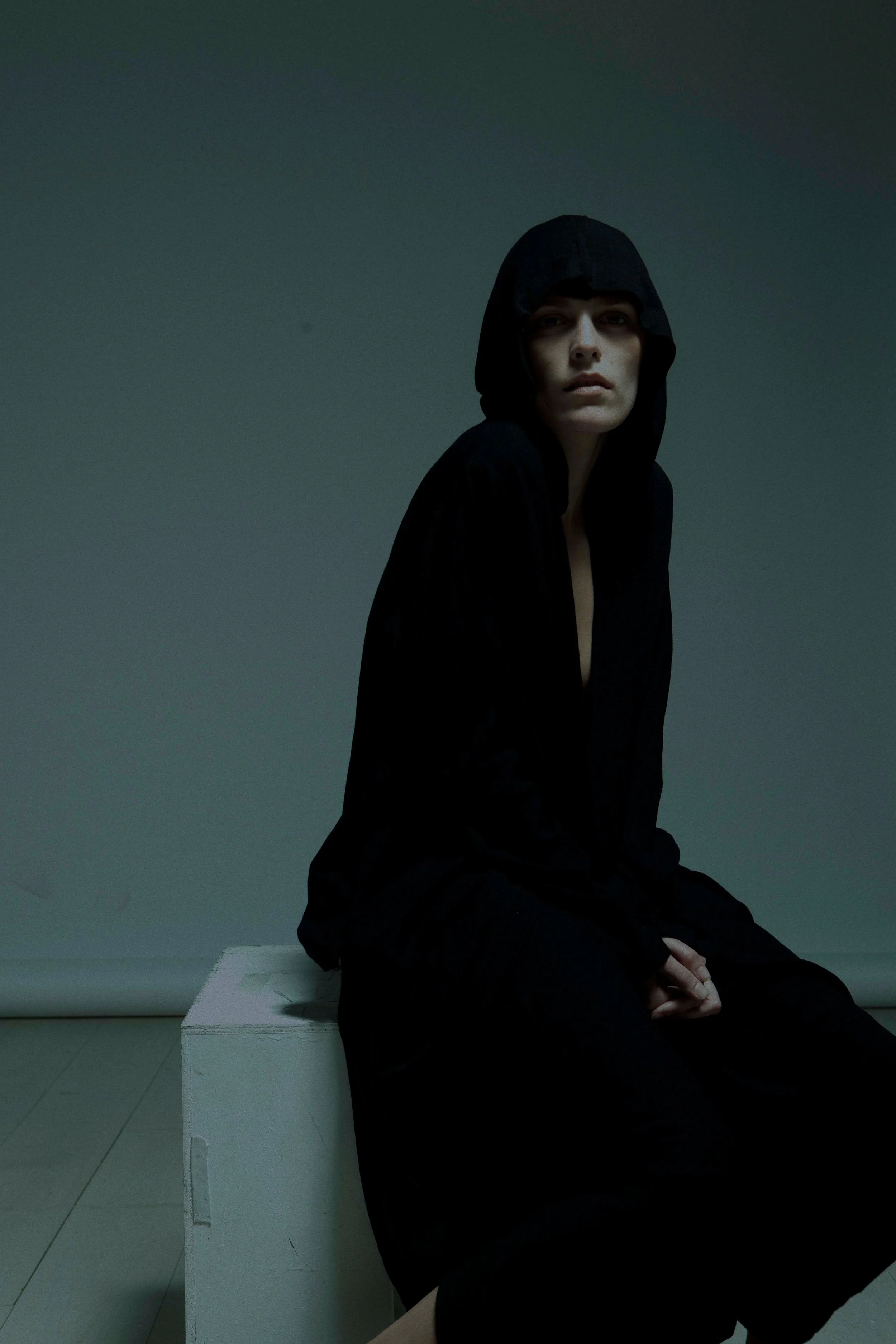
PEOPLE & SOCIETY: INTERVIEW
Eye of The Storm: Charlotte Colbert
Imagination As An Act of Resistance And Re-imagining The Future
BY JOHN-PAUL PRYOR

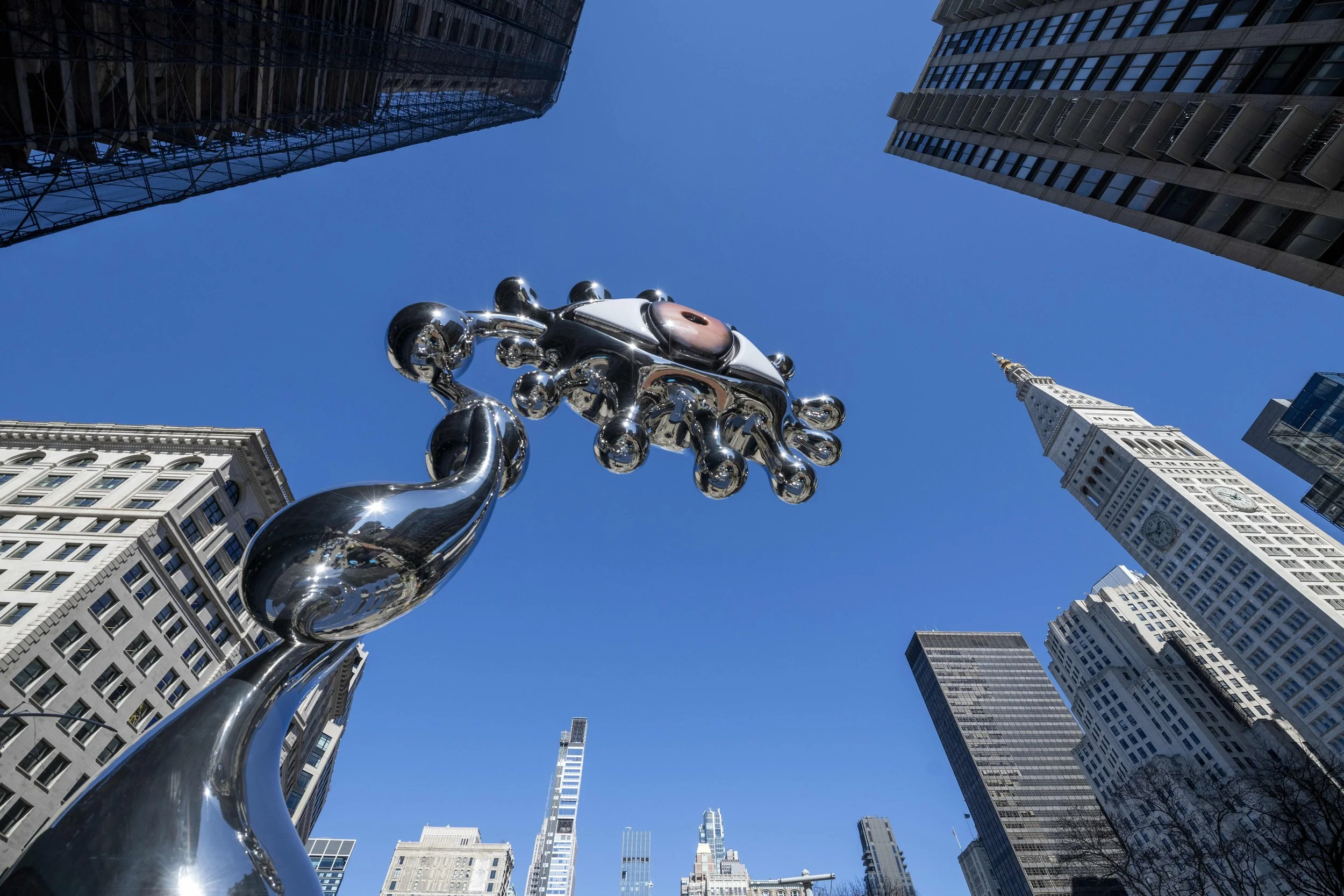
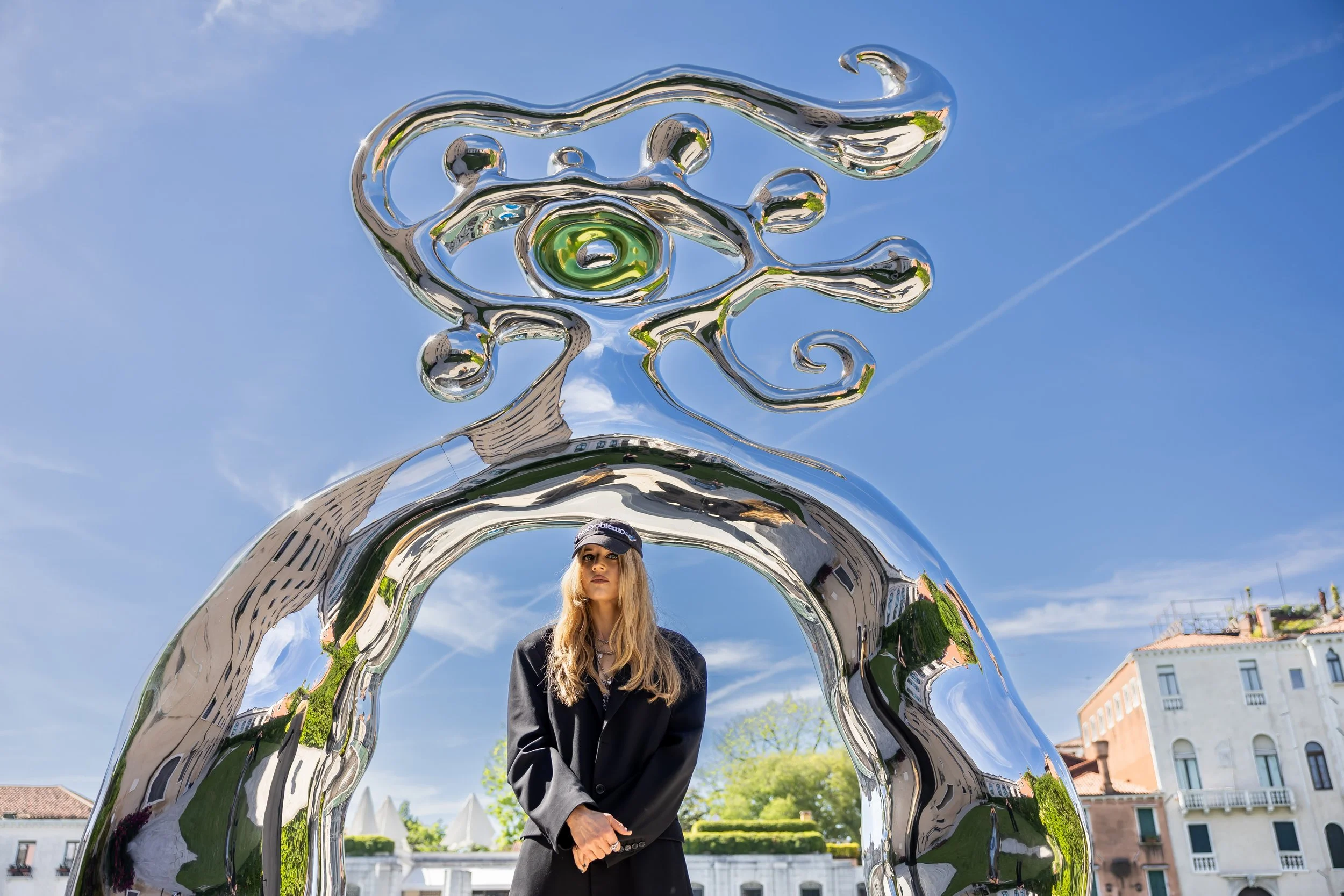
Charlotte Colbert is a multimedia artist and indie filmmaker known for sculptural and celluloid interventions that probe feminist critique, modern womanhood and the collective imagination. Her practice is broad in scope, yet her oversized eye sculptures have become something of a silver signature – gleaming in the sunlight with surreal sci-fi audacity, they make you acutely aware of living in a society where you are are being watched, but, somehow rather charmingly, they invite you to watch them right back. In recent months these playful sentinels have popped up across the globe alongside similarly imaginative creations. In Venice Colbert occupied two sites for the Biennale: a four-metre-tall sculpture dangling over the Grand Canal opposite the Guggenheim, with a companion piece planted more domestically in the Aman Hotel gardens. While, in New York earlier this year she installed 30‑foot polished-steel works in Flatiron, NoMad and the Meatpacking District, transforming mundane plazas into reflective surfaces that displaced the city’s grimy bustle into something uncanny, dreamlike and gently persuasive.
This July, Charlotte Colbert returns once again to The Fitzrovia Chapel with Supernatural Tendencies, an immersive show that turns a consecrated patch of London into something akin to a mini-wonderland, in which wishing wells and silver trees appear like glistening phantoms from a half-remembered fairy tale. It’s the sort of work that demands reverie – imbued with the poetic insistence that the life we live is stitched together from archetypes and narratives rehearsed long before birth. It may sound metaphysical, or even whimsical, but her point is a serious one, namely that all the trappings of our existence were dreamed before they became reality. As such, Colbert suggests that collective imagination is not some ephemeral academic notion, but a vital engine of creation, and The Fitzrovia Chapel setting amplifies this singular meditative logic. Visitors find themselves sitting in a pew and feeling, astonishingly, that they have drifted into someone else’s daydream. In a city where stress is a commuter’s second skin, Colbert’s work provides an elegant antidote. In this interview with FUTURISTIC DRAGON she tells us why she wants to create portals for transcendence, and forwards her quietly radical faith that imagination, exercised collectively, will remodel our future.
You’ve been pretty prolific of late, particularly with your large-scale public sculptures in both Venice and New York. Is it the public space that most excites you at the moment, and, fundamentally, what do you hope to inspire with the symbol of the eye?
I have been pushing the public sculpture works. The recent installation of two 30‑foot sculptures with the city of New York – one in Madison Square and the other in the Meatpacking District – was the first time the two boroughs had collaborated on a project, so it felt holistic and interesting. They both featured the eye symbol, which, I guess, has come to symbolise collective imagination in my practice. I’m really obsessed with the idea that today’s visionaries are geeks raised on the science fiction and dystopian visions of the ’60s, ’70s, and ’80s, and that they have ended up now creating that aesthetic in the world for lack of re‑imagination. We’ve been presented these tech visions of the future as if they were set in stone – the driverless car, for example, feels like a very ’80s dream. But I’m hoping that collectively we can reimagine the future and create alternative aesthetics of democracy and earth‑centred living, and remember that everything around us is imagined and therefore can be reimagined and reinvented. Anything I'm doing at the moment is trying to push some form of imaginative connectivity between people – through play, through random encounters, through public sculptures..
I love the idea of the random encounter, but do you believe we can actually come together to challenge the divisive tech-feudalist dream of the future?
Tech does have a strong aesthetic, somewhat like totalitarianism, and it is often the concentration of one person's vision, so the messaging is simple and direct. Democracy, by contrast, is straggly and messy, full of complicated ideas and different people – and, by definition, people contradict one another. As a result, it's quite difficult to create a holistic vision that can cut through all the noise and carry us forward with an energy we can look to and aspire toward. It feels essential for us to collectively reimagine that and come forward with aesthetics and visions that inspire people, so that we can have the exciting lure and creative momentum to produce new things. Otherwise our governments keep on pushing projects like living on Mars when many of us only want clean water! It's nuts how divided the dreams are – the aspirations of living people versus what governments are pushing for.
“Everything was imagined by someone before it was real – your jumper, your coffee cup, your headphones. It’s an act of creative thinking that creates the world around us”
And the eye is intended to act as a public catalyst for reflection and re-imagination?
The eye has become a symbol for me – a reminder of the power of collective imagination. It’s like that Alice in Wonderland idea I always think about: you fall through the rabbit hole and come out the other end in a topsy-turvy world where everything is ridiculous. In all that ridiculousness and nonsense you remember that everything is just a convention. I love public art because it feels like a glitch in the matrix, and surrealism, I suppose, is a glitch in the matrix – a tongue-in-cheek reminder that the order of things is always to be questioned. In the age of algorithms where everything is controlled – who you speak to, what information you get – just speaking to strangers feels almost like an act of defiance. In fact, kindness feels like an act of defiance right now! It’s nearly punk in the age of bullies, it’s so crazy. What was really lovely in New York, was that the installation created a lot of random encounters – people got engaged under the sculpture, there were kids running around – it was really wonderful and sweet.
The kind of spontaneous connection is precisely the thing the smart-phone mediated age seems to be eliminating …
Yes. It feels like those moments are disappearing more and more; you’re expected to check out and use the machine. You can’t chat to someone and have a little natter. All these small moments of connection are limited to the specific people the algorithm decides for you. But I do feel there’s a push-back toward community, togetherness, play, and random encounters. That’s why I really like this idea of putting art outside in the streets, and seeing people interact with it,. I think there’s something so joyous in that kind of communal experience. The same thing applies to film and cinema too. What I hate in British cinemas is just that they’re so expensive, whereas it should be a really democratic medium. I just love just this idea of everyone breathing together, and that collective gasp you hear when there’s a fearful thing on screen. It’s just a collective truth for an hour and a half, and then hearing what people are talking about afterwards, and how they experienced it.
“I do feel there’s a push-back toward community, togetherness, play, and random encounters. That’s why I really like this idea of putting art outside in the streets, and seeing people interact with it. I think there’s something so joyous in that kind of communal experience.”
Is there anything you are currently working on as filmmaker?
I’ve just finished shooting a film I’m editing now about Robert Capa and Gerda Taro – two fiercely anti-fascist war photographers in the 1930s. It follows them from Paris to the Spanish Civil War and should be released, hopefully, within the next year. The project grew from a question: what is the aesthetic of democracy, where does it come from, and how do images help us tell today’s narratives? Photography has always been... well, interesting. For the longest time our institutions were built on the idea that we could share an empirical truth. By that I mean we had conventions we could rely on. For a while, photography functioned as proof. Now photography functions as belief. If you see a photo of a dead child, you either believe it or you don’t. It becomes a matter of belief: do you accept it as true, or do you reject it as false? It’s no longer simply ‘this is proof.' In some ways, we’re at a stage where we need to invent another system. And who the hell knows what that system will be. But how is it going to work, when our whole system is built on trust? .
How we handle and age of disinformation is probably one of the biggest questions facing us as a species …
I do think democracy has become a little bit of an illusion, because there’s so much affecting the way we think. The propaganda is so extreme that, in some ways, if critical thought is completely destroyed, can one still call it a democratic process? And by critical thought I mean independent thinking: the ability to question everything. And that relies on being given the tools to do it, on being taught that you’re allowed and have the space to question, or to experience that glitch. A lot of the time we’re crushed into thinking there aren’t other ways, that imagination doesn’t exist, and that everything is there for specific reasons. But its’ not true. Everything was imagined by someone before it was real – your jumper, your coffee cup, your headphones. It’s an act of creative thinking that creates the world around us.
“I feel like the eye is such an archetype that It can of be a portal between inner and outer, our subjective world and our real world, and remind us of the power of dreams; the power of collective imagination”
Did you explicitly want to dive into notions of collective consciousness?
I do love the idea that there's this big sort of cosmic soup underneath us that we can tap into, and that we're sort of all connected in one big messy blob. If you speak to nuns and people like that, then they really believe that prayer helps the world and has an actual, real life effect in terms of making the world a better place, and sometimes I’m sure we all wonder if our intention in thinking about something actually affects it.
Were your own ideas about the natural world shaped by your visit to the Amazon to meet the Kogi Tribe some years ago?
Well, it was amazing. I was one of eight artists dropped in the middle of the Columbian jungle to live with the Kogi Indians on a trip organised by visionary curator Mia Pfeifer. They conceive of Earth as an organic, holistic organ, a female body with nerves, and skin, a stomach and veins – and themselves, for a lack of a better analogy, as its acupuncturists or keepers of balance. They have held this responsibility for thousands of years and the entire structure of their society is based on it. But since the 70s, they have found the imbalance created by man too great to be able to regulate themselves. The whole culture believes in the curative power of ‘la palabra’ – the power of the word – very like psychoanalysis. They believe in a common unconscious, similar to what Jung plotted in his Viennese apartment at the beginning of the last century.

“I think it takes a lifetime to learn how to love. It’s difficult to love someone properly; it’s not something you’re born with, you have to develop it. It’s difficult to become human, and a good human”
Do you think we are increasingly out-of-touch with our ‘natural’ humanity?
Yes. Everyone imagined the cyborg invasion would look like The Terminator, but when it really came, it was much more subtle! We have become the cyborgs. I am interested in exploring how our own physicality might be redefined as the fabric of our material and virtual worlds continue to blur. Digitalization poses the question of identity in a fresh light. How does co-existing in different worlds, the 3D physical world and the ‘other’ virtual world affect our sense of self? What new senses are available to a human who is a concentrated blend of matter and media? How can we remain autonomous in a world where we are under continual surveillance and are constantly being prodded by algorithms run by some of the richest corporations in history that have no way of making money other than to manipulate our behaviour.
Do you think the answer is to re-ignite a sense of empathy and togetherness?
You hear a lot the notion of ‘well, that’s human nature.’ But we've spent millennia trying to overcome human nature – to become poets and dreamers, to create wonderful fantasies, and, in some ways, to create love. I think it takes a lifetime to learn how to love. It’s difficult to love someone properly; it’s not something you’re born with, you have to develop it. It’s difficult to become human, and a good human. It’s such a job. It’s interesting that right now things are becoming quite divided regarding this empathetic humanity, this sense of togetherness – the value of that is being very much questioned. I feel a sense of sadness about that, because I think it’s such a gorgeous thing about humans. We’ve all got lots of problems, but that quality has helped us a lot throughout our history. I feel like the eye is such an archetype that It can of be a portal between inner and outer, our subjective world and our real world, and remind us of the power of dreams; the power of collective imagination.
Introduction & Interview by John-Paul Pryor
Supernatural Tendencies shows at Fitzrovia Chapel July 1-9
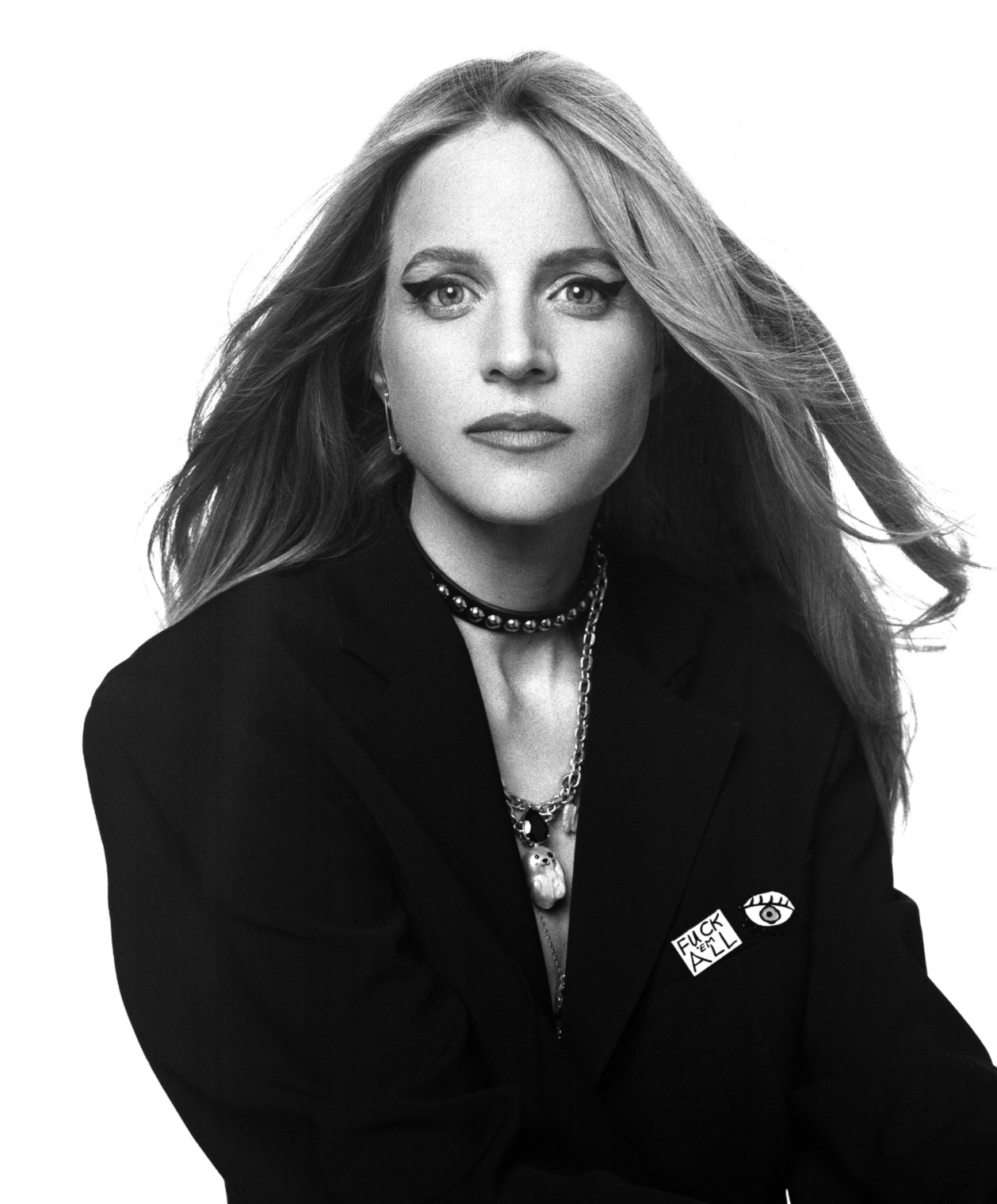
Portrait of the artist by David Bailey
All images courtesy of the artist
Get up-close-and-personal with artists from all over the world and unlock the mysteries of the creative mind.
Read in-depth interviews with the most exciting cultural movers and shakers shaping the creative landscape.
Discover the actors, authors, designers, mavericks and entrepreneurs at the bleeding edge of cultural life.