PEOPLE & SOCIETY: INTERVIEW
Universal Soul: Chaz Guest
Energy, Divinity And Seeking The Hue of Humanity
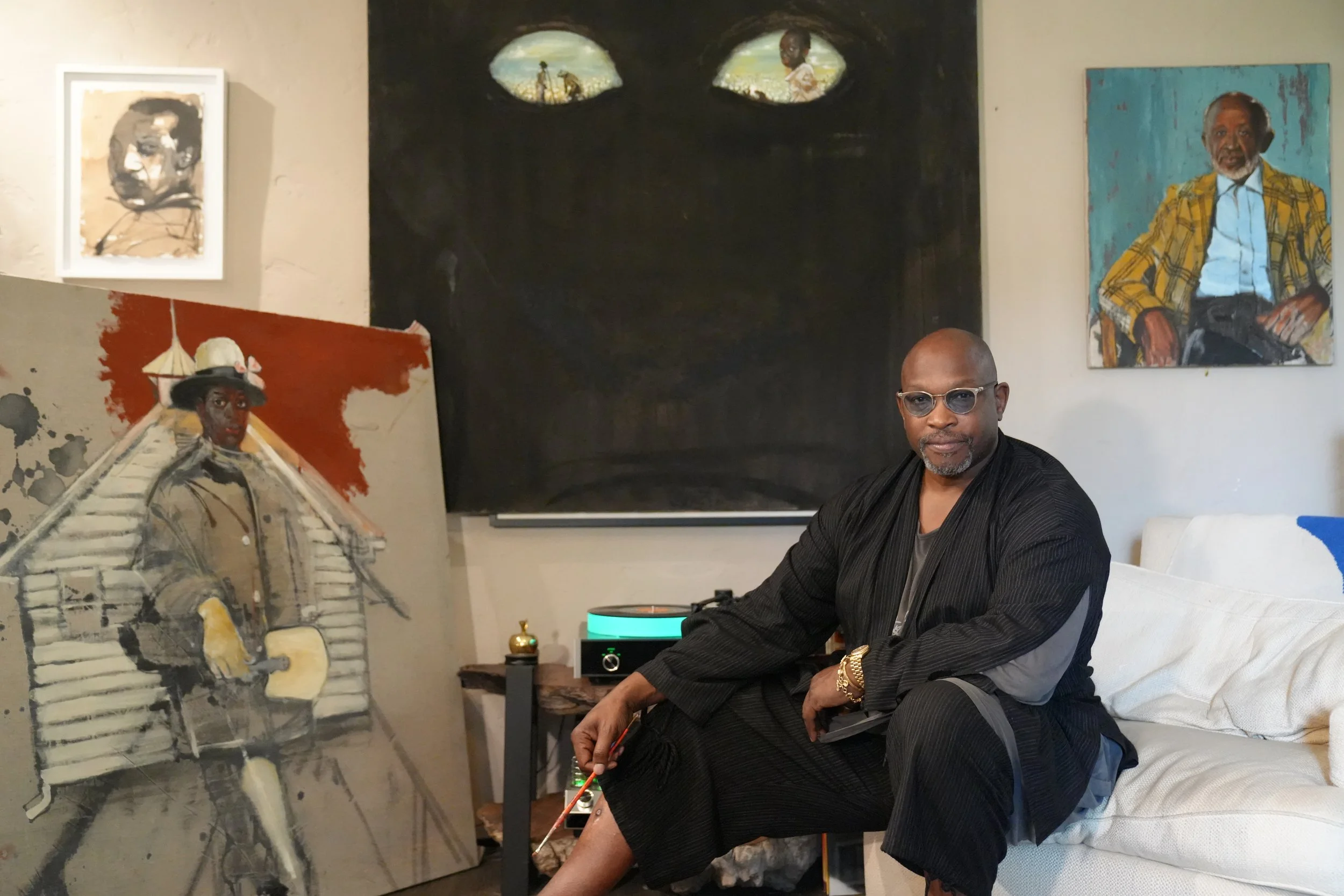
The celebrated New York–born artist Chaz Guest reminds us of the beauty of existence with luminous portraiture that seems to exist somewhere between generous invitation, heartfelt nostalgia and uncompromising statement. The faces he paints, both famous and unknown, are often radiant and seem to contain an unmistakeable kernel of joy, but his work is not merely an exercise in uplift. It can also take you deep into the shadowed caverns of American history, and ask you to reconsider prevailing narratives and unconscious prejudices.
As a young man, Guest worked as an illustrator for French fashion magazine Joyce, and there is an almost mythic edge to the tale of his rise in that none other than the legendary designer Christian Lacroix nudged him toward single-minded pursuit of the art life in the 1980s. It was prescient advice. As a fine artist, Guest has consistently attracted extremely high-profile collectors, such as Angelina Jolie, Oprah Winfrey and the Obamas, and even witnessed his work make its way to the hallowed walls of The White House, where his portrait of the first African American Supreme Court justice Thurgood Marshall hung for almost a decade. These somewhat celebrity-studded details make for an intriguing ascendance, for sure, but they alone do not define him. What does define him is his unique methodology as a painter – a kind of improvisatory choreography that begins like a sketch of impulse and settles into something that reads as both spontaneous and very, very considered.
The self-taught artist often paints to music as he seeks what he describes as the hue of humanity upon the canvas, drawing on stories of resilience in paintings that seem to insist to us that our lives are a current of small but profound moments in which losses and triumphs are intricately braided. His process is dance-like and contemplative – a line is laid down instinctively, and another, and another; then colour arrives in layers that feel iridescent and begin to make the surface breathe. The results feel both urgent and meditational in nature, embodying both the immediacy of a first impression and the accrual of myriad histories and feelings that only long looking can reveal. FUTURISTIC DRAGON sat down with him in his studio as he worked on a new series for his autumn show at RX & SLAG in Paris to talk process and purpose, and find out why, for him, all portraiture is a manifest transmission of energy.
You are a self-taught artist. Do you believe your lack of formal training has worked to your advantage? Do you think classically trained artists are often too constrained?
I don't think that the personality that I am allows me to sit in a class and listen to someone else’s ideas. I'm trying to embrace experiencing what it is to be human, and painting is my way of communicating – I don't want someone to try to teach me that. I want the universe and nature to show me the way to purity, the way to divinity, so yes, being self taught greatly serves my personality. I won't say anything about classically trained artists, simply because I don't know, and I don't care – I'm far too busy enjoying my own garden that I've created by hand. On the other hand, I can always ask the classically trained artist what they've learned, and steal some ideas here and there, you know, just take stuff.
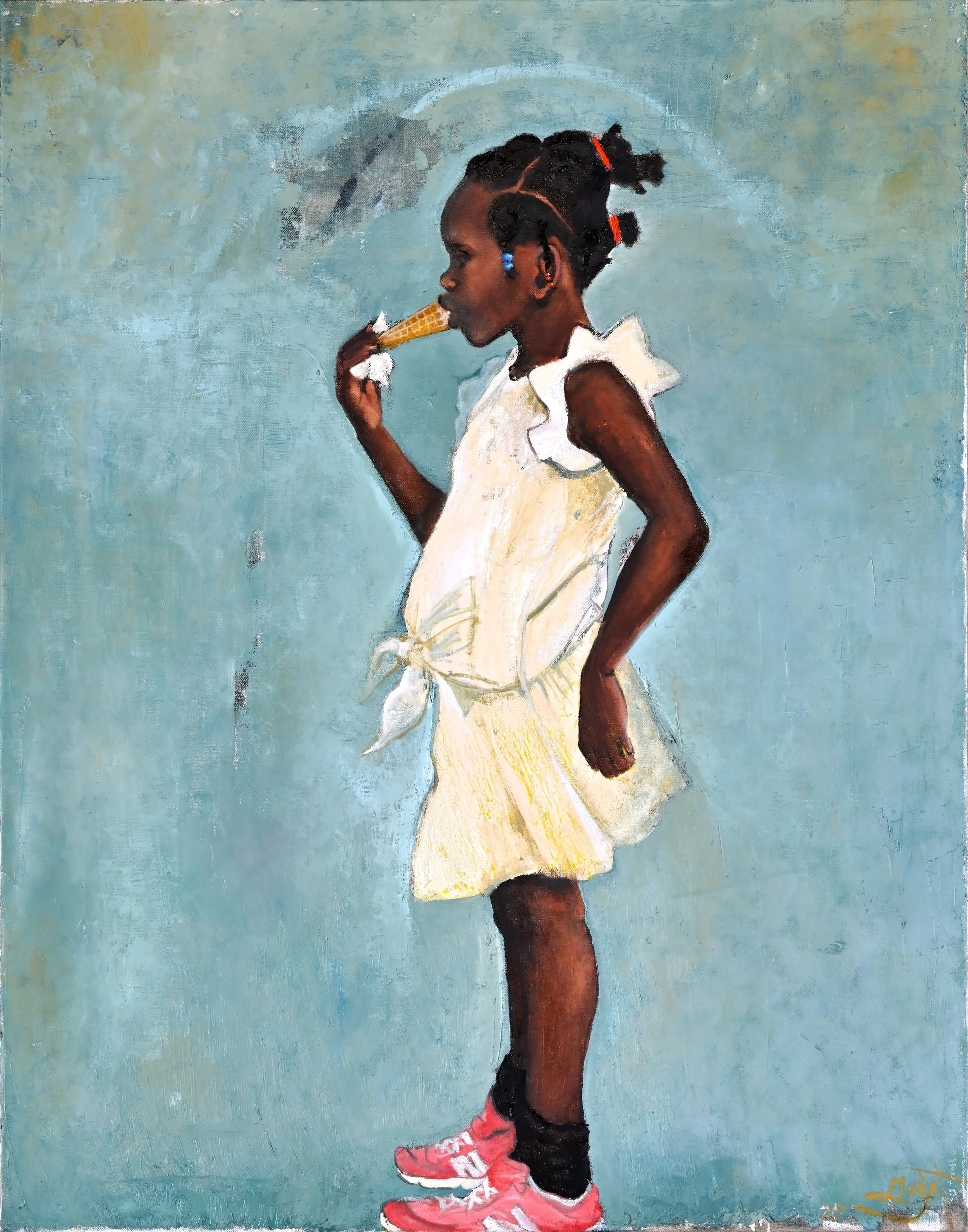
“If I can feel the energy of the person when I see them, then I know it's going to be a good portrait”
You often paint listening to jazz, and sometimes even paint live to music. how does the ebb and flow of jazz improvisation inform your creative process?
It’s not just what you call jazz that inspires my heart and brushes – you call it jazz but it's American Classical music – I love European classical too. The music drives its way through my cells and nerves and tells my heart what to lay down on these canvases, and the process is fantastic. Most of the time I'm painting I’m not even thinking. I'm in full meditation as this music is just moving through me. I love it. I want that for everyone. I wish that there was a way that I could share this level of peace and happiness that I have in searching for what I call the hue of humanity, because it is very interesting being human – I mean, we don't even have the DNA to even understand how fantastic we are.
How do you think art can help us to overcome hardship and make us more resilient?
How do I think art can help overcome obstacles in life? That depends where you are as an artist, doesn't it? I recall when I was worried about getting kicked out of my tiny New York apartment in 1986 – that wasn't sexy! It is easier to overcome these trials and tribulations when one can find a way to finance yourself with your art – when one can reach a level that you can more than support yourself, the whole platform changes. I have been divinely blessed to be able to create for more that 30 years, and it's been a great training ground to overcome just about anything to conquer New York City as an artist.
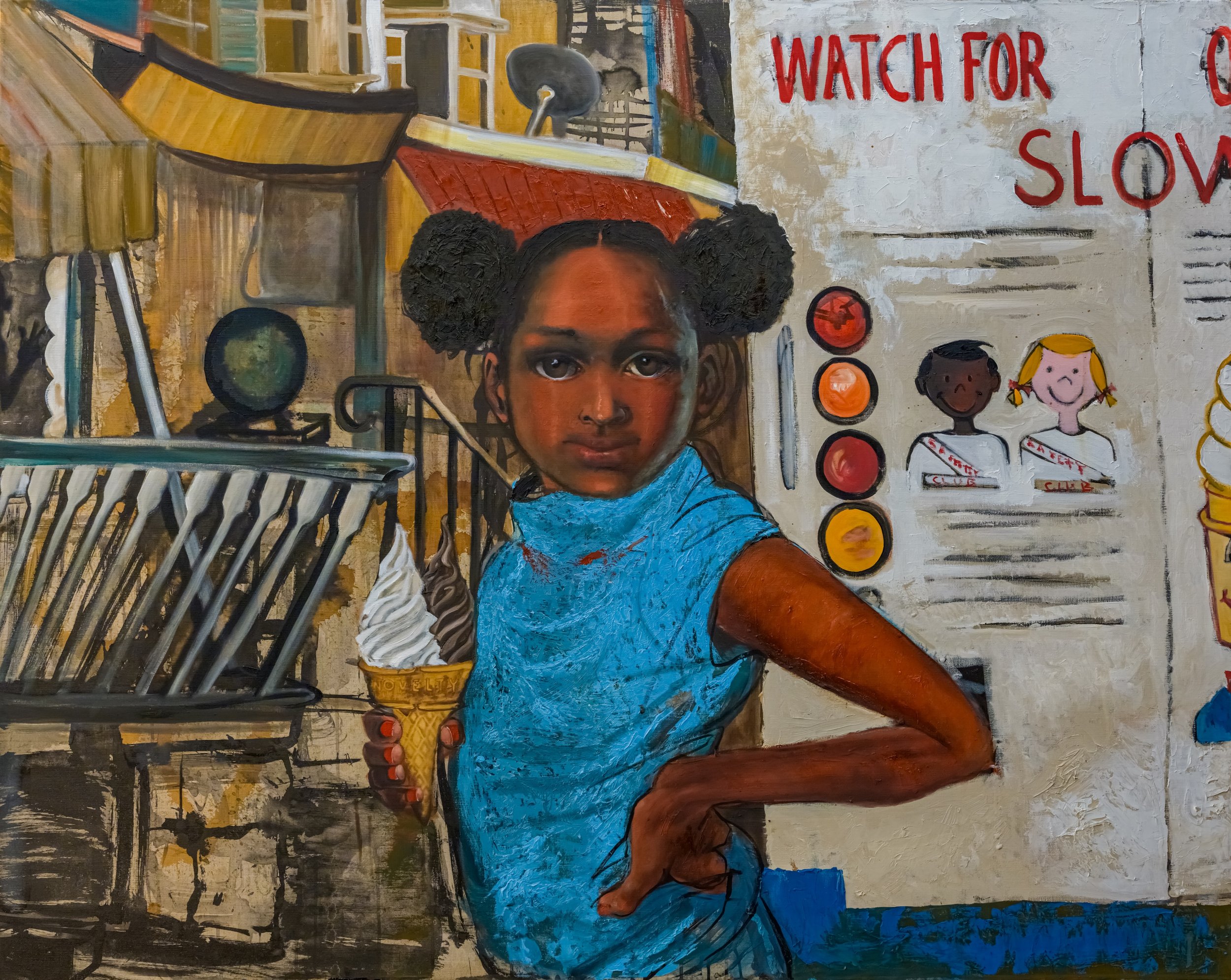
“Music drives its way through my cells and nerves and tells my heart what to lay down on these canvases, and the process is fantastic”
You spend a lot of time in Paris, how has the city shaped you as an artist?
Since my first trip there on a one way ticket in 1987, it has always been a place that feeds my imagination and my hunger for the search. When I'm spending time there, I feel my inspiration grow, and I feel that I'm in a place where the greatest artists were, and the place they were inspired by, and so on. Paris has shaped me into a painter that has seen my palette develop into natural hues and more mature lines. Also, Paris has some of the best museums on earth, if not the best museums on earth. Paris has shown me that the world is indeed my neighbourhood. There's a great and rich history of African Americans in Paris, and I see why they chose this city to grow their talents..
Talk to us about the autumn show in Paris you are currently working on – Sugar At The Bottom, can you tell us about the inspiration behind it?
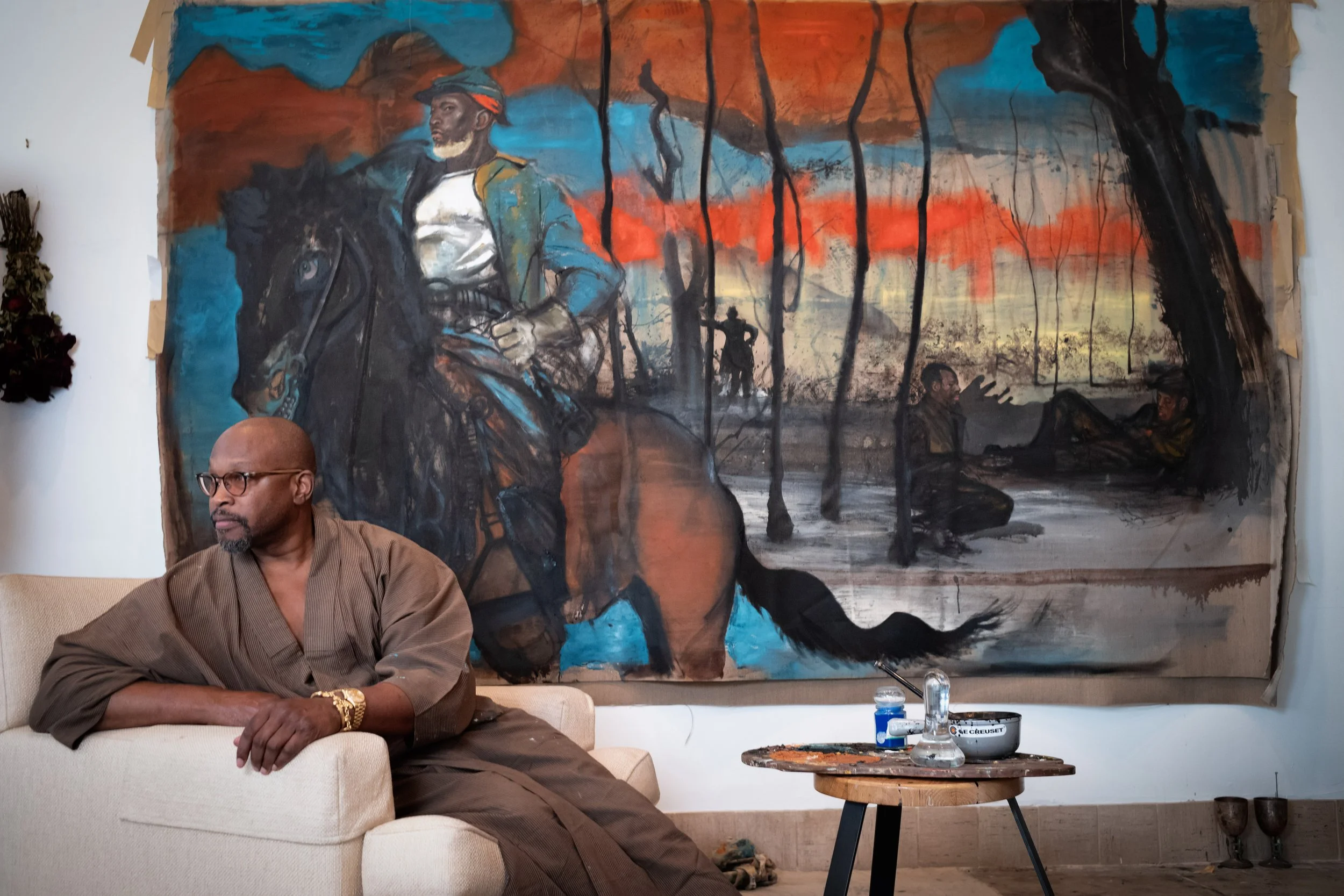
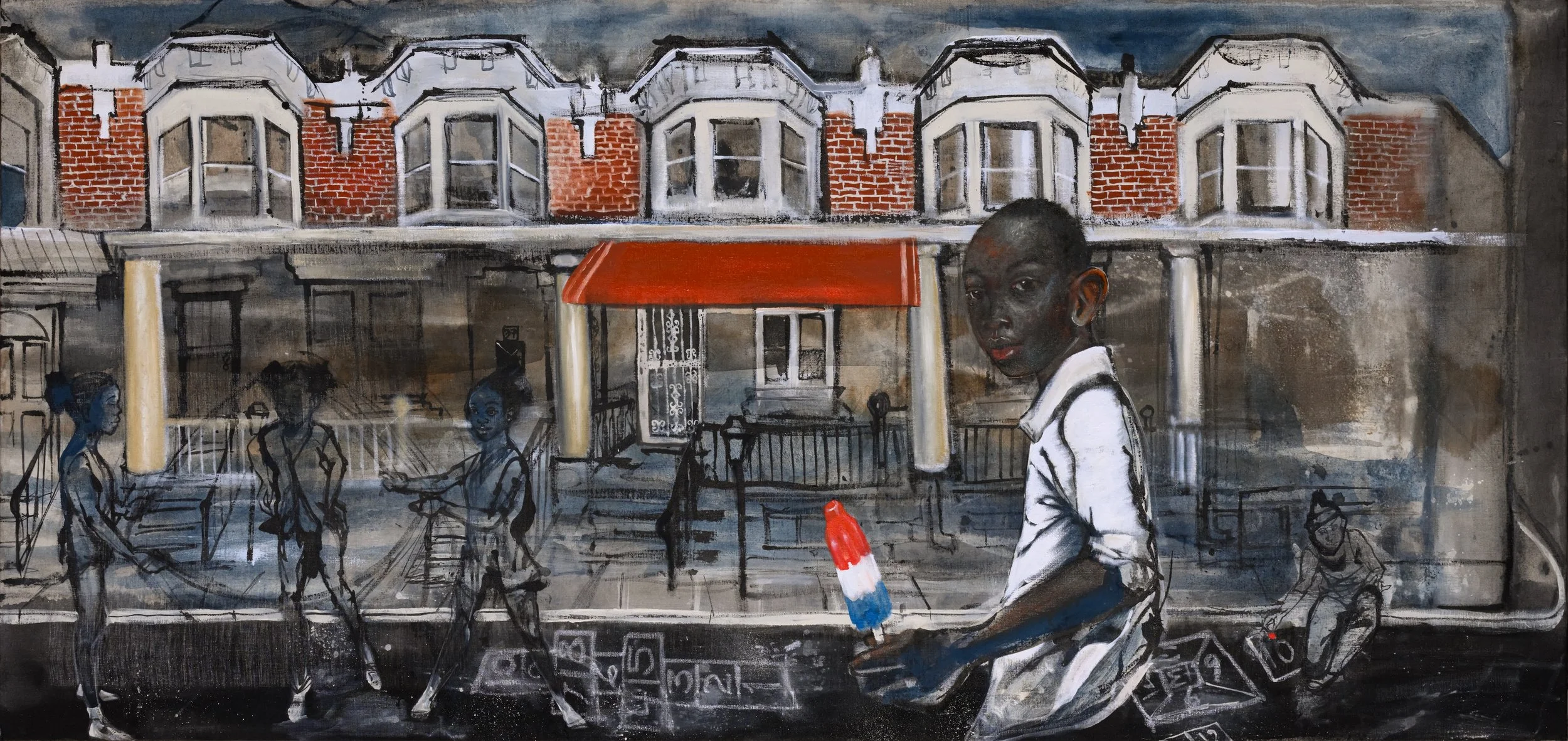
‘Sugar at The Bottom’ is about my young life in the inner city church – being home with family, and the days when we prayed a lot. We made Kool Aid, and I loved looking at the sugar settled at the bottom of the pitcher. Hard work pays off! Those memories of long days in Church set up this show with inspiration. The Artist Peter Doig and I traded a few words around gospel music, and it further inspired me. Music truly inspires me. When I put the Dixie Humming Birds on, Mahalia Jackson and The Swan Silvertones, that music alone can paint a whole series of great paintings. Paris is in for a beautiful treat.
It sounds as though you have a deeply emotional drive, as opposed to intellectual?
Yes. I have no real understanding of it, though. Sometimes I wonder what it might be like to actually abandon thinking, and all of that, and just be very natural in the way that I approach painting, to approach it the way a tree or a beautiful plant grows, where information is unseen and coded. And I wonder if I can reach that as an artist. I mean, we are just energy and vibration, and I'm trying to take full advantage of that energy and be totally open to it, which is one of the reasons I love to paint live to music, and kind of capture the music on the canvas. Sometimes when I paint, I don't even know how the painting has been done – if I see it in a museum or an art show, I'm like, wow, I don't even remember making the first mark on the canvas.
“I wish that there was a way that I could share this level of peace and happiness that I have in searching for what I call the hue of humanity”
How do you feel about the current climate in the USA? Do you feel wounds once healed are coming to the fore?
How do I feel about things shaping up societally in the US right now? Are you serious? I don't even recognise the USA! I am ashamed of the country and where we are! There are good people for sure, but if people are agreeing with what's happening to black and brown people, and poor people. middle class people... then, my God, they’re blind, I'm sadly ashamed and I will paint about it. I will. The wounds were never healed, they've just been greatly exposed under this so-called leadership.
You have immortalised some truly incredible figures, such as the former president Barack Obama. What was your impression of Obama, how did you set about capturing his ‘truth’ if you like, and what do you think of his legacy?
I recall standing in a circle of four men, one being Clarence Avant, and I was studying Obama standing there with his arms folded, thinking about every word as we all talked. I was painting in my mind as to how I would capture this moment on canvas, and that night, I started the painting of him from memory – laying down the energy of the man. I was greatly impressed with his intelligence and sharpness, but it was the energy that was most important. Usually, I can tell if it's going to be a powerful and successful portrait before I even start. If I can feel the energy of the person when I see them, I know it's going to be a good portrait. I loved painting Gordon Parks for this reason. Angelina Jolie as well – I love that whole thing we did with the Netflix film Maria Callas. The portrait I did of Thurgood Marshall hung in the Obama White House for eight years. That was something that was really unbelievable to happen. But, you know, where the paintings wind up is where they wind up. I really didn't ever think about the painting going into The White House. I just wanted to paint this man and tell his story on the canvas. In terms of legacy, I love the fact that the Obama Presidential Center was built. That's great for legacy, for sure. Bob Clark did a fantastic job, for his part in it. His art collection is stellar, and I'm overjoyed to be included in it.
Introduction & Interview by John-Paul Pryor.
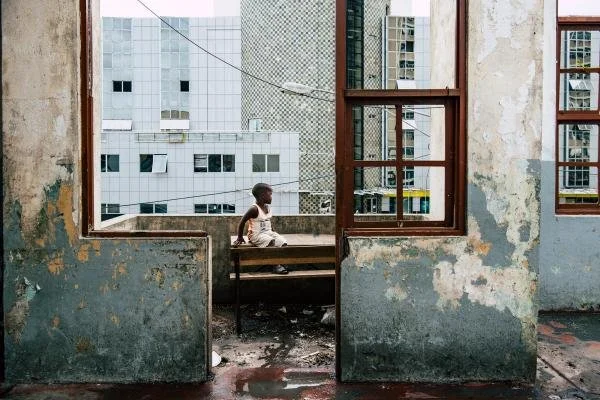
First portrait of Chaz Guest by Frances Syreeta DeLoach. Second portrait of Chaz Guest by Earl Gibson lll (painting held in the Vito Schnabel collection). All images courtesy of the artist and RX & SLAG Gallery, Paris.
Get up-close-and-personal with artists from all over the world and unlock the mysteries of the creative mind.
Read in-depth interviews with the most exciting cultural movers and shakers shaping the creative landscape.
Discover the actors, authors, designers, mavericks and entrepreneurs at the bleeding edge of cultural life.