PEOPLE & SOCIETY: INTERVIEW
Manifest Destiny: Debra Shaw
Life On The Runway And The Vagaries Of The Fashion Sphere
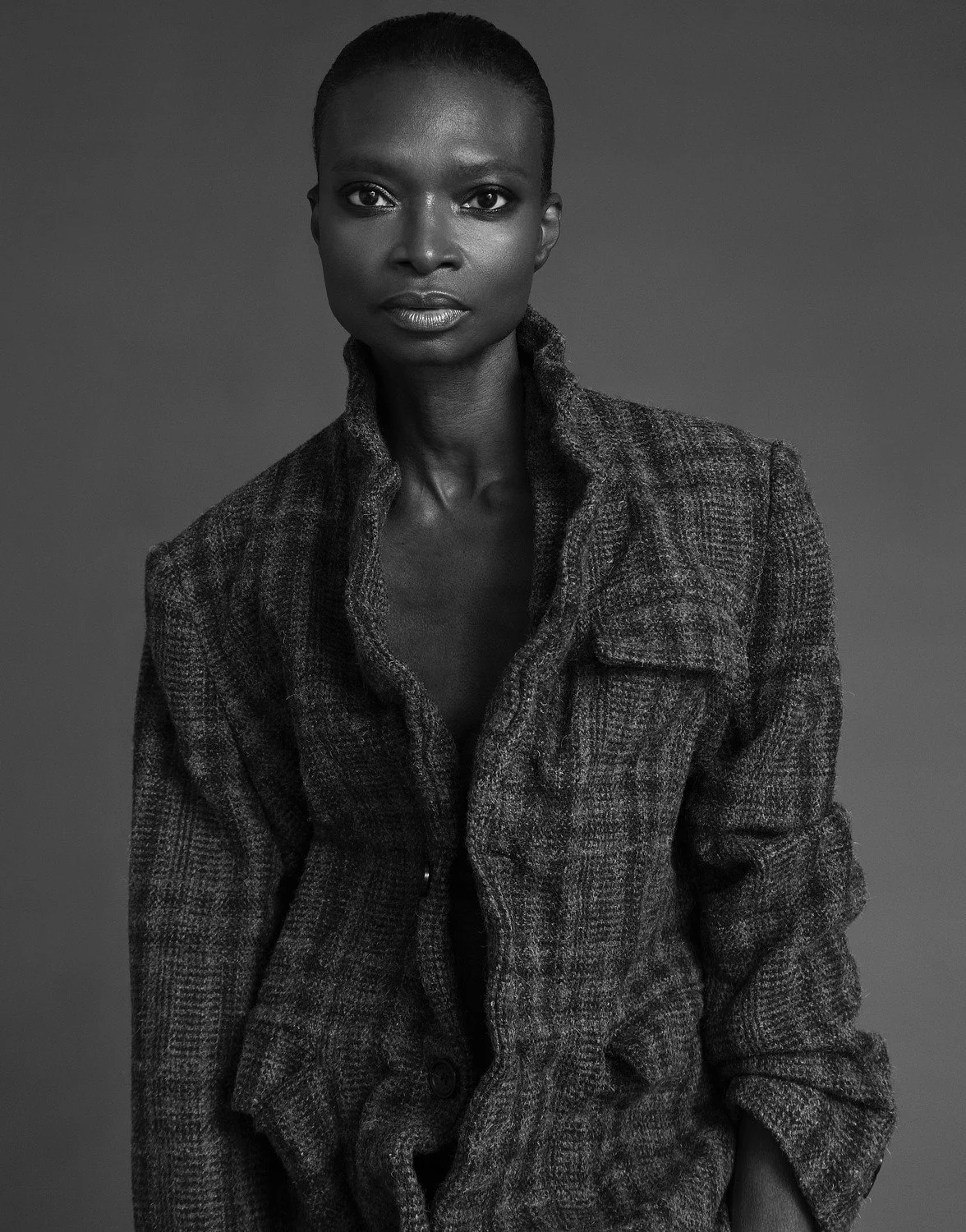
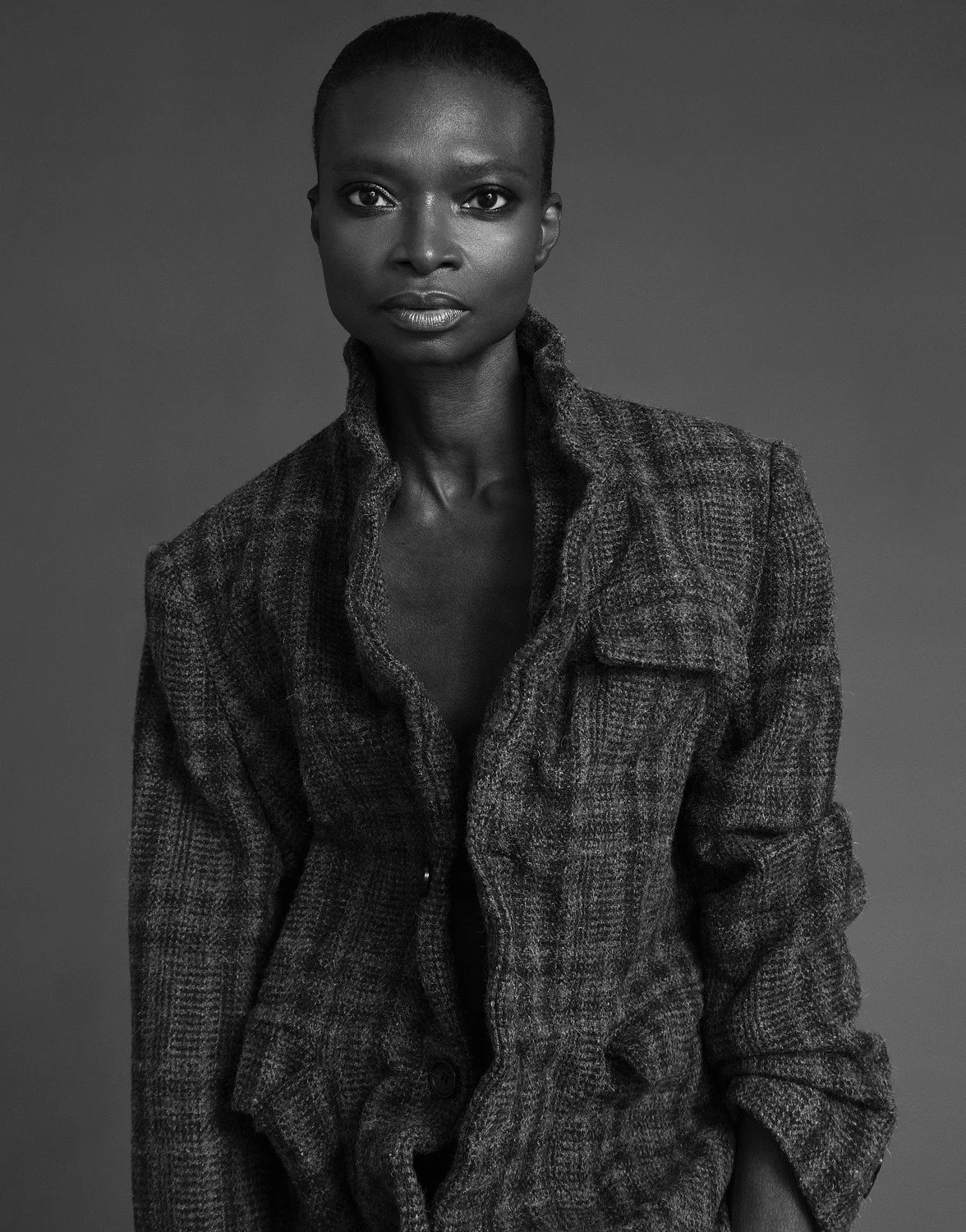
Debra Shaw cuts a profoundly influential figure in the fashion industry, and is renowned across the globe for a vivacious versatility, walking the runway under the auspices of revered masters, such as McQueen, Lagerfeld and Galliano, and appearing in the likes of Robert Altman’s legendary 90s classic Prêt-à-Porter and George Michael’s Fast Love. Born in Philadelphia, Shaw won a modelling competition in her teens in New Jersey, and was catapulted into stratospheric echelons of style, very soon playing muse to some of the world’s most iconic designers – perhaps most notoriously walking attached to a metal frame in McQueen’s game-changing 90s show It's A Jungle Out There. In a trailblazing career that now spans decades, she has graced the covers of leading magazines around the world, and has worked for titans of fashion, such as Dior, Mugler and Givenchy, showcasing an almost capricious adaptability via her truly distinctive presence. She has also established herself over the years as a passionate advocate for diverse representation within the industry, actively using her influential platform to empower others. In this rare interview with FUTURSITIC DRAGON, the inimitable fashion heroine tells us how a religious childhood first turned her onto to style, discusses the meaning of manifestation, and explains why it’s important to always speak from a place of love.
Is style something you have always been consciously attracted to?
Yeah. I love people watching. As a child, I was surrounded the women of the church where I grew up, who all dressed really well. I am a Christian and would say that going to church was probably my first introduction to fashion. And back then was the time when women really did dress up. The church has changed now, and it's more casual, but, when I was a kid, it was very important how you dressed. The preacher's wife would have the biggest and most decorative hat, to represent the power of her position, and the ushers would have on white gloves and suits that fitted to perfection – they were very military-like, but it was a very beautiful silhouette.
“In a way, the whole question of diversity almost feels redundant to me now, because it’s a space that has grown so beautifully from a model's perspective”
Interesting. Has the faith of the church stayed with you?
My Christian faith has stayed with me, but I have also been introduced to spirituality over the years, and now what faith looks like for me is more personal, and a result of my travels, and meeting people from all over the world. I no longer live in the US, and have a perspective on life that's very different than my family’s, but, when I go home, I'm reminded of what my beginnings were, and although I am no longer in exactly that space, I respect how they live their life, and how dedicated they are to their religion. I don't feel the need to go to an institution to be able to have an understanding of spirituality, though – my sense of spirituality comes in many different forms and my belief today is more based on a sense of karma and the universe, and manifesting, which, for me, is another word for praise. I am proud of my accomplishments and the obstacles I overcame and will overcome.
You were, of course, one of the very first black supermodels – how has the industry changed during the course of your career?
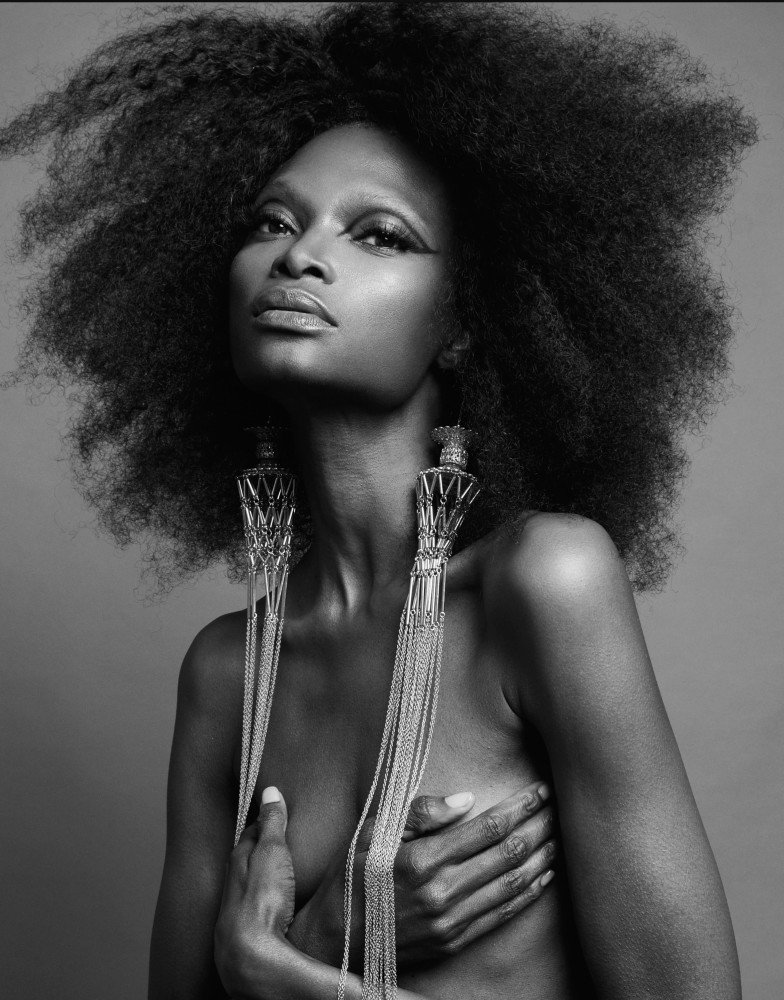
It has moved on. And it's so beautiful. I mean, in a way, the whole question of diversity almost feels redundant to me now, because it’s a space that has grown so beautifully from a model's perspective. In terms of designers, it probably still needs a lot of work and attention, but I do think it's really interesting to see such an overwhelming amount of models from Africa dominating the fashion scene, and they're all exquisite and quite beautiful. My only input on that would be that it's important that the industry does not only go to just one region. It's important to broaden the regions of where we're getting models from, because when it’s all focused on one specific region, it can look more like a trend.
Presumably some of those models are coming from quite challenging places and situations?
Yeah. I saw a documentary recently of how some agencies are sourcing models from refugee camps. And I am sure that comes from a good place, of trying to make someone’s life better, but then, when they don't work, the models get sent back to the camp with a debt to pay – all the things that the agency had invested in them, such as their visa, their place to stay, and so on. I mean, fashion training its focus on different regions has always been happening – you had the Brazilian and Russian girls at different points – and there has also been a history of lifting people out of difficult situations. I believe Alek Wek left her country initially because it was not safe. And there is currently a war going on in Sudan, so the approach is, let's go and help get them out of their situation. I think it all starts from a very positive perspective.
When did you first realise the industry had changed for the better in terms of diversity?
Well, I took a big pause in my career, and then I came back around 2015, and it was, like, wow! I remember the first show I did when I came back I was Armani, and it was a black hairdresser who was in charge of the hair. I started to cry because I had never seen that in my entire career. There were all these black models. That was the very first time that I saw the new diversity, and it was overwhelmingly beautiful. I was also stunned, because when I re-entered into the business, the change had already taken place, but it had not been like that when I left. I started taking pictures with all these girls because it was just so rare for me.
Do you think fashion can play a role in highlighting social issues? When you look back at your time with Alexander McQueen, did you feel a sense of its cultural significance?
I knew it was something incredibly special because my agent had told me how important the client was. And because of that information, I paid more attention from the outset. Naturally, once I got into the environment and saw the collection, and what he was doing and his need to speak up, I loved it. Then it became important for me for another reason. I mean what Lee did came from his heart and from his perspective, and, yes, now he is an icon and a legend, but he didn't get great reviews at the beginning – some were very harsh on him.
I suppose everyone hearkens back to McQueen partly because it almost felt like a counter-culture movement. It felt explosive …
It was all of those things that you're saying, and it felt like it was all of those things at the time. We had no idea we were creating history, though. I don't think anyone in history knows that they're making something that's going to last forever. It was a pleasure to do It’s A Jungle Out There, and I enjoyed every minute of it, whether I got slack from it, or not. I mean, people were not always nice about what I did for him. They all wanted to critique the walking in water in the frame, and I always felt, how dare you take away my joy and my pride in doing that? I didn't fall, I wore it! (laughs!) You know what, though? We all look at it differently, and that's the beauty of art.
“We need to remember we are in a business of creating and having fun. Let's not take it too seriously”
What do you think was so special about McQueen?
He always had this impressive mind and imagination alongside impeccable craftsmanship – his designs, his details, and his process were all incredible. His work is something to be adored and to be studied and taught, but I really believe strongly that it’s not something other designers should be compared to. I think that is important, because when we put that kind of pressure on someone to be like another designer, it’s unfair. I think it's important that we respect each designer for what they bring to the table.
You sound very passionate about design …
Yeah. One of the things that I love most about working as a model is that I get to see what other don’t see. I get to see the fabric, I get to feel it, and I get understand the process during the fitting. I get to see the very beginning of these garments and how they've come to light, and that is the most amazing art ever. That is why I never critique or compare anyone, because everyone has a unique vision.
Did you ever envisage that you would still be having such a successful modelling career later in life?
Well, I guess I feel that the things that are happening now are something I manifested a really long time ago, and I feel like that is unfolding in front of my eyes every time I get hired for another job. Sometimes we forget about what we manifest, so, when it comes into fruition, you're, like, oh, this feels familiar, but it also feels like a surprise. It's like that gift for Christmas that, when you get it, you're like, oh, it’s exactly what I wanted! But then, you're also, like, I can't believe I got it! It's like that. I don't know if that makes any sense, but that's how I process it all. I mean, all of these recent jobs are a bit of a surprise, but also, they are somehow not. In terms of being a cover girl, I am grateful and have a understanding that it is a miracle each time it happens.
You have worked with some incredible people, who apart from McQueen made a lasting impression on you?
There are lots of people who taught me things about the business, but I would have to say Peter Lindbergh – his lighting and the easiness he had on set, and how he didn’t take things so seriously. That would probably be the number one for me. It's so important that we don't take ourselves too seriously in this business – we need to remember we are in a business of creating and having fun. Let's not take it too seriously. Let's keep it light, you know? I do find that this generation today is a little lighter in the sense that they know their history, they know their work, and they work differently. They feel freer in some way, and let's say I am adjusting to that. And, of course, looking back, at one point in the 90s it was really just pretty much just me, Alek or Naomi. Now, as I say, the industry is flooded with black models, and that's good.
How do you think the language of beauty has evolved, and what is your definition of beauty?
Well, beauty starts within in terms of how you feel about yourself, and that level or capacity for love that you have within yourself, because we have all different types of levels. I don't know if I have a specific definition of beauty, but I can tell you that I believe beauty exists everywhere, and I believe it’s all about perspective, right? I'll give you an example. My mother-in-law was bedridden and, at one point, I was removing all the dead leaves from the flowers by her bed, so that the perfect leaves and the roses could stay without all these little dead petals. And she says, ‘Why are you doing that? Don't take them away. Leave them. They are still beautiful.’ And I started looking at it differently, and I was oh, wow, it’s true – just because it's a little bit dried up and wrinkled, or whatever, doesn't make something less beautiful. It's just that it's just in a different form, and a different stage of its life. This is how I approach reading beauty in all forms. I also continually work on myself on how to deliver things in a way that I like to receive them. When we speak from love in all things that we say hopefully it's received with love. And for me, that's beauty.
Introduciotn & Interview by John-Paul Pryor
Get up-close-and-personal with artists from all over the world and unlock the mysteries of the creative mind.
Read in-depth interviews with the most exciting cultural movers and shakers shaping the creative landscape.
Discover the actors, authors, designers, mavericks and entrepreneurs at the bleeding edge of cultural life.