STYLE & CULTURE: INTERVIEW
Notes From The Edge: Derek Ridgers
The Eighties, Subculture And Radical Identity
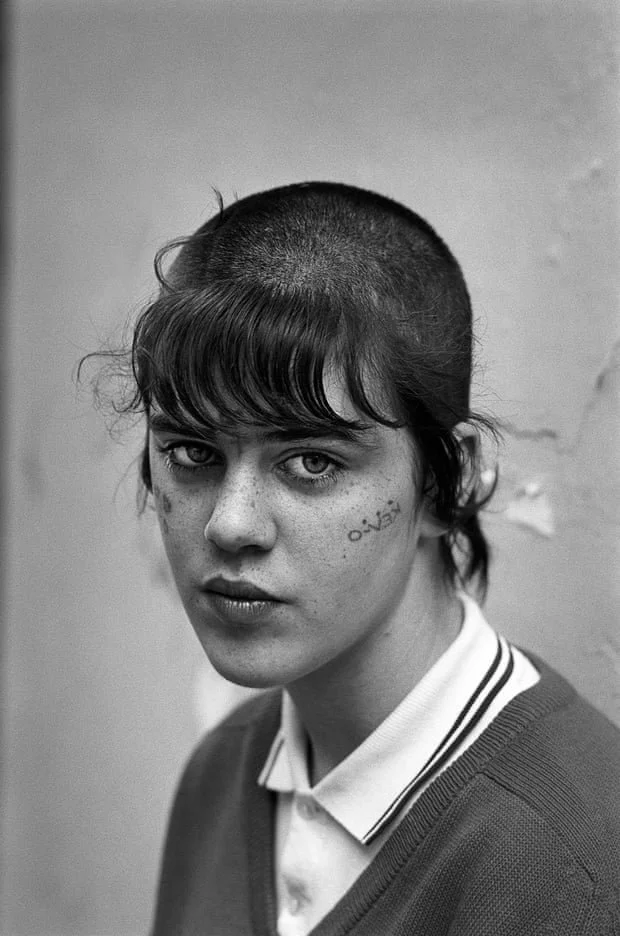
The archive of the photographer Derek Ridgers is arguably unparalleled in terms of its documentation of post-war British subculture. Over almost five decades, the image-maker, whose work graces the likes of The National Portrait Gallery, has brilliantly captured the people at the heart of every significant cultural explosion in the UK, both known and unknown, with all the strange anomalies that have existed somewhere in-between.
The comprehensive repository of his photographic endeavours bestrides punk’s snarling inception, tips its hat to the new romantics’ androgynous poise, and rides the acid house rave’s polyrhythmic vertigo — a compendium not of mere images but of powerful sociocultural tremors. For almost half a century, Ridgers has been present at those convulsive moments when cohorts of youth and would‑be aesthetes reconfigure habit, taste and antagonism into new regimes of look and behaviour, and reshape culture as they do so.
HIs work is not detached reportage, but rather a practice of intimate trespass. He does not point and preserve; he returns, time after time, to the same milieus, and the same faces, building a kind of photographic familiarity that approximates both friendship and the semiotics of trust. Thus his images possess that double efficacy: the blunt, arresting immediacy of the night‑club portrait and, simultaneously, the conspiratorial disclosure of repeated attendance.
FUTURISTIC DRAGON sat with Ridgers to excavate his portrait practice, his methods for photographing the liminal edges of youth culture, and his prognosis for subcultural expression now that the scene, or rather the very notion of ‘scene’, has been commodified beyond recognition.
Can you recall the first images that turned you onto photography?
I don’t think there was any moment in my childhood or teenage years that might have indicated that I would one day become a photographer. When I was young, I loved to look at photographs, but I had absolutely no interest in being a photographer myself. I didn’t even own a camera until I was about 23 years old – not even what might be classed as a point-and-shoot. Maybe the film Blow-Up, which I first saw as a 13-year-old school- boy, planted some early seeds. To be honest, I always thought it was a rather flawed film but I was certainly captivated by the photographer Thomas’s extravagant lifestyle, and at that age, Jane Birkin naked seemed like the best thing I had ever seen. I suppose you might categorise that as inspired? But I was more captivated by the idea of having that way of life – plenty of money, a beautiful studio, a beautiful car and not having to work for someone else. I managed the last two – I’m still working on the others.
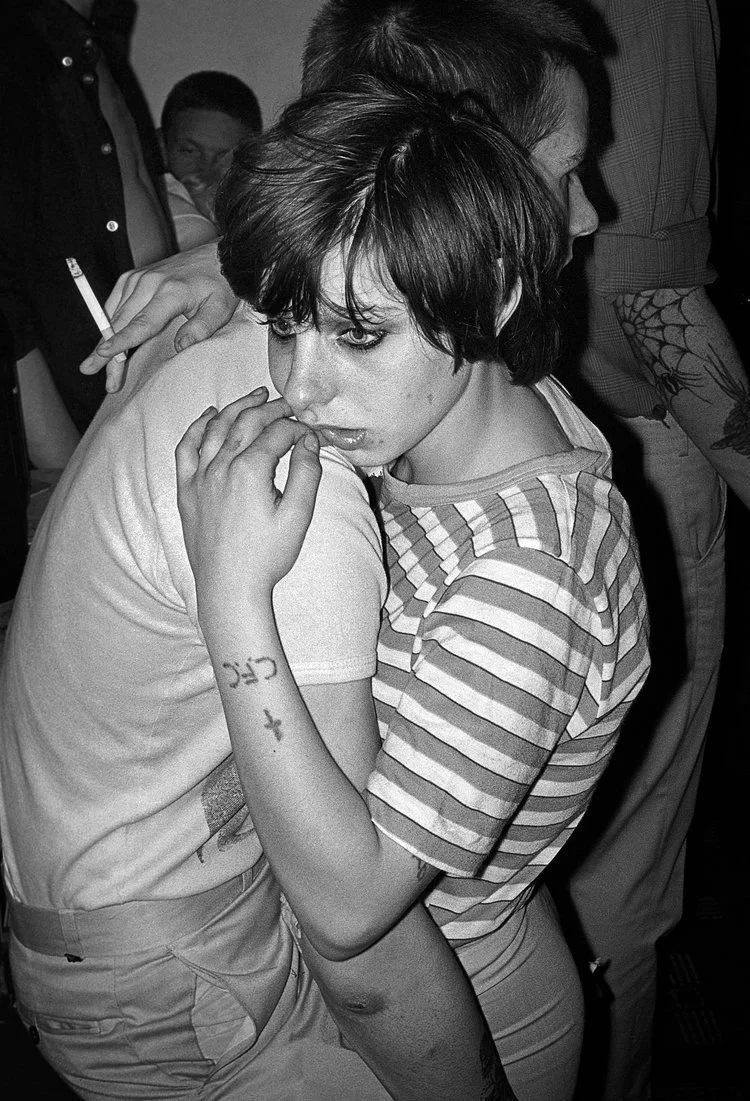
“Punk was marginalised and incorporated very quickly, but it still liberated a generation”
What would you say first made you want to pick up a camera and shoot what was going on around you?
It wasn't really a ‘what' more of a ‘who’. The who was Kim Mukerjee, boss of the advertising agency I worked at in 1973. I was an art director on the Miranda camera account. Kim suggested I take one of the cameras home with me, use it and get familiar with it so that I would be able to produce better ads for it. At the time, I had a partner and a small child and our only social life was going out to gigs and music shows. I took the camera along with me to some of them and often forced my way to the front and pretended to be a photographer. Being right there at the front, sometimes even in the photography pit, only feet away from the performers, was really quite exciting. But at that stage, I was still very much an amateur, far more interested in the music than the photographs I was taking.
How did you feel about the subcultures you were shooting as a young man? Was there ever a desire to join the ranks of the punks or skins?
I don’t suppose I had either the commitment to be one of society’s peacocks. And I didn’t start shooting other young people until I was 26, by which time I figured I was too old to be a punk. Had punk come along ten years earlier, then, maybe... I would have liked to have been a skinhead in my late teens. I gave it a half-hearted go for a bit, but I wasn’t really a hard-case. Short hair, short jeans and big boots did rather mark one out as being up for a ruckus at almost any time, and I wasn’t. Conversely, around that time, I would also have liked to have been a hippy. When I went to art school, I was a bit of an odd mixture of both hippy and skinhead – long hair, but skinhead clobber. The free love thing was so much more compelling to me than the idea of going and getting into fights.
Do you think there will ever be another moment like the punk moment?
The thing about punk and to some extent most of the British subcultural youth groups of the latter part of the 20th century was that they were able to go through a period of gestation, and get a proper toehold, before they were exposed, via newspapers and TV, to public scrutiny and comment. In the case of the teddy boys, mods and skinheads this might even have been a year or two. By the time of the punks and the New Romantics, it was no more than a few weeks. In the age of social media, if anything happens now, it could be just a few hours. Whoever it was that first said "a lie is halfway round the world before the truth has got its boots on” must have had social media in mind. Nothing significant can take place away from the public gaze these days, and it can often have a smothering and negative effect. There is seldom much room for nuance on social media.
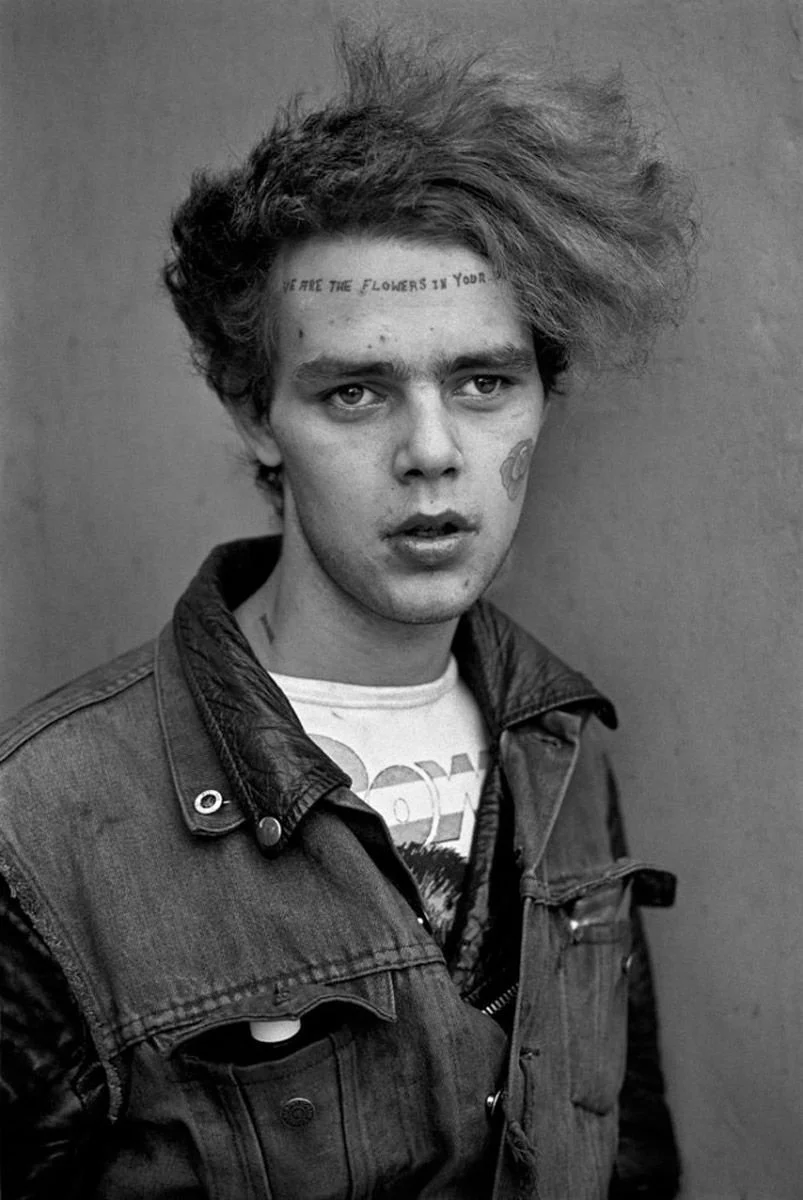
“Nothing significant can take place away from the public gaze these days, and it can often have a negative effect”
What for you is the most profound moment in subculture?
For me it would have to be the rise of the counter culture in the mid to late 60s. Characterised nowadays as The Hippies. It was profound for me simply becaus? I was at the right age to find it so. My entrée to into that world was the 14-Hour Technicolour Dream, held at Alexandra Palace in April 1967, just one month after the film Blow-Up was released. I was still a schoolboy and it was the first time I stayed out all night. Pink Floyd, Soft Machine, Sam Gopal and John’s Children played. Yoko Ono did her Cut Piece thing. I’ve lost it now, but for years I kept my little bit of that model’s dress. I didn’t capture it myself but The Beatles effected the greatest cultural movement during my lifetime. They had an impact in the early ‘60s that was immense. Their music, attitude and slightly longer than normal hair had a liberating effect on the whole world. It took a few years, but that effect reached every single corner of the globe. It was an amazing era to live through. For me and my camera, however, it would have to be punk, during that first six months after it first hit the headlines. Punk was marginalised and incorporated very quickly, but it still liberated a generation.
How would you describe your photography, and what would you say you are always trying to reach for artistically?
Most of what I do would broadly fit into the category of portraiture. Even when I’m shooting fashion, I approach it in essentially in the same way as I do portraiture. It’s all just driven by my interest and curiosity about other people. Artistically it’s extremely simple. I just see myself as a conduit. All the meaning in my photographs comes from the people themselves. I try desperately not to get in the way of that. If any of my photographs are not good enough, it will usually be because there is too much of me in the equation MY approach hasn’t evolved much at all. As soon as I started to take myself seriously as a photographer – around 1981/82 – my approach has remained virtually identical. I’m drawn to people who look good and have done interesting things because, more often than not, their story will be written on their face. As a photographer, I don’t have to add anything, just metaphorically keep out of the way.
What would you say it is about an image that provokes strong reaction?
All my favourite photographs by other people, be it Richard Avedon, Garry Winogrand, Vivian Maier or whoever, have a story to tell. You may not know everything about that story, or the full details, but a story none the less. With my own work, I know (or think I know) the whole story but it’s hard, maybe impossible, to appreciate whether or not the story will come across to the viewer. Sometimes my brain is completely spellbound by the moment I took the photograph and I can’t ever objectively see what someone else might. Mick Jagger looking straight down the lens of my camera, in a shot taken from the audience in 1976 is a case in point. I was so completely wrapped up in the euphoria of the moment.
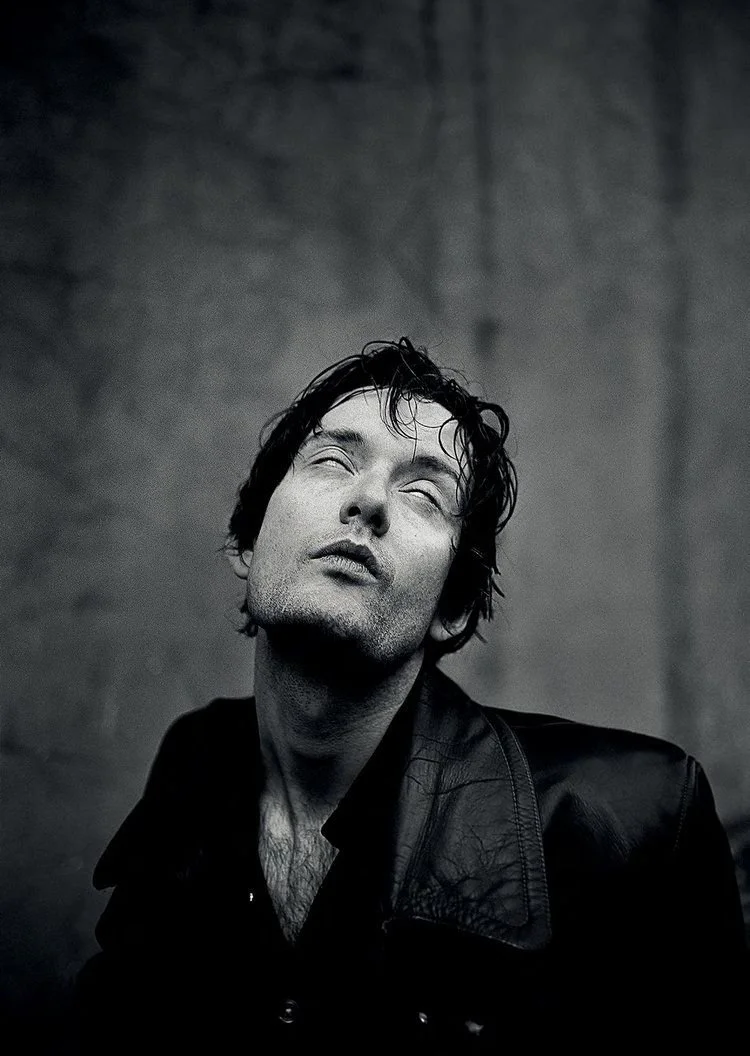
“Sometimes my brain is completely spellbound by the moment I took the photograph and I can’t ever objectively see what someone else might”
Why do you think you have always been attracted to subcultural expression?
I'm an only child. I grew up in a sleepy, boring suburb of West London in the 1950s. Heston was a place where nothing much ever happened. It seemed like a very small world. My family consisted of my parents, my grandmother and me. That was just about it. We didn’t even have any pets. My parents were loving people, but I realise now that they were both psychologically wounded. My father by the Second World War and my mother by being adopted, and then, soon afterwards, by losing one of her adoptive parents. Art school showed me there might be a lot more going on in the world and, eventually, photographing interesting groups of people allowed me, vicariously I suppose, to imagine I was much more interesting myself.
What do you think you have learned from the documentation of subcultures over the years in terms of identity?
I think, primarily two things. One, that objectivity isn’t really possible. When I was photographing the skinheads in particular, I tried to be completely objective and keep my own thoughts out of it. I realise now this is impossible. And secondly, one never really understands one’s own motivations. Even if you think you do, you’re almost invariably wrong.
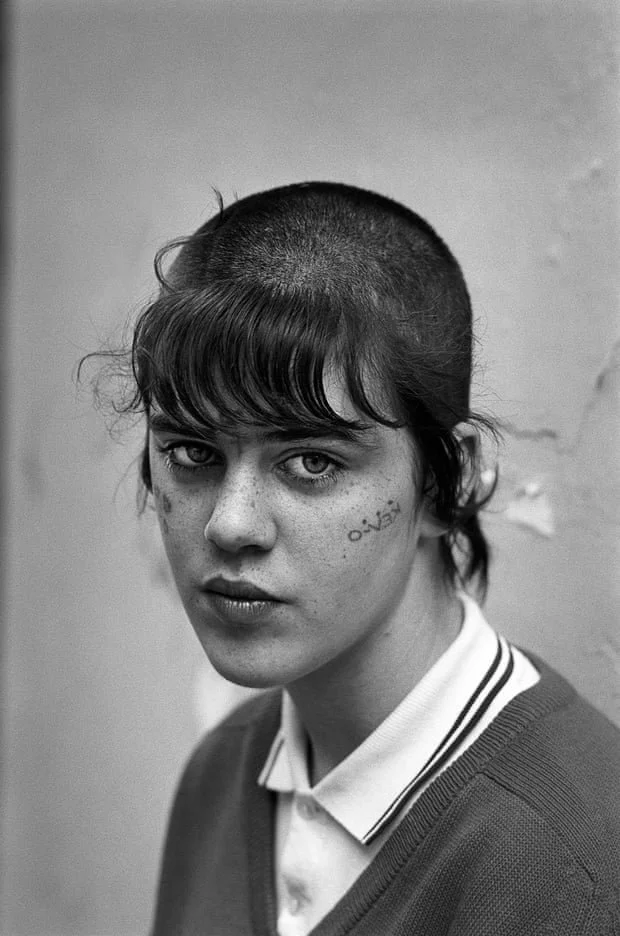
“I’m drawn to people who look good and have done interesting things because their story will be written on their face”
How do you think the smartphone era has affected photography both positively and negatively?
In the ‘60s (thanks, in part, to Blow-Up) there was a real sense of photographers being something special. Professional camera gear was extremely expensive and there was a sense that the photographers themselves were only one notch down from rock stars. It was almost exclusively male urban elite – who were highly paid, mostly drove sports cars and were usually surrounded by beautiful women. When I was an art director in the ‘70s, I worked with a few photographers who fitted this stereotype almost exactly. During that time I only worked with one female photographer - Jeannie Savage. She also drove a sports car and was surrounded by beautiful women too. The exception that proved the rule, I suppose. The era of the smart phone has changed all that. Everyone can take photographs and, if they want, everyone can now be a photographer. Nowadays getting paid is the hard part. Really the only groups of people that the smartphone has been deleterious to are the police and professional photographers. Nowadays whenever something important or truly dreadful happens (I’m thinking of the death of George Floyd here) there’s always someone around to record it. No one has to wait for the professional photographers to turn up. I think the pluses far out way the minuses in this situation
What is your personal definition of beauty?
I really don’t have a definition of beauty – it can be anything, just like life itself. The moment I tried to define what I thought was beautiful, would be the first step towards not seeing something that might fall outside of that definition. And these aren’t just words to me. I have no idea how old Michéle Lamy actually is (and it would be ungentlemanly to hazard a guess), she’s quite old but is just about the perfect photographic subject. She radiates beauty and an inner youth. .
Introduction & Interview: John-Paul Pryor
The Derek Ridgers archive is available as Limited Edition prints via Derek Ridgers Editions. Images (Top to Bottom): At Heaven, London, 1981; Tuinol Barry, Kings Road, 1983; Jarvis Cocker photographed for NME 1992; Babs, Soho,1987
Get up-close-and-personal with artists from all over the world and unlock the mysteries of the creative mind.
Read in-depth interviews with the most exciting cultural movers and shakers shaping the creative landscape.

Discover the actors, authors, designers, mavericks and entrepreneurs at the bleeding edge of cultural life.