Radical Authenticity: Diane Pernet
The fashion icon on provocation, responsibility and maintaining integrity in a fractured world
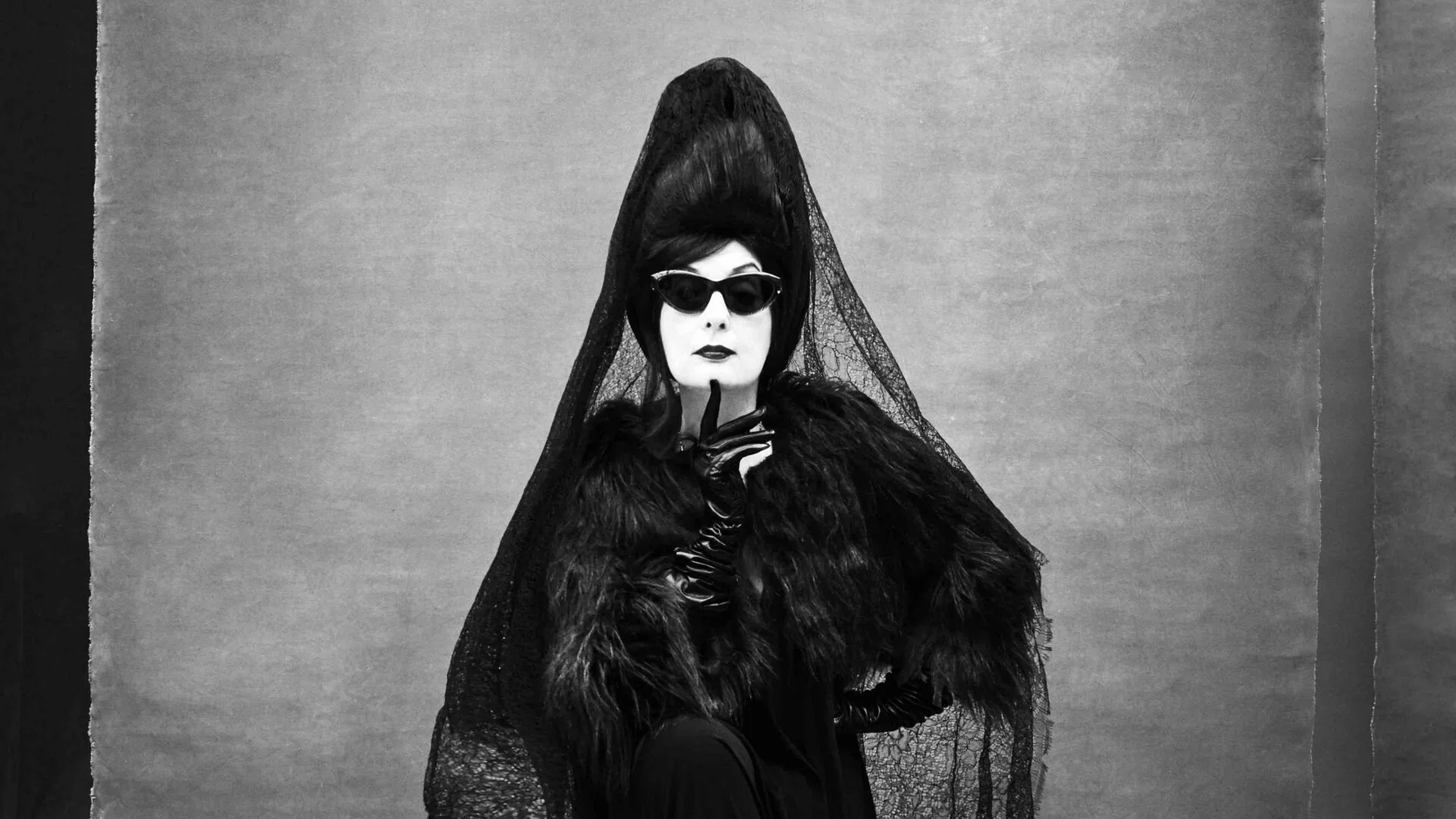
There are some people who arrive already made, as if the world accepted them wholesale and asked nothing in return, and Diane Pernet is one of those preformed myths – a veiled silhouette in black that immediately registers as archetype; the kind of person whose clothes are a shorthand for an attitude. Her public persona has been honed, certainly, but it’s not manufactured. Before the ASVOFF sign went up near 20 years ago, and her fashion film festival became the node where fashion’s image-makers congregate, she had already been shaped by keen exploration in the environs of style. Trained in haute-couture sensibility, she worked inside ateliers and learned the grammar of cut and gesture; she photographed and wrote; she ghosted and glossed and taught herself the forms that would later be her instruments. And this creative multiplicity – designer, critic, reportage photographer, perfumer – moulded her into something utterly unique.
Her now legendary festival A Shaded View on Fashion Film is at once clarion call, manifesto and marketplace. Founded in 2008, it arrived just as fashion’s image economy was mutating – moving pictures were no longer adjuncts to stills, but a primary idiom. Pernet’s instinct was to gather the dissonant and the experimental – the makers who treated fashion film as an unruly cousin to art cinema. She cast a wide net and pulled in some surprising trophies – films that refused to sell garments in the conventional sense, but instead provoked, puzzled and seduced. And, over the subsequent years, her jury rosters have been extravagant in the best sense – Jean‑Paul Gaultier’s mischief, Alejandro Jodorowsky’s occult grandeur, Caroline de Maigret’s Parisian nonchalance – names that signal the festival’s hunger for work that exists beyond commerce and pure spectacle.
Over seventeen editions ASVOFF has thus functioned both as incubator and shrine – it discovers, elevates and, occasionally, even canonises. Yet, even as it performs that cultural labour, it remains alert to the fragility of its own medium. Pernet worries, as many thoughtful people do, about a world sliding toward simulations – the proliferation of virtual experiences and algorithmic curation increasingly producing images that lack in the human anchors that give art its friction. But perhaps what is most compelling about Pernet is the way she bundles these kinds of contemporary contradictions into coherence – embracing new technologies while simultaneously challenging them.. Here, the single‑minded polymath talks to FUTURISTIC DRAGON about always being open to the unpredictable, and explains why provocation remains essential to great filmmaking.
The fashion industry feels in a moment of extreme flux and transformation right now. What specific qualities do you think a young designer – or indeed any creative – has to have to survive and thrive in this moment?
The fashion industry has always been unstable, but what we are living now feels more like a permanent state of vertigo than a temporary disruption. I think to survive that, a young designer has to cultivate an inner seismograph – the ability to register the tremors of culture without losing their own axis in the process. Resilience today is not just about “working hard”; it is about knowing how to metabolise disappointment, rejection, and digital noise without becoming cynical. You need curiosity more than certainty – a willingness to learn new tools, from AI to new materials, without letting the tool become the author. Equally vital is a strong, coherent universe. A collection is not enough anymore; you need a language, a myth, a point of view that is recognisable even when the logo is not visible. That is what allows you to move fluidly between fashion, film, performance, and social media without becoming fragmented. And finally, a sense of ethics. The next generation is judged not only on silhouette and cut but on how they treat people, the planet, and themselves. In a moment where everything is content, integrity becomes the rarest luxury item.
You were the first true champion of the fashion film – do you feel brands are fully utilising fashion film for deep storytelling now, or are they largely still treating it as an extended advertising campaign?
When I started ASVOFF, there were barely enough fashion films in existence to build a festival programme; now every brand has a film, sometimes a dozen. The question is no longer “Are they making films?” but “What are they doing with the privilege of someone’s attention?” Many brands still treat fashion film as a longer commercial – beautifully lit product shots, a famous face, a soundtrack, and not much else. It’s an extended campaign rather than a cinematic experience. There is nothing wrong with seduction, but if the narrative begins and ends with the logo, the viewer feels it instantly. Where it becomes exciting is when brands dare to let the clothing be a character rather than a billboard – when they allow ambiguity, when the story can stand alone on a big screen with the same legitimacy as a short film. That is what I have always pushed for with ASVOFF: to show that fashion film is not a sub-genre of advertising, but a legitimate form of cinema where style is the protagonist, not the slogan. I’ve always been pushing for real filmmakers to direct and then just pair up with a good stylist. A fashion film director does not need a fashion background, but they do need to know how to construct an interesting and provocative film.
“AI-generated films touch the viewer differently because they come from a composite psyche – a kind of collective subconscious trained on millions of images”
Do you feel AI-generated films connect with the viewer in a fundamentally different way to an 'organic' film? Do you find that disruption exciting?
AI-generated films touch the viewer differently because they come from a composite psyche – a kind of collective subconscious trained on millions of images. There is often a strange déjà-vu in them, as if you are watching a dream stitched from other people’s dreams. That can be thrilling. As a judge, I am fascinated when an artist uses AI as an instrument, not as a shortcut: when they bring a precise intention, cinematic language, editing, and sound to push the technology somewhere unexpected. Then AI becomes another lens through which to question beauty, identity, and reality – themes that fashion has always played with. The danger is when AI flattens everything into homogeneity – the same glossy skin, the same impossible bodies, the same algorithmic surrealism. It can reinforce clichés at incredible speed, and it can also erase the labour and authorship of image-makers if we are not vigilant about credit, consent, and ethics. So I see AI as both a mirror and a provocateur. It will not replace storytelling, but it will force us to define what we value in human-made images: the imperfections, the accidents, the weight of lived experience behind the camera. In that tension between human and machine, interesting stories are already emerging, and that is where my excitement lies.
Over the last few years you have tackled societal issues via ASVOFF categories such as 'Mental Health in Fashion'. Do you think the next generation will use fashion as a tool for social responsibility, rather than just aesthetics?
Through categories like “Mental Health in Fashion,” ASVOFF has been a way for me to insist that style cannot be separated from the conditions in which it is produced and consumed. Clothes are never just surface; they carry narratives of labour, identity, and aspiration stitched into every seam. I do think the next generation feels this instinctively. They are growing up in a world of climate crisis, burnout, and social fragmentation; for them, using fashion only as decorative fantasy feels inadequate. They are asking how garments can heal, protect, protest, and bear witness – and they are using film to show those stories with an intimacy that a runway alone cannot provide. That doesn’t mean aesthetics disappear; on the contrary, beauty becomes a Trojan horse. You draw people in with allure and then confront them with what lies beneath: mental health, sustainability, diversity, the politics of the image. If fashion is going to remain relevant, it has to engage with that deeper responsibility, not as a trend but as a structural shift.
You have had so many iconic judges of ASVOFF by this point, who when you look back on the many years of the festival most inspired you and why?
We are coming up to twenty years if you include the two editions of my first film festival, You Wear It Well, which I launched in 2006 at Cinespace in Los Angeles, so by now I have had the privilege of working with an extraordinary range of jurors and collaborators. It is genuinely difficult to single out just one, but Alejandro Jodorowsky remains one of the most inspiring figures for me. I discovered El Topo years after its original release and it was a real shock to the system, in the same way as Holy Mountain and Santa Sangre – films that rewired my understanding of what cinema could be. For about six years I dreamt of having Jodorowsky at ASVOFF, and when it finally happened it felt like a kind of magic. I was introduced to him by Xavier Guerrero Yamamoto, the coproducer who found the final million to complete Endless Poetry, and through that connection I was able to host a conversation with Alejandro, his two sons Brontis and Adan, the producer, and his wife Pascale Montandon Jodorowsky, who created the costumes and art direction. That encounter bridged my earliest cinematic fascinations with the living, breathing community around ASVOFF, and it remains one of the high points of the festival’s history for me. But I have been incredibly spoiled by the calibre of our juries and honored guests over the years. Bruce Weber has been wonderful. Roger Avary, who cowrote Pulp Fiction with Quentin Tarantino, has served twice on the jury and once as president. Jean Paul Gaultier brought his unique generosity and humour. JayJay Johanson, Caroline de Maigret, Rick Owens, Michèle Lamy and Willy Chavarria have each added their own very distinct energy to the festival. Rossy de Palma, who was president of ASVOFF 10, is another emblematic figure for us; she has been involved in six different editions of the festival, from performing at the Centre Pompidou to DJ’ing in our Cannes, performing and presideing over editions in Mexico City and Barcelona. I could truly go on and on, because I love my juries and what moves me most is this constellation of voices rather than a single “iconic” name. That said, I am especially excited that ASVOFF 18 will have Stephen Jones as President, surrounded by yet another amazing jury, which feels like a beautiful continuation of this long, evolving story
What do you value most in art?
I think regardless as to whether it’s a piece of music, a film, or an artwork, it is easy to see what is authentic, and authenticity is probably what I value the most. I think we increasingly live in a world where it is not considered shameful to ‘re-appropriate’ something, or to present something entirely fake. Take the lives people create on social media and the effect it has on those that are not living that supposed charmed life. I worry that because of this we are all becoming more disconnected. Maybe in the future we will all become what the Japanese call ‘hikikomori’ and never leave our homes or computer screens–all of the interest and intrigue about virtual and augmented reality is just going to take us further into that direction of the inauthentic experience. Life is so bad that you have to live inside a video game?
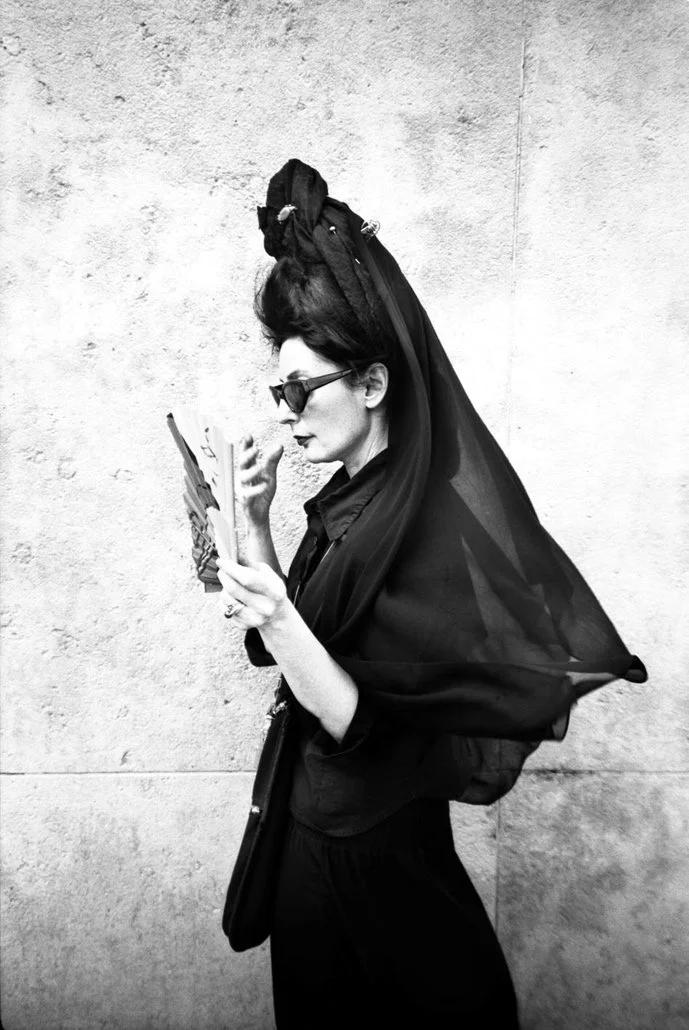
“If there is any activism in what I do, it is in defending individuality: encouraging others to explore the shadows of fashion – the more fragile, eccentric, or uncomfortable ideas.”
Are you somebody who is concerned about the future?
I would like to remain positive as I am an optimist but I have to say that it is getting harder every day. We are living through times that I never thought I would need to relive. My friend, Alan Friedman wrote the book This is Not America, which puts a focus on a nation that is suffering from deep divisions and tearing itself apart as it slides society back into the 50’s. We all live in our own algorithms and feedback loops now, and suddenly we are forced to see that not everyone agrees with the way we see things–hence, we have an empowerment of the far right. These were all things that we thought would never happen again, and here they are.
What do you think we can do right now as a global society to bring people together and create more harmony?
I will never understand how “woke” – which for me simply means being awake to other people’s realities and caring about humanity – became a bad word. I am horrified by what is happening politically and socially in so many parts of the world right now, and I do not think we have the luxury of being silent. Silence is complicity. As a global society, I think we have to start by really listening to each other again, especially to voices that have been pushed to the margins. That means creating spaces where different cultures, identities and experiences are not just “represented” as decoration, but are actually shaping the conversation. Culture is a powerful tool for that, because stories can reach people on an emotional level long before politics does. With ASVOFF, I have always tried to build that kind of space. From the very beginning the festival has been inclusive by instinct, bringing together filmmakers, designers and artists from all over the world and across the spectrum of gender, ethnicity, age and perspective. What I can do in my own field is give a platform to that diversity, shine a light on people who need it and who have real talent, and insist that beauty and imagination are not the property of any one group. None of this will “solve” the rise of the far right overnight, but it does create bridges where others want to build walls. If each of us uses whatever power we have – whether it is a festival, a classroom, a brand or just our social circle – to protect empathy, complexity and dialogue, then we are already undermining the simplistic narratives that fuel hate. I still believe that culture can be a meeting. place, and that is the work I am committed to.
You have carved such a unique and iconic niche in the style sphere. What would you say fundamentally has been your core aim in doing so, would you describe yourself as a radical?
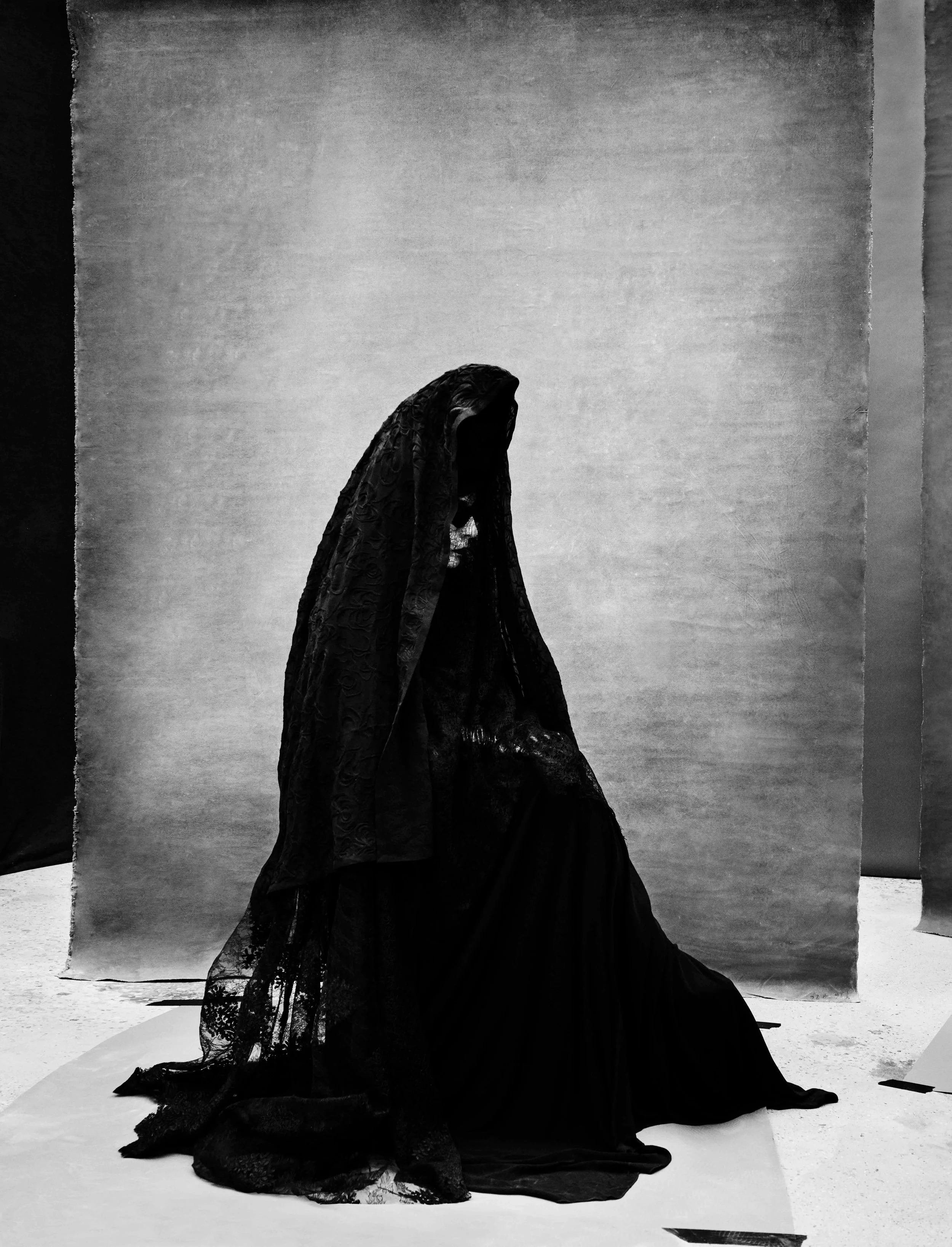
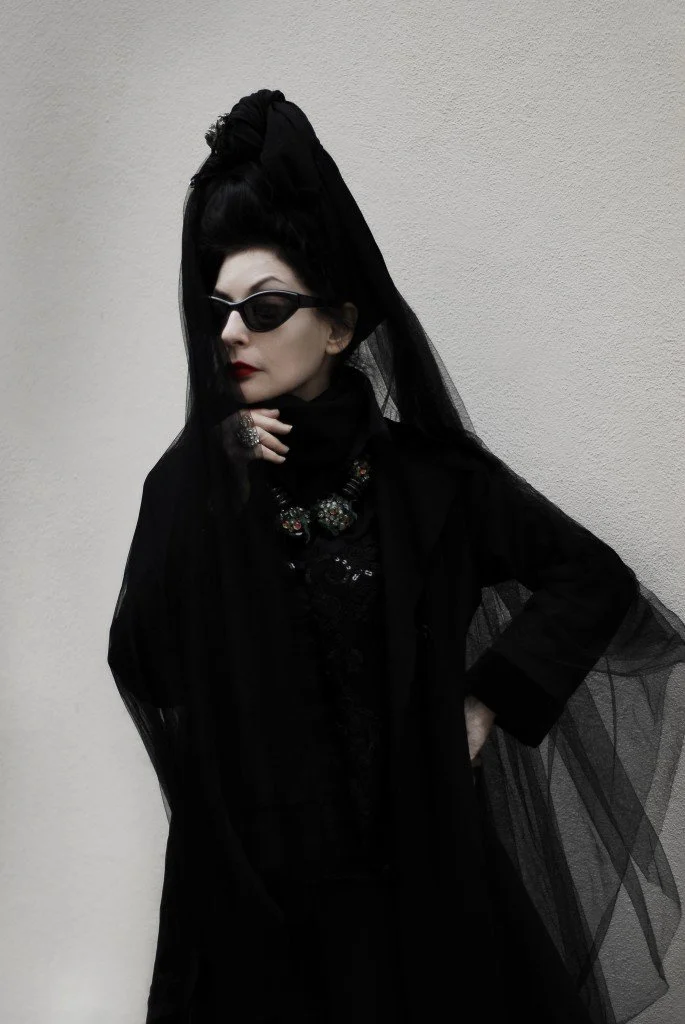
I never set out to be a “radical”; I set out to be consistent with myself. The black, the veil, the silhouette – these are not costumes but the architecture of my identity. Holding onto that, quietly and stubbornly, for decades in an industry obsessed with novelty may be the most radical gesture of all. My core aim has always been to create spaces – physical, digital, and emotional – where unconventional visions can breathe. ASVOFF exists because I wanted a home for films that did not fit into the traditional fashion system or the traditional film system, a place where a young designer could stand next to a legendary director and be judged on imagination rather than budget. If there is any activism in what I do, it is in defending individuality: encouraging others to explore the shadows of fashion, the more fragile, eccentric, or uncomfortable ideas that would never survive a conventional marketing meeting. If that is considered radical, then perhaps the bar for radicality in fashion has been set far too low.
What do you consider to be your purpose in life?
I’m very much into the here and now. Inspiration is based on a process of interaction, and that can be with a work of art, music, a book or a conversation–it can come from everywhere, on a daily basis. I’ve done many things in my life–filmmaking, photography, fashion designer for my own brand, journalist, talent scout, curator, costume-designer–and at each turn, I have felt that I was following my calling. I think that is how you find your purpose–if you want to do something, just do it and if it doesn’t work out, try something else.
Introduction and interview by John-Paul Pryor
Find out more about Diane Pernet here
Get up-close-and-personal with artists from all over the world and unlock the mysteries of the creative mind.
Read in-depth interviews with the most exciting cultural movers and shakers shaping the creative landscape.

Discover the actors, authors, designers, mavericks and entrepreneurs at the bleeding edge of cultural life