ART & IMAGE: INTERVIEW
Embracing Impermanence: Gill Button
Sublime Portraiture, Emotional Transference And Artistic Catharsis
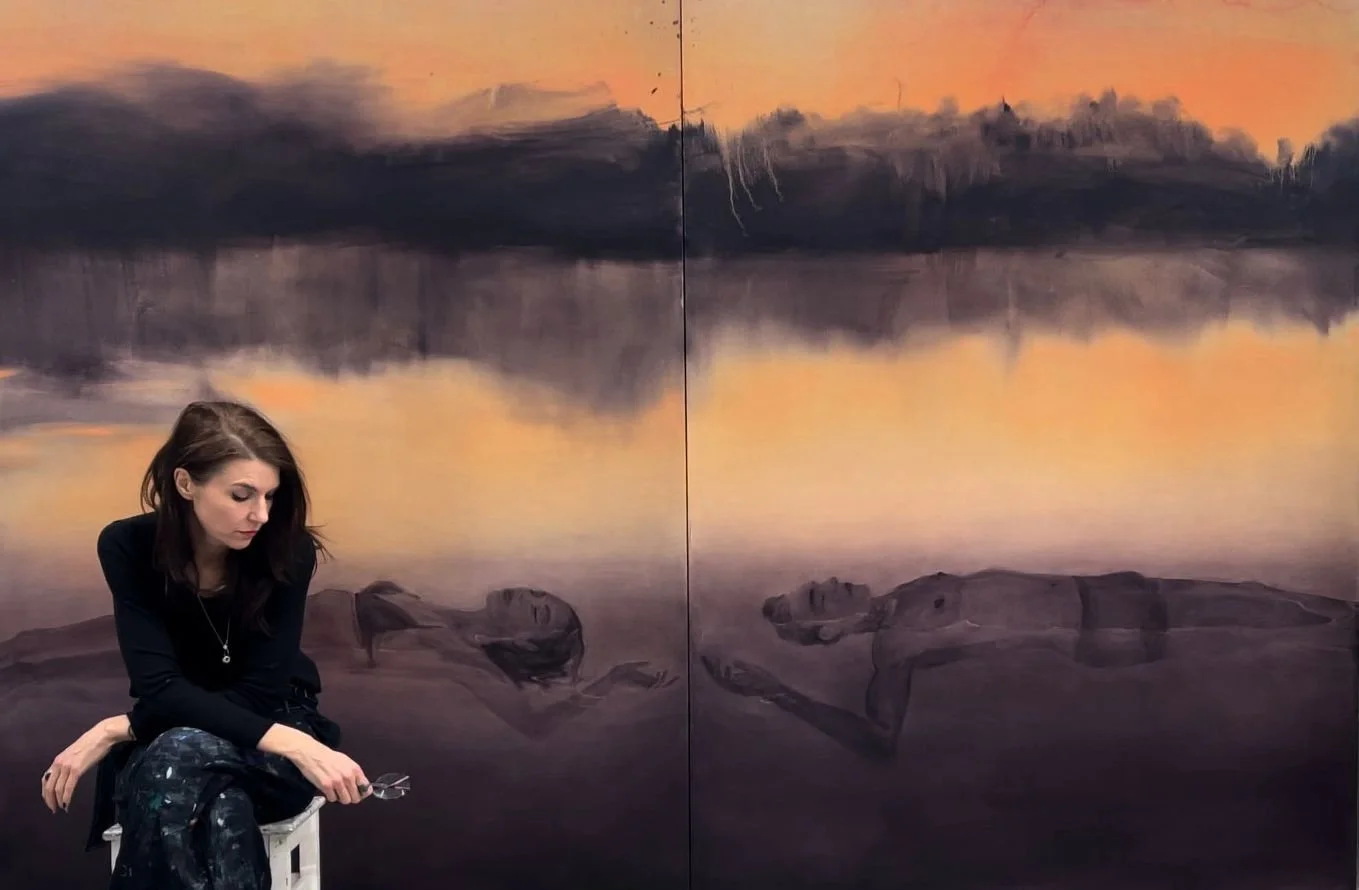
The British artist Gill Button paints with a quiet insistence that makes what is seen also what is felt, her images moving in the shadowed space between presence and absence. There is no dramatisation in her work, but a steady, contemplative attention and melancholic patience that allows vulnerability to appear as an ordinary condition of existence.
Much of her material is drawn from the flood of images that pass through social media – snatches of pose, gesture, and the provisional lives people construct for spectators. But she does not merely reproduce these fragments, she translates them, stripping away their staged assurance until they return as something like evidence – traces of longing, fatigue, and the recurring ache of identity under acute observation. To stand before her work is to be asked into an economy of looking that resembles self-interrogation, in which images become meditative surfaces where one’s own place in the world can be reviewed, and deeply felt as fragile, uncertain and insistently human.
GIll’s unique ability to create such emotive canvases from the flotsam and jetsam of our digital image-heavy era, has duly witnessed her exhibit across the globe, and be commissioned by prestigious clients such as Gucci, Vanity Fair, The United Nations and Dries van Noten, and she has, perhaps unsurprisingly, attracted a global cabal of collectors. Here, the self-confessed recluse tells FUTURISTIC DRAGON why every image we are exposed to provides a mirror to our own thoughts and feelings, and explains how she turns experiences of emotional transference into what she calls paintings of the soul.
What are your earliest memories of painting, and when did you know you wanted to be a painter?
I loved drawing as a child and was totally addicted from a very young age – I was always drawing and redrawing and then cutting up and collaging, and just getting through tonnes of paper. I think that the attraction probably had something more to do with the physical sensation of loving to create, and the feeling of the paper and the mark, than it was about wanting to make a pretty picture, or what was being depicted. In terms of wanting to pursue painting as a vocation or career, I knew from the age of about 13 that it was what I wanted. I did a bit of a curveball, though. My art teachers were wonderful, and wanted me to skip foundation and go straight to The Slade, but I was worried everyone would be a year older than me, so I actually did a foundation course in Maidstone. At that point, for some reason, I lost my nerve and felt I should be more sensible and do illustration. I didn’t come from a privileged background at all, and was worried that I would not be able to support myself as a figurative painter – I actually worked as an illustrator for years, until I couldn’t bear doing it any more.
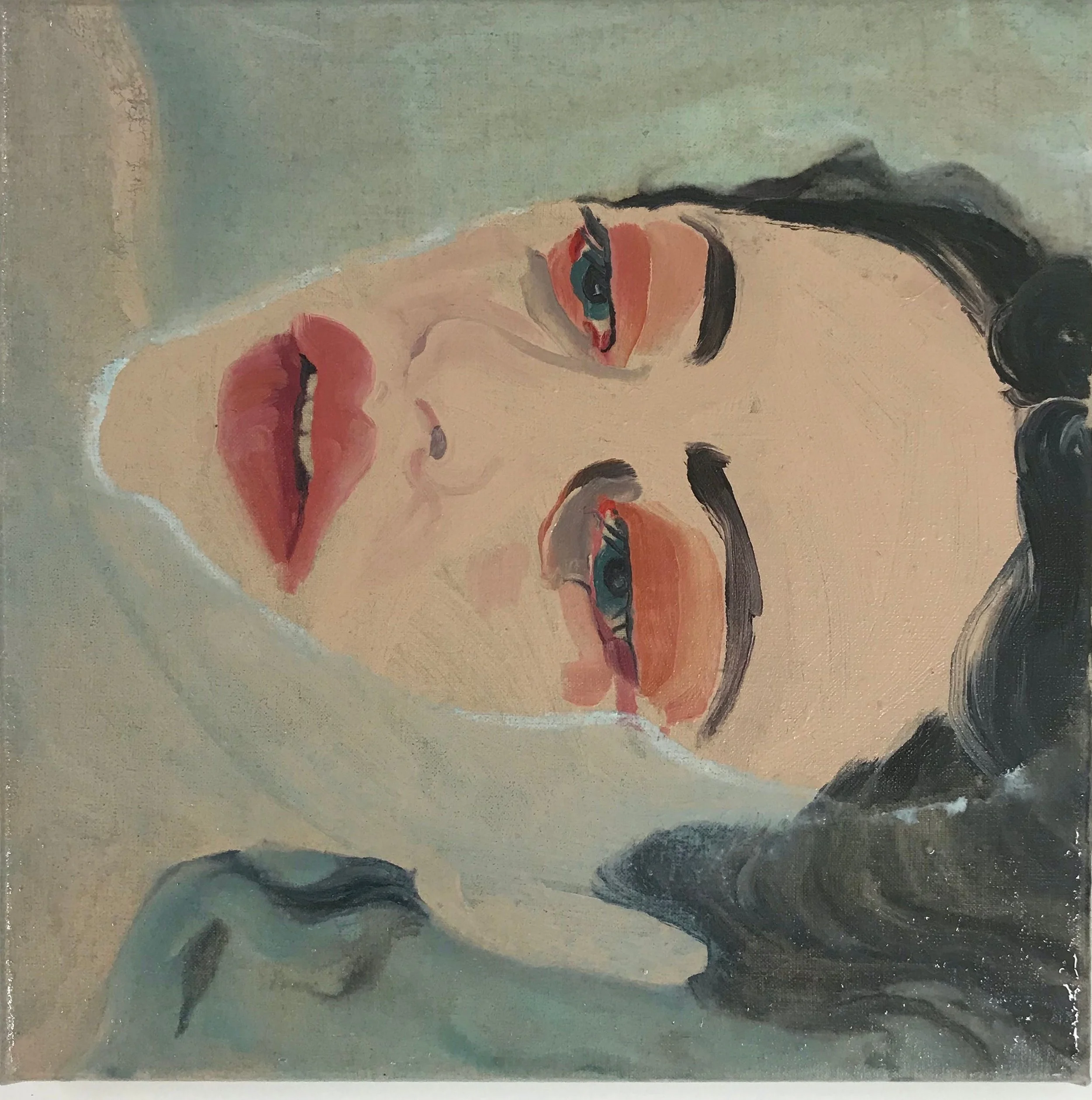
“I don’t see the work as portraiture. It is much more about the mood that finds or presents itself during the process”
Would you say that your love for the process still takes precedence for you over the subject or the finished piece?
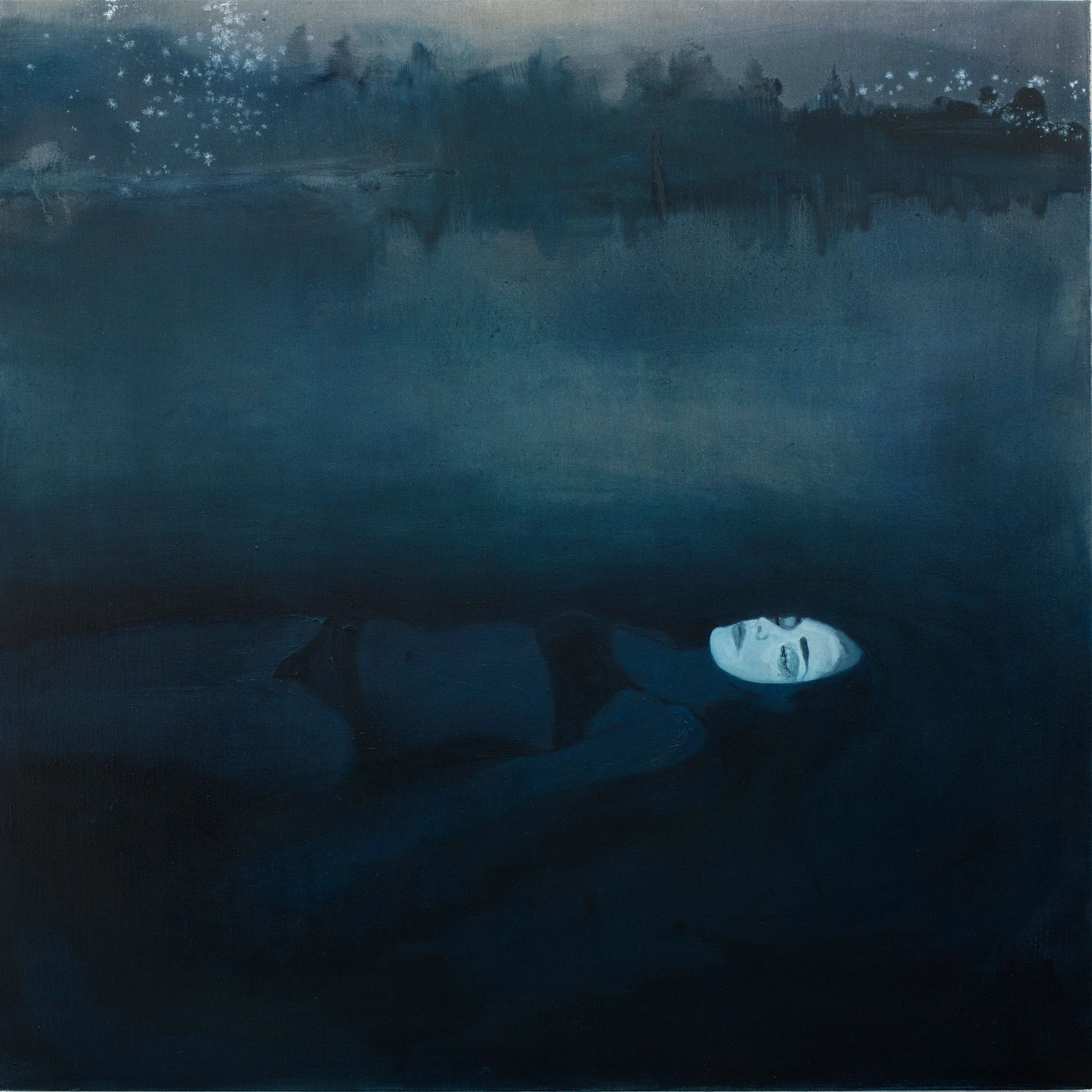
I don’t prescribe what I am creating. I don’t decide beforehand that I want it to be one way or another. Not to be too kind of Buddhist about it, but I do try to get into that state where you don’t really question what you are doing, but are just channeling how you feel – and in my case that is often through the face of a stranger. I don’t see the work as portraiture, though. It is much more about the mood that finds or presents itself during the process. My work is often seen as dark somehow, but I am never consciously trying to draw someone angry or miserable. I think with the recent work I made in Ibiza, I had some excitement about it being sunny, and so on – and that added a kind of positive spin that came through in the colours, but the process was exactly the same. You just have to allow a painting to have its own life and kind of guide you – you’re almost just a part of the equation. I did a painting for the Soho Revue show of a figure completely submerged under the midnight water, for example, but I didn’t actually submerge the figure until right at the very end of the process, after two months of working on the painting.
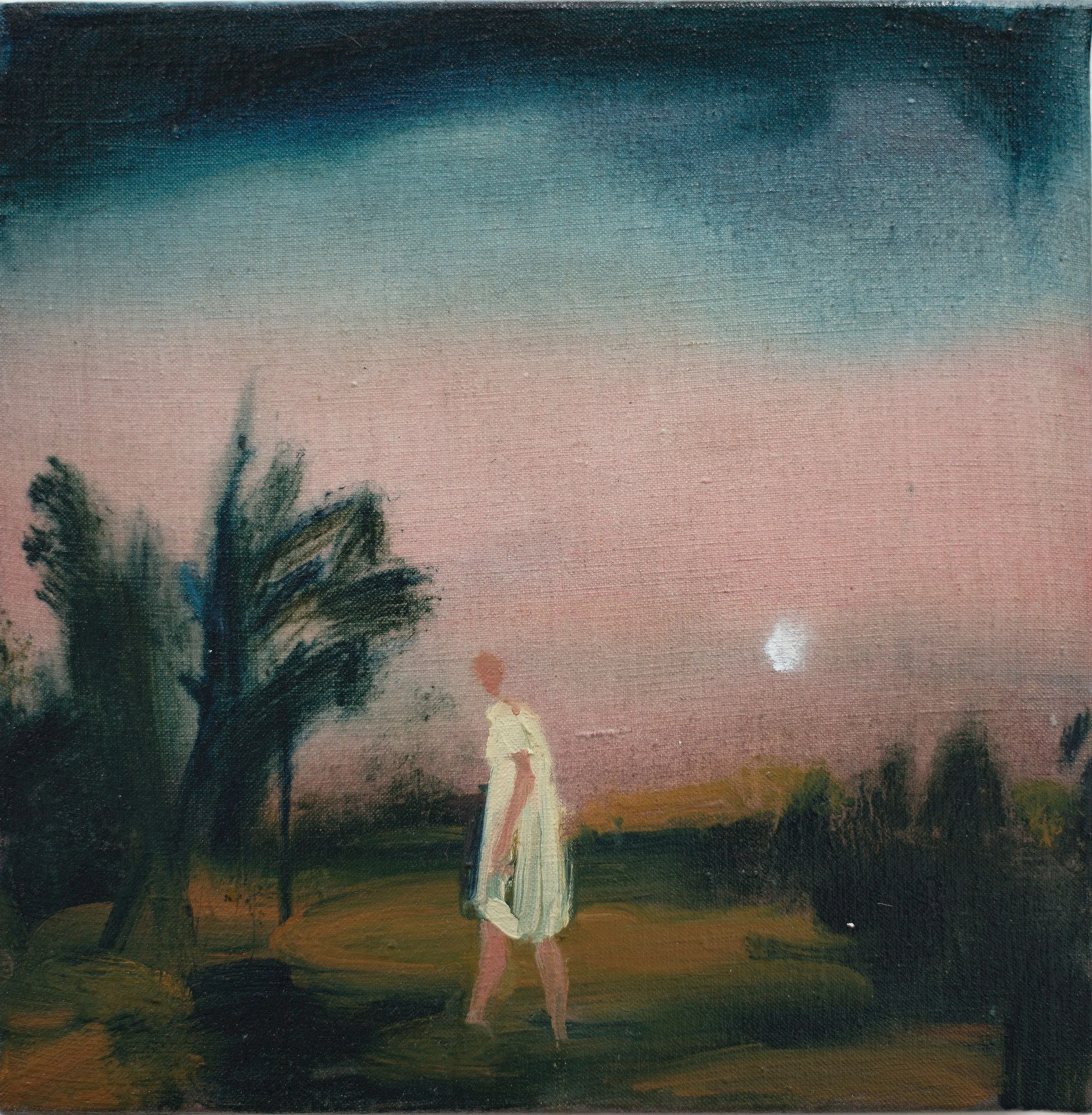
Even though your images are largely of strangers, there seems to be a strange kind of emotional dissonance at play in the work – do you seek to inject emotion into the source imagery?
I don’t think I inject anything. It's already there. I think maybe I will draw it out, if anything. If you see a photograph of a model or an actress. or whatever, there is this kind of resonance it has – like the strange resonance you can feel when you look at a photograph of a complete stranger, and the poignancy that can have for you. We all relate to others through the face and then through the eyes, but the really interesting thing is how easily you can misread something, or how often you find something that is actually echoing within yourself – there is always an emotional transference going on. As a painter, I am literally using the resonance that I'm feeling from staring at somebody's face – even if I'm drawing from my memory of what I've seen. I don’t always use media driven imagery, but when I do, I always find that there's a human connection. Quite often people will ask me if the works are self-portraits, and no, they never are but, of course, they always are. You bring yourself to the process, so you can't divorce yourself, even if you're painting a portrait of a specific person rather than a stranger – it's never just the sitter.
“I think that whenever you lose something, or somebody, something else fills that void”
Buddhist philosophy would similarly say that every emotional thought we have is just something that just passes through …
Yeah. It's transitory and has nothing to do with you. It's impermanent. That was what I called my last exhibition, Impermanence, and I like to put a positive spin on that word because I think we are trained as a society to try and hold onto things and view impermanence as a negative. But as soon as you realise that everything is impermanent, and you really embrace that, then there is a freedom that comes. And there is a real positivity to it. I think that whenever you lose something, or somebody, something else fills that void, inevitably – you make room for growth. Actually, I think through losing people, whether that's through separation or through death, you find a way in yourself to deal with impermanence, you know? I mean, how can you constantly want things to stay the same? It's not healthy.
What's the most profound impact your art has had upon somebody?
I specifically know, because a woman bought a piece of work that was about my friend’s suicide. She had been through something similar, and told me it had really helped her. What is interesting is that it came from the body of work Traces of You that I created after losing my friend Tracy, but I didn't actually talk about it until I did a show with UNIT London during lockdown. They had approached me because they were doing a show and giving ten percent of sales to charity. I did a video with them in which we actually mentioned what was behind the work, and it was only then that the buyer knew where I was coming from and was able to write me a message about the piece. I don't know why, but we just don’t talk about suicide enough in our society, and I think it is very dangerous not to talk about it. I was concerned during the lockdown about how many people were contemplating it, and following through. It was a really dangerous time.
Introduction & Interview by John-Paul Pryor
Find out more about the artist here
Image Credits: Portrait of the artist by Jennifer Corker. Stillness, 2019, oil on canvas, (show: 'Traces of You', James Freeman Gallery, London). Walking in Your Landscape, oil on canvas (show: 'A Distant Glow' CANArt, Ibiza). Midnight Lake, 2023 oil on canvas (show: 'Impermanence', Soho Revue, London)
Get up-close-and-personal with artists from all over the world and unlock the mysteries of the creative mind.
Read in-depth interviews with the most exciting cultural movers and shakers shaping the creative landscape.
Discover the actors, authors, designers, mavericks and entrepreneurs at the bleeding edge of cultural life.