PEOPLE & SOCIETY: INTERVIEW
Acts of Resistance: Gordon Cheung
The Acclaimed Artist On Control And The Invisible Apparatus Of Existence
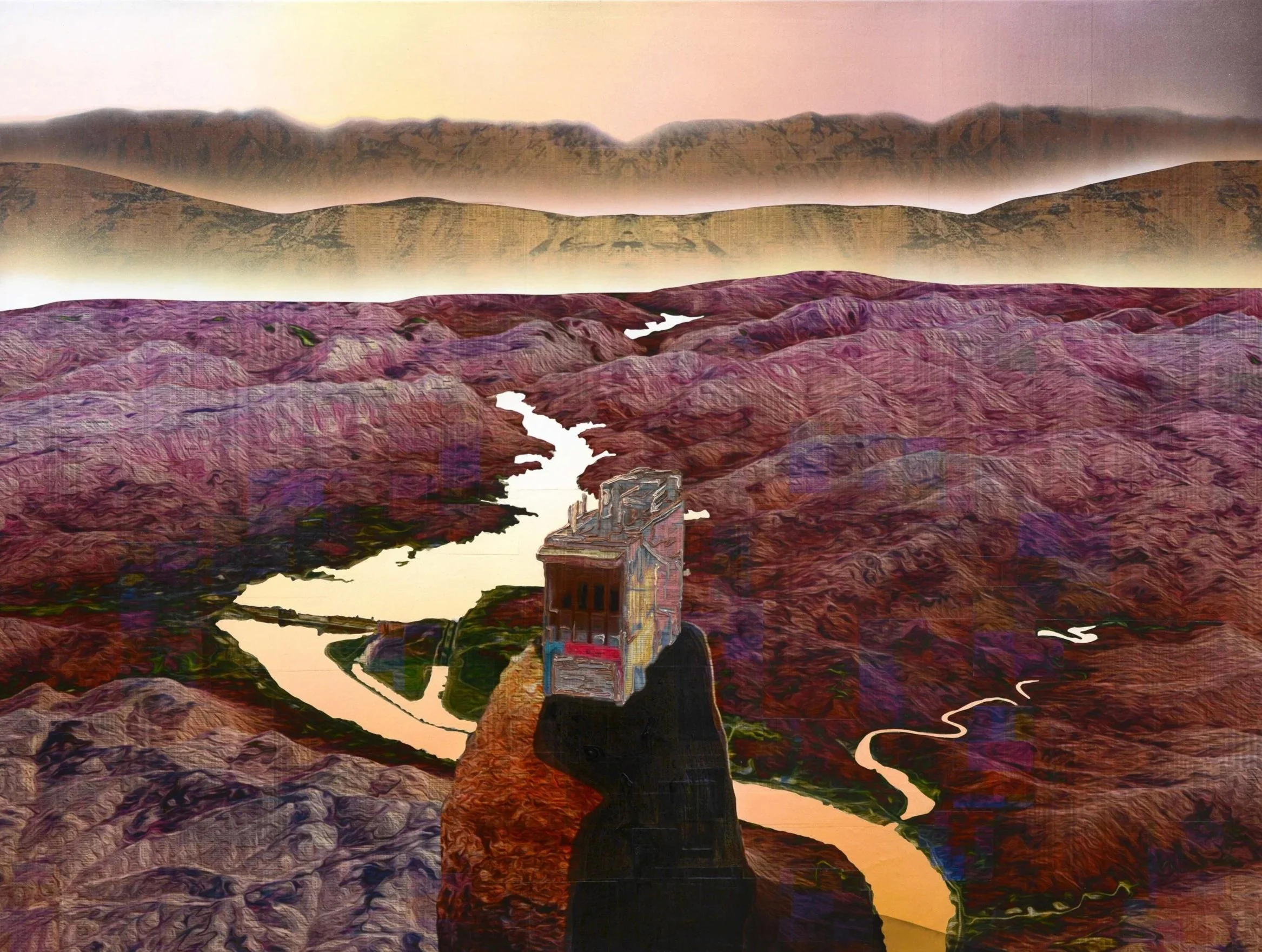
The British-Chinese artist Gordon Cheung dives into the overwhelm of our age and glides fluidly between global economics, art history and cutting-edge tech to reflect on what it means to be human in the modern era. His current retrospective Many Worlds: One Mind at CLOSE gallery in Somerset frames his unique practice as an act of radical translation – one that demystifies the veiled systems that underpin trade, belief, markets and collective memory and renders them into landscapes and forms that often carry the patina of science fiction. At the centre of Cheung’s work lies an expansive curiosity about the invisible structures that govern our lives in late capitalism, and many of his works are built on pages of Financial Times stock listings, folding the rhythm of global capital into the literal substrate of his images. From this ledgered ground he assembles shimmering vistas that at first read as classical-romantic horizons – rich with echoes of the Dutch Golden Age and fragments of collective art‑historical memory – only for closer inspection to reveal their ultra-contemporary manufacture.
What reads as painterliness in the work actually emerges from experimental technology – landscapes become liminal terrains where data, markets and imagination intersect; classical motifs dissolve into structurally derived digital forms, and historical citation is translated through the grammar of innovation. As such, the work occupies a simultaneously archaic and speculative temporal fold – existing where art history, financial infrastructure and cultural identity coalesce into a strange visual economy. The Somerset location of Many Worlds, One Mind only serves to sharpen the dissonance between shimmering data-driven flux and pastoral calm. In a gallery whose Georgian bones might once have hosted genteel debates about property, Cheung stages scenes of currency and catastrophe, in which markets shift like weather fronts and histories persist as stubborn artefacts of power.
The works in the exhibition, many of which have been acquired from the private collection of a recently passed patron, span two decades and read less as tableaux than as afterimages of conversations in which Cheung probes value, migration, digital space and the uncanny persistence of empire. They essentially function as thought experiments that question how civilisation operates and what becomes of value when the tools via which it is measured are fundamentally unsettled. Under Cheung’s hand, art is both societal diagnostic instrument and keen poetic device: it exposes the hidden architectures behind contemporary life and reframes familiar landscapes and cultural motifs, material and imagined, as alien sites of interrogation. The sometimes near-psychedelic results of this deconstructive process are searching, skeptical and unmistakably of our moment. In this interview with FUTURISTIC DRAGON the artist, whose works hang in major institutions across the globe, discusses duality, hope and speculative futures, and tells us why love remains a powerful act of resistance.
“I think of a work of art as a conversation — I’m often in dialogue with the painting as it unfolds, considering the ideas that emerge and resolving how to visualise them”
You have often talked about the notion of an in‑between identity or duality that underpins your geopolitical concerns as an artist – how has that shaped your outlook as a human being and as an artist, both socially and culturally?
I was born in London but my parents were from Hong Kong, so this idea of being in between was always kind of inherent, and the 80s was a racially intense period to grow up in. As a toddler, I remember watching the Brixton race riots on television and also seeing the real life consequences, because we lived in Brixton at the time. I didn’t understand what it all meant, but there were street fights and I recognised violence when I saw it. As I grew older, I became more aware of graffiti by The National Front and Combat 18, and this notion of belonging and national identity. So, the idea of being in-between has always been part of my identity. I was still at Central Saint Martins when the handover of Hong Kong to China happened in 1997, and I knew it was an important moment, but I didn’t understand what it really meant. I didn’t even know what a colony was, let alone what an empire was. British education and history had taught me that China was this tiny nation on the other side of the world, and whenever we talked about anywhere in the world, it was always from a Euro‑American centre. All of this was wrapped up, for me, in that sense of being in between, which became a motivating force to pursue a journey to understand how civilisations operate. It led me down a gigantic rabbit hole.
So, there was always a sort of forensic sociological drive underpinning your desire to create art?
Yeah. You were asking about personal motivators and how that expanded into subjects that don’t seem as personal – geopolitical histories and the largest human apparatus of our existence, which is civilisation. I think of history, in a way, as a kind of software because it is written by victors. For me, it’s a useful way of understanding our reality and looking at the different categories through which reality is filtered – from the personal, through to how your identity is defined by culture, belonging, histories, etc., and who controls those narratives. As an artist, you can explore all of that and develop, at least, an understanding of it. In that way you can perhaps build a stronger sense of self, or at least understand where and who might control those aspects.

“I think of a work of art as a conversation — I’m often in dialogue with the painting as it unfolds, considering the ideas that emerge and resolving how to visualise them”
There’s a prevalent idea that if you step away from the constructs of self you’ve built you can reach a purer, deeper awareness capable of shedding the individuation of the ego and sociopolitical baggage. Do you believe in that?
Well, I suppose those are almost like questions of free will, choice, consequence, and fate. How much is determined by external forces, or by what we think of as external forces? How interconnected are we, and how aware are we of that interconnection? How powerful is our ego in precluding the possibility of recognising the interconnectedness from which we ourselves are constructed? It’s interesting if you bring it back to our childhoods in the 80s and 90s, looking at things like electronic dance culture and the drug culture that accompanied it, and the way the government reacted, trying to put an end to that culture because it became a threat to their version of social order. Or thinking back to when Margaret Thatcher said there’s “no such thing as society,” as a way to atomise the individualism prevalent in Western culture and enable a more fragmented society in which you’re encouraged to look out for yourself rather than be a united people.
Do you think division is core to the infrastructure of the financial market? The algorithmic consumer drive, for example, seems quite obviously there to put you in an isolated channel …
I think that’s about disempowerment. It prevents people from building concentrated, collective power: from downing tools and stopping the machine from functioning. I also see it as a logical extension of divide and conquer to atomise people. Not just to split society into competing strata, but to carry it to an extreme: to reduce everyone to caring only for themselves. It’s far easier to enslave a people that way than to face large blocks acting in their collective interest. That said, this is speculative; I’m not a sociologist, nor a politician trying to weaponise aspects of human need to control voters’ emotions.
“If the gatekeepers aren’t going to choose you, then you have to put yourself in a position where they will – you have to hack the system you have so that your work is seen”
Are your critiques of the financial infrastructures that guide the markets intended to wake people up to their everyday impact on their lives, or are they a personal expression of your viewpoint?
I suppose it’s kind of both. I put the work out there, offering it as a meditative space and a conversational one as well. I think of a work of art as a conversation — I’m often in dialogue with the painting as it unfolds, considering the ideas that emerge and resolving how to visualise them. But then, as a work of art communicating something, it can be for others to enjoy or to be stimulated into, perhaps, coming to realise something. There is that aspect, for sure.
You’ve often created work from the pages of The Financial Times. Is that political in intent?
The reason I used The Financial Times, and the stock listings in particular, was because when I was a student I wanted to paint without paint. The reason for that was to question, philosophically, what it meant to make a painting. If I was using the principles of painting, what principles make it a painting if there’s no paint in it? The substance it’s supposedly named after isn’t even in it. Can it be called a painting if it’s just using its principles? Ultimately, it doesn’t matter, because, for me, it’s more about the ideas being conveyed. The question of whether it is or isn’t is a way to encourage a different way of thinking about something was compounded, for me, by what happened after 9/11 – the illegal invasion of Iraq, and a friend of mine dying in the 7/7 bombings. It made me completely question what our politicians and designated leaders were telling us. Why were we being pushed into this despite millions of us going on the street protesting. Then I did begin to realise that we’re not necessarily led by people who are actually looking after the voters. There are other agendas at play, whether that’s for big money, war profiteers, the banks, etc.
It sounds as though you began to question the systems behind the running of society at that point?
It was a slow – very, very slow – naive realisation that the systems we’re told to believe look after us, our society, our civilisation, and our nation, often carry different agendas. It’s important, for example, to ‘follow the money’ as a way to understand the realities of the world and the societies we live in. I guess the way I dealt with that in my work was to question the very structures through which I was constructing my work. These are symbols or a language that belong to a culture. But who determines that culture? In the art world, for example, who gets to canonise art? Who gets to elevate it? If the gatekeepers aren’t going to choose you, then you have to put yourself in a position where they will – you have to hack the system you have so that your work is seen.
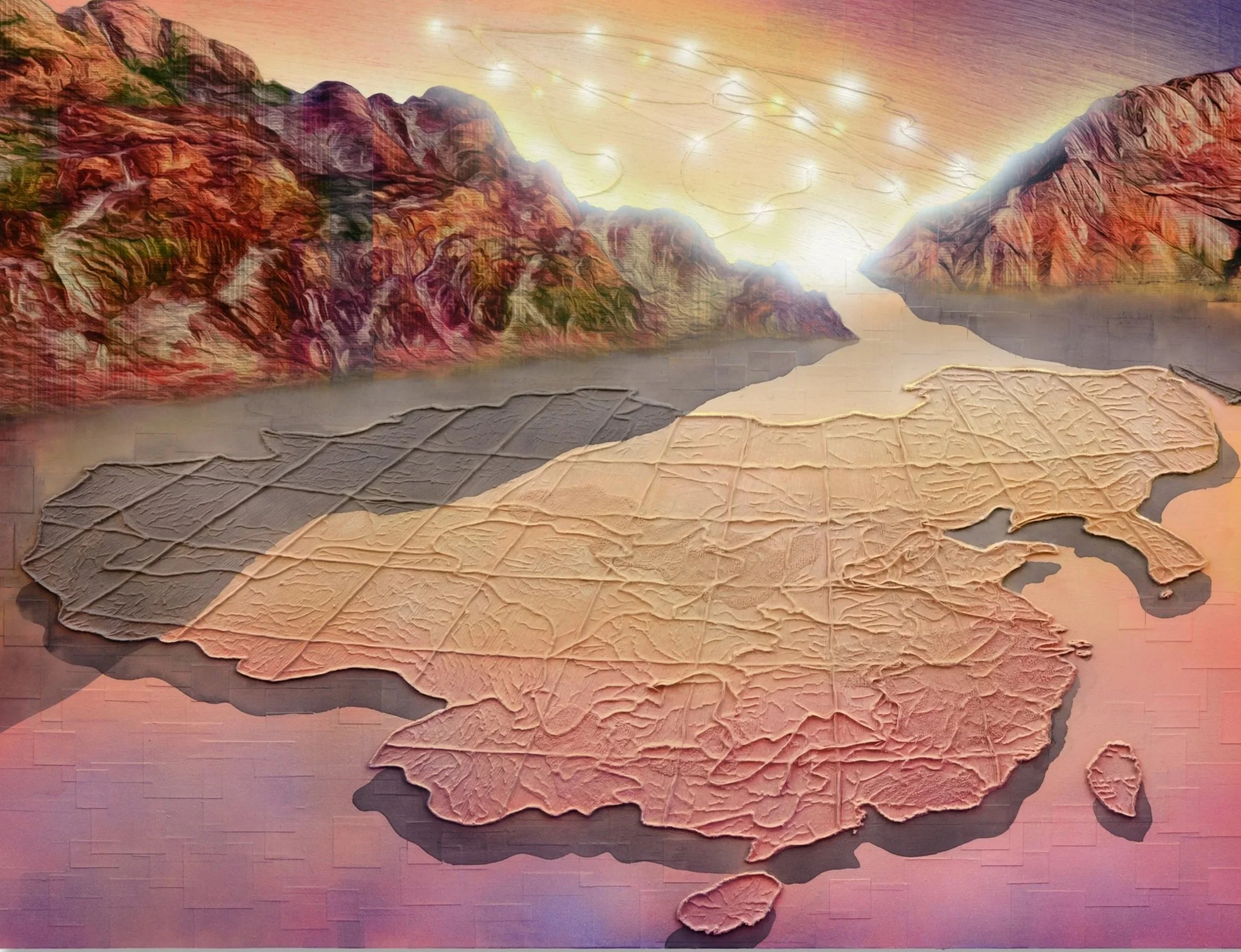
“I use information as my pigment and technology as the brush. It’s a way of questioning: what is a painting? What is this system?”
How do you construct the stratified layers in your work?
In terms of how I construct the work and the language I’ve developed: I use information as my pigment and technology as the brush. It’s a way of questioning: what is a painting? What is this system? And through the extrapolation of these sorts of ideas to also filter reality – to question who determines the way we think of our reality. Initially you see a work and bring all your preconceptions to it. Then, when you look closely, you realise it’s constructed in a completely different way from what you expected. Then there’s a third reading when you step back, because you now have to combine your preconceptions with the new information; your conscious self fuses those two realisations together. In that way, I am trying to create these multiplying realities in the works that are often inspired by science fiction – writers such as Philip K. Dick and J. G. Ballard, who were huge influences. It’s a way of suspending disbelief — not only from our current, physical reality, but also into another dimension or world, whether surreal or science-fiction. In that sense, it’s a third reading, a third space, in which you come away thinking, “This could be like a really strange funfair mirror,” showing a part of our reality through distorted fiction. It offers a space to comprehend or meditate on our present reality through imagination, allowing us to look past fixed ideas of what reality is.
Reality seems to be in a dystopian moment with the mass panopticon of surveillance culture, and all of us uploading our identities online …
Yeah. George Orwell probably didn’t imagine that we would willingly buy the very devices that are surveilling us. Whistleblowers like Edward Snowden and Chelsea Manning exposed how governments were illegally harvesting our data, and the crackdown on them was immense. Those revelations showed that either governments forced tech companies to hand over data, or the companies were complicit, sending information to the military-industrial complex: the NSA, the CIA, and maybe less so the FBI. In a sense, these whistleblowers revealed a covert future – a cyberpunk sort of Blade Runner world that is already here, minus the neon lights and Tron suits. We have effectively been turned into human data farms. Tech feudalists rule over digital plantations, and astonishingly, we buy from them the very tools that enable them to do that.
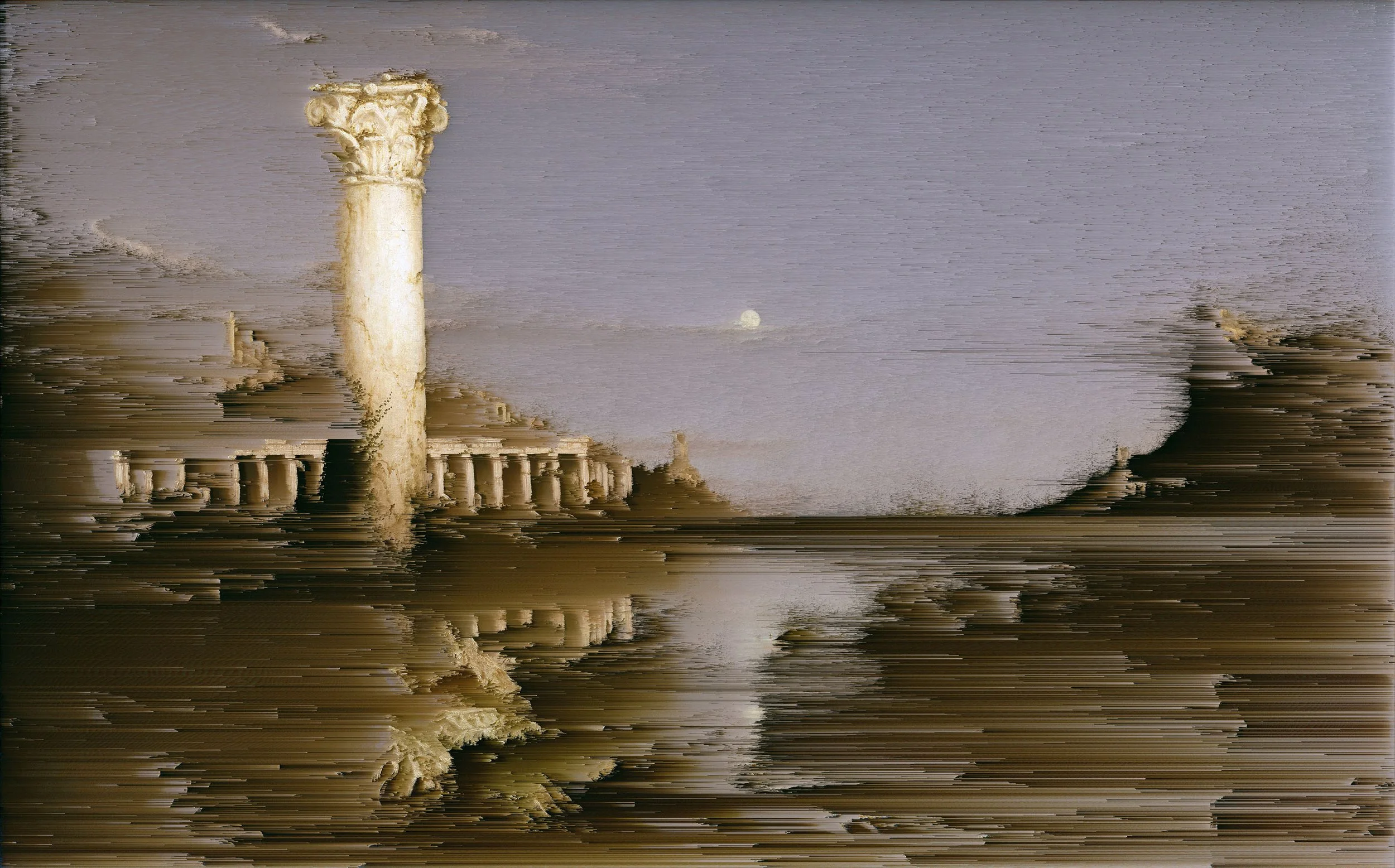
“George Orwell probably didn’t imagine that we would willingly buy the very devices that are surveilling us”
Do you think the meditative space that art can afford an individual can provide an antidote to that, and is that something that your work seeks to engender?
Yeah. It can often feel overwhelming, right? All of these systems are, ultimately, a form of enslavement utilised in order to extract our productivity and wealth and transfer it into the hands of the powerful. In terms of finding a meditative space, I’m trying to find one in order to reflect on these things. When I think, for example, of a traditional Chinese painting – those great vistas of misty mountains – I think of an essay I read recently by the Metropolitan Museum that said the mountains represented the state. Of course, it’s also about beauty and solace and the romantic human need to experience wonder, but the tiny huts, and sometimes the people and fishermen, are often very small in the painting to accentuate the measurable size of the landscape. It’s a way to highlight the insignificance of a human being, or yourself, compared with the vastness of the universe or the cosmos. But this essay suggested that the mountain also represents the state, and that these paintings were a way for the literati to meditate on their relationship to both nature and the state co-defining, perhaps, approval or disapproval of it.
How does beauty play out in your work?
At art school in the 90s, calling anything ‘beautiful’ was dismissed; it was almost treated as a dirty word. The aesthetics art schools aspired to tended toward conceptual art and critical thinking, rather than conventions like still life flowers, for example. My own interest in still lifes was partly prompted by the 2008 financial crisis and a look at where the first economic bubble occurred – namely tulips in 1636 and the speculation around them. That led me to still life paintings and the romantic language surrounding them – fragile mortality and the futility of materialism – ideas rooted in the puritanical society of the Dutch Republic. But the paintings were also an expression of mercantile power. What art history often overlooks, or what history written by victors omits, is that much of that wealth came through colonisation, slavery, and militarised trade. In that sense, art was laundering an image of prosperity. That was one lens through which I examined that period: bringing those works up to date with modern motifs to reveal not only recurring histories, but also human values that remain true today.
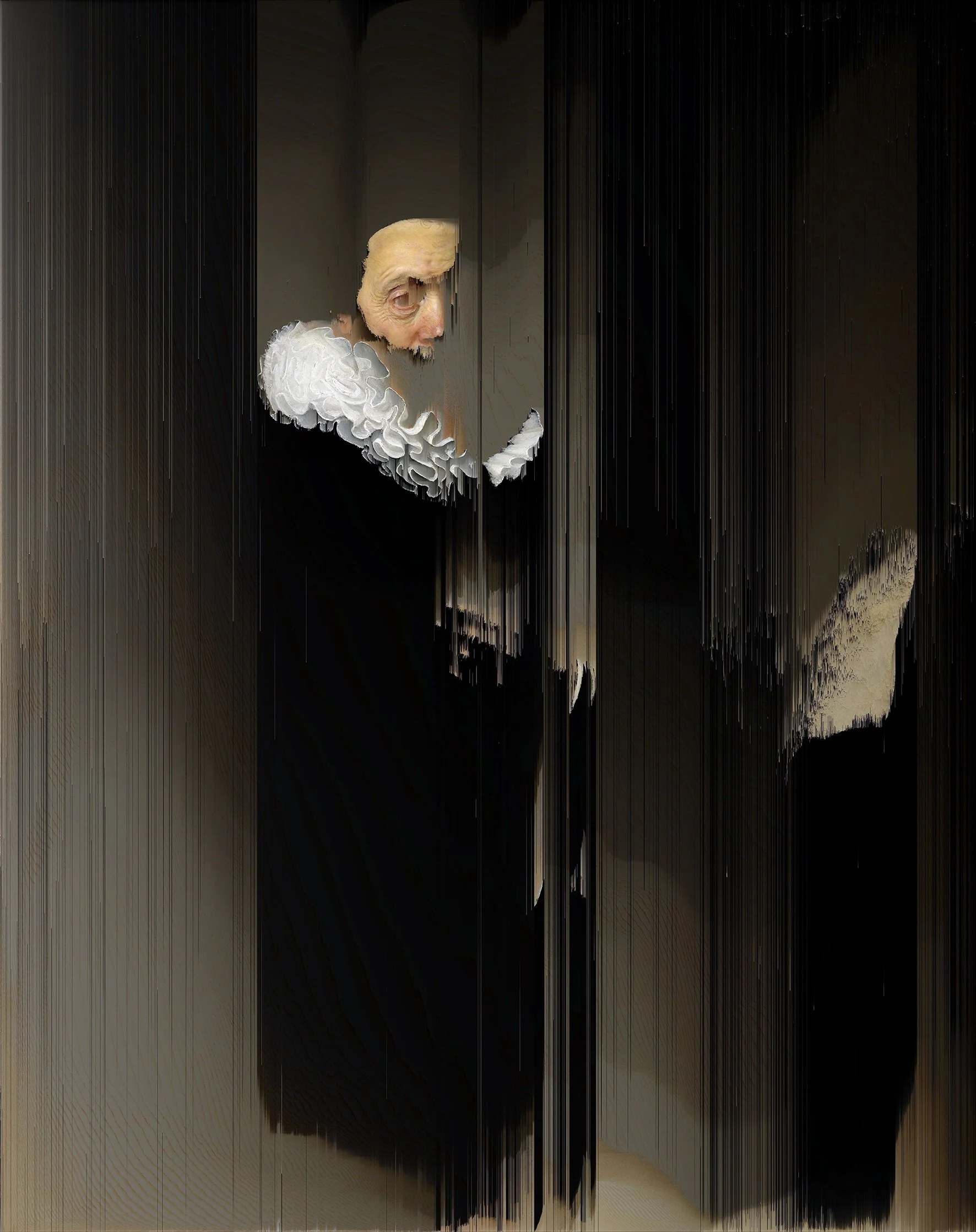
“In my work I’m thinking about power structures and everything that comes with them, but also about wonder, beauty and other intangible human values that power can sometimes seem to consume”
Would you say your work was more contemplative now than in the past?
I don’t know whether it’s because I’m getting older, but over the last five years a lot of my work has centred on the idea of a meditative garden. The sculptures I’ve been showing – models of Chinese scholar rocks – are based on traditional scholar stones. These naturally perforated stones have long been chosen for their meditative and aesthetic qualities; they’re like microcosms of landscapes or mountains. They invite a kind of contemplation: you relate to the mountain, which in many traditions functions as a bridge between heaven and earth. Gardens themselves are archetypal representations of heaven on earth across many cultures, so they provide a space to occupy that in‑between position. In my work I’m thinking about power structures and everything that comes with them, but also about wonder, beauty and other intangible human values that power can sometimes seem to consume.
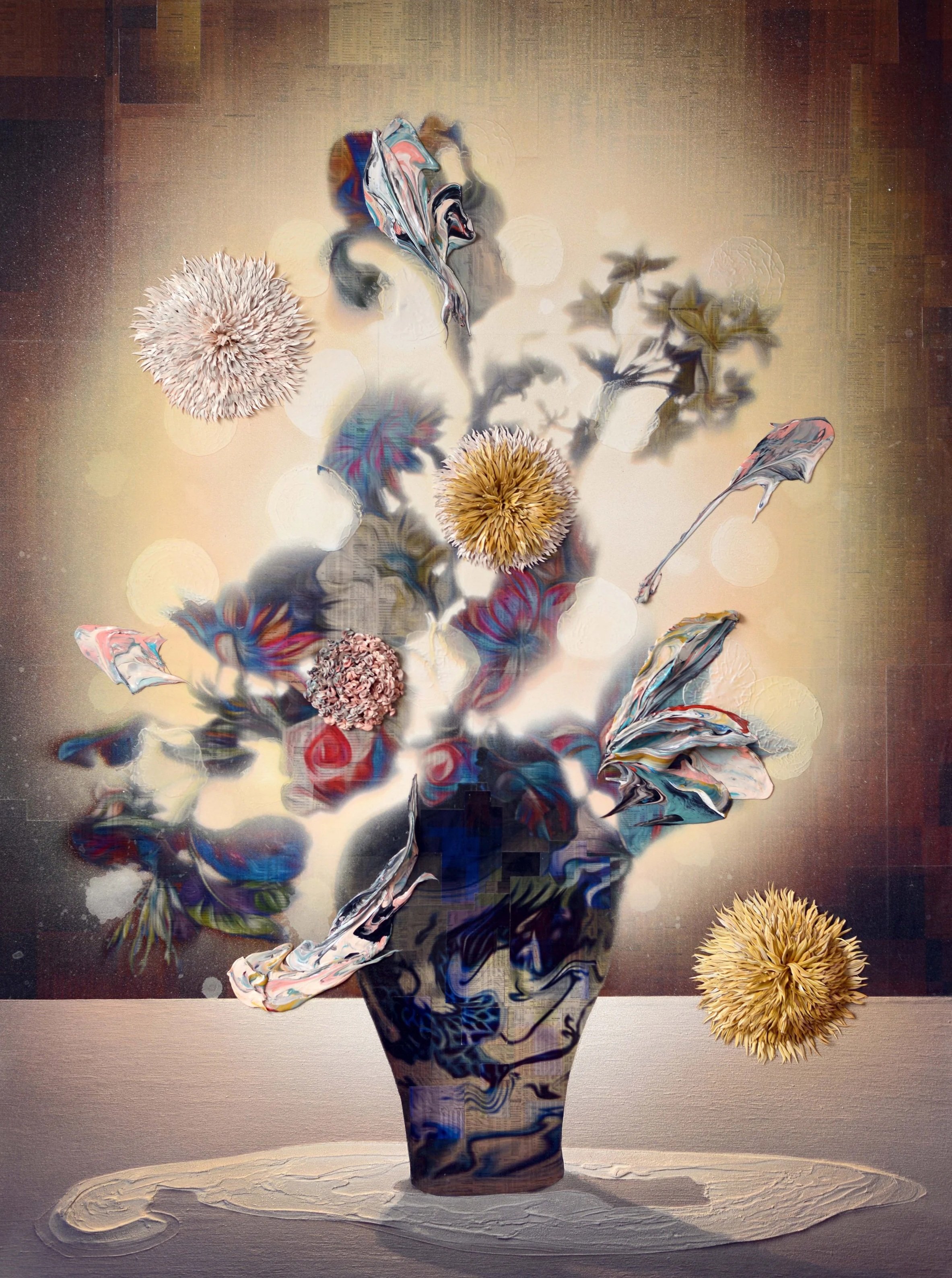
“How powerful is our ego in precluding the possibility of recognising the interconnectedness from which we ourselves are constructed?”
That sounds like Voltaire, finding meaning in tending one’s own garden …
A lot of the philosophers I read and listen to seem to be discussing these kinds of notions. I was thinking about The Three-Body Problem — it’s almost a kind of science-fiction cosmic horror where the universe is a place of predators. It’s basically a universal law that these aliens will come after you, and the only way to protect yourself is to reveal the alien home-world so even more powerful aliens will destroy or consume them. If you save one human, you’ve saved humanity, and that becomes almost the only hope: as long as one of us survives – that is the crushing distillation of the human spirit in this vast cosmic existential horror of meaninglessness. Finding something meaningful becomes almost the core survival instinct. It’s so abstract that just being conscious feels like a form of survival in a universe of potential meaninglessness.
Your landscapes contain a strange existential vastness. How do they play out in terms of the search for meaning?
I think one reason I was drawn to sublime landscapes is that, when you stand on the precipice of a gigantic vista, as in sublime paintings, you feel the overwhelming force of nature; nature itself becomes the embodiment of God. You’re meant to have an almost terrifying, awestruck feeling that either compels you to subjugate yourself to God or to question the meaning of life for you — this kind of existential interrogation. There’s that kind of romance – an existential confrontation with your mortality through these grand vistas. But I remember seeing a show at the Tate called “The American Sublime,” and I realised, looking at it, that I didn’t see many, if any, American Indians in the paintings. It was essentially a kind of propaganda. If the tiny figure in the painting is a Euro‑American gentleman explorer, the message becomes: this land is yours to take, commanded by God.
I guess that comes back to this sense of hidden systems or agendas guiding belief and identity …
Well, I came to realise that art is a form of soft‑power propaganda, and that obviously extends to contemporary art. Who gets to show in all these institutions? Who gets celebrated the most? Who commands the highest prices? These are soft‑power mechanisms. When I was a student and studying Abstract Expressionism, I discovered the CIA’s involvement – Operation Long Leash – framed to make the movement a symbol of freedom, in opposition to the supposed formalism of the Soviets, which was portrayed as constraining and draconian. The Australian art critic Robert Hughes called art a ‘cultural weapon’. There are all those dimensions in my work, but I update them for contemporary information landscapes, which allows me to explore modern ideas of power structures: how they shape civilisations and how they indoctrinate soft-power ‘software’ into our minds through culture, and to what end. I aim to reveal these structures or encourage research into them as a way to comprehend our mortality within such worlds. By looking at the past and considering the present, we can think about the future and what kind of world we might want to build with the limited powers of our consciousness.
For me, there’s a simple notion I always apply: if nothing matters, then everything matters. The smallest kindness is incredibly profound and meaningful, because every act of kindness is a kind of resistance to the machine ...
Absolutely. And in these times, to bear witness is an act of resistance: why else would they seek to silence us? They wouldn’t bother if the single human voice didn’t mean something in the face of these huge power structures. Facing power as truly as you can is a form of resistance to oppressive forces. Why else did emperors demand that you lower your eyes and walk backwards? Do not face the greatest authority, the divine! Because if you recognise it, you see it – and you can also see how to resist. There’s a form of resistance in focusing on the things that we find beautiful. Because beauty is intangible, and ultimately, it’s love. That’s what a lot of science fiction always lands upon – reaching for love over the system itself. In that way, so long as we’re reaching for that point, it can save us.
Introduction & Interview by John-Paul Pryor
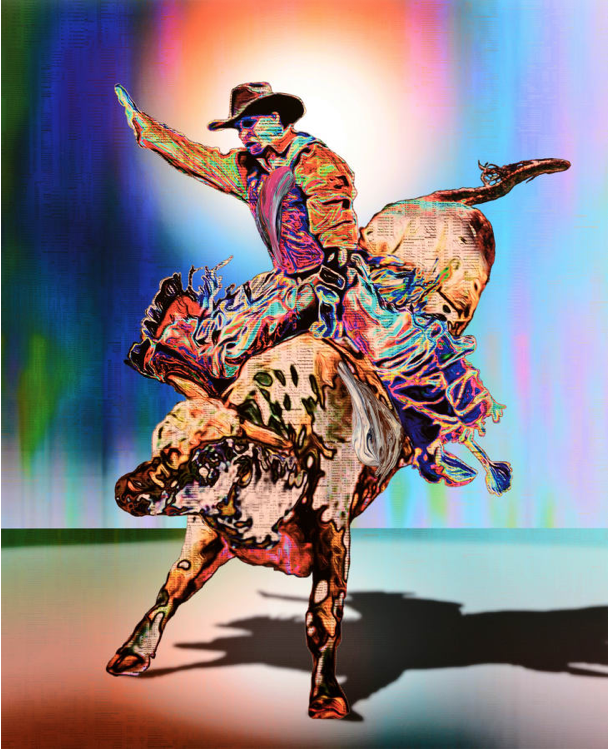
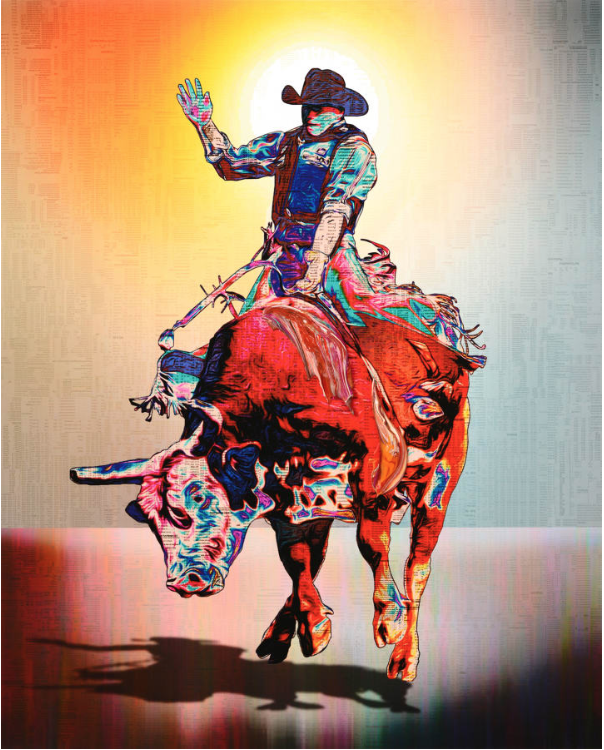
Images: Minotaur 1; New Order Flower Still Life (after Maria van Oosterwijck, c. 1669), 2022; Minotaur II; Heavens Collide, 2022; Course of Empire, Desolation 2016; Johannes Wtenbogaert (after Rembrandt Harmensz van Rijn, 1633) 2017
Get up close and personal with artists from all over the world and unlock the mysteries of the creative mind.
Read in-depth interviews with the most exciting cultural movers and shakers shaping the creative landscape.
Discover the actors, authors, designers, mavericks and entrepreneurs at the bleeding edge of cultural life