PEOPLE & SOCIETY: INTERVIEW
Any Colour You Like: Jack Coulter
Synaesthesia, Abstraction And The Healing Power of Music
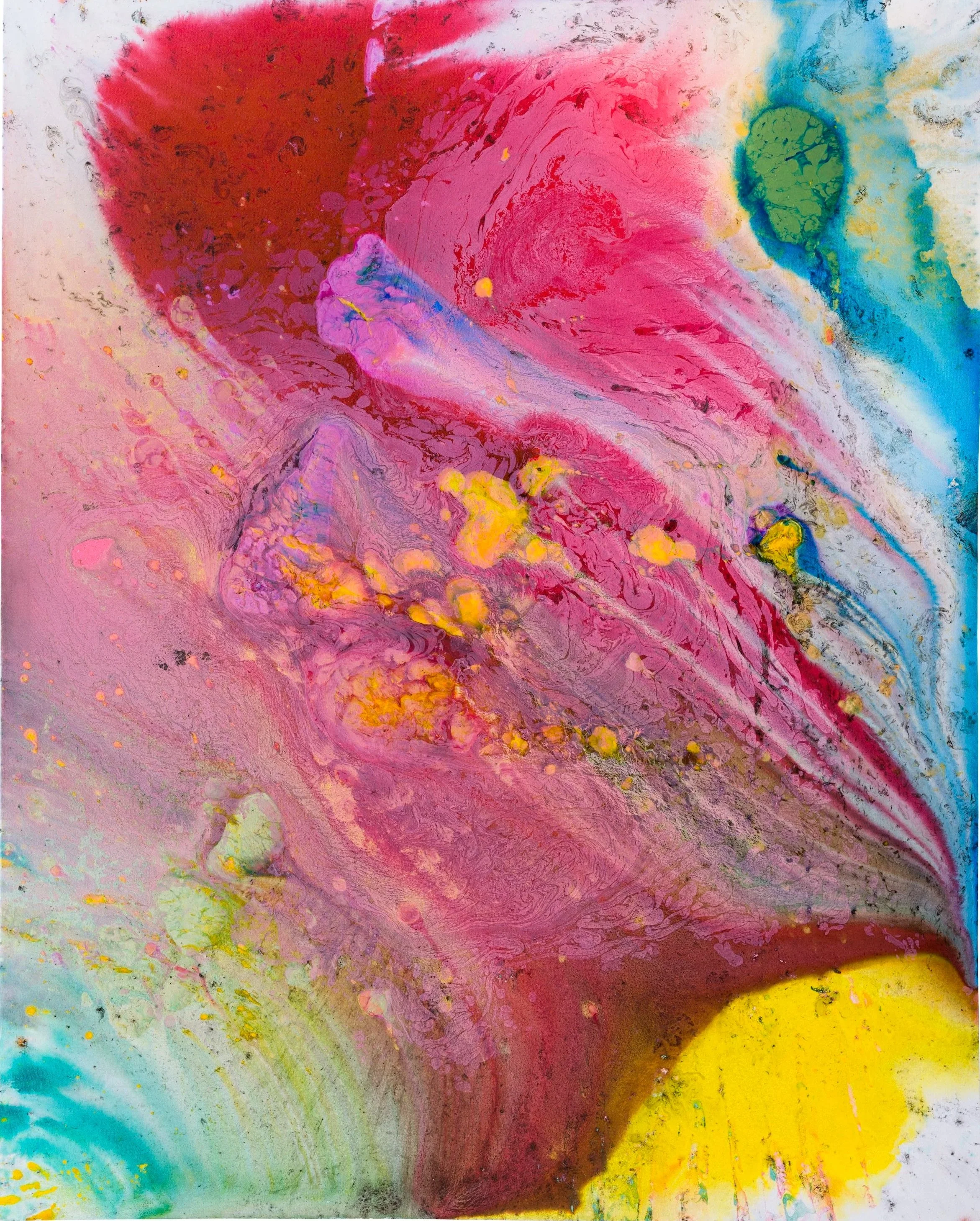
In an era increasingly dominated by algorithmic hyper-speed, the Belfast-born artist Jack Coulter offers a meditative counterweight, presenting a deeply analogue communion between human sensation and canvas. Coulter has chromesthesia, a rare sub-form of synaesthesia, which means his neurological apparatus does not merely process music as emotional stimuli – his auditory and visual cortexes exist in a state of permanent, fluid cross-pollination, translating acoustic frequencies directly into vivid visual phenomena. In his sensorial world, a visceral guitar solo may appear as a flash of vermillion; a resonant bassline as an immediate, tactile density of charcoal black – or, as Pink Floyd might opine, any colour you like.
In his most recent exhibition, With Every Light and With Every Song, hosted at London’s St James’s Gallery 8 via Winsor Birch, Coulter emerged from a three-year period of deliberate, quiet gestation with twenty-five radical new works. Recent years have brought high-profile cultural intersections – most notably an artwork collaboration with Elton John that raised a quarter of a million dollars for The Elton John AIDS Foundation at auction – but his work remains uncompromisingly raw and abstract. Working entirely on the floor, he bypasses the traditional mediation of the brush, using sticks, scrapers, and his own hands to pour, drag, and manipulate liquid acrylics onto unprimed canvas. Listening to a diverse sonic palette through headphones he effectively transforms the studio into a laboratory of somatic translation, turning sound into colour and form. In this interview with FUTURISTIC DRAGON he discusses his early years and the ways in which his canvases provide evidence of moment where sound collides with human consciousness.
I read that one of your earliest childhood memories was seeing the sound of your own heartbeat reverberating as pulses of colour - can you describe that experience for us?
That experience was very surreal. Even as a young child, I knew that it wasn’t normal. Though it also felt magical, as many things do when you’re a child. I remember lying down on my side and hearing my heartbeat in my ears as the room was dead silent, and as soon as I heard it and nothing else, the colours began to appear, in pulses right in front of me. I assumed it was normal, to be honest, until later in life, when I learned that it wasn’t. I felt isolated at the beginning as no one understood what I was trying to explain. It’s lucky that my outlet was painting, as in my case, colour is everything.
You have cited your aunt Christine, an abstract printmaker, as an early influence. Looking back, did observing her creative world normalise abstract art for you, making it your native expressive language?
I most definitely think so, yes. It was normal to me seeing that type of work and form, and also mixed with abstract forms I was seeing due to sound. It really did feel like a visual language. It was all that I was seeing in that realm. I think building that visual vocabulary and language from a young age, internally and externally, really led to me painting the way I do. I was also a very emotional kid, hyper self-aware and shy because of this. So, art became something that could be loud and expressive in what I was feeling and experiencing.
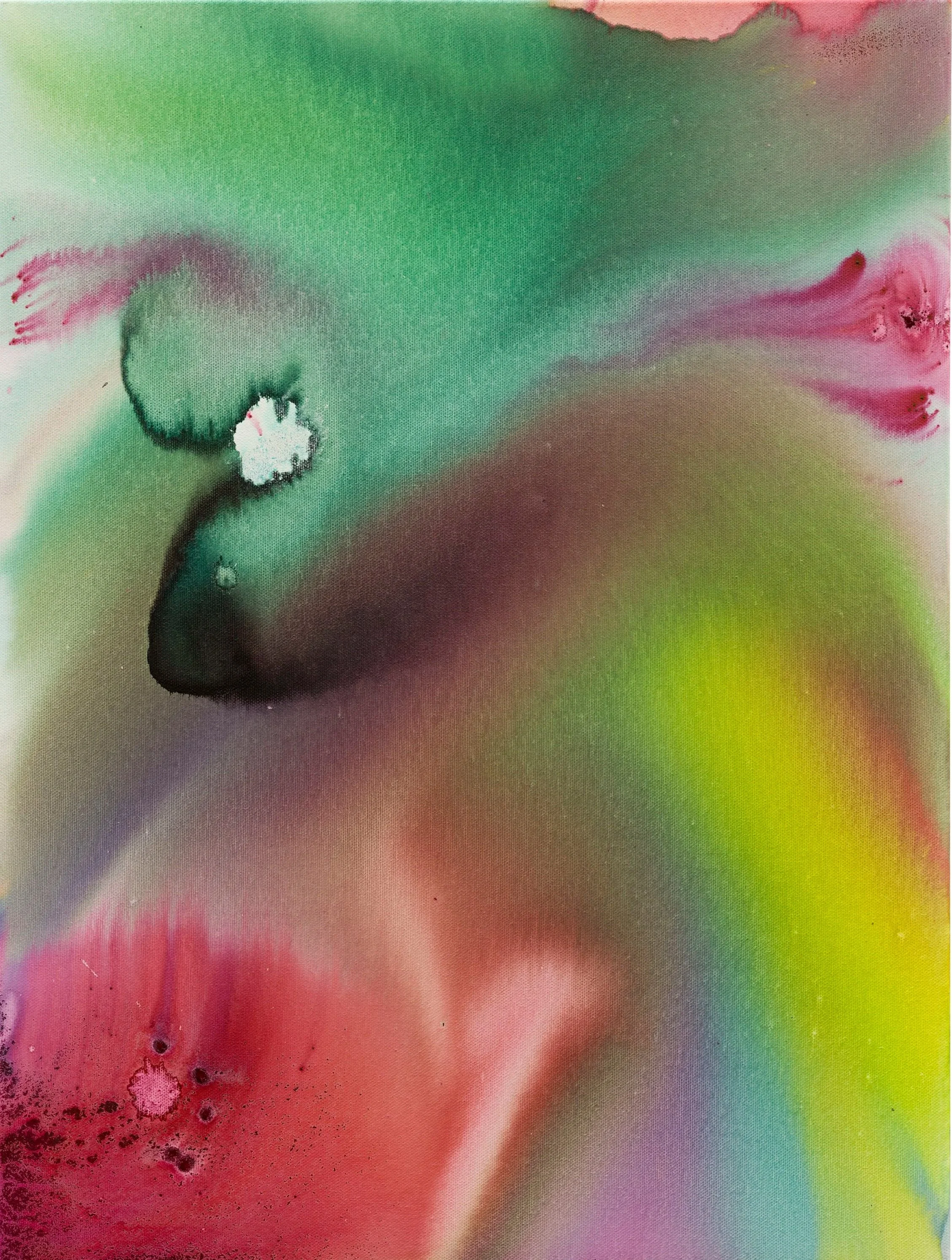
“I remember lying down on my side and hearing my heartbeat in my ears as the room was dead silent, and as soon as I heard it and nothing else, the colours began to appear, in pulses right in front of me. I assumed it was normal, to be honest, until later in life, when I learned that it wasn’t”
Your work often draws comparisons to Abstract Expressionists like Jackson Pollock. Do you view your process as a continuation of mid-century action painting, or does your neurological translation of sound fundamentally change the meaning of the gesture?
I feel like any artist gravitates toward what is already inside at the beginning. You look at something, and you’re kind of like ‘that’s me’. I certainly had that with abstraction, as I was already painting that way, and then art history references begin to surface and knowledge of your world comes. I’m not sure if I’m part of a lineage per se of artists, maybe in a way. Though, starting out, I knew enough about painting to know my work was unique, and it was coming from somewhere unique.
It seems your early adolescent inspirations included both classical composers like Franz Liszt and subcultural figures like Kurt Cobain. How did the raw energy of Nirvana and the structured movement of classical music intersect in your teenage mind to set you down your specific artistic path?
I’ve always been drawn to how something makes me feel, and in music, that came from a very wide range of artists. It’s still like that now. No matter what you like musically or painterly, if you feel something, it usually comes from a genuine place. For those two references, Franz Liszt and Kurt Cobain, both artists’ sounds reflect different things in the painterly process. There’s energy, anger, speed, stillness, experimentation, beauty, darkness and lightness. The list is endless.
The momentum for your most recent show directly follows your celebrated live performance with Sir Elton John, where you painted "Tiny Dancer" in real-time. How did the shared energy of that specific collaboration influence the creative direction of your most recent paintings?
The collaboration itself is something that’ll always stay with me. The day was magic, and it was like that for everyone. Not just for Elton and me. It felt so alive and authentic, two artists working together with just a canvas and a piano. It was the highest-level situation, though I treated it just like I was at home in my studio. The piece was the most important thing. The collaboration itself and having Elton’s support since 2022 really lifted everything for me in terms of approaching the works for this show. Ironically, it should’ve made me more wary about the work I was putting out next, though it did the opposite. I feel even more free now when painting.
Your work seamlessly shifts from icons like Elton, The Beatles and The Supremes to contemporary voices like Olivia Dean. Do you find a distinct neurological contrast between the sonic textures of vintage, analogue tracks and the crisp production of modern digital music?
I actually do! I always go beyond painting the actual song, and want to leave little easter eggs in the work. And eras such as vintage songs (to me) usually have more of a timely visual in a way. You can see this quite clearly in the ‘With Or Without You’ piece, and also ‘Everybody Wants To Rule The World’. There’s a sonically clear sound and visual, though it’s steeped in history. I physically soak the canvas in inks prior, reflecting prominent aspects of the song. Then I work over this. I do that for songs that have a generational feel, and they need to exude that history and depth. And for people going to the show, it doesn’t matter what age you are, or where you’re from or who you are - I hope there’s something for everyone, and they enjoy it.
“I approach each piece emotionally each time, which is in harmony with depicting the colours I’m seeing. I think building a painting and building a song sit in a similar world”
Music relies heavily on time and progression, whereas a painting is experienced, for want of a better term, all at once. How do you capture the rolling emotional narrative of a piece of music on a static canvas?
I approach each piece emotionally each time, which is in harmony with depicting the colours I’m seeing. I think building a painting and building a song sit in a similar world. Though, in abstraction, creating a painting stays in the ‘feeling’ of playing music, almost when two musicians are bouncing off each other, and feeling it. That’s why I always loved the fearlessness and unpredictability of jazz. It almost is rewritten live, and you’ve heard something that was never played before off instinct, feeling and emotion. Exactly how an abstract painting is approached, for me anyway.
For your historic collaboration with the London Chamber Orchestra, you painted Felix Mendelssohn’s Violin Concerto in E Minor completely live. How did the adrenaline of a live audience and the strict tempo of an orchestra alter your physical brushstrokes compared to your usual independent studio process?
The live element had a tremendous effect – I realised that I loved painting live after that. The changes and unpredictability really reflect the way I work. I felt really at home as it was chaotic stillness. I was reacting in real time live, when it’s always reacting in real time on my own. There’s an immediacy to painting live that really makes the piece feel and look alive. It’s the live moment visualised on a canvas.
How do you distinguish between the intrinsic, involuntary colours of your synesthesia and the conscious choices you make while painting? Also, when you listen to music from your childhood, do the colours remain identical to how you perceived them years ago, or does the spectrum change as you age?
I do, and I don’t, if that makes sense. When I’m painting, it’s kind of an automatic space I’m in. Synaesthesia is something that I experience, though conscious choice when working on a piece with fluency and thought is something you build. It’s never forceful - everything feels as one, and all works in harmony. And each colour I see is never truly identical. As simple as it sounds, it’s almost as if the colours I see are like clouds. You always recognise a white cloud, though it can be dark, light, shimmery, iridescent, and ever-changing shades. In that way, it’s always been the same for me.
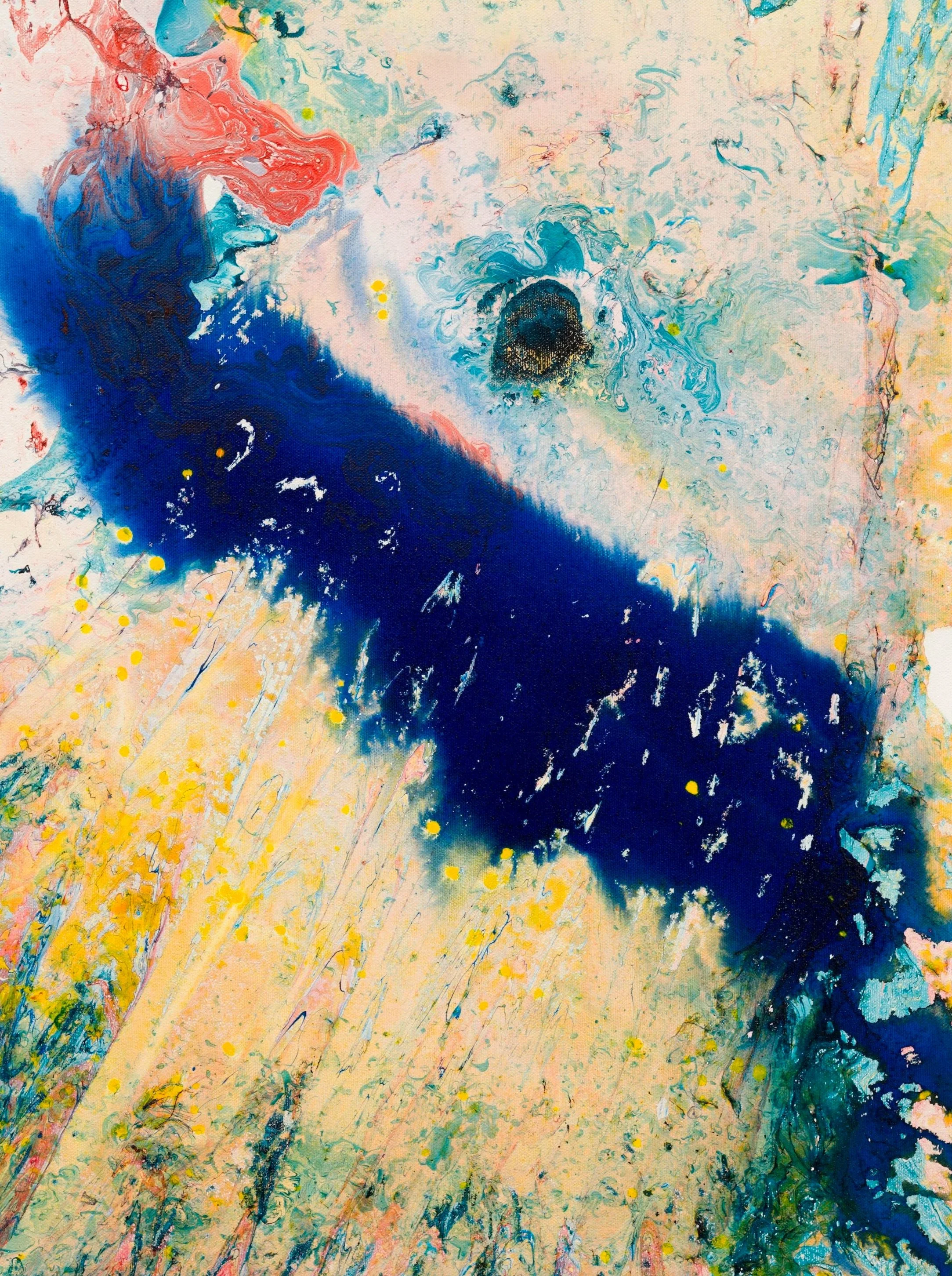
“I find beauty in everything I see, and I feel that all colours can go together, it’s just their placement. I look at a lot of flowers, and I’m always fascinated by how such colours work together and are so breathtakingly beautiful”
How do you navigate painting sounds that are traditionally unpleasant or discordant? Do those negative auditory experiences translate into jarring visual palettes, or do you find a unique beauty in them? What is your definition of beauty? Is beauty core to your concerns as an artist?
They can, though a lot of the time it’s unexpected what a traditionally unpleasant sound can look like, and what a traditional nice sound can look like. I find beauty in everything I see, and I feel that all colours can go together, it’s just their placement. I look at a lot of flowers, and I’m always fascinated by how such colours work together and are so breathtakingly beautiful. I think my definition of beauty is imperfection.
You have noted that you were quite a shy and emotional child growing up, and that ‘music and painting saved’ you. In those early years in Belfast, how did painting function as an emotional sanctuary or a survival mechanism to process sensory overload?
Art and music really did save my life. They’ve given me everything. They were always a safe place, and a place that I could truly feel like my real self. I ran to art in every situation. It was my world, and it still is. Obviously now, I have an audience, though back then, when no one was watching, I did the exact same things. Sensory overload was a huge problem for me, mostly at the beginning and in my teenage years and 20s. I think, looking back now, in an audiovisual sense, it was exploring all of this new territory with life, painting, music, and experiences. I have experienced enough now to know when sensory overload will pop up, and I recognise it. Though it’s nowhere near the way it used to be. And even my headaches have subsided a tremendous amount. It’s almost like I’ve been ticking off an audiovisual list of experiences to get somewhere safe.
I have read that you often employ non-traditional tools, such as vintage knives, instead of brushes. How does the physical resistance of these objects alter the rhythm of your movements when you are deeply immersed in a sonic experience?
Using these actually gives me a lot more freedom, I use a lot of liquid in my work, and I want the pieces to take on a life of their own at times. I want them to move on their own, whilst I’m composing the movement of the canvas. I do use brushes, though I Love the look of something being slightly ‘off’ even though everything works structurally.
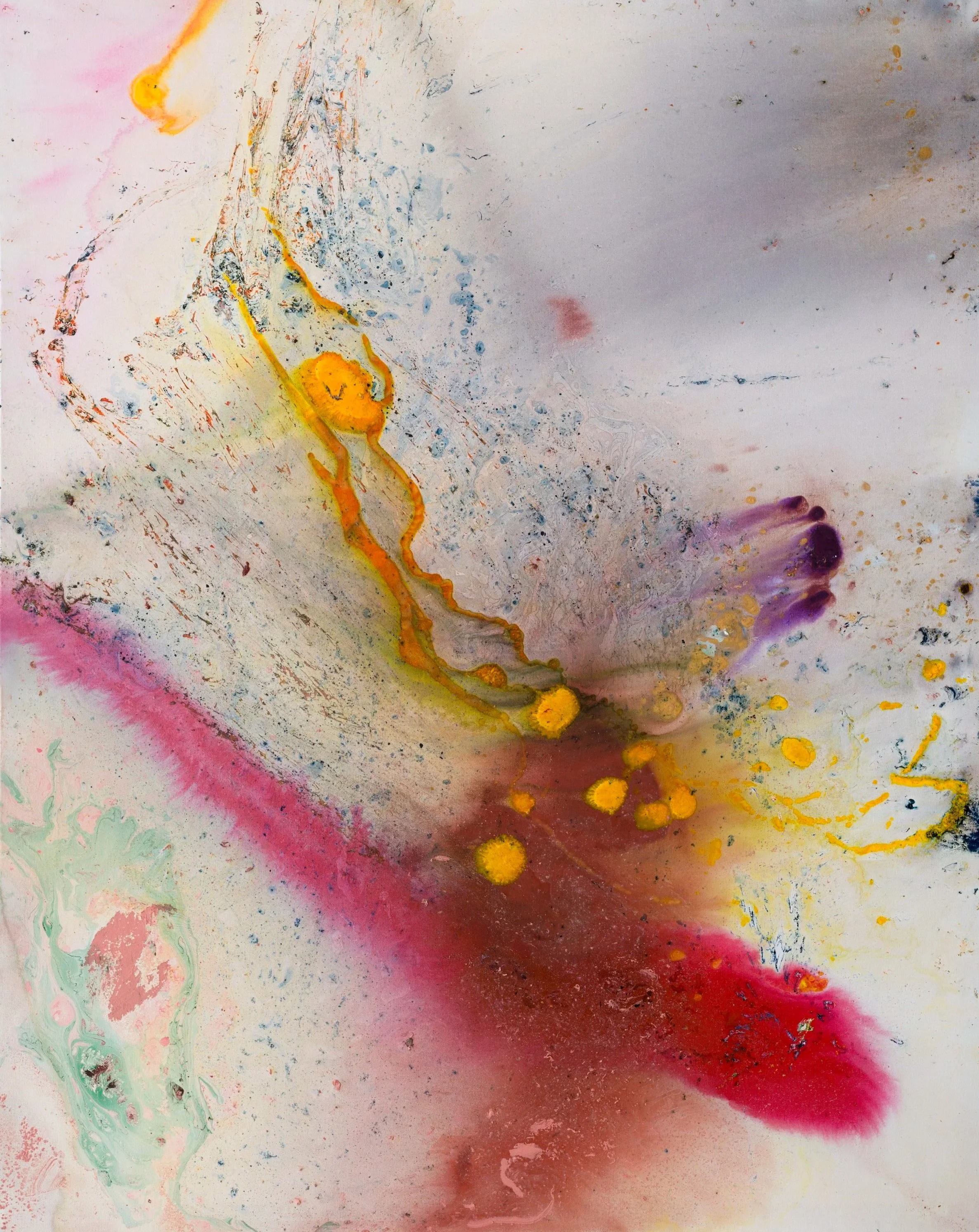
“I use a lot of liquid in my work, and I want the pieces to take on a life of their own at times. I want them to move on their own, whilst I’m composing the movement of the canvas”
Your most recent solo exhibition with Winsor Birch, "With Every Light and With Every Song," marks your first public showcase in three years. How has this three-year hiatus from the gallery space altered the emotional landscape of your work? Do the 25 previously unseen abstract paintings in this collection reflect a more introspective, solitary experience of sound? Tell me about creating the work for the show ...
It’s quite hard to explain! For my debut show at Sotheby’s London in 2022, I knew it had to be everything. I approached it in a way I would be proud of when I’m an old man, and the venue itself, the most famous auction house in the world, comes with pressure. The same went for the Sotheby’s Ireland show as well, although it was a different approach as I had the London show behind me. So much has happened now that this show is an expression of where I am currently. The responses have been fantastic, and to the work in particular, its extensive use of colour. I love colour, and I’m feeling the best that I ever have in my life, and I think the work has reflected that entirely. There’s a great feeling to the collection, and I felt great creating them and wasn’t thinking about anything else. On top of this, those years of change in an artist and more experience have brought out quite different works for me. There’s more of a collective ‘noise’ feel, which I love. And that came out organically. A lot of the works are quite like soundscapes. The works were all created in the same few months this year, so they’re all intrinsically linked. It was a real painting season.
Introduction & Interview by John-Paul Pryor
Find out more about the artist here:
Image Credits: Tears Dry On Their Own, Amy Winehouse (detail), oil, acrylic, enamel and ink on canvas; With Every Light And With Every Same Song (MK. gee – How Many Miles); Tears Dry On Their Own, Amy Winehouse, oil, acrylic, enamel and ink on canvas; Carolina In My Head (James Taylor), enamel and acrylic on canvas; Dive (Olivia Dean), oil, acrylic, enamel and ink on canvas. All images 2026. All images courtesy of the artist and Winsor Birch.
Get up-close-and-personal with artists from all over the world and unlock the mysteries of the creative mind.
Read in-depth interviews with the most exciting cultural movers and shakers shaping the creative landscape.
Discover the actors, authors, designers, mavericks and entrepreneurs at the bleeding edge of cultural life.