Sublime Intimacy: Agata Przyżycka
Mental Health, Eroticism And The Eternal Quest For Beauty
ART: INTERVIEW
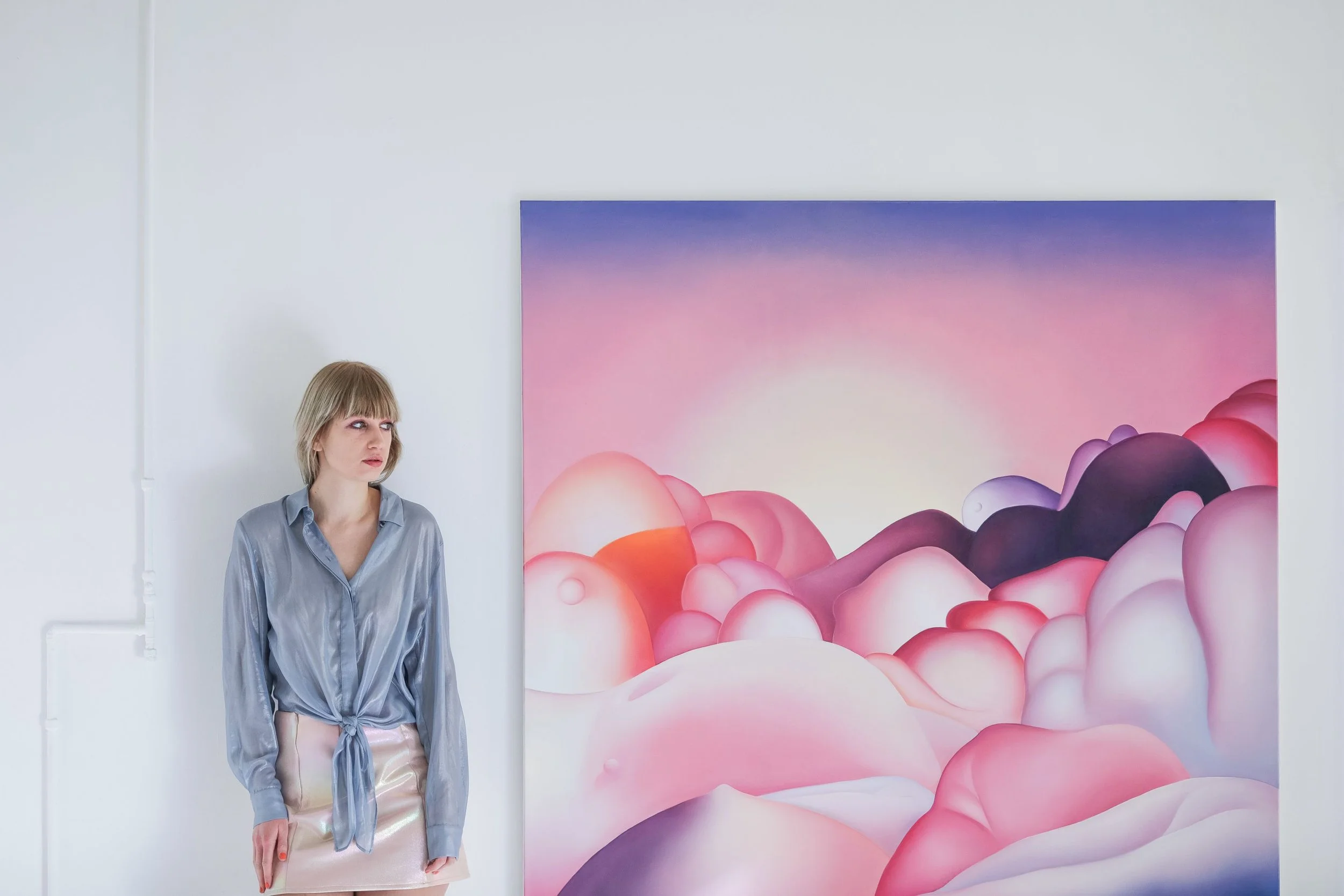
Agata Przyżycka is a young Polish painter whose work moves like a thought that has just become flesh. Her insistently sensual canvases treat the female body not as an object of display but as a field for experiments in perception, in which limbs and curves become topography – the body at once both organism and language, speaking to the viewer in gestures borrowed from landscape.
There are obvious parallels to Georgia O’Keefe in her work, and she describes her practice as a process that seeks to uncover sublime intimacy, with the starting point of each painting often being a photographic session with close friends or family members. These sessions provide an emotional jump-off point for the artist, who then radically alters the forms caught in the eye of her lens into sumptuous abstractions that are both dreamlike and imbued with subtle eroticism – inviting you to deep dive into unfettered reverie.
As such, her practice refuses simple allegory, preferring instead a poetics of relation — between what the eye recognises and what the eye must learn to read. In this interview with FUTURISTIC DRAGON, the artist—whose reputation grows quietly, like light through a shutter—speaks of art not as spectacle but as a means of attention and therapy, loosening the tightness of anxiety and opening a small room in which it becomes possible to breathe..
Talk to me about your childhood. Where does your interest in painting originally stem from?
I took painting classes from early childhood, and it has been very important for me my whole life. It was immediately a form of expression that I liked and understood. I remember that the first exhibition we had from our painting lesson made me really nervous, though, and I still get nervous showing other people my work. I also find it quite difficult to talk about my work. I think I am quite a reclusive person, really – I don’t like to talk with other people so much, and I love the solitude of painting. It’s almost a form of meditation for me, and I can happily spend a lot of time in my workshop alone. I think the first thing that really drew me to art was probably album artwork, because my parents absolutely loved music. I can also remember my parents taking me to Barcelona very young, and the Gaudi Park was just amazing to me – there was this very organic feeling I got from the sculptures. I suppose, even from a very young age, I knew that I wanted to go the academy of fine art, and the first really important thing I became interested in when studying was realist paintings and realist art.
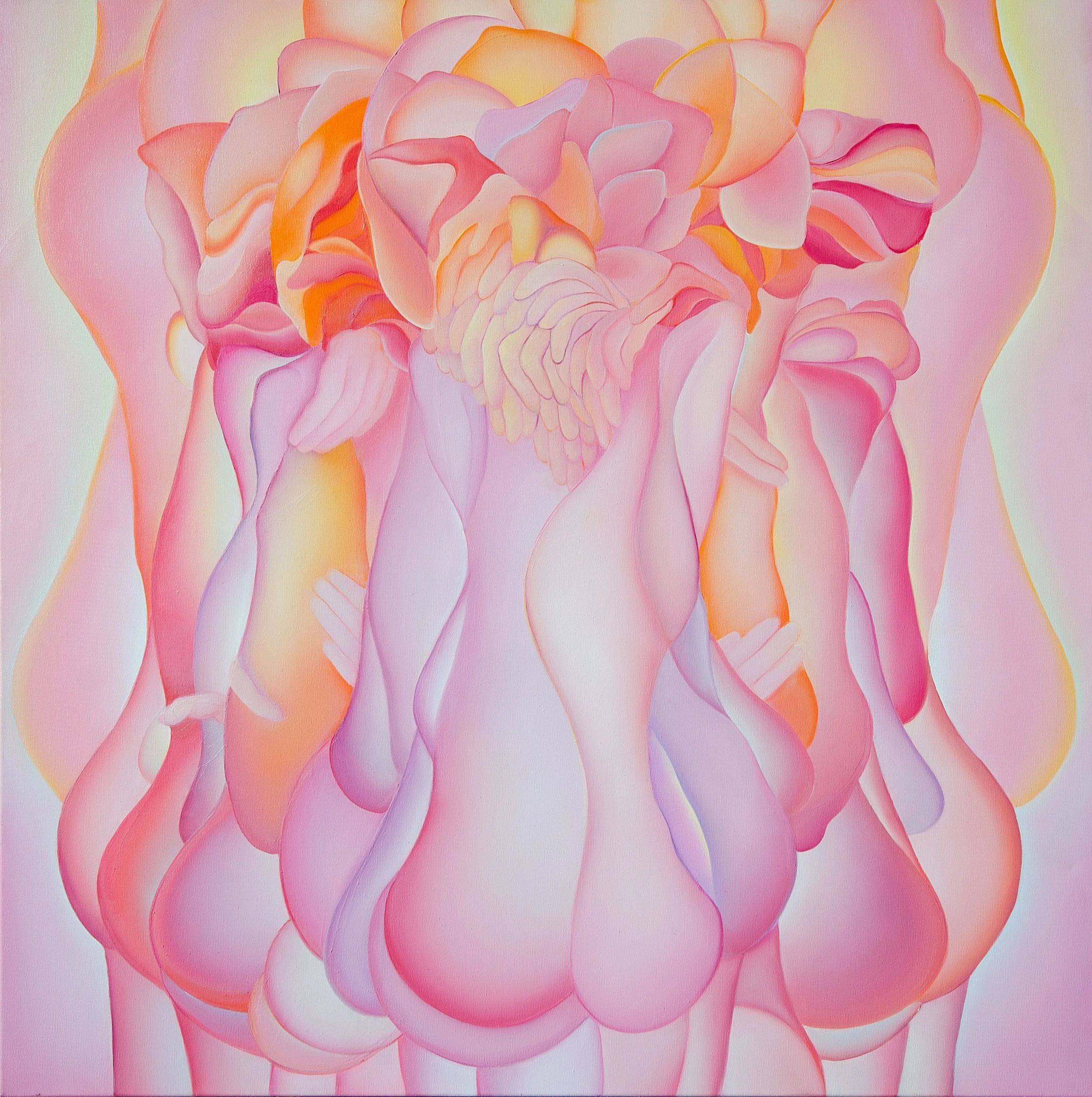
“Femininity is important to me. I consider woman as the source of creation, in a way – the bringer of life.”
Is that same organic feeling something you are seeking to communicate via your own art practice?
The first thing I wanted to do in my work was to show something that lies behind the everyday, and uncover a kind of erotic intimacy, but, lately, it hasn’t been so important to me. I think I have created my own aesthetic alphabet, and I use the female body as a sign. I do perceive my work as a process to look at nature, language, the body and femininity, and the main topic of my work is to capture the dynamics between those components. Working on a painting is an important and emotional process for me. Before I start, I will usually take a photograph of people I know from close friends and family, to kind of explore that notion of intimacy and the body, and I’m always seeking to go deeper into intimacy by taking the realistic form into abstraction and geometric shapes. I think abstraction has more value for me now than realism, because the viewer can kind of imagine something, without any pressure from me about how the painting should be received, or how they should feel.
How do you feel yourself when you view your work?
I paint a lot and always have a problem working out when to stop painting – it’s a long way for me to go conceptually and I am very much within the process.I actually think that the time I value most is that moment when I actually start the painting, and when I am thinking about it and am not sure what I will do. It’s good for me to have exhibition deadlines because it makes me stop painting when I need to. It also allows me to work on three or four paintings at once. I like doing that because it allows me to create the works as a series that correspond to each other.
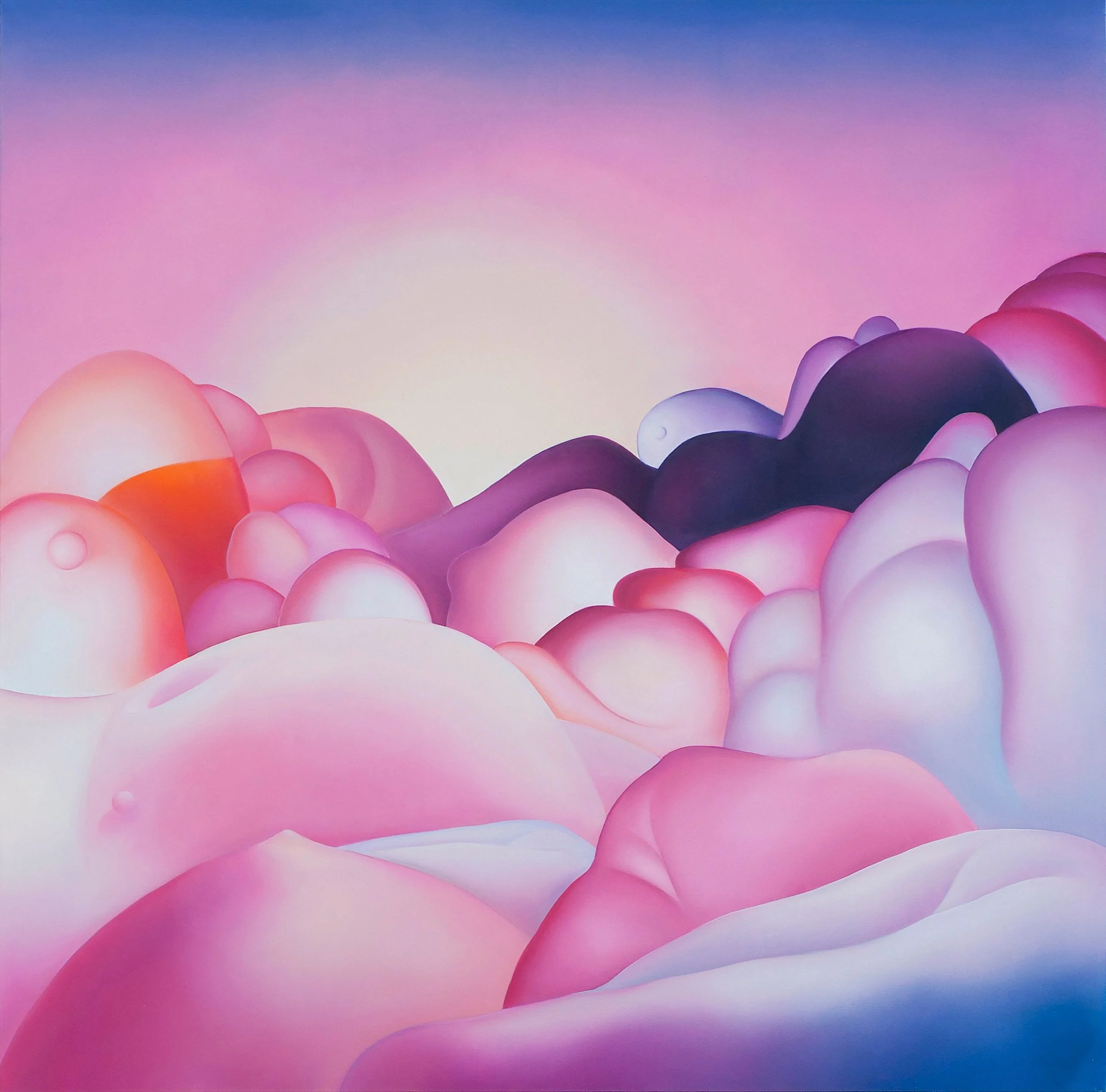
Why does it feel so essential to you to approach womanhood and femininity in your art practice?
It’s actually true that I’ve only been painting women’s bodies lately, but in the past I have painted men as well. I’m not sure why I was drawn to focus mainly on women but maybe it’s because the female body is more associated with biology, nature and the sense of a landscape to me. The palette that I use in my painting is generally inspired by the colours of sunsets, or flowers, which I know are pretty common topics. Femininity is just very important to me – I consider woman as the source of creation in a way, the bringer of life. All of my paintings are very close to my heart and play a big emotional part in my everyday life, but, ultimately, I can’t explain why I always come back to the female figure.
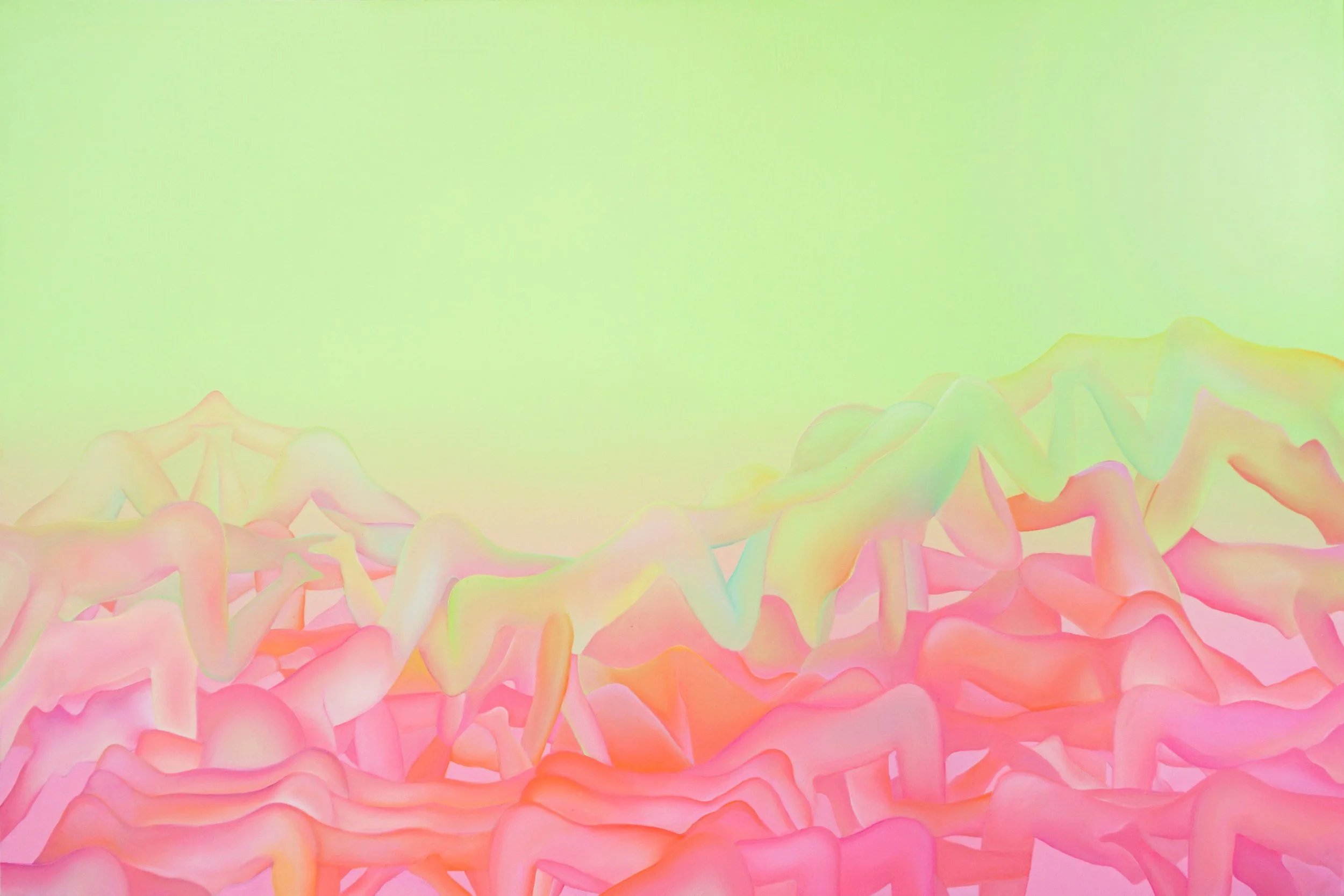
“Beauty is always there, every day in our lives, but we don’t look for it enough”
Does your art act as a kind of therapy for you?
Well, in a way, yoga and painting are very similar practices for me, and art has always been very important therapeutically for me. I can’t ever imagine stopping painting. I can find it difficult to go to work in the day-to-today, and I spend all of my free-time painting because it makes me feel better. I had therapy when I was younger, but my daily routine of painting is really the thing that makes me feel okay and calm, and makes me feel free. I don’t feel anxious or nervous when I paint; I feel that I can become anything on the canvas. I can’t really express why beauty is really so important for me, but I have always really been drawn to beauty, and I look for it every day in nature. Beauty is always there, every day in our lives, but we don’t look for it enough. I need that contact with nature, and my art is my connection to it. I like to spend time with other people, but I can’t ever predict what that will be like, but when I am alone, I am comfortable and I know that I can express myself freely.
Introduction & Interview by John-Paul Pryor
You can find out more about Agata Przyżycka here
Images (top to bottom): portrait of the artist at Kravitz Contemporary by Grzegorz Podsiadlik; Untitled, oil on canvas, 2021, Agata Przyżycka, courtesy of the artist; Trzymam świat Niepojęty, oil on canvas, 2021, Agata Przyżycka, courtesy of the artist; Untitled, oil on canvas, 2021, Agata Przyżycka, courtesy of the artist.
The Spanish artist Javier Calleja on playful optimism and conjuring minimalist magic
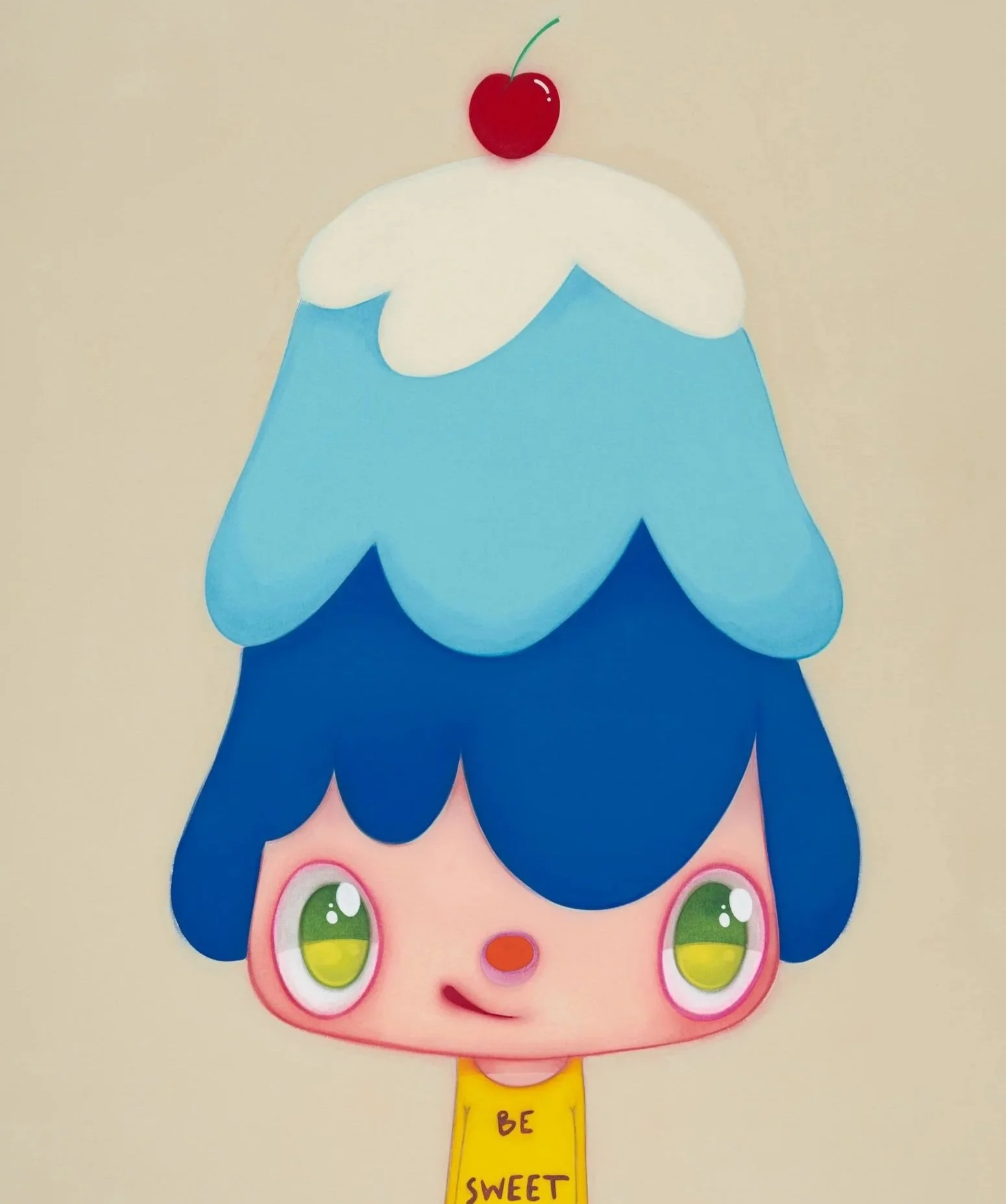
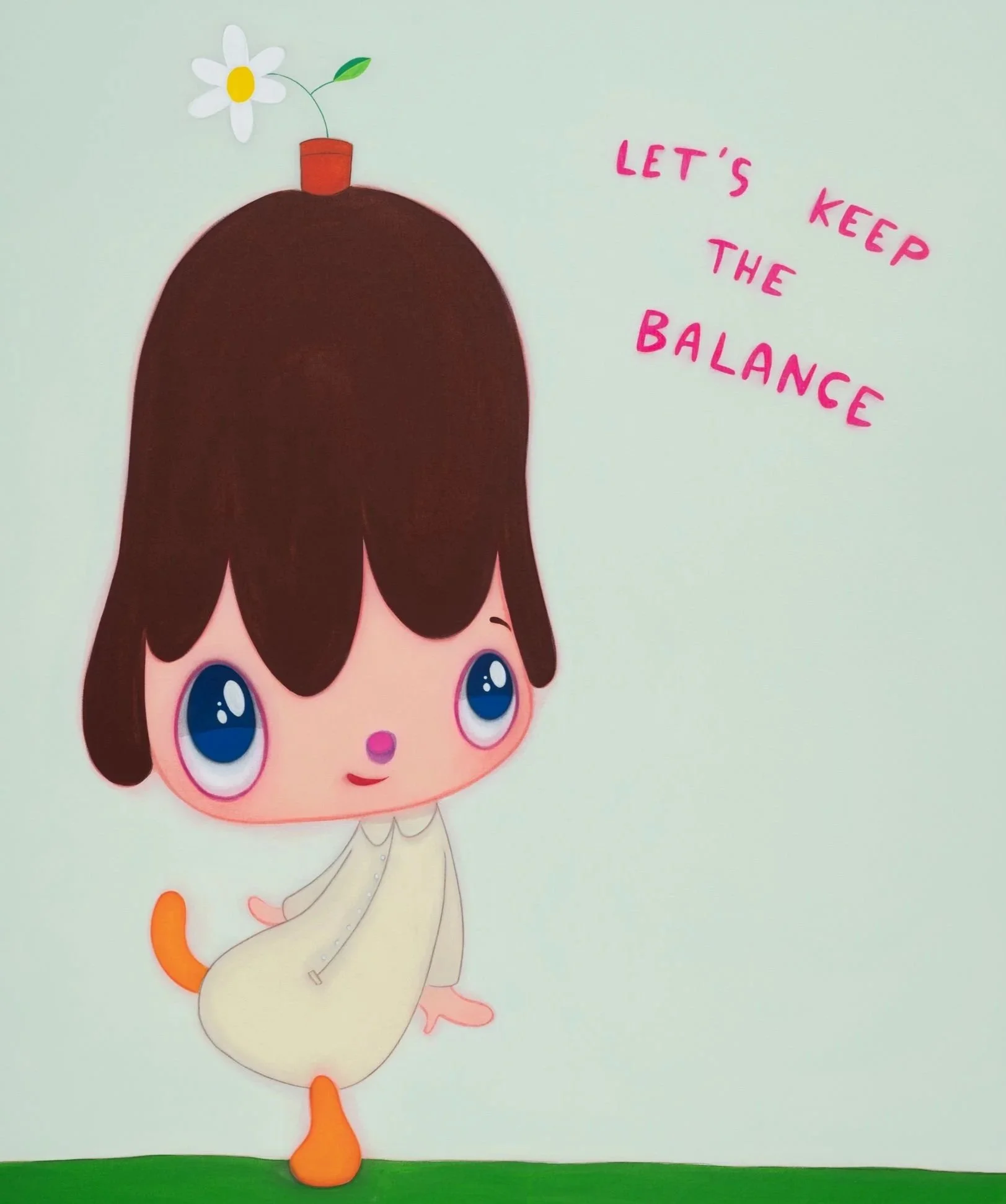
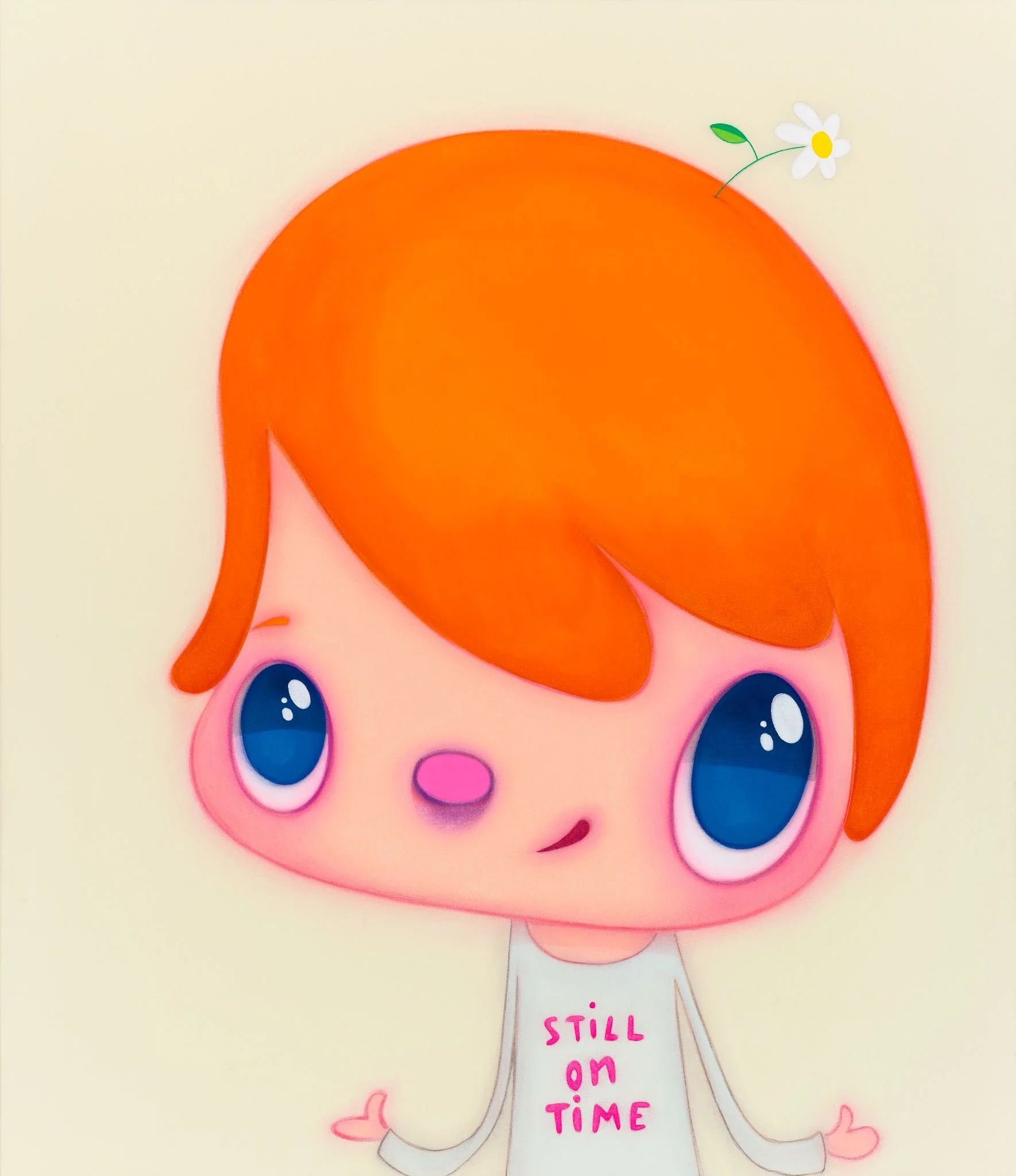
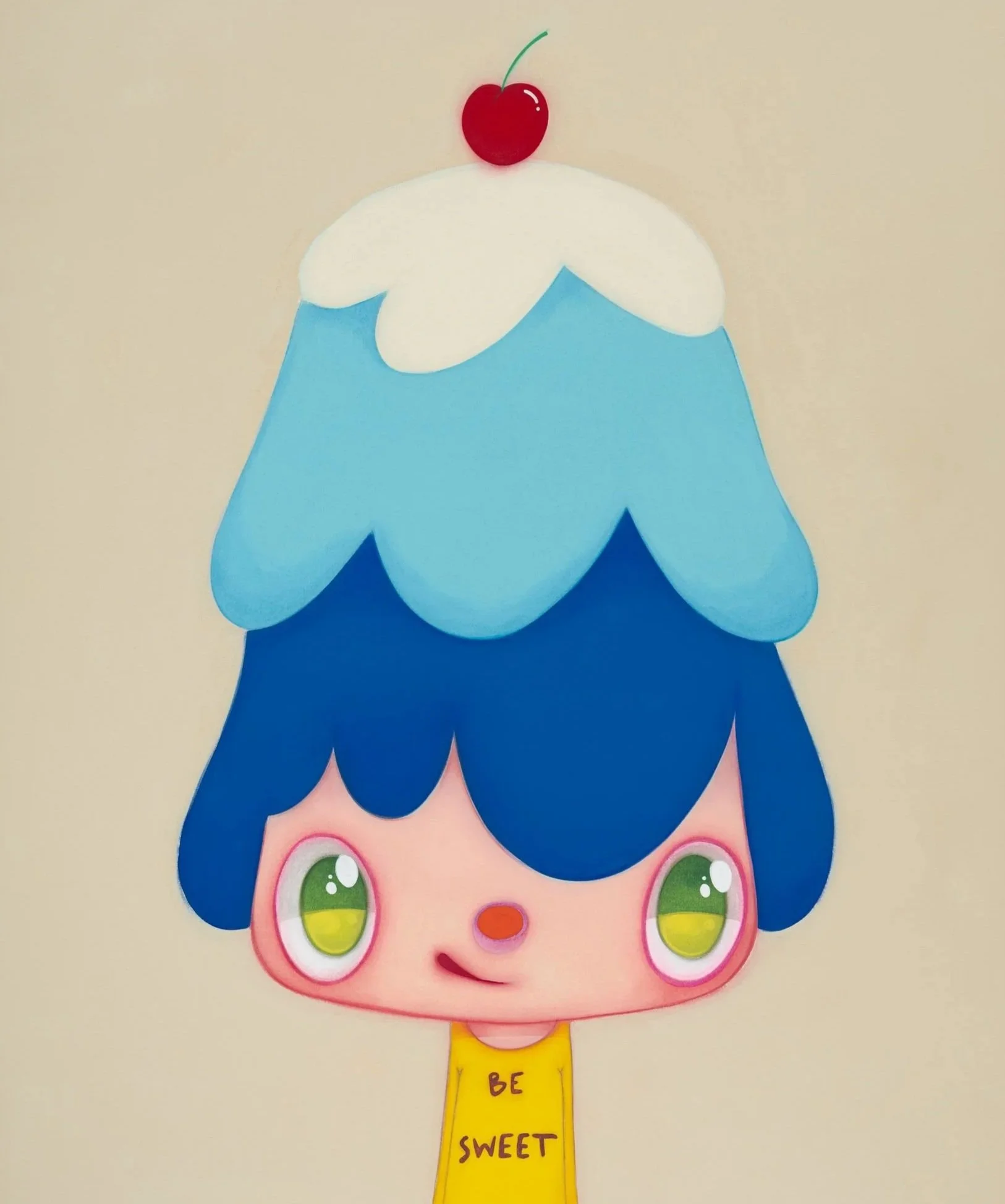
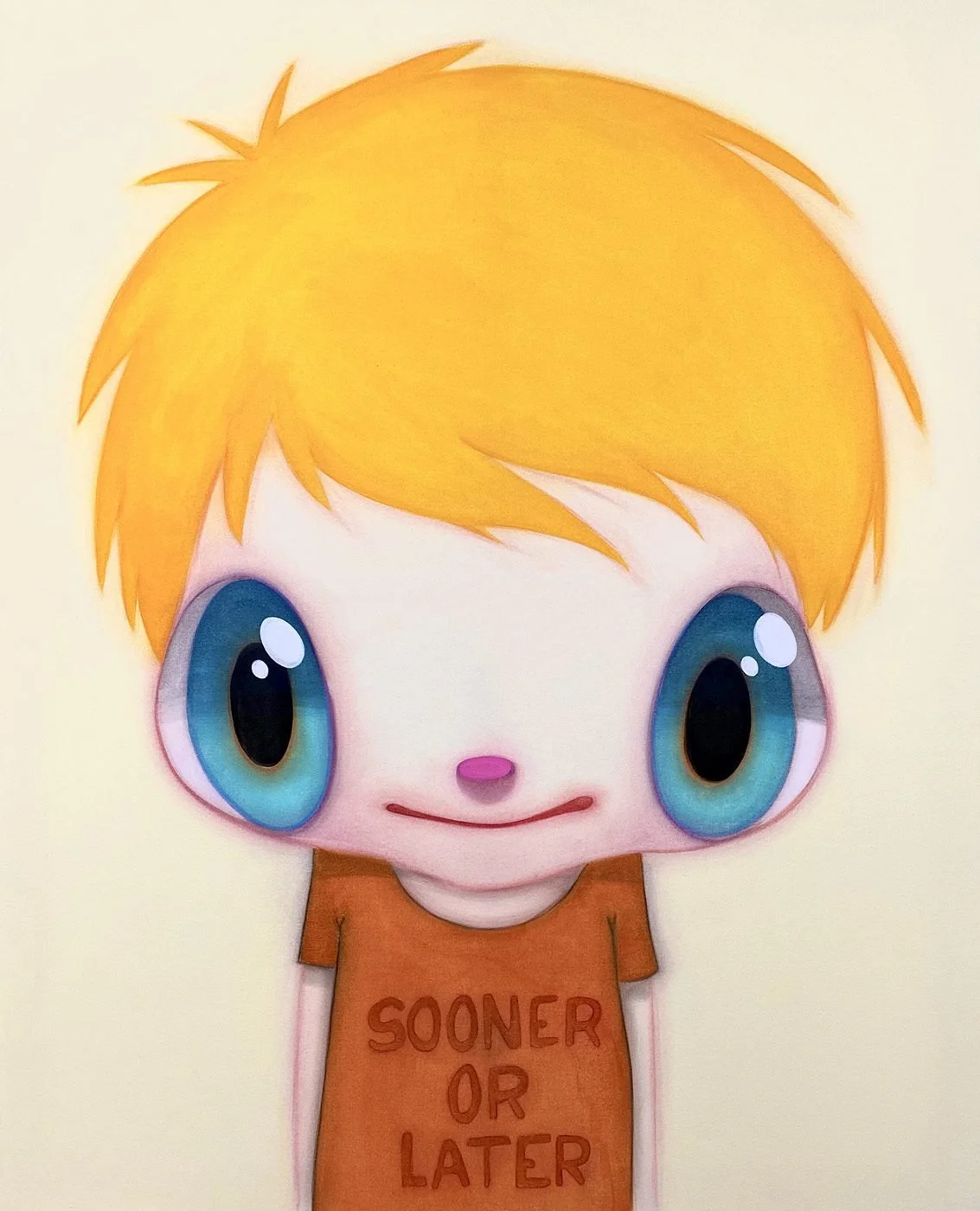
In an era where so much artistic output deals in dystopian cynicism, the acclaimed work of Spanish artist Javier Calleja projects hopeful optimism, while simultaneously presenting a wry and ironic sense of humour acutely attuned to the zeitgeist. His latest show Still on Time, exhibiting at Almine Rech until the end of this month, features twenty new paintings of his trademark wide-eyed children, all of whom seem to be knowingly poking fun at the farcical seriousness that underpins not only the art world, but our contemporary culture at large. Accompanied by phrases such as “Lets Get Crazy”, “What To Do Now?”, “Keep The Balance” and “This Is Your Lucky Day” the pithy progeny of his imagination can’t help but raise a smile. Masterfully painted on huge canvases, and considerably less credulous than they may at first appear to be, these mischievous characters, who have been companions of the painter for some twenty-plus years, engage the viewer in a game of self-reflection – confronting the everyday hurdles of life with a playful rebelliousness that is both uplifting and brimming with satire. Here, the artist talks to Culture Collective about the minimalism at the heart of his practice, his love of magic, and tells us why the most important lesson we all need to learn in life is that you can’t always get what you want.
How would you describe yourself as a painter? I feel that I am a very classic kind of painter. I am not a cartoonist, although I do know that because we live in the age of social media, people often don't see the work directly, and only see the characters, not the actual painting. When people do see my paintings in person, though, they see the depth and technique, and that some elements of my paintings are actually very realistic – such as the eyes, which are very simple, but also kind of almost hyper-realistic. This effect plays a little trick on the brain, because one side of your brain says, well, okay, I can see something real, but, at the same time, on the other side, your brain also says, come on, it's a cartoon, and a cartoon is not real. To me, this is a kind of magic, because your eyes believe they see something, but at the same time your brain says, no, this is not possible – and that for me is really the magic of art. I was always obsessed with drawing as a child. I loved Mickey Mouse, for example, because I was drawn to the very minimalistic secret structure at work – he is really just a series of circles. In Disney the soft, or sweet characters, always had this simple structure, actually, while anything scary, or bad, was much more complicated. I loved that. My own painting is a kind of minimalistic exercise.
What would you say is different about your new paintings, and what kind of experience are you seeking to communicate to your viewer in general? I am introducing many more objects into my new paintings, because I always want to do better, and I feel if I can add more details then maybe I can do something new without losing my classical composition. The most important thing in them is still the look, though – because my paintings are always looking directly at you – and the feeling I am still looking for is this kind of magic. I don't ever want people to walk into the gallery and feel intimidated, or stupid when they leave, because they have been made to feel that that they don't understand, or can’t read the work. An art gallery shouldn’t be about somebody telling you that you are not intelligent. It should be a place that is relaxed, where a child can bring their mother, and where maybe that child will come to love conceptual art in the future. I am not asking the viewer to read anything into the paintings, only to come into the space of the painting. I like that people who don't know anything about art can enjoy the work, and that intellectual art people can also see that there is a good painting behind the character.
Are you somebody who is nostalgic for the innocence of childhood? What stage of childhood would you say your work is focused upon? Is there something nostalgic in my painting? Yeah. Maybe. I try to paint this moment in childhood where people cannot really say if the child is a boy or a girl – this moment at maybe about six years old when we are all really still the same, and the only difference is really that maybe your mum cut your hair like a boy, or your father decided that you would wear blue for a boy or pink for a girl, or something like that. It’s this moment before you are kind of made separate. The children in my paintings are all at this age and this moment where, apart from the difference in style, they are the same, and, in that sense, they are kind of nostalgic. There is a kind of nostalgia in the eyes also, because it almost looks like they are crying sometimes, and that is kind of there to remind you of your emotions when you were a child – that kind of feeling, for example, when you are tired and you want to cry, or you don't now why you might want to cry or laugh. This is kind of the point – maybe the child has stopped crying and is smiling and happy again, but the eyes are still wet. It’s this moment where children learn from their parents that every time they stop crying, they are a kind of small hero – and when you start to learn in life that you can’t always get what you want, or that you can’t always win, but that failure is not a disaster. That is really the biggest lesson for a child.
In terms of your process do you begin with the character, or does the phraseology come to you first? I always start with the character. I start with the drawing, and then, at the end, I will add the sentence. It is always the last thing that I do. It’s almost as though when the painting of the character is finished, I say, okay, I will talk with him or with her, and I will say, what do you want? Then I find that they want to tell you something. For example, when I did the painting Never Too Late To Talk, I was thinking about Brexit, and I felt that the character was saying she needed this little white flag to say, peace, can we talk? Brexit is very stupid, because we are all European brothers and sisters. I do often repeat characters in my work, but there are some new characters in this show. Let’s Get Crazy is one, who has a little volcano in his head, and there I’m talking about mental safety, and how everybody has to take care of their mental health, which is what we all found in the pandemic – that we all have to look for the signs, and take care of each other. And, you know, if people tell you that you are crazy, it's like a weight, or a big stone you have to carry on your back. I think it was Shakespeare who said that everybody has a monster inside, and that you have to let the monster go out sometimes, because if you keep it inside, it can grow, and destroy you – we all need to get crazy sometimes, before the madness gets you.
Still On Time exhibits at Almine Rech until July 29. All images courtesy of Almine Rech and the artist