ART & IMAGE: INTERVIEW
American Nightmare: Jim Shaw
Suburbia, Weirdness And The Detritus of The American Dream

For nearly five decades the revered Californian artist Jim Shaw has worked as if he were composing an ongoing absurdist parable about the modern world, turning the ordinary detritus of American life into an unlikely kind of scripture, in which junk, scraps and refuse testify to ways of seeing otherwise abandoned by prescribed taste. Over that long career, he has accumulated a vast and idiosyncratic archive of objects and images that function like a dystopian cultural archive, and produced numerous images that unsettle moral certainties, oftentimes revealing the hidden grammars of longing and shame with a mixture of brash directness and cool ironic distance.
His practice then inhabits a space at the bleeding edge of taste, presenting hallucinatory frescoes in which familiar icons and myths become props for ridicule and displacement, with all of their supposed certainties unstitched and bizarrely reconfigured. In this rare conversation with FUTURISTIC DRAGON, he speaks without indulgence about the particular arithmetic of complexity he regards as beautiful, and the curious ethics of error – how a misstep, when exposed, can open up a space for new perception and radical reorientation. The account he gives is, however, neither apologetic nor celebratory, but a patient examination of how certain gestures in art unmask the ordinary, and how failure, once revealed, has unforeseen possibilities for renewal.
How have your concerns as an artist changed since the early part of your career and what has remained the same?
What drives me now? Some of the same things, I guess. The weird thing is that if you don't have a career then you are not driven in the same way as when you do have a career. It's not just you in your room making art – it's you plus other people that are dependent on you, and there is a weird sort of effect that that has. I mean, I have two more comic books that I want to do that relate to the prog rock opera I want to do, but, at the moment, I can't take time out from making more commercially accessible work to do the comics, because they take a couple of months of energy and there is a certain amount of expense involved in them, and the opera has a lot of expense involved in it. My methodology involves me sitting there making marks for long periods of time, so if I stop doing that for couple of months to record and write an opera then nothing has happened, in as far as there being art to show or make a living from.
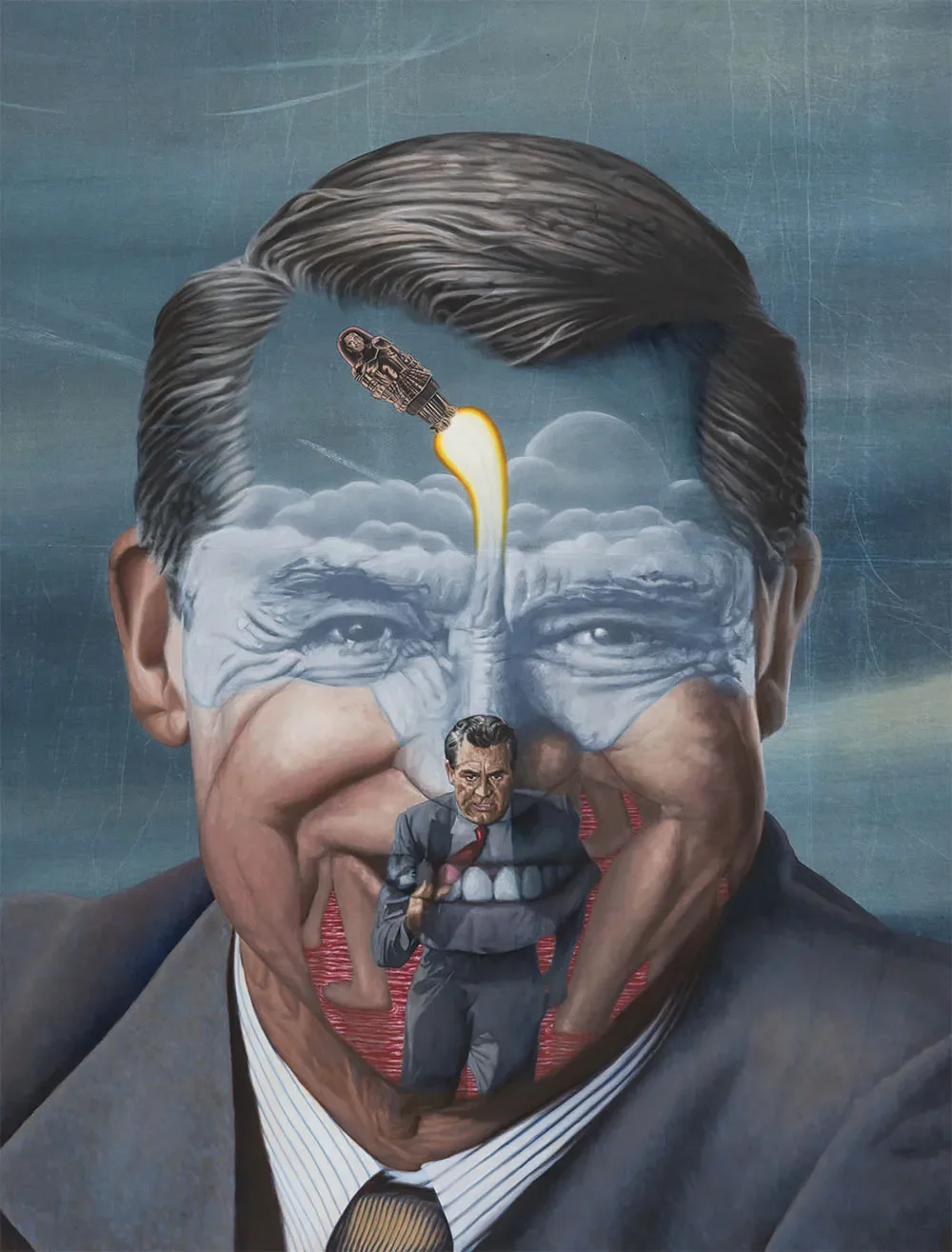
“I guess if I had ever positioned myself in the past it was never to be a a Salvador Dali or Picasso, it was more to be a Robert Crumb”
Did you envision yourself as a successful artist as a young man?
I guess if I had ever positioned myself in the past it was never to be a a Salvador Dali or Picasso, it was more to be a Robert Crumb – in that he had created an entire new genre of art and was the master of it – or maybe Clovis Trouille, because he refused to sell his art and continued to work as a janitor all his life. That kind of fitted with my self-image as an undergraduate but, of course, you can't really afford to live your whole life as a janitor in Los Angeles. As someone who discovered art through the public library it was always a goal of mine to produce books, so in that sense I guess someone like Ed Ruscha could have been a model to look at. I have always been interested in the notion that what exists in reality and has a certain scale has to carry its weight in its reproduction in print. I feel if they can't stand up in both mediums then it's like you've failed.
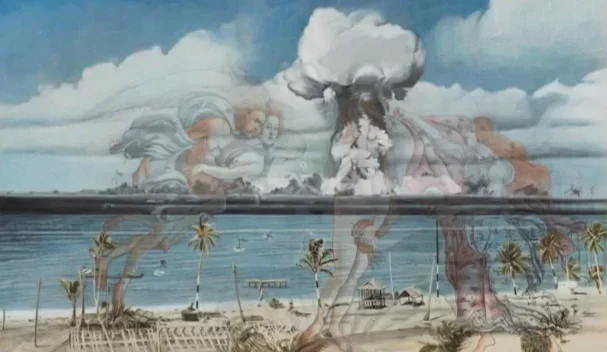
You have always cited your dreams as your key inspiration – why is dreamtime so fundamental for you in the creation of art?
The vast majority of dreams are anxiety related, but every now and again you will get some sort of a visionary dream. I truly believe that dreams and DMT are basically the same substance, and that you are accessing the same thing through different things – meditation, drugs… I have got to the point where I can access that same state just through listening to this mechanical device called a HoloSync but I think you can get apps for the iPhone that are supposed to do the same thing. It works best for me if I have a problem to solve – if I have a partial idea for a piece. It doesn't work so well if I have no idea yet.
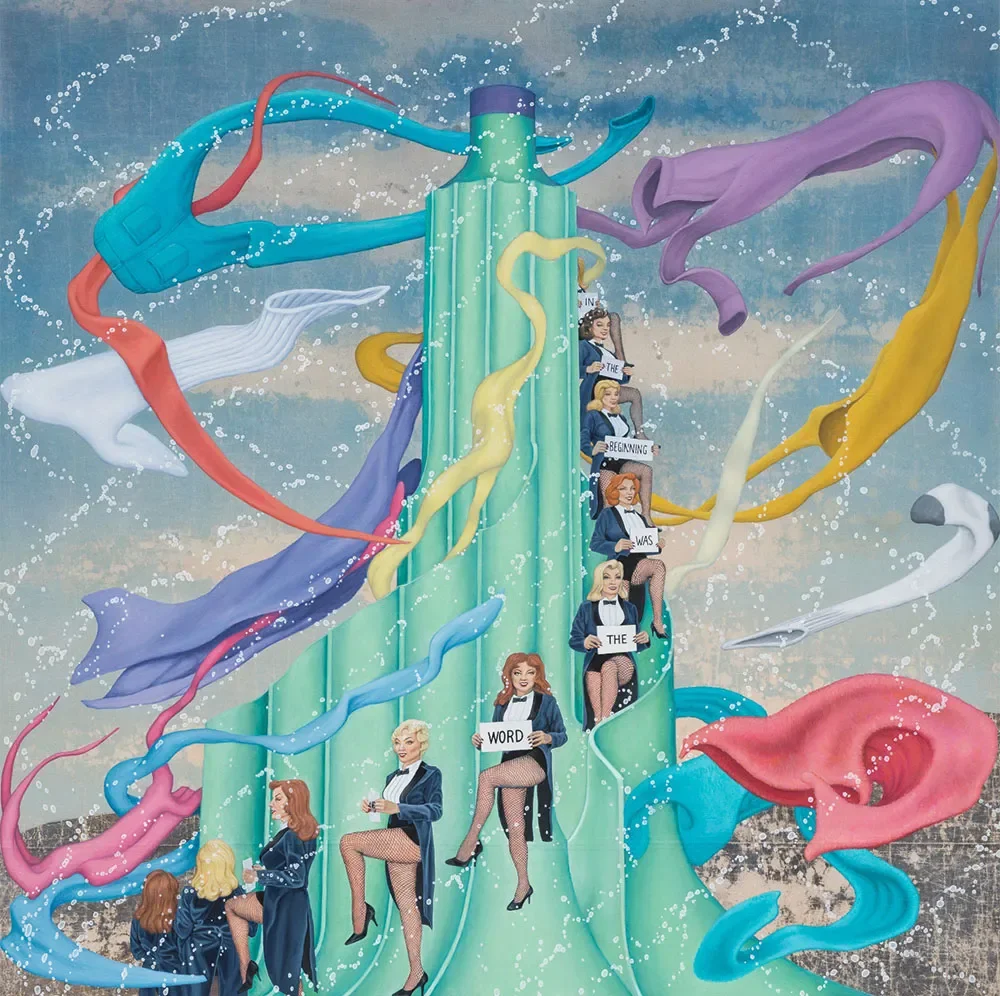
“I find myself revelling in the world of iridescent tessellation that comes upon you in a really intense dream”
Do you believe you are tuning into some kind of deeper reality in those states, beyond the world of samsara?
The Gnostics say you have to transcend all of the sensuality of the world and get to that place of pure light, and maybe that is true, but I find myself revelling in the world of iridescent tessellation that comes upon you in a really intense dream. There's a joy to just the pure amount of detail. The world is a fabulous place, so to transcend it one hundred per cent doesn't sound that interesting. It tends to be the gnarled aspects of the human psyche that are interesting, and, in many ways, the gnarled roots of a tree are more interesting than the parts that are reaching up to the heavens. There's a beauty in complexity.
Introduction & Interview by John-Paul Pryor
Find out more about the artist here.
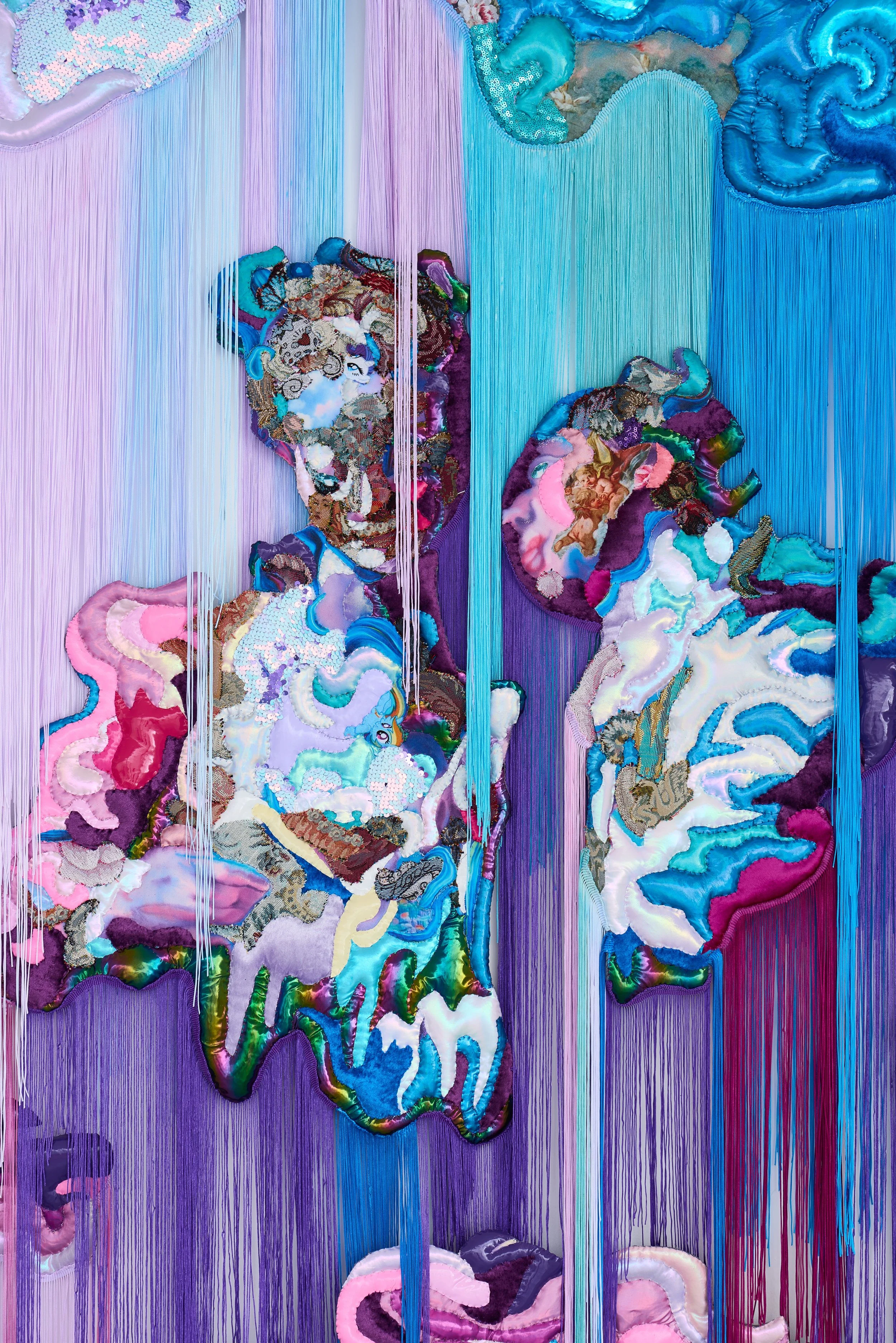
Image Credits: Never the Twain Shall Meet, Jim Shaw, 2023. Jim Shaw’s Cary Grant, 2022. 'No Bikini Atoll,' Jim Shaw, 2022. Down by the Old Maelstrom (where I split in two), Jim Shaw 2022.
Get up-close-and-personal with artists from all over the world and unlock the mysteries of the creative mind.
Read in-depth interviews with the most exciting cultural movers and shakers shaping the creative landscape.

Discover the actors, authors, designers, mavericks and entrepreneurs at the bleeding edge of cultural life.