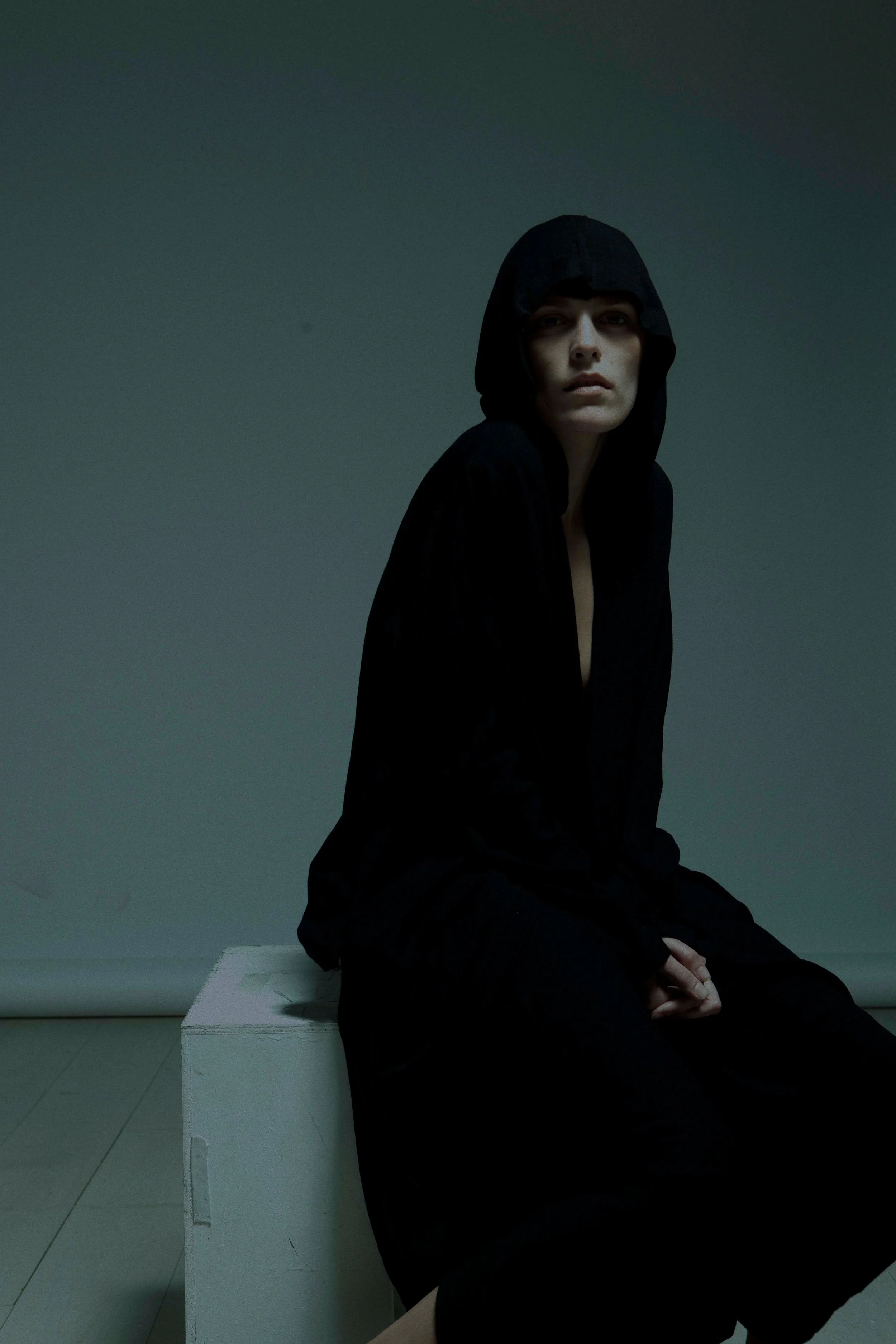
ART & IMAGE: INTERVIEW
Kasper Sonne: People Are Strange
Exploring The Unfathomable Sea At The Heart of Humanity
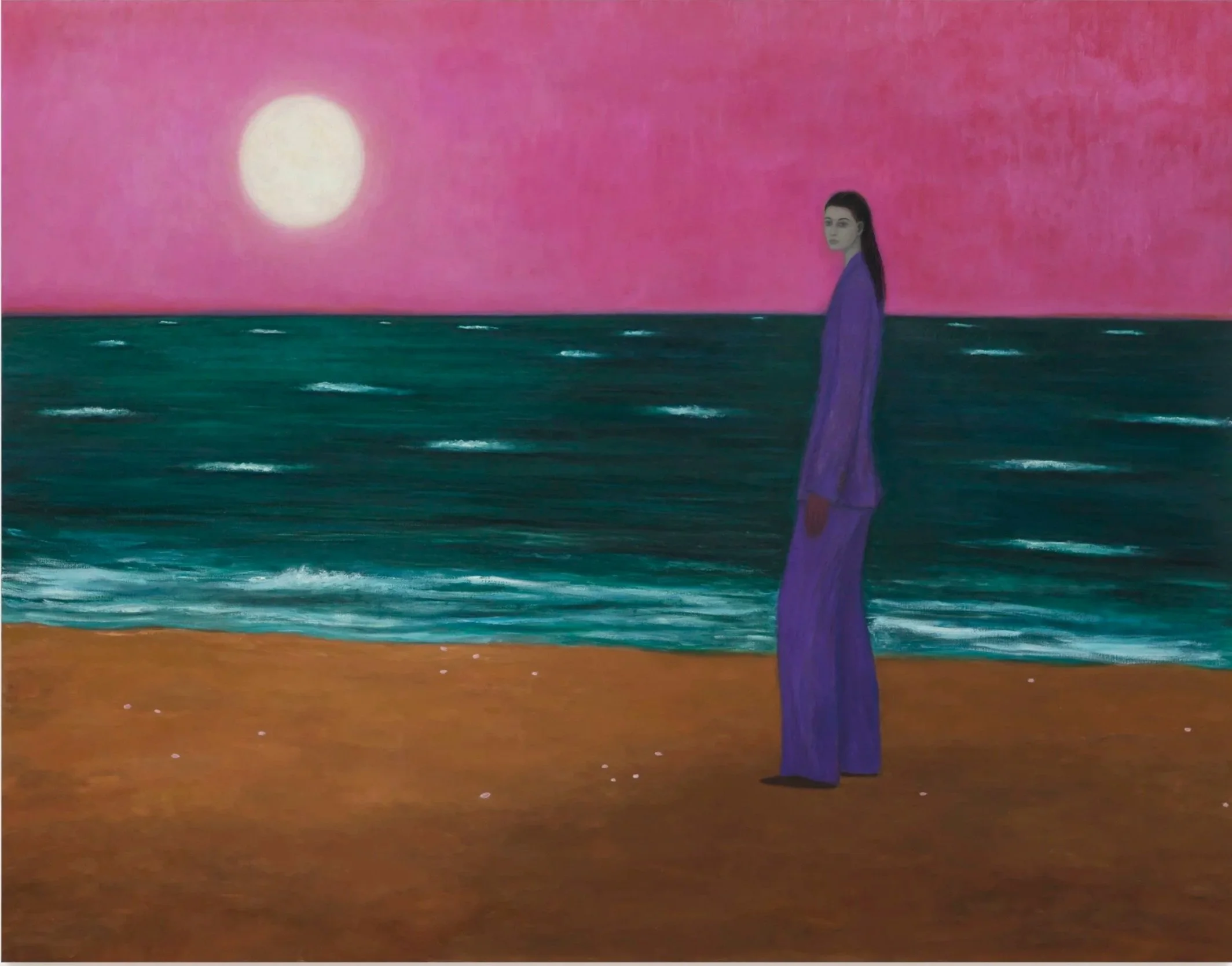
As Jim Morrison of The Doors famously opined, “people are strange”, and indeed it is arguable that to be human is to live with paradox – we often seek connection yet retreat into solitude; construct identities while wrestling with the projections of others and desire permanence while knowing, deep down, that everything is subject to change. For acclaimed Danish artist Kasper Sonne, these opposing forces at the heart of the human condition have provided inspiration for more than two decades. Early works witnessed him subject pristine painted surfaces to fire, bleach and chemical processes – inviting destruction to become an agent of creation – but in his more recent paintings that drive to explore instability has resolutely migrated inwards. His latest works may, on first glance, appear to have become more serene, and perhaps even ethereal, but they belie a troubled psychological terrain. In the People Are Strange series, currently on show at Maruani Mercier, solitary, haunted figures stand beside oceans that reach for distant horizons, seemingly adrift within their own thoughts. These protagonists are recognisably contemporary, their clothes carrying the subtle codes of fashion, gender and identity, but they appear suspended in time, occupants of another space entirely.
It is a displacement that seem the zeitgeist. We inhabit an era that promises almost limitless connectivity while producing profound experiences of isolation, and Sonne’s paintings seem to embrace, or in some way transmit the loneliness at the heart of modernity. The ocean that repeatedly appears throughout People Are Strange becomes an apt metaphor for the aloneness of being-in-the-world. Sonne grew up close to the sea and describes finding tranquillity in the horizon line, but also recognises something of his characters’ psychological condition in its unknowable vastness. Having lived in Berlin, London and New York before returning to his native Copenhagen, Sonne speaks candidly about a lifelong sense of solitude and never quite belonging. But rather than seeking to reconcile those contradictions, he has increasingly learned to accept them as constituent parts of the self. “I’m a work in progress,” he says, “and have come to appreciate that I will likely never reach a final conclusion as to who I am.” And for Sonne, perhaps that absence of conclusion is precisely the point, the human condition itself akin to Shelley’s Unfathomable Sea. In his interview with FUTURISTIC DRAGON. the artist talks about solitude and belonging, the seductive unreality of images, and tells us what painting might still reveal about the faces that come out of the rain.
Your earlier work often involved physically destabilising a painting. In these new works, the instability seems to exist within the image itself – in the figures, the landscape, even the light. Has destruction become something more psychological in your work?
Looking back at my work over the past 25 years, it has become increasingly clear to me that everything I’ve made has been an exploration of the human condition. While the concept of creation-through-destruction has become less easily identifiable in my work, it remains an idea at the forefront of my thinking. I view destruction as a natural, even necessary part of the human psyche, and a means for radical change. So my paintings are continuously made through a process of building up and breaking down, adding and subtracting. As such, my paintings are always the result of transformation.
“All data shows that we live in a time where people feel more isolated than ever, despite the internet and social media promising instant human connectivity”
You’ve said in the past that you’re not interested in depicting reality, but more in visualising a mood. Are you seeking to explore or transmit a deeper sense of being? Is melancholia at the heart of reality as you perceive it?
In my opinion, art is not bound by reality and shouldn’t remain faithful to anything, or anyone. Art is about transgression, about freedom. Art should show us that we are human beings, full of hopes and dreams, failures and shortcomings. Art is beauty and decay, life and death. That’s what I wish to convey in my paintings.
There is something strange about the people in these paintings: they are intensely present and yet seem psychologically somewhere else. Do you think it has become harder for us to truly be present with one another in the social media age?
All data shows that we live in a time where people feel more isolated than ever, despite the internet and social media promising instant human connectivity. Advanced technologies have largely replaced actual human interactions with virtual experiences, and this replacement is accelerating at a nauseating speed with the invention of AI. Unsurprisingly, people find it increasingly difficult to relate to one another, causing us to withdraw further into separation. I’m certainly guilty of self-isolating, often choosing my own company over that of others. I enjoy being on my own, which helps when working in solitude in a studio all day, but it ultimately comes at the cost of social engagement with fellow human beings.
“My characters are not to be considered realistic depictions of specific individuals, but rather visualisations of psychological states. Their characteristics evolve and change during the process of the making.”
You’ve spoken about trying to find empathy with these characters as you slowly construct them. Do they ever begin to feel autonomous from you, or are they all, in a sense, avatars of different elements of the self?
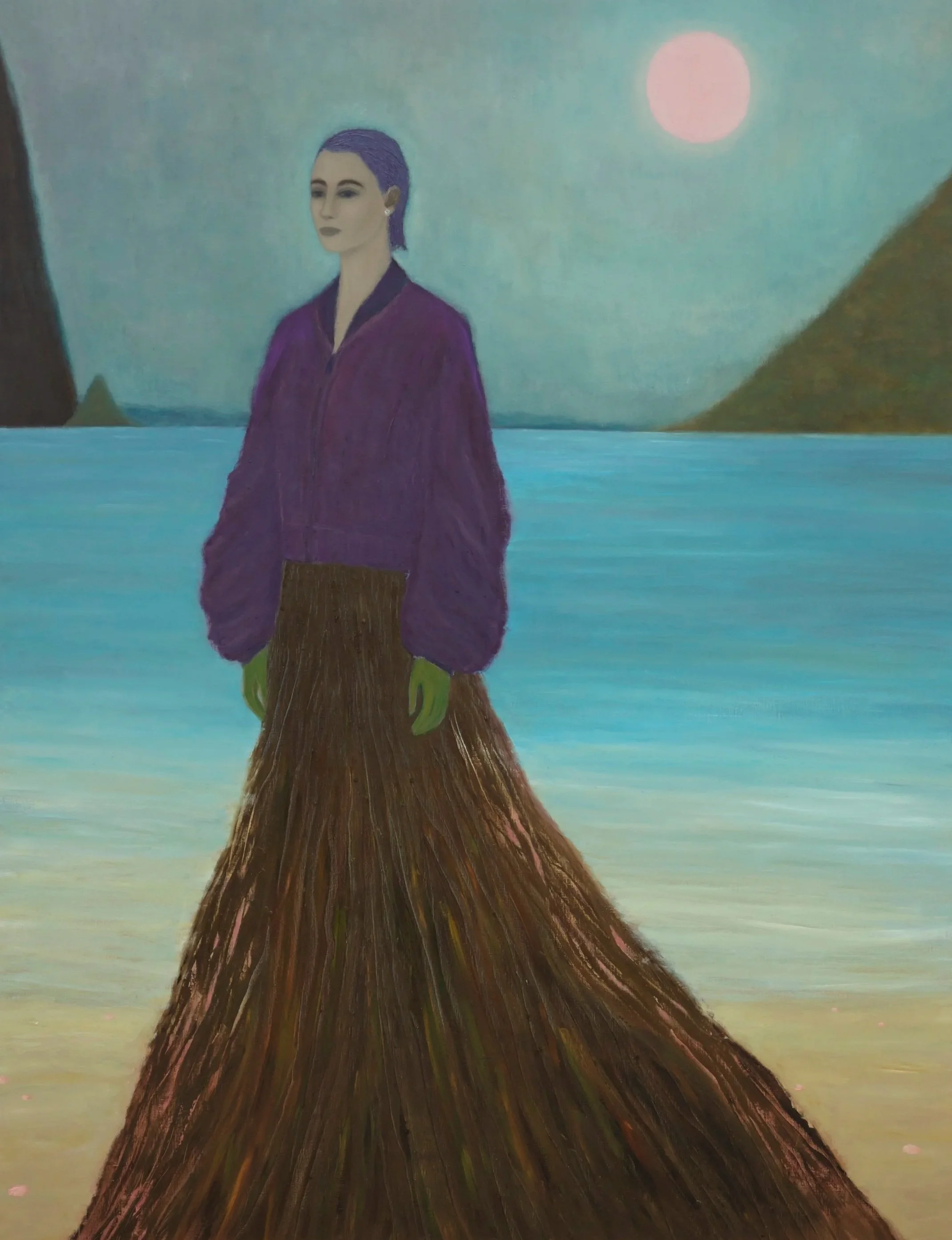
It’s been said that every painting is a portrait of the artist and there is some truth to that, as a painting is always an interpretation. My characters are not to be considered realistic depictions of specific individuals, but rather visualisations of psychological states. Their characteristics evolve and change during the process of the making. They are in a perpetual state of flux, of becoming, until they eventually arrive. At which point they are still a part of me, yet they are now also autonomous individuals, freed from their maker.
The figures are contemporary – their clothes communicate taste, status and identity – yet you place them against landscapes that seem almost ethereal and outside time. Why?
I’m primarily interested in fashion as a tool for identity construction - a way to signal class, status, gender, sexual orientation and so on. To ensure the figures appear contemporary and reflect our present time, I produce screenshots of fashion advertisements I encounter online. However, I use the advertised clothing only as inspiration and modify it enough to obscure any immediate brand identification. Then I locate the figures in a natural setting to counter their urbanity, allowing for an open-ended narrative and reading of the paintings.
The ocean is everywhere in People Are Strange. Mythologically it can represent freedom, of course, but also danger, unknowability and the limits of human control. What do you find when you look out towards it – transcendence, anxiety, or something else entirely?
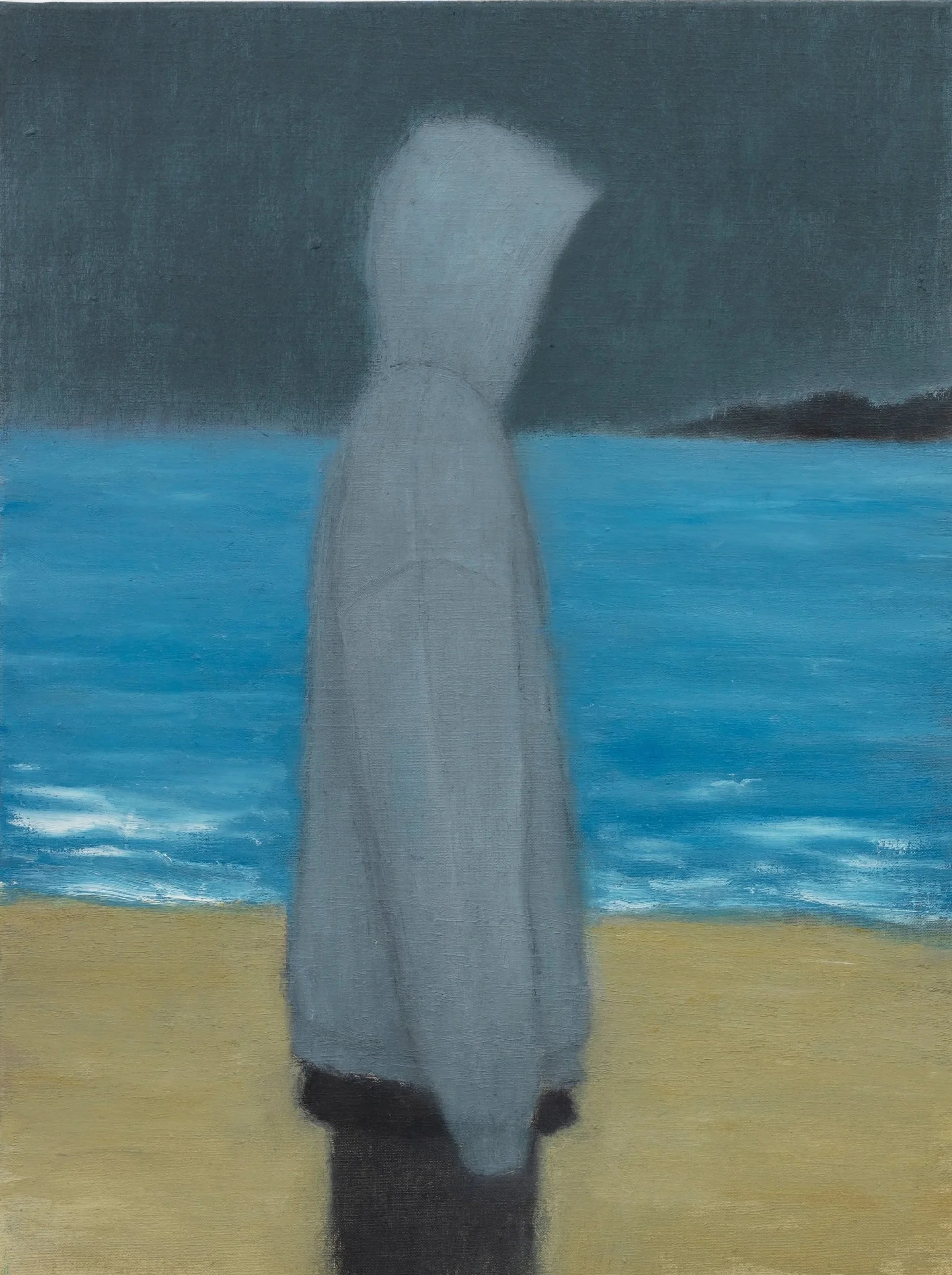
I grew up with the ocean in close proximity and I’ve been drawn to it for as long as I can remember. It gives me a great sense of calm to look at the horizon line, but the ocean also remains a mystery to me. It represents so many opposing qualities, such as beauty and horror, quiet and rage. It is vast, deep and secretive and I employ it to reflect the psychological conditions of the characters in my paintings.
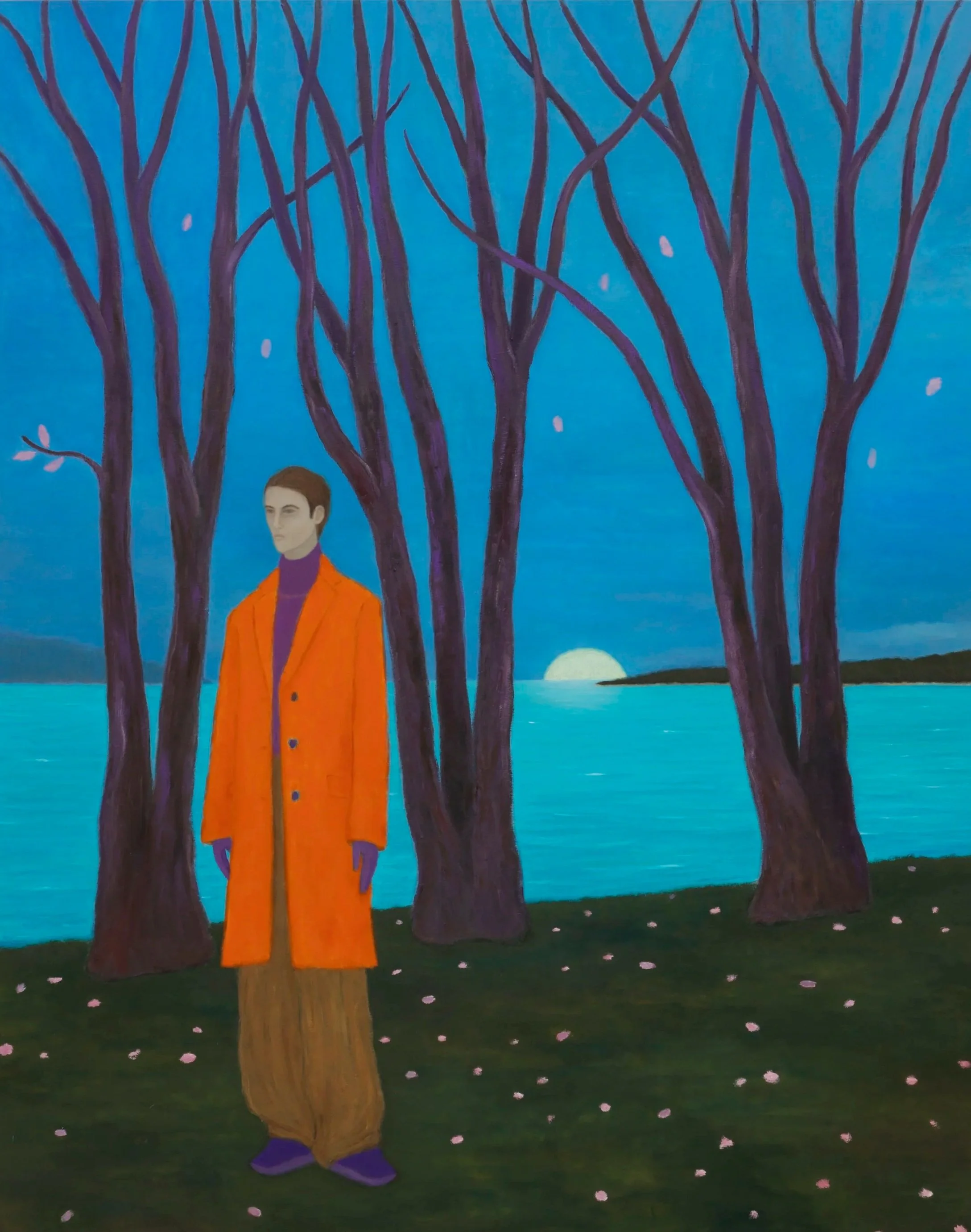
“To me, the purpose of painting, of all art, really, is to present us with alternative realities, showing us alternative ways of being in the world.”
There is a recurring sense of displacement in your work – people who don't quite belong to their surroundings, places reconstructed from memory, images assembled from fragments. Is belonging something you've personally found difficult to locate in your own life?
Personally I’ve always had a strong sense of solitude and never felt like I truly belonged anywhere. I’ve lived in Berlin, London and New York and am now back in my native Copenhagen, but the feeling remains no matter where I am. However, I imagine that the feeling of displacement is quite common among artists, as we exist somewhere on the periphery of normative society and tend to live a bit in our own heads.
We now live among an extraordinary number of images depicting things that never actually happened. Your paintings also construct fictional realities from fragments, but through the physical process of painting. Has our increasingly unstable relationship with the image changed what painting means to you?
Art is real but it’s not fact. Unlike a manipulated photograph or an AI-generated photographic image purporting to represent an objective reality, a painting is knowingly an interpretation, no matter how realistically its subject is rendered. To me, the purpose of painting, of all art, really, is to present us with alternative realities, showing us alternative ways of being in the world. Art is the product of the artist's imagination and is not bound by universal truth, and therein lies its power.
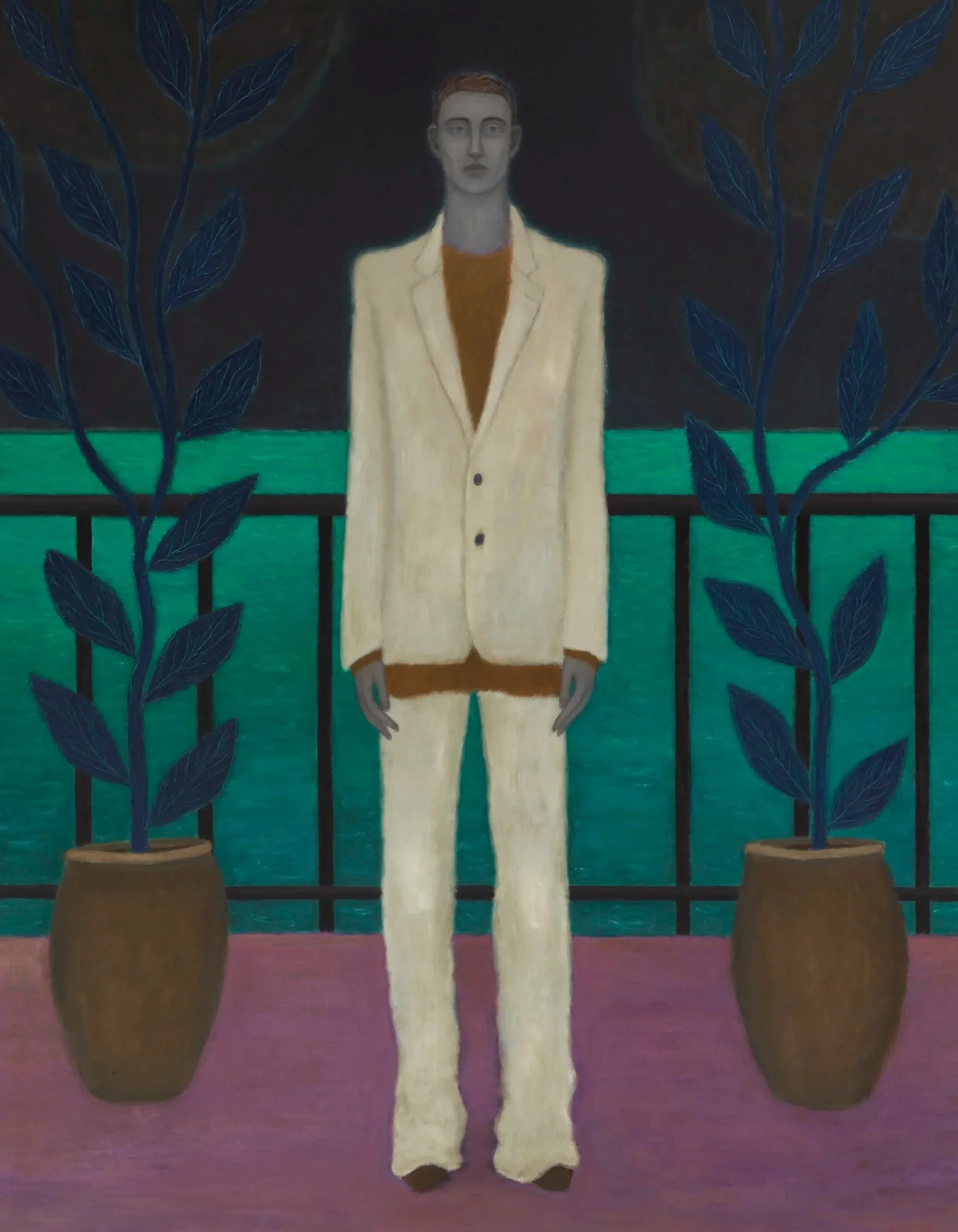
“We all contain multiple identities, and while they might feel in conflict with each other, they are all part of a whole.”
You once moved away from figuration because abstraction freed you from narrative. Now the human figure has returned. Why? Did you eventually discover something that abstraction couldn't give you?
I discovered that I had lost my freedom. By setting parameters for what my work could be, I restricted my ability to utilise my full potential. I really enjoy painting both the figure and the more abstracted passages in the background, exploring different techniques and experimenting with the materiality of paint, and I didn’t want to rob myself of the full experience of painting.
Your work has repeatedly moved between opposites – beauty and destruction, control and accident, belonging and displacement, figuration and abstraction. Do you think contradiction is ultimately where you feel most comfortable as an artist? If so, why?
I think contradiction is part of the human condition. We all contain multiple identities, and while they might feel in conflict with each other, they are all part of a whole. As a young man I often found it difficult to reconcile my inner oppositions, so I’ve spent a considerable amount of time analysing these internal contradictions, which eventually led me to accept my multifaceted self. I’m a work in progress and have come to appreciate that I will likely never reach a final conclusion as to who I am.
People Are Strange exhibits at Maruani Mercier Gallery until October 31
Introduction & Interview by John-Paul Pryor
Find out more about the artist here
Images (top to bottom): Purple Rain, 2026, oil on linen; Ghost, 2026, oil on linen; Skull Earring, 2026, oil on linen; Vampire, 2026, oil on linen; The Balcony, 2026, oil on linen. All images courtesy of Maruani Mercier and the artist.
Get up close and personal with artists from all over the world and unlock the mysteries of the creative mind.
Read in-depth interviews with the most exciting cultural movers and shakers shaping the creative landscape.
Discover the actors, authors, designers, mavericks and entrepreneurs at the bleeding edge of cultural life.