PEOPLE & SOCIETY: INTERVIEW
Free Your Mind: Leanne Maskell
The Reality Manifesto And Keeping It Real In The Digital Age
BY JOHN-PAUL PRYOR
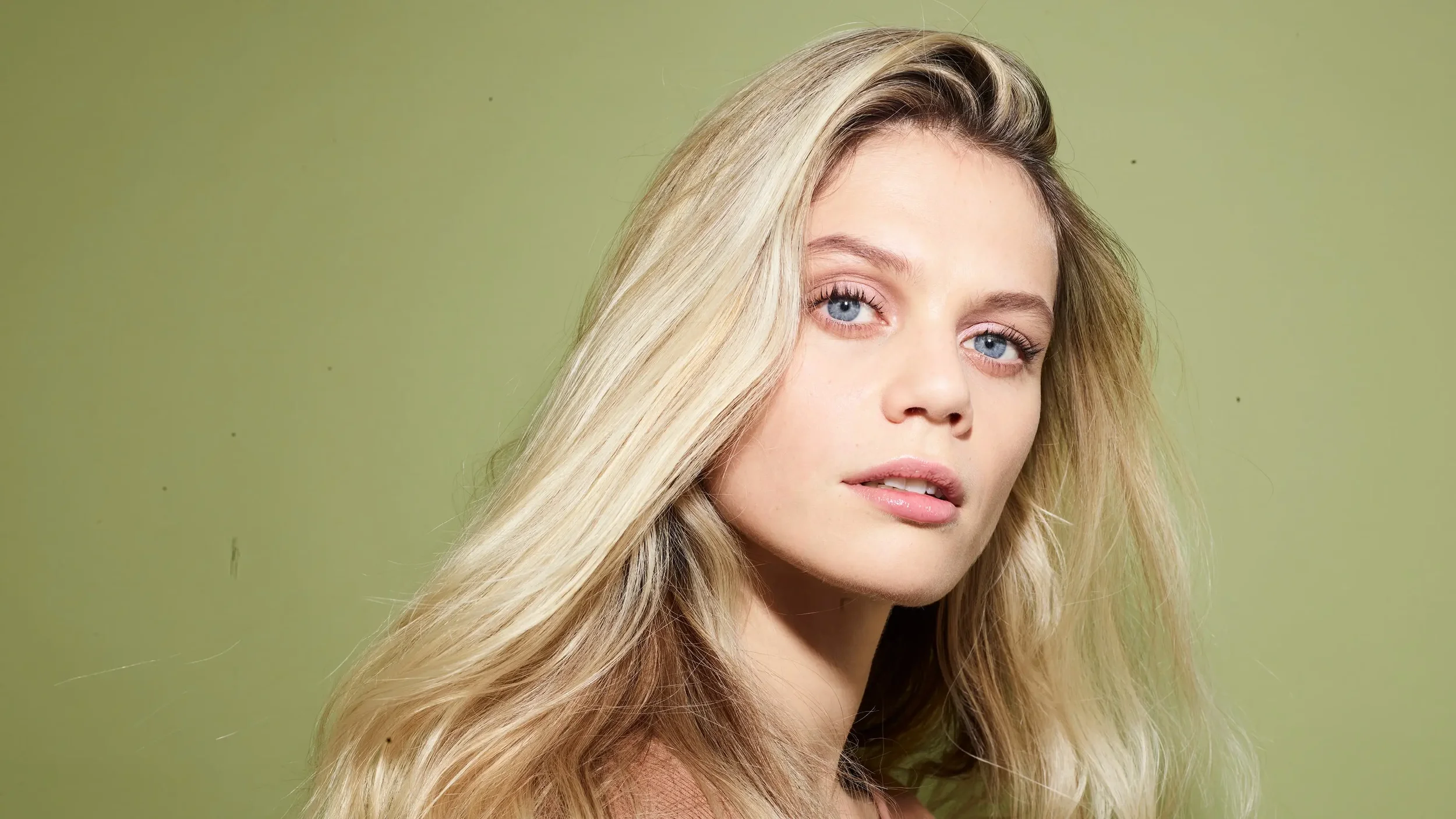
The author and model Leanne Maskell first came to literary attention with her book The Model Manifesto – a best-selling whistleblower title that exposed the exploitation at the heart of the fashion industry. It was a tome forged from the personal experiences of a woman whose modelling career began as a child, and whom had notable success working internationally – being shot for titles such as Vogue and i-D, and brands such as Asos and Urban Outfitters. Despite ‘living the dream’ in the eyes of her peers, Maskell quit the industry at the age of 27 in the grips of profound suicidal depression and suffering from a panoply of eating disorders, which led her to a life-changing rock-bottom and a shift to the legal profession, activism and authorship.
Her second book ADHD: AN A to Z broke new ground in mental health and her third book The Reality Manifesto enters meta-verse territory, seeking to tackle the profound changes the smartphone era has brought to our species - with our lives increasingly, and arguably unhealthily, divided between the virtual and the real – and provide a handbook designed to help readers quit the habit of dopamine-hit-seeking doom-scrolling. Here, she tells FUTURISTIC DRAGON how we can overcome the anxiety-overwhelm of social media, and reclaim our attention and self-esteem from the machine...
How do you think social media in general has affected the communication of our identities to others, and even our relationship with ourselves?
I think of our identities as two-fold: the internal sense of self we have about ourselves, and the external version we present to the world. The more distant these versions become from each other, the more depressed we feel, in masking who we ‘really’ are. I’ve felt this strongly in being diagnosed with ADHD age 25, where I realised I could finally stop trying to fit into what I ‘should’ be like, and instead accept my brain for how it is. Social media gives us all the opportunities to be brands. It makes individuals act like companies, and companies act like individuals. When this external version of ourself becomes adaptable to metrics such as numbers of likes or followers, we lose control over it, and start living for other people instead of ourselves. When we market ourselves as the product, we might feel a sense of objectification and disconnection from who we are, because we’re putting ourselves up for sale. I think many creatives will resonate with this, as I’ve worked with many people who find it very difficult to market their brilliant work within the confines of Instagram. Meaningless numbers can become the new measure of our own self-worth and validation.

“Social media presents a world where everybody appears popular and happy, and if we don’t feel that way, it can leave us feeling like there’s something wrong with us.”
Do you think the selfie culture has brought an inherent narcissism that is present in human nature to the fore?
In The Reality Manifesto, I write about how our natural human vulnerabilities, such as the drive to compare ourselves to others and strive for self-improvement, are being targeted by technology, such as cameras on smartphones. If we can all be photographers and models, it’s easy to end up measuring your self-worth as the image presented externally to the world. The selfie culture is driving an obsession with self-improvement, which can easily appear as being self-obsessed. However, I don’t think it’s narcissism – it’s more anxiety-ridden overwhelm – the expectation to keep up a perfect online and offline appearance twenty-four hours a day, reply to hundreds of messages a day, and keep up with all of our ‘followers’. We might see selfies, but these represent a serious crisis of self-esteem and boundary issues with the online world.
Do you believe social media is responsible for driving up suicide rates among young people?
In the last ten years, the suicide rate for women and girls aged between 10-24 has increased by 94 per cent in the UK, and the number of people being hospitalised for eating disorders in the UK has risen by over 21,000 people per year. Chapter ‘E is for Expectations’ of The Reality Manifesto highlights the reasons I believe this is happening, based on my own experiences. Social media presents perfection to us, which simply doesn’t exist in reality. No one is happy all of the time, so whenever we’re not feeling great, we turn to Google in an attempt to ‘fix’ ourselves. Social media platforms aren’t free because they’re charities: it’s because their ‘users’ are the products, not the customers. Our attention and insecurities are being hacked and sold to the highest bidder. For a generation of young people who can literally trace back pictures of themselves being born, they have a lifetime of comparisons to meet. Social media presents a world where everybody appears popular and happy, and if we don’t feel that way, it can leave us feeling like there’s something wrong with us.
“Our attention and insecurities are being hacked and sold to the highest bidder”
How do you think our interpersonal relationships have changed since the advent of social media?
Along with the objectification of ourselves, it feels like interpersonal relationships have also become more transactional and externalised, as they’ve literally become more visible to the outside world. We don’t just go for coffee with someone anymore, we can post about it for it to exist forevermore on the internet. This can add an odd sense of value in giving us ‘content’. Particularly as a model, I’ve had relationships with others that felt as though they were based on providing content for each other, rather than genuinely being there for someone when they need it. We’re all so overloaded with digital bombardment from hundreds or even thousands of people on a daily basis, that keeping up relationships with other people in real life can feel exhausting. Keeping up with people on the internet can feel easier than real life, because we can just leave comments on their posts, or view their profiles to get a snapshot of what they’ve been up to. However, this takes away the vulnerability of actually giving them a call or seeing them in real life to find out what lies behind the highlights reel, which we might not even want to acknowledge exists ourselves. It’s like the equivalent of junk food, because these shared moments of vulnerability and support are what strengthen our relationships and trust, not liking a person’s photo of their lunch. Ultimately, having relationships based mainly online, leave us feeling lonely.
What in your opinion are the chief undertakings an individual must embrace in order to become self-actualised? And does it involve ditching the smart phone?
I think we’re living in a world obsessed with self-reflection and self-development, which is taking away the responsibility from companies that are deliberately targeting our human vulnerabilities. To find happiness, try being bored, and see what comes up. The smart phone is obviously a very helpful invention for our society, but it’s also imprisoned us. Instead of being able to switch off on the weekends, we’re available 24 hours a day. I think of it like an extra limb, and the kids I coach simply cannot imagine their life without it even for a day. To be fair, I did this recently and it was INCREDIBLY difficult – and liberating!
Introducion & Interview by John-Paul Pryor
Portraits by Rankin
You can get hold of The Reality Manifesto here, and find out more at leannemaskell.com
Get up-close-and-personal with artists from all over the world and unlock the mysteries of the creative mind.
Read in-depth interviews with the most exciting cultural movers and shakers shaping the creative landscape.
Discover the actors, authors, designers, mavericks and entrepreneurs at the bleeding edge of cultural life