ART & IMAGE: INTERVIEW
Reaching For The Skypath: Cao Jigang
Taoist Poetics, Negative Space And Aesthetic Escapsim
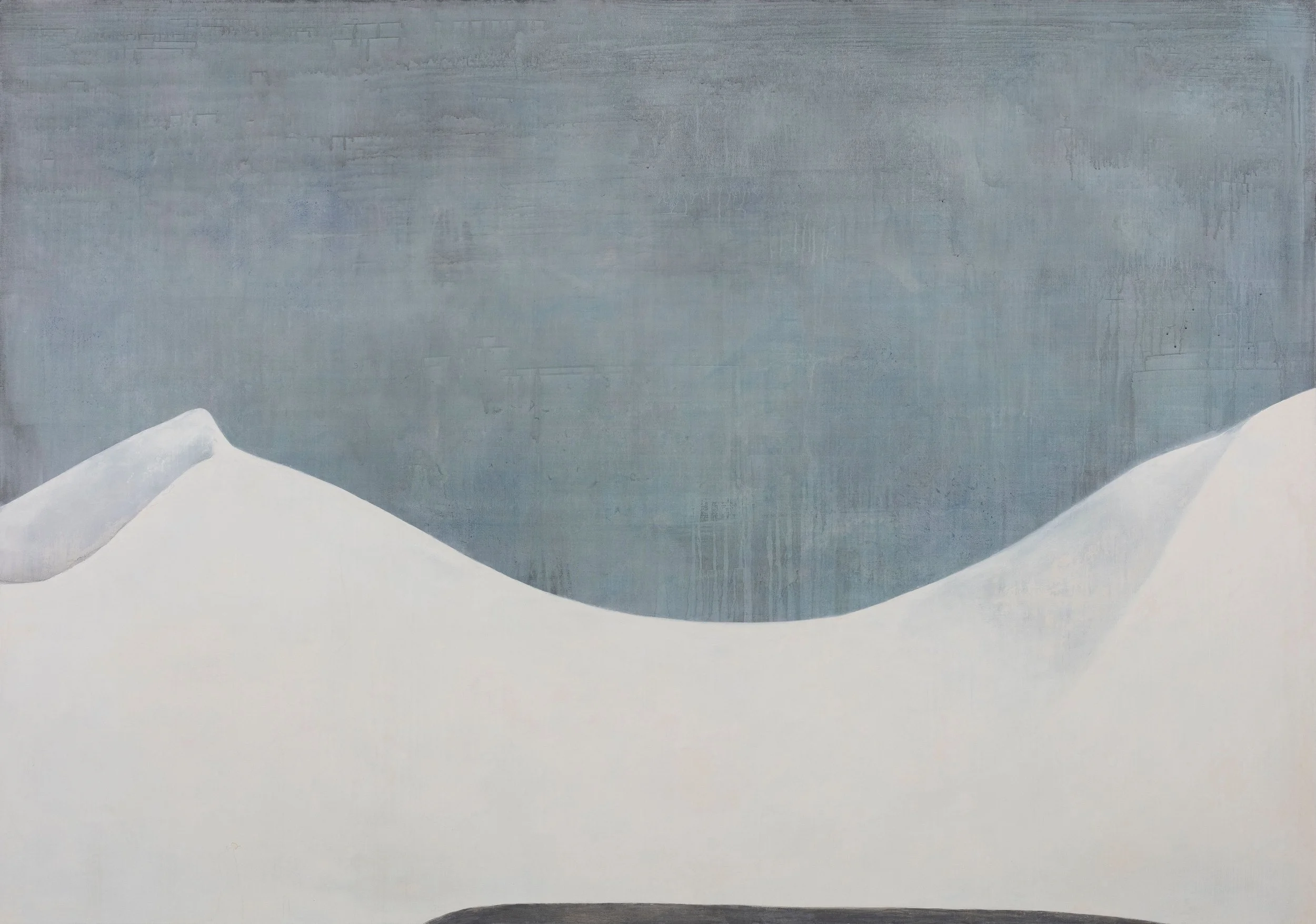
The acclaimed Chinese artist Cao Jigang has spent forty years creating work that transmits an intimate translucent void. Emptiness, in his canvases, is not an absence but a presence articulated through omission. It is almost as if his paintings have been varnished with exceptional patience – layer upon layer both revealing and concealing, slowly building towards a compositional asceticism that reads both as discipline and invitation. The resulting minimalism is not merely stylistic; it is ethical, a withdrawal that creates a vast field for contemplation – in his quiet expanses, one discovers a practiced attempt to align inner weather with outer sky.
As such, Cao’s art reads as a practice of translation of moods, intuitions, and something that might even be called spirituality into the lexicon of the natural landscape – an attempt to inhabit the Taoist injunction of harmony between heaven and man, the unity of nature and humanity. However, he does not proclaim this as doctrine, instead he insinuates it, the way a river might insinuate its presence through a landscape. The result is neither dogma nor demonstration but a lived proposition – that art can be the bridge between a single life and the vast, indifferent architecture of the universe.
Despite many incredible accolades he has garnered in Asia as a legacy artist, it was only last year that Cao made his European debut at Bluerider ART, Mayfair, where he showcased numerous large-scale Tempera Shanshui – a practice that combines traditional Western egg tempera technique with traditional Chinese landscape (Shanshui) to result in his distinctly elegant landscape style. In this interview with FUTURISTIC DRAGON, the acclaimed artist shares insight into his practice, and tells us why his work is intended as an antidote to the chaos of modern society
“I aim to start my work with a calm, stable, and deliberate mindset”
Did you grow up in a creative environment?
My parents were involved in book design, which can be considered related to art. Many of their friends were well-known figures in the literary and art circles, so, yes, I grew up in an environment rich with artistic influence. Coming home from school, it was common to see the house filled with guests, engaged in lively conversations and, at times, spontaneously composing poems or creating paintings. Our home was small, so being in close quarters was a regular occurrence. This environment had a profound impact on me.
Which artists have most inspired you?
Different stages of my life brought admiration for different artists. During my time at the Central Academy of Fine Arts, I mainly studied European traditional painting and was particularly drawn to artists like Rembrandt, Velázquez, and Courbet. Their emphasis on ‘brushwork’ resonated with the expressive quality found in Chinese painting, where brushstrokes and the inherent power of ink play a significant role. Later, I developed an interest in Chinese landscape painting, with works from the Song and Yuan dynasties deeply influencing me. Artists such as Fan Kuan, Mi Fu, Ni Zan, and Huang Gongwang often served as sources of inspiration. After learning the materials and techniques of tempera painting in 2000, early Renaissance artists like Giotto, Fra Angelico, Piero della Francesca, and Uccello had a significant impact on me.
Your work is incredibly spiritual. Do you have any studio 'rituals'?
There are no particular rituals in the studio. It takes about 40 minutes to drive from home to the studio, so I usually rest a bit upon arrival to transition from daily life into work mode. This pause is essential for making the shift. Regardless of whether something joyful, troubling, or infuriating happens in my personal life, I aim to start my work with a calm, stable, and deliberate mindset. This approach is reminiscent of medieval European monks painting religious icons, working with rationality and restraint, focusing on perfecting each section of colour. I also take a moment to rest before leaving the studio at the end of the day.
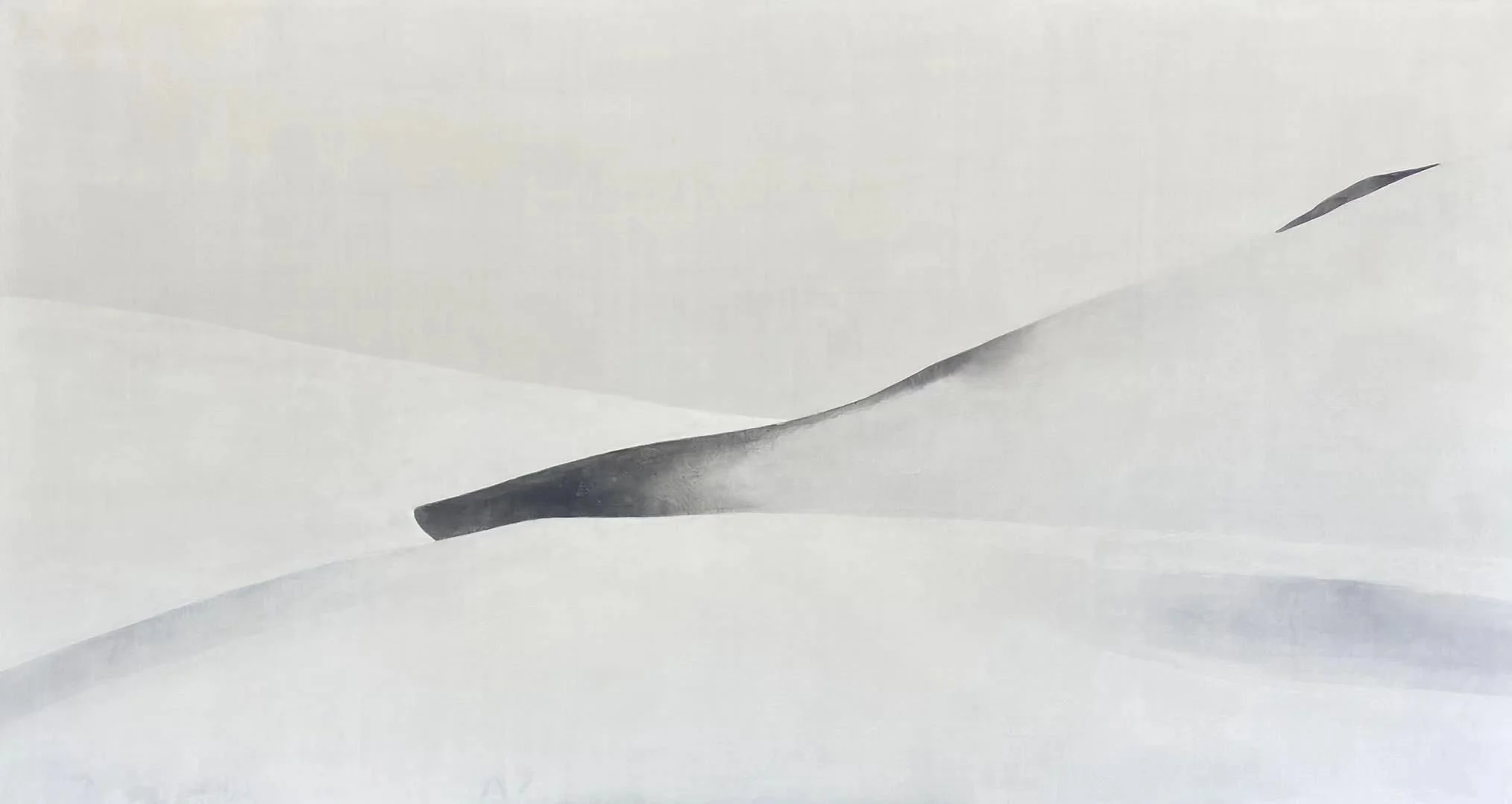
“I aspire to paint landscapes untouched by human influence, even though such places scarcely exist”
Your landscapes have shifted from the realistic (your Great Wall works) to much more abstract. Was this a natural progression over the years or was it intentional?
The shift from realism to a style closer to abstraction was a natural progression, but also intentional. All human actions are guided by consciousness, and even what seems unconscious may stem from a deeper level of awareness. I aspire to paint landscapes untouched by human influence, even though such places scarcely exist today. Any sign of human presence in my work would disrupt the purity of the image. My most recent exhibition was called Skypath, which symbolises looking up toward a vast, boundless space – an alternative realm in stark contrast to the noise and chaos of modern society. Both the title and the artworks embody the essence of traditional Chinese landscape painting’s ideals of returning to nature and the philosophy of seclusion and escapism.
How do you hope viewers will respond to your work?
I am uncertain how viewers will perceive these works. They are neither landscapes nor traditional Chinese Shanshui paintings. My hope is that when viewers look at these uninhabited, silent scenes, their imagination and contemplation are sparked. The large expanses of negative space in my paintings are designed to invite various interpretations and thoughts.
Introduction & Interview by John-Paul Pryor
Find out more about the artist here.
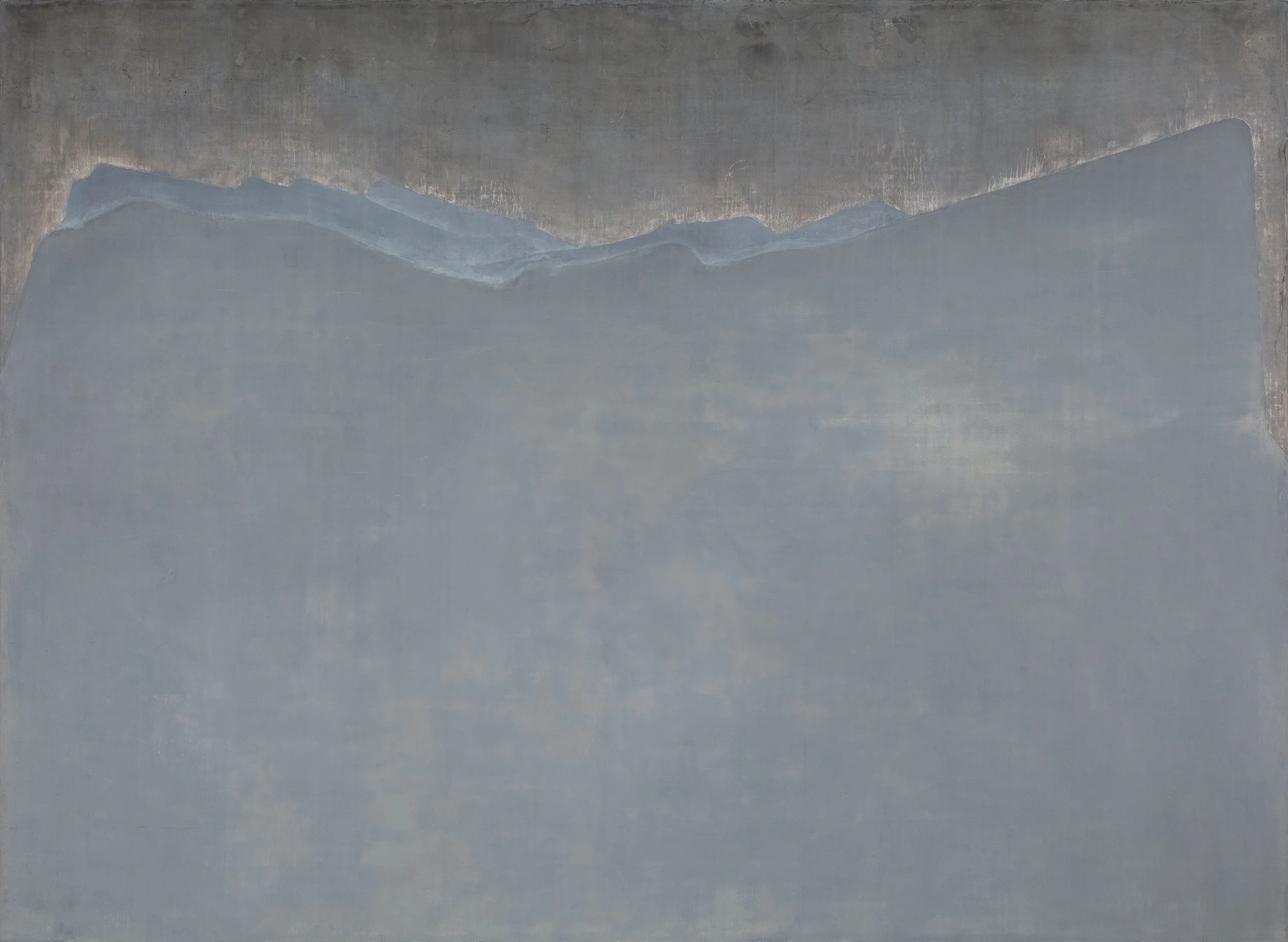
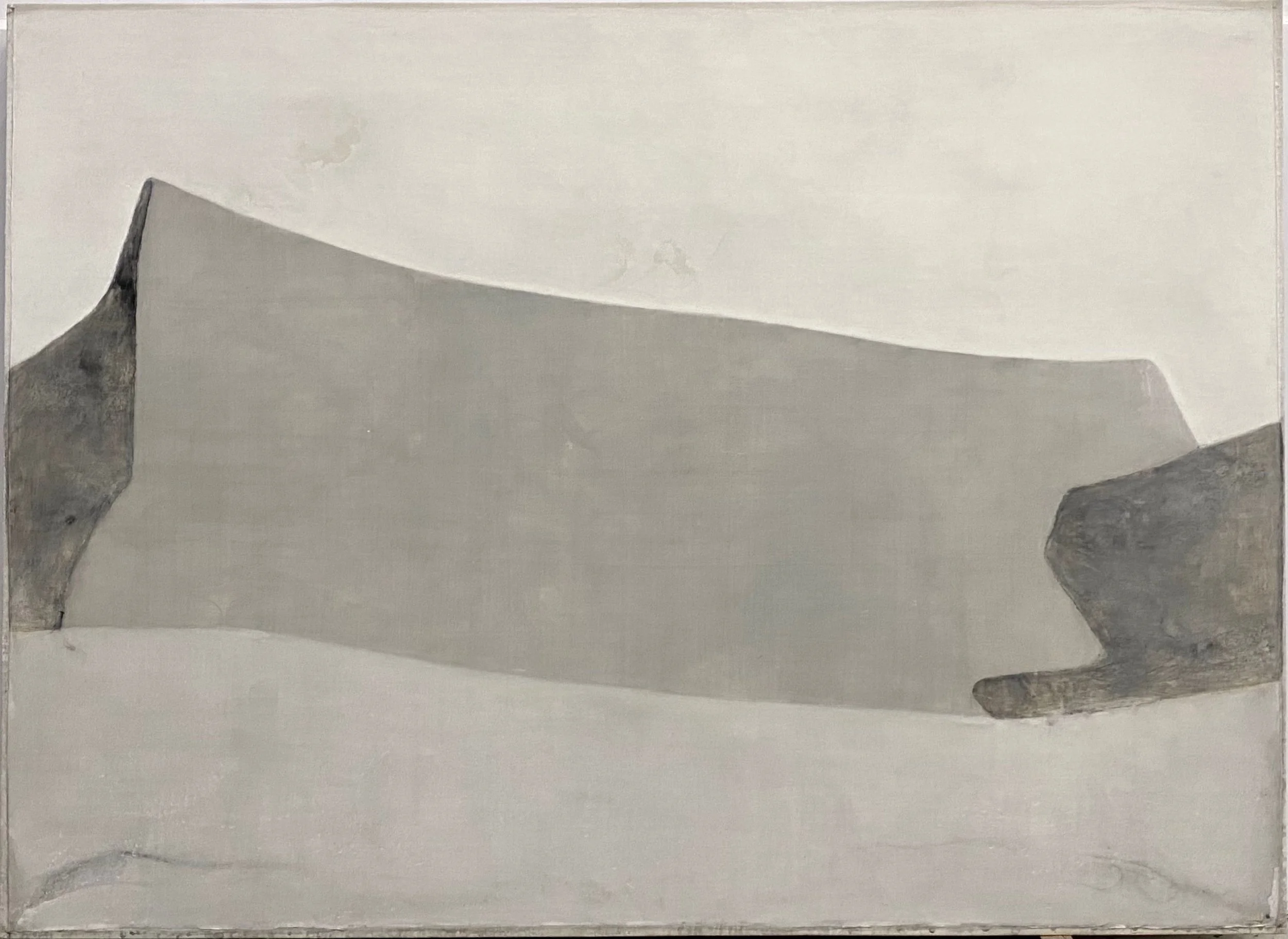
Image Credits: White U Shape, Cao Jigang, 2023, Tempera on linen; Vertical Face of Mountain Cao Jigang, 2022, Tempera on linen; Cool shadows, Cao Jigang, 2022, Tempera on linen; Barren Cold 9. Can Jigang, 2022, Tempera on linen. All images courtesy of the artist.
Get up-close-and-personal with artists from all over the world and unlock the mysteries of the creative mind.
Read in-depth interviews with the most exciting cultural movers and shakers shaping the creative landscape.
Discover the actors, authors, designers, mavericks and entrepreneurs at the bleeding edge of cultural life.