PEOPLE & SOCIETY: INTERVIEW
Existential Eye: Miles Aldridge
Art-Directed Realities, Cinema And The Beauty Paradigm
BY JOHN-PAUL PRYOR
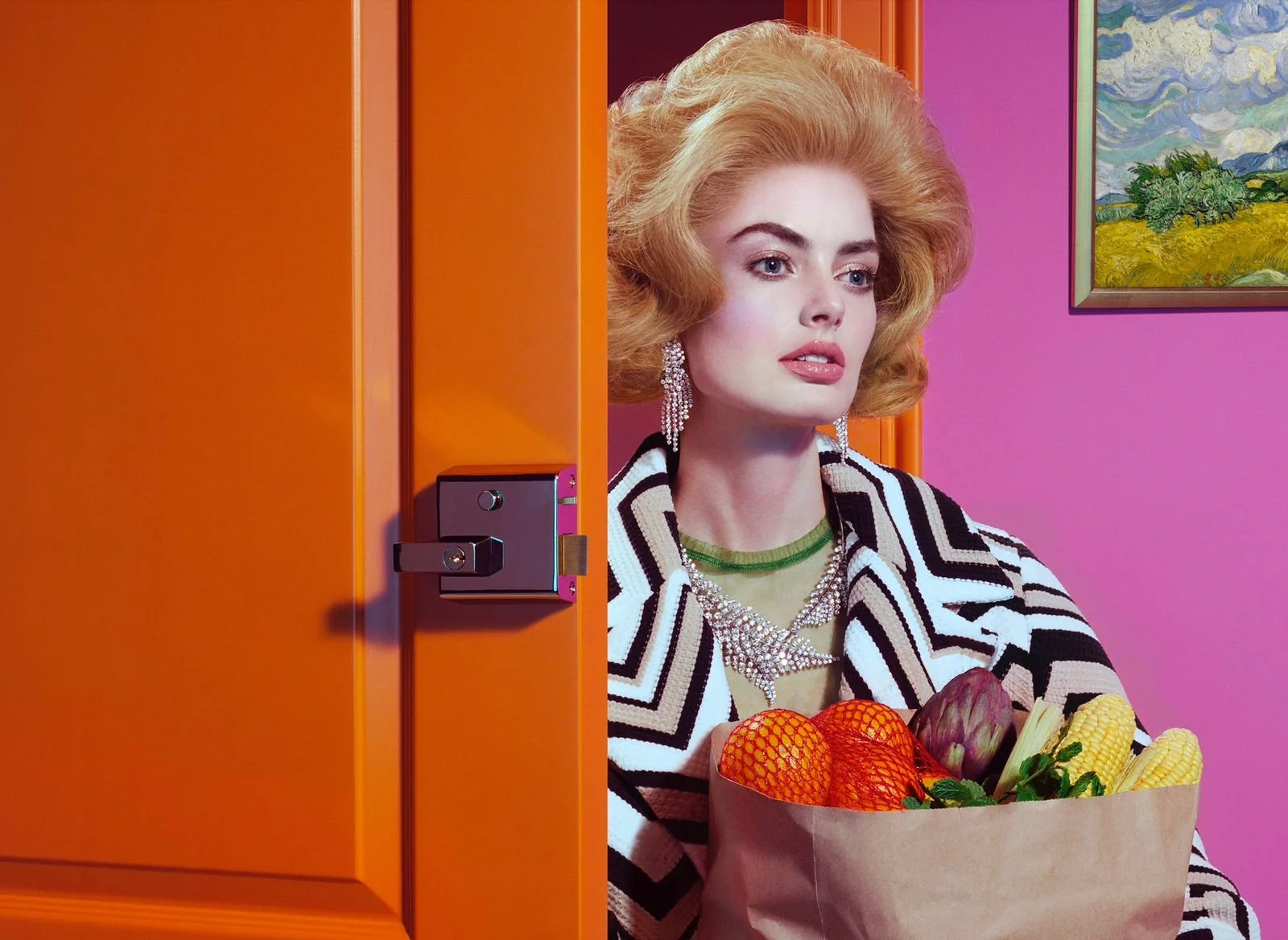
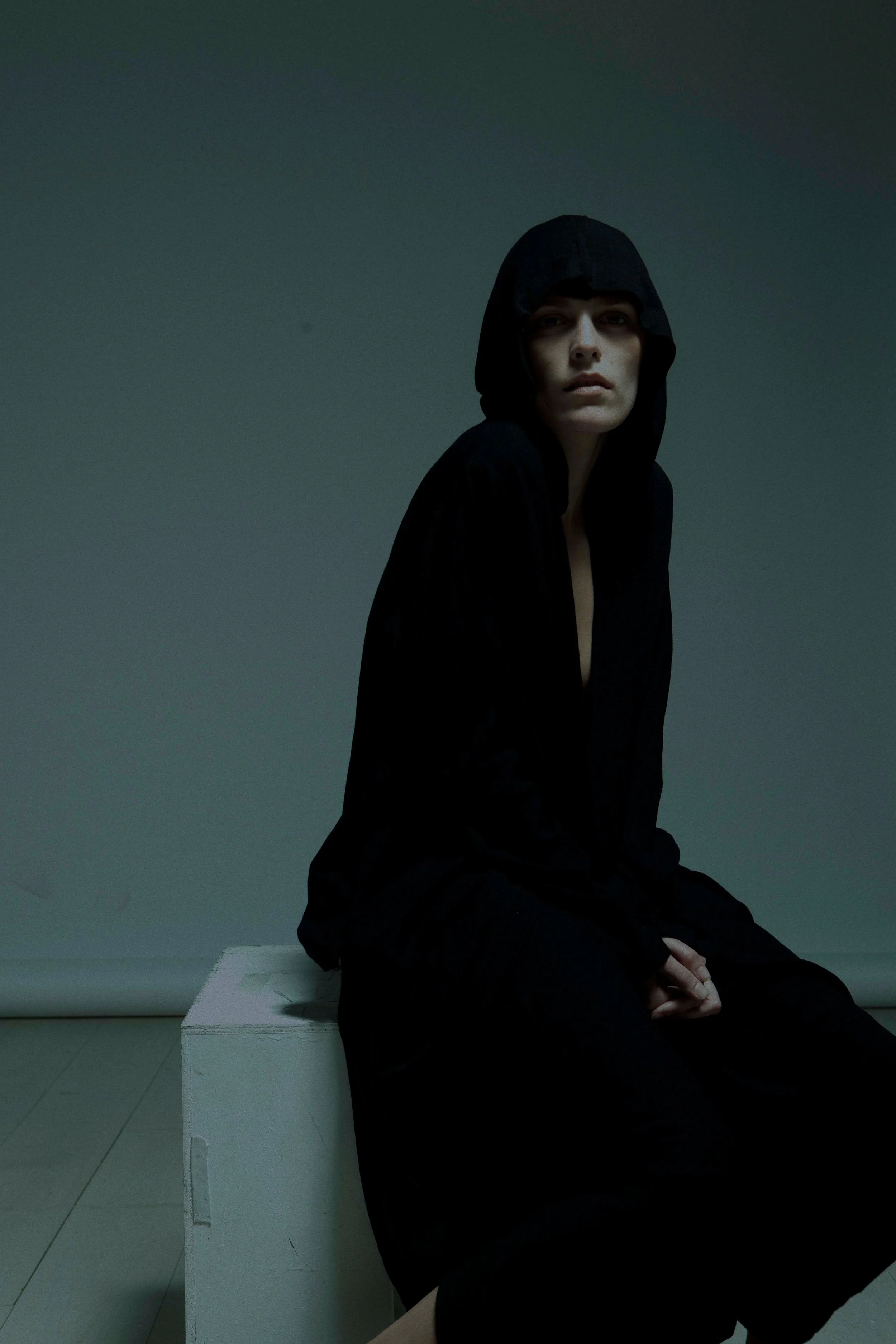
Miles Aldridge is a commanding figure in contemporary image-making, whose theatrically staged images have presented the societally prescribed female ideal as staged ritual for a quarter of a century. In his celebrated oeuvre the make-up is always perfect, the hair immaculate, and the table set, and yet this polished white-picket fence veneer always seems to be threatening to slip into something insolent, violent or tragic – inviting the viewer into stylistically polished surfaces only to then reveal an unsettling undercurrent.
It’s a successful methodology that has witnessed his work challenge the reigning doctrines of beauty across iconic platforms, such as British Vogue and Harper’s Bazaar, with bold and cinematic verve. His heavily staged and colour-soaked photographs seem to borrow from a celluloid dream logic, in which compositions feel like freeze-frames from a film you already half-remember seeing in the theatre of your subconscious. Sure, David Lynch’s domestic nightmares and Fellini’s extravagant melancholy are apparent in his unique blend of artifice and menace, but Aldridge keeps these references resolutely off-balance, folding them back into a language that belongs to the environs of advertising, and the art-directed fashion editorial.
The result is an image-world where surface, story and medium are constantly in conflict – look closely, and you’ll find ennui and domestic drama encoded in the pitch-perfect sheen; the mannequin-like faces of his models etched with calm ferocity. Most recently, the artist has opened up his universe to members of the general public, photographing Polaroids of anyone willing to sit for him in his “15 Minutes of Fame” project, and he is also rumoured to be preparing his first short film. in this interview with FUTURISTIC DRAGON, the renowned image-maker reflects on capturing that frozen, existential instant, and explains why he soon intends to translate the timeless aesthetic of his photography into the language of cinema.
Where does your love of photography come from, and why are you drawn to the cinematic in art direction?
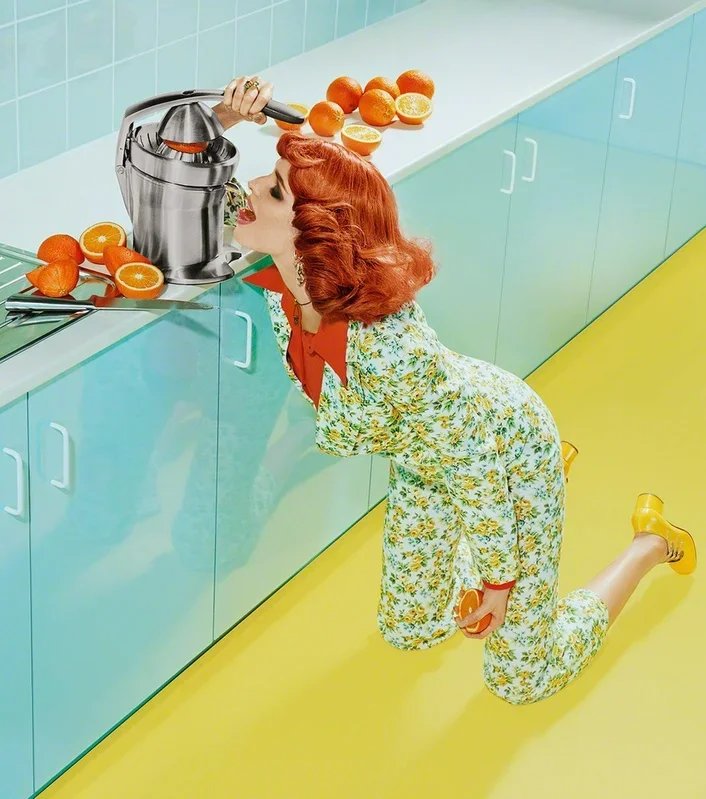
I consider myself not only a professional photographer, but also an amateur photographer, because everything that is included in the word amateur is about love – I love photography. It is impossible for me to do work that doesn’t reference the history of photography, or the history of cinema, because my passion was born from a love for the trickery of artificiality. When artifice was shown in the cinema, I really believed in what I was watching – I believed that James Dean was going to die in that knife fight, for example. When I got a chance to be a photographer, I never really had a problem with the artificial. I never have understood this obsession with documentary photography. I’ve always had this kind of bugbear that photography was given this really dumb role in society, to record the truth, but, of course, it’s never truth – it’s always an art directed reality.
“It is impossible for me to do work that doesn’t reference the history of photography”
What do you hope to communicate in the frozen existential moments you create?
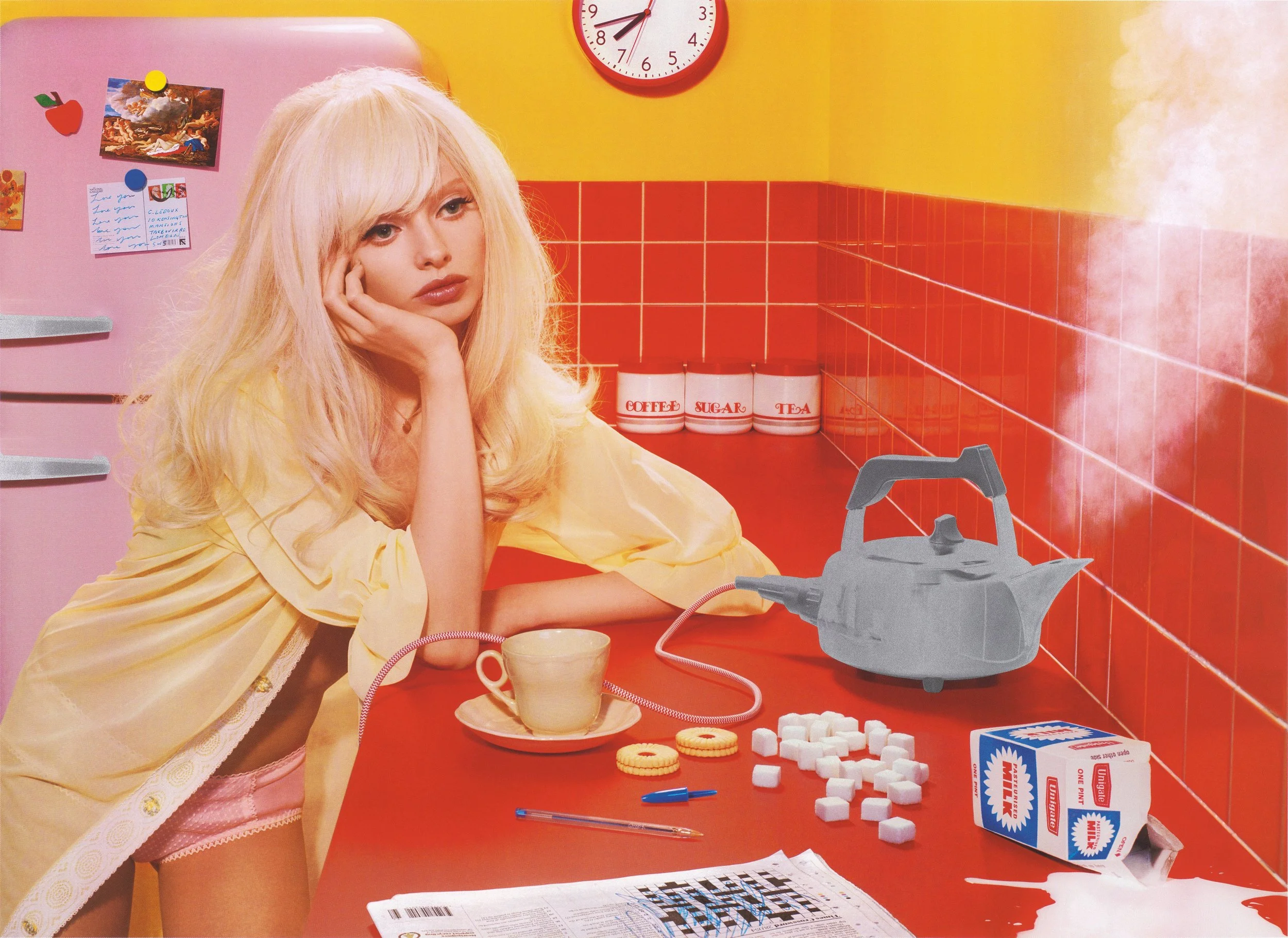
Hopefully it’s the well observed moment that then translates into a kind of visual poetry about how mysterious we are, or what drives us. People often say to me: ‘Oh, your photographs of housewives seem just like mannequins.’ They’re not meant to be mannequins, they’re meant to be stopped in a moment of incredible profundity – about how banal and dumb all the things they’ve been chasing in life actually are; and now that they’ve got everything, they don’t know what they want. It’s that sort of thing. Hopefully, some of them are profound statements, but, of course, if I can kind of put in some humour and innuendo, it helps to buy you into the picture – you need those elements of comedy to lubricate the mind, to let all the kind of profound stuff come through. That’s also the reason I use pop colours – I try and create a sort of a visual feast to draw you in, but then, once you’re in there, hopefully you realise the message is a bit weird. It makes you complicit in the narrative between the artist and the audience. Personally, I like certain things, such as David Lynch and Hitchcock and Helmut Newton, so when I have the chance to do an image I’m likely to take it into those sort of arenas, but of course, I do that with my own history and experiences of the world in there. There is a sort of endless re-examining of visual messages from the past.
I feel like there has always been a sense of subverting the aesthetics of fashion advertising present in your work …
My generation have grown up with advertising, and in my case, not only with advertising but with parents who were involved with advertising, so when I create a pop art image, it’s not only about the mass-consumerism of our society but it’s sort of commenting on other images that have commented on mass-consumerism in previous generations. Whereas Warhol was commenting on consumerism as it was in the 60s, if I do an image that has those sort of qualities, I’m not only commenting on my own experience of consumerism – affecting me and the people I know – but also that lineage from Warhol. In a way, it’s like Warhol kind of revealed it to his generation, but because we’re postmodern, we’re all very aware of it.
“I try and create a sort of a visual feast to draw you in, but then, once you’re in there, hopefully you realise the message is a bit weird”
Speaking of Warhol, you’ve recently opened your practice up to the general public with “15 Minutes of Fame” – what has that been like?
I loved it! Most of all, I think loved the sort of randomness of it – opening up the Miles Aldridge world to any one, not just beautiful models and famous people.We initially agreed that I would shoot for four days at Sotheby's, and I had no idea how it would go. We built a stage and people could book tickets online for a 15-minute slot. It was a huge hit. We shot people individually, we shot couples together who wanted to celebrate their love, we shot families with children – it was all so much fun. And, of course, you become rather like a hairdresser, or a psychologist, and wind up having these in-depth conversations with the people sat in front of you – there was the joy of people celebrating their birthdays and being in love, and then there was the sadness of people with a cancer prognosis. It was so touching.
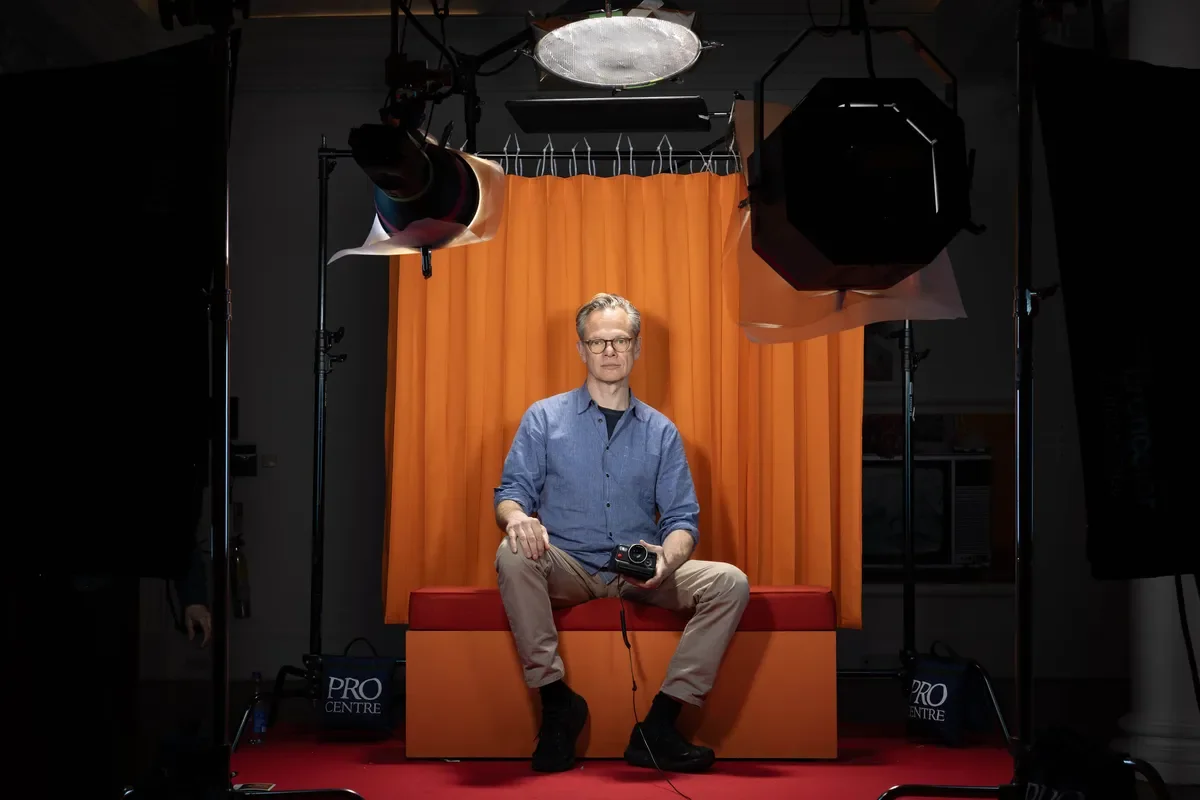
“The idea of a photographer becoming a director feels like a natural progression, but it's actually happened very rarely”
Is it true that you are working on your first film right now?
Yes. I think the idea of a photographer becoming a director feels like a natural progression, but it's actually happened very rarely. I mean, the only one that you could really say it happened to properly was Stanley Kubrick, who was a press photographer. There are wonderful little shorts made by Guy Bourdin, of course, but you couldn't really call them films, in terms of there actually being a story. I think David Bailey was interested in making a feature, but it never happened. It’s interesting to imagine the films these photographers might have made.
It makes sense. Your photography has always had a strong storytelling aspect …
One of the reasons I am very drawn to making film is actually the demise of the magazine as a place to put images. When I worked for Vogue Italia, we would often create a 16 or 22-page story, and by putting all these images one after the other it was almost like you were creating a narrative. That doesn’t happen any more. There has always been a performative or dressing-up aspect to photography, but I think it took Cindy Sherman to show us all how photography and cinema are related. Her work has always played with the language of cinema – a close-up, a wide shot, an establishing shot, a reaction shot – In many ways, the whole idea of treating a photograph as if it's a film comes from her.
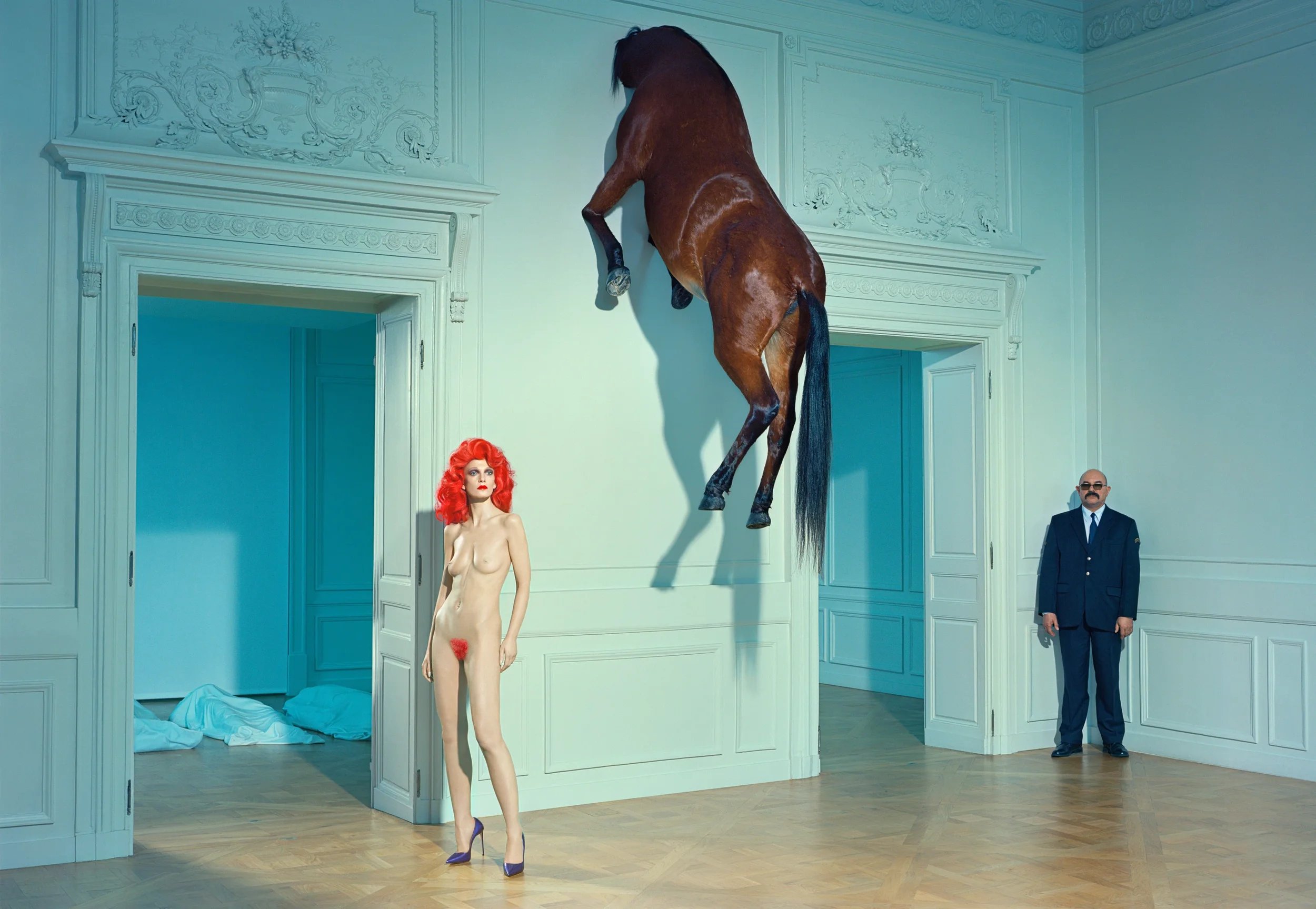
“I think that idea of recording the here and the now, or passing comment on it, is exactly what anyone in the arts should be doing”
You’ve talked in the past about Fellini as an important influence, what do you love about his work?
What I like about Fellini is that he’s taking things from his present world and reimagining them in a way that reveals the dark side. La Dolce Vita, for example, was basically a re-enactment of several episodes that had been reported in the press – whether it was a Hollywood movie star coming to Rome, or some children seeing the vision of the Virgin Mary, or the transportation of the statue of Christ by a helicopter. These were things that Fellini had read about and he’s commenting on it in a subtle way. I think that pretty much sums up what I believe an artist should be doing. The Italian word ‘Moda’ for fashion means that it’s literally ‘here now’ – I think that idea of recording the here and the now, or passing comment on it, is exactly what anyone in the arts should be doing.
Would you say that one of your aims over the years has been to subvert the medium through which you’re expressing your art – you express some quite dark elements of the human condition in your work. …
Yes, you’re right, my work does have a very dark undercurrent to it – Vogue Italia have always understood the value of that dark spin – but just like Fellini seeing that the world is a rather dark and twisted place through Italian media, I read The New York Herald Tribune and have the same feelings. So, when I’m asked to do pictures about the world, I have to include this cynical element – whether it’s about motherhood or about cooking or vanity, everything has to have a slightly bittersweet quality to it. The trick is to comment on it in an intelligent way, not to say ‘this is bad, this is good’ – that kind of message is not really smart. It’s much more intelligent to lead the viewer into asking questions themselves. I think art should be about contemplation.
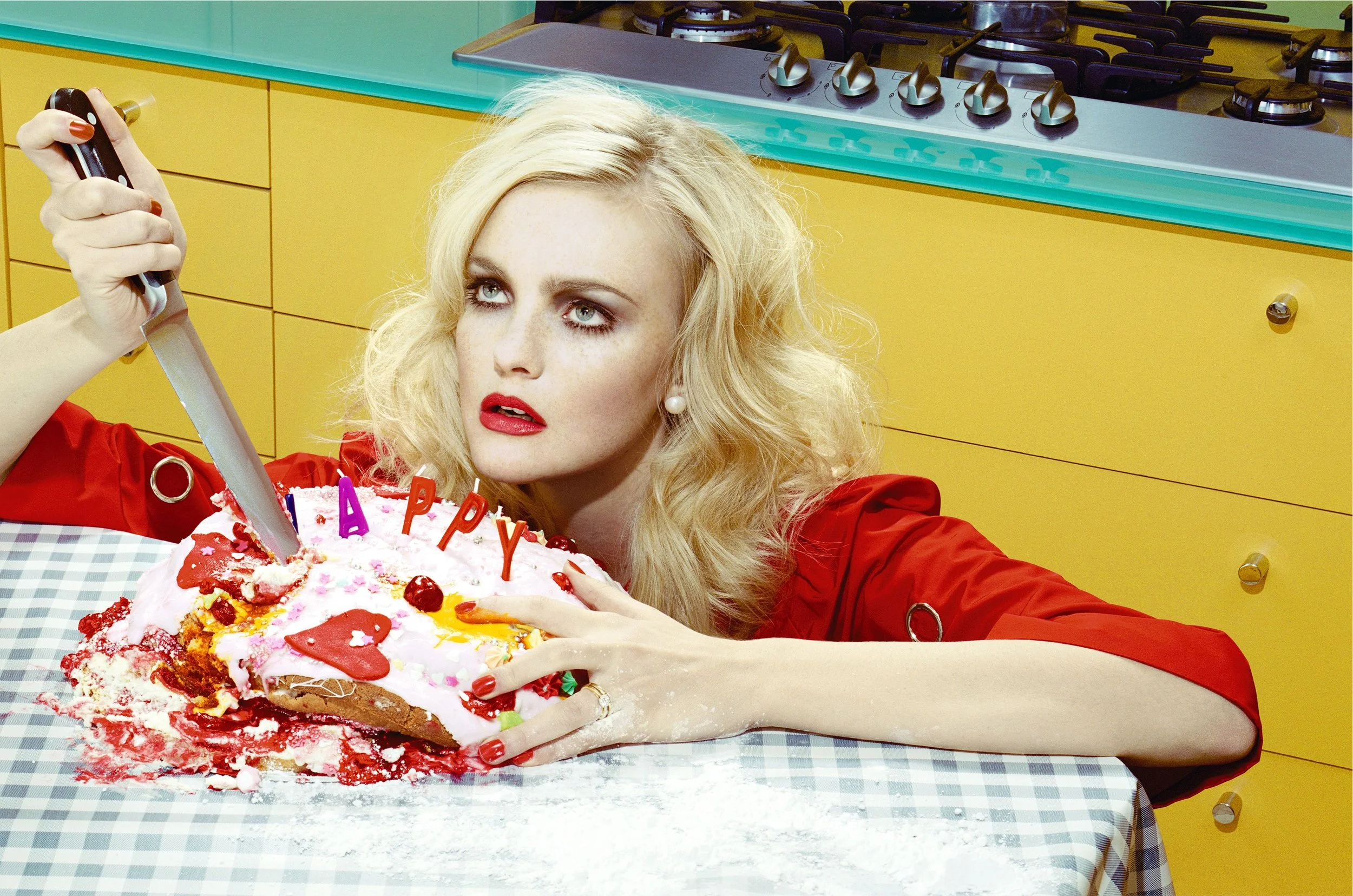
“I am trying to create a fascination, so that the person trapped within the rectangle of the picture draws you into the cinematic world of somebody like Hitchcock”
Do you always create a sense of a backstory for your subjects before shooting your images?
I always plan my pictures pretty intensely, but I have this ability that when I put my eye into the camera I see the person for the first time through the frame, and I suspend disbelief. I really believe I am in the bathroom with that girl – I’m her boyfriend, or I’m her brother, and I’m trying to take a picture from the best angle I can. I become again the amateur working out the best angle to shoot from. Diane Arbus said something that I love – she said that when she enters a room, she never likes to adjust anything, or move anything; she’d rather position herself. I think it’s a really nice rule, so even if I’ve built a bedroom, or a kitchen – or whatever – rather than moving everything around on-set, I actually move myself to find what I am looking for. I am trying to create a fascination, so that the person trapped within the rectangle of the picture draws you into the cinematic world of somebody like Hitchcock.
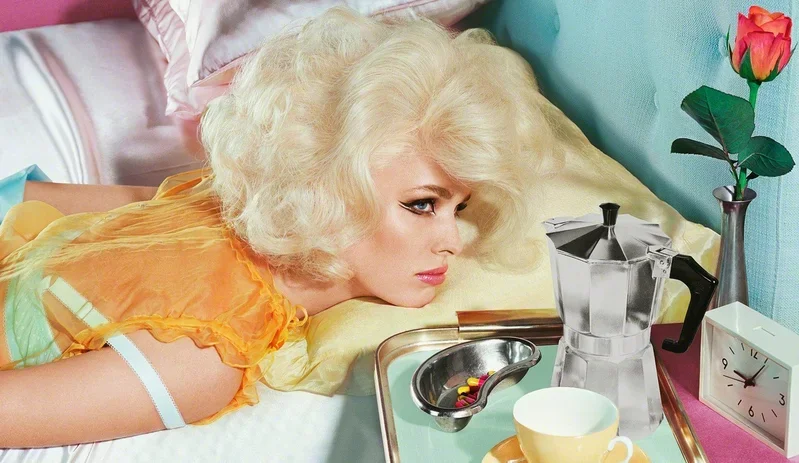
“One of the reasons I am very drawn to making film is actually the demise of the magazine as a place to put images”
We’ve spoken before about JG Ballard as being a big influence on your work. Do you think society is increasingly sliding towards one of his dystopian visions?
I think Ballard was a genius in the same way that George Orwell was, but Ballard’s vision of the future was actually tomorrow – it wasn’t as far away from reality. Ballard was kind of able to look at our culture, you know, the love of the car and the obsession about pornography and put those two things together in his book Crash and create this character who could only exist – to use that word ‘Moda’ again – in that moment where the automobile was being so celebrated in advertising as an appendage to your masculinity, and he married that with the obsession with Hollywood superstars like Elizabeth Taylor. So you’ve got the car as a pop art image, you’ve got the woman as a pop art image and you’ve got the crash of two things together – it’s an amazing set of pictures to go into anyone’s mind. Ballard is just so brilliant at seeing the cracks in society. I was reading some interviews with him again recently and he loves the idea of how we are all incredibly civilised, and we all drink white wine and hold hands together in some palazzo, and everything seems kind of harmonious, but actually the palazzo is sinking and the wine is sour – it’s all falling apart. I guess I have my own parallels with that. I was quite aware of the trickery of fashion photography early on, so when it was given to me to create images about women it seemed very natural to highlight the cracks in a certain lifestyle, and that’s what I’m interested in. It’s not like I’ve discovered that, but I think it’s why my work has been well received lately. It just seems that the ideas in the work have a parallel with the dissatisfaction of people living in this weird period of history.
Introduction & Interview: John-Paul Pryor
Find out more about the artist here
Images (top to bottom): Doors #2, 2023, screenprint in colours; Venus Etcetera (after Titian) 2021, screenprint in colours with silver ink. New Utopias #5, 2018, screen-print in colours with silver ink. 15 Minutes of Fame self-portrait, 2024; Untitled (after Cattelan) #3, 2016, chromogenic print; Home Works #7, 2008, chromogenic print. All images courtesy of Miles Aldridge.
Get up-close-and-personal with artists from all over the world and unlock the mysteries of the creative mind.
Read in-depth interviews with the most exciting cultural movers and shakers shaping the creative landscape.
Discover the actors, authors, designers, mavericks and entrepreneurs at the bleeding edge of cultural life.