STYLE & CULTURE: INTERVIEW
American Power: Mitch Epstein
Corporate Dominance And Ethical Decay
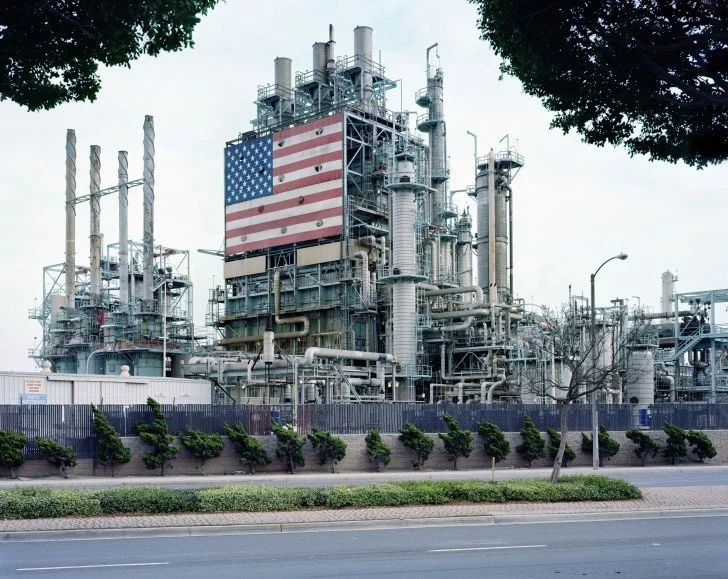
Mitch Epstein is often described as a photographer who has spent a large fraction of his life assembling an elegy for a country that continues to insist it is invincible. But that reading is an over-simplification, partly because Epstein’s work refuses easy declamation and partly because what he does is less elegy than a form of patient accounting – an inventory taken at the intersection of entitlement and entropy. His iconic American Power series, made in the noughties, still reads like a ledger compiled by someone who has been deputed to record the nation’s habits and who, by dint of prolonged looking, becomes capable of translating habit into character.
Epstein has always approached sites of consumption and extraction with a kind of civic coolness, the observational stance of a chronicler who knows that outrage is rarely as useful as specificity. He frames factories, strip mines, power plants and suburban sprawl with the calmness of a person cataloguing objects for a future jury. The immensity of the American appetite for oil, for electricity, and for the faint consolation of convenience, is laid out without flourish, and the moral questions appear in the seeming banality by implication, a slow pressure that accumulates in the negative space of the images.
There is something of the journalist in Epstein’s detachment and something of the moral philosopher in his patience. He is not an agitator; he is not a pamphleteer. He is, rather, the kind of artist who trusts the camera to do its work – to hold things steady long enough for the contradictions to become legible. The result is a body of work that nudges you into an ethical awareness without ever hauling you there by the collar. Corporate dominance and ethical decay are not shouted from the rooftops; they are revealed in the choreography of pipes and pylons, and in the exhausted geometry of parking lots
What makes American Power resonate now, and what ensures its vitality beyond the temporal circumstances of the noughties, is that Epstein’s gaze translates the infrastructural into the existential. His photographs hold up a mirror not to policy debates alone but to the quotidian rituals that sustain those policies. Consumption is rendered as character trait; extraction becomes a kind of national temperament. And in that translation there is a necessary ambiguity: Epstein neither indicts nor absolves so much as records, and in doing so he invites the viewer to inhabit the moral spaces his photographs open up as both spectator and census-taker, invited to tally the details even as you feel the implications gather.
When did you first become interested in communicating via the medium of photography?
My beginnings in photography go back to when I was a student at a New England boarding school in the late 60s. I was the editor for my high school yearbook. It was a very traditional male boarding school and it was at a time that was really quite tumultuous. The Vietnam War was taking place and the year I graduated I wanted to do something more maverick with the book – I wanted to break it open somehow; to see how photography could put the year that I graduated into the context of something larger. That was probably my real beginning, what spurred my interest in photography as a communicative medium.
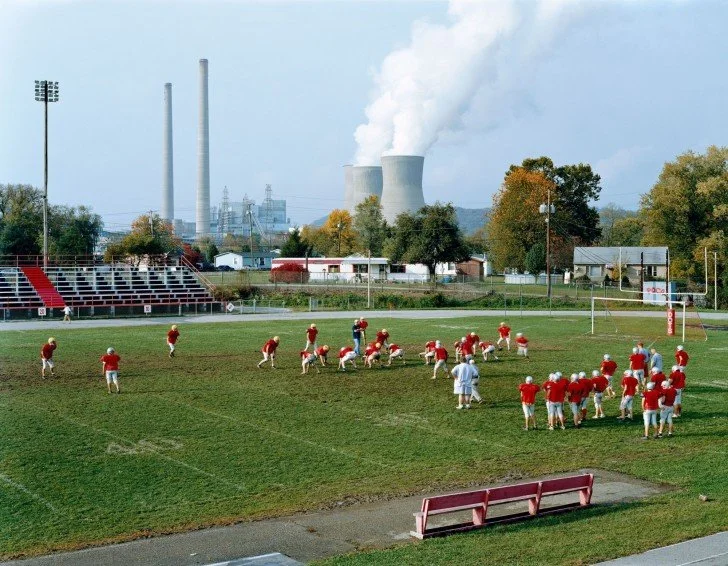
“I think what the project calls to light, and what was very central to the whole thing, was where corporations sit within this
whole power structure”
You’ve never described yourself as a political artist but that sounds like the work of a politically engaged young man…
Absolutely. I was quite surprised when I went back and looked at this high school yearbook because, as you say, I have never described myself as a political artist, and yet I had done these seminar discussions on subjects like the war and the environment. I’d actually forgotten that I’d done that. I’ve certainly been mindful and had concerns about environmental issues over the years, but I didn’t come to the project American Power as an environmental activist, or with a preconceived agenda.
Then why the provocative title American Power?
I didn’t even know it was going to be titled American Power when I began it in 2003, but when I did define it as such, I wanted to enable it to be somewhat elastic and to see how far out I could let it span with just the very notion of power itself. I do work in a certain documentary tradition, but I’m not a strict documentarian, and I didn’t plan this as the definitive book or project. It wasn’t even really begun as a book, but as a project looking into the state of American power as it relates to energy. It’s a complex and unwieldy subject, and I wanted to let it be such because that was a way for me to work artistically.
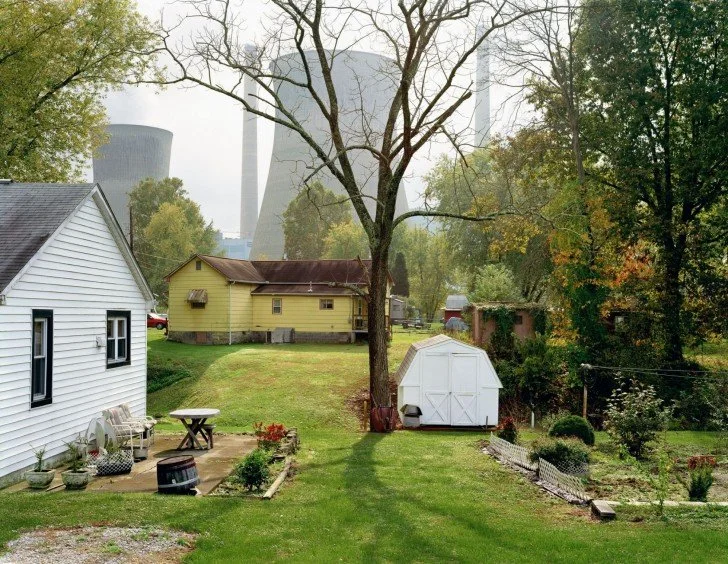
What did the series teach you about the American psyche?
What I understood from doing American Power is that the American psyche is very influenced by a certain historical precedent, which goes back to this era of when we were pioneering out way out through the West. We’ve always had the sense of our nation as this country of big space, and of having this primary right to protect individual ownership. My generation in particular are still coming out of this mind-set where we designed a certain lifestyle based on the suburb. The whole model that, regrettably, we have established as an example and exported to developing countries is sadly now very difficult to retract. I think what we as Americans can do now, and have the responsibility to do, is to come up with a new and more viable model, because we have to take greater responsibility for what we’ve created.
Do you think what’s been created is a corporate monster?
I think what the project calls to light, and what was very central to the whole thing, was where corporations sit within this whole power structure. The interdependency between corporations, government, the power of the media and civic power – all these forces are in some complex interrelationship to each other. But in the end, I do feel the corporations do have the upper hand.
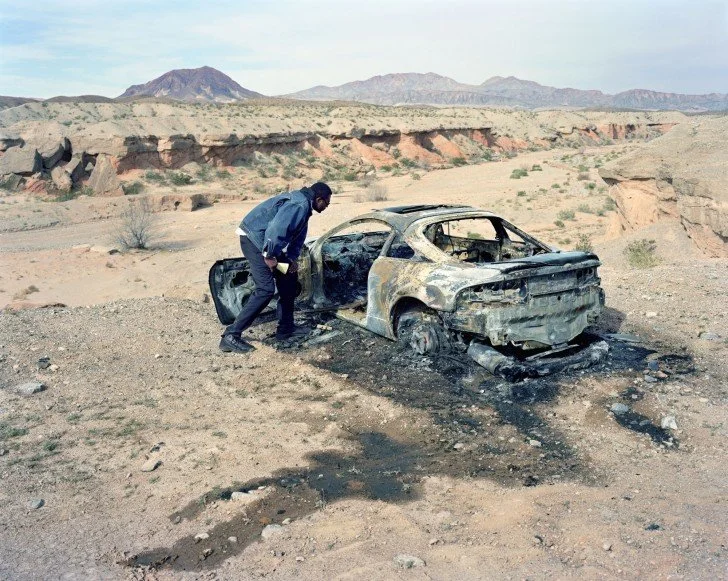
“There was a crack in the sense of promise and possibility I grew up with”
Why do you never describe yourself as politically motivated?
I don’t want to be in service to a political agenda – a political artist is one that is in service to one-dimensional thinking. Yet the power of politics was one of the many powers I felt was essential to investigate with American Power. I’m glad I did because I think it added an important dimensionality to the work. I spent about a decade or so from the late 70s – well, more than that, almost 15 years – where a lot of my geographical orientation was outside America. By the time I came to work on my project Family Business – which was a piece of work I did about my father and my home place of Holyoke, Massachusetts – I began to focus in on the ways in which things were no longer working in the way that they once did. My father believed in the ethic that if you worked hard you’d do well, and all of a sudden those beliefs were unravelling for him. By looking deeply into his life and peeling back the layers to understand in what ways he was both victim and also participant to his situation, I began to understand that there was a crack in the sense of promise and possibility I grew up with.
Introduction & Interview by John-Paul Pryor
Get up-close-and-personal with artists from all over the world and unlock the mysteries of the creative mind.
Read in-depth interviews with the most exciting cultural movers and shakers shaping the creative landscape.

Discover the actors, authors, designers, mavericks and entrepreneurs at the bleeding edge of cultural life.