FUTURISTIC DRAGON: EXCLUSIVE
Soul Survivor: Nathaniel Mary Quinn
MeetThe Man Behind The Iconic New Album Cover For The Rolling Stones
BY JOHN-PAUL PRYOR
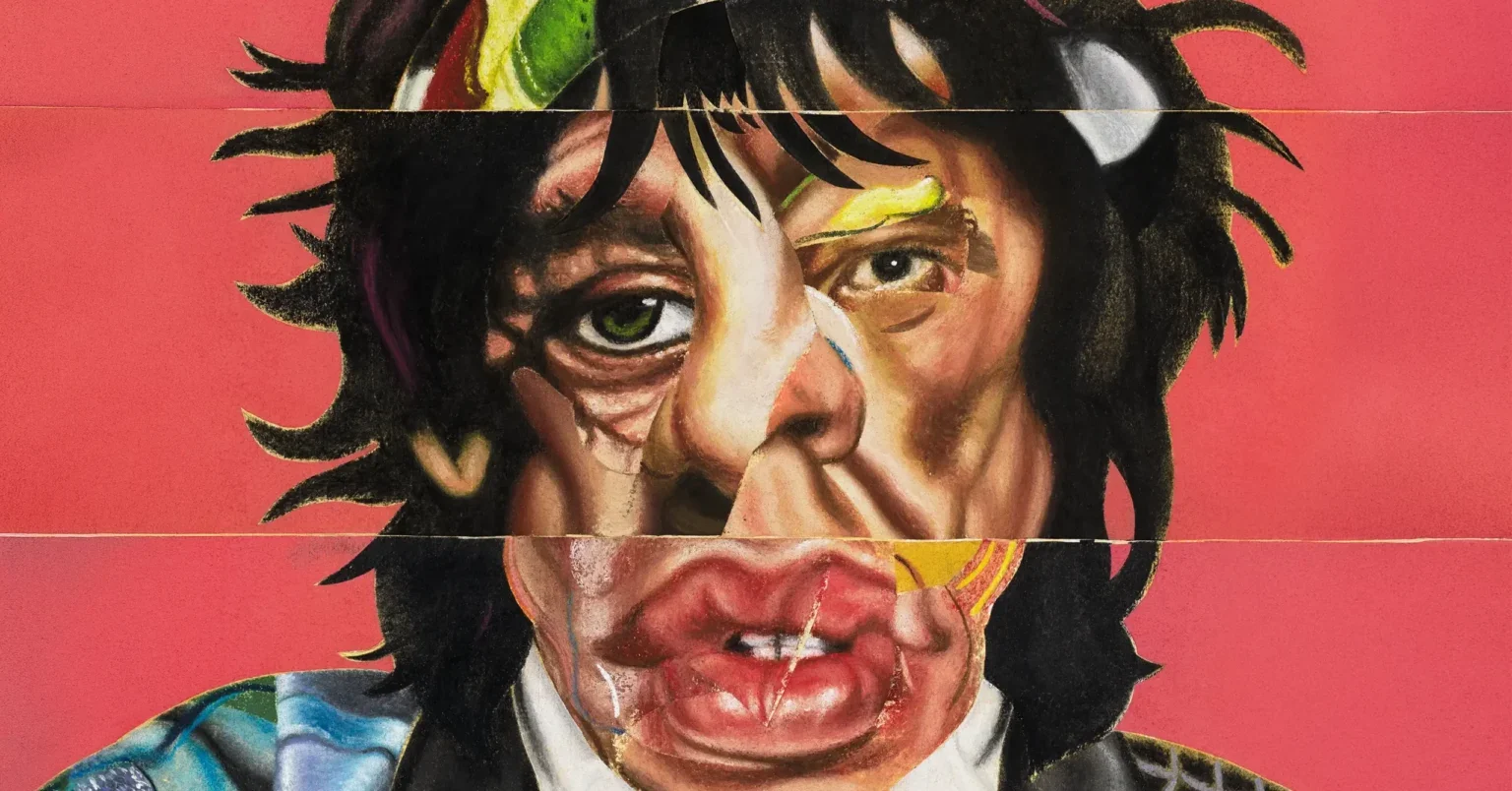
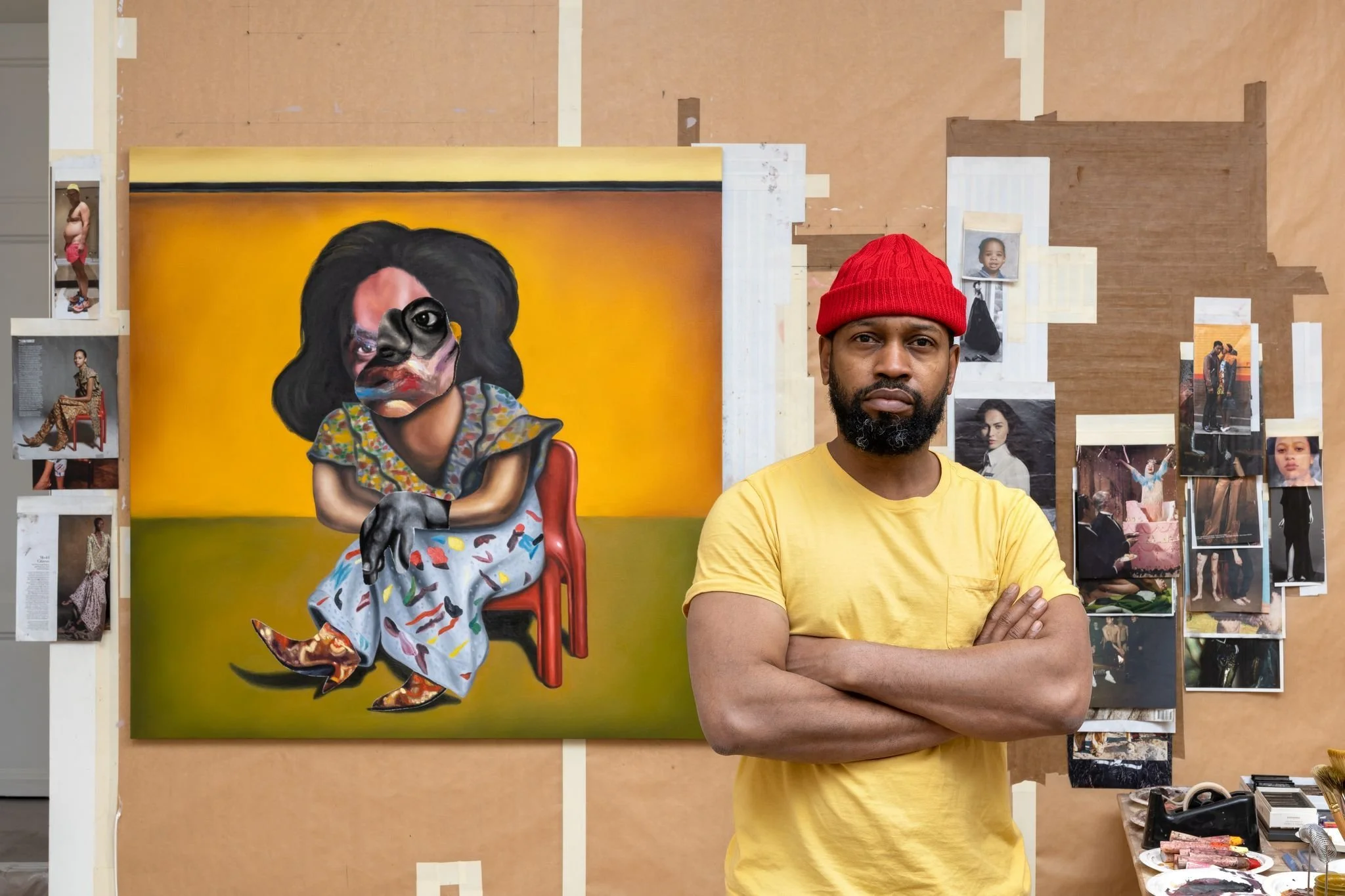
The American artist Nathaniel Mary Quinn is the man behind the cover of the hotly anticipated new album from The Rolling Stones, and his own life unfolds like the narrative of a classic blues track, or the plot of a coming-of-age movie in which seemingly insurmountable challenges shape destiny.
He was raised in the infamous Robert Taylor housing project in blues-soaked Chicago, a built environment of public housing that provides shelter and, by the same stroke, yields isolation, and it was in the hard geometry of those buildings that a bright young man learned how not only to survive, but to thrive. His devoted mother was the primary influence of his childhood, and from her came the time and investment that allowed a manifestly prodigious young talent to grow.
Quinn’s academic and creative aptitude won him a full scholarship to the Culver Military Academy, which swiftly transferred him from the enclosing walls of The Projects to the ordered rituals of a buttoned-down American institution. And it is there that this story cleaves into the kind of tragedy the likes of early blues maestros, such as Robert Johnson and Howlin’ Wolf might well have penned rough-hewn songs about. Soon after Quinn arrives at the Academy, his mother unexpectedly dies. Then, in the space left by the profound absence, other absences very swiftly announce themselves, and he returns home in the summer to find his father and brother disappeared. What remains is the figure of a 15-year-old boy utterly alone, not simply abandoned, but compelled by brusque realities to become the absolute master of his fate.
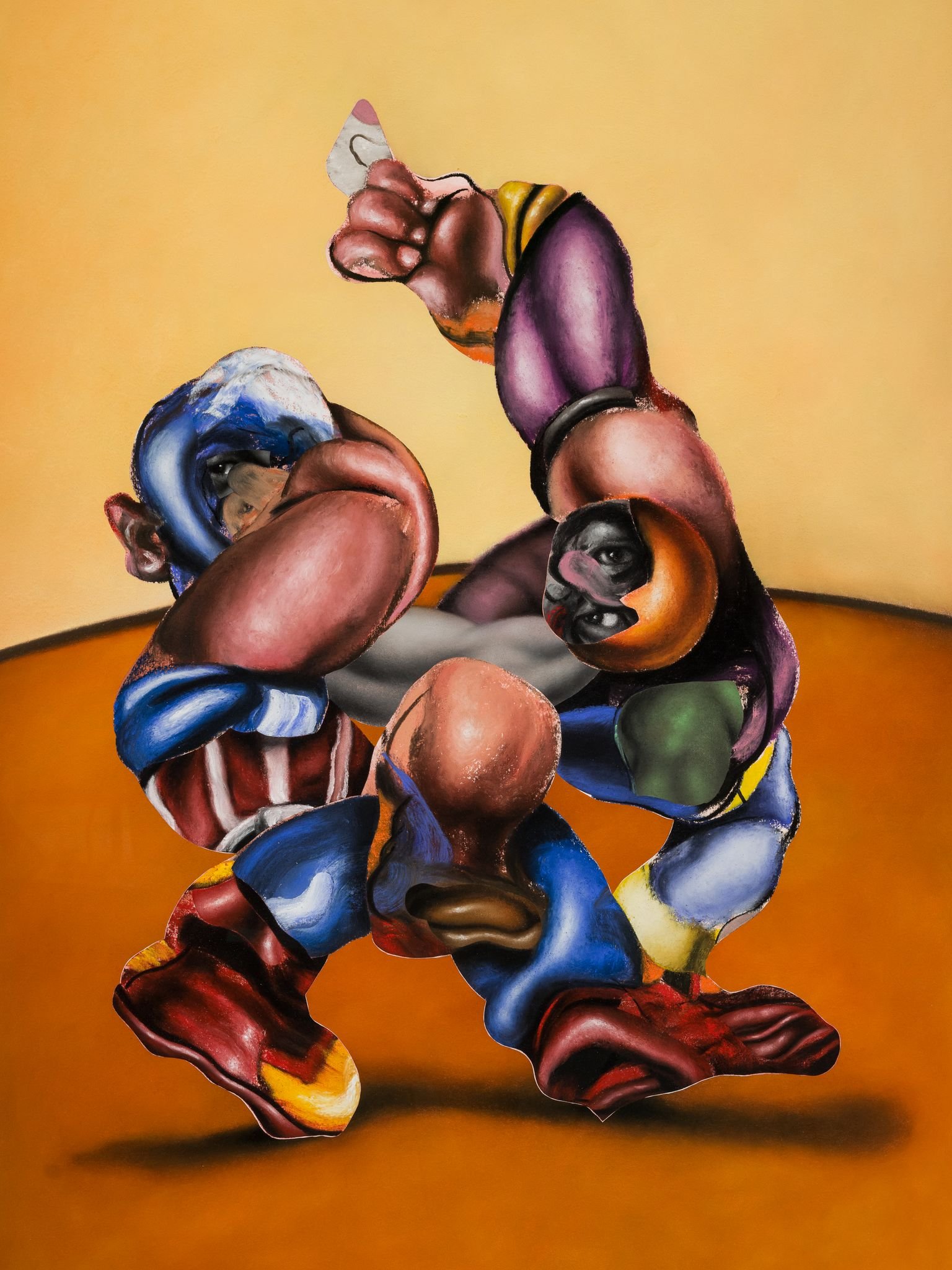
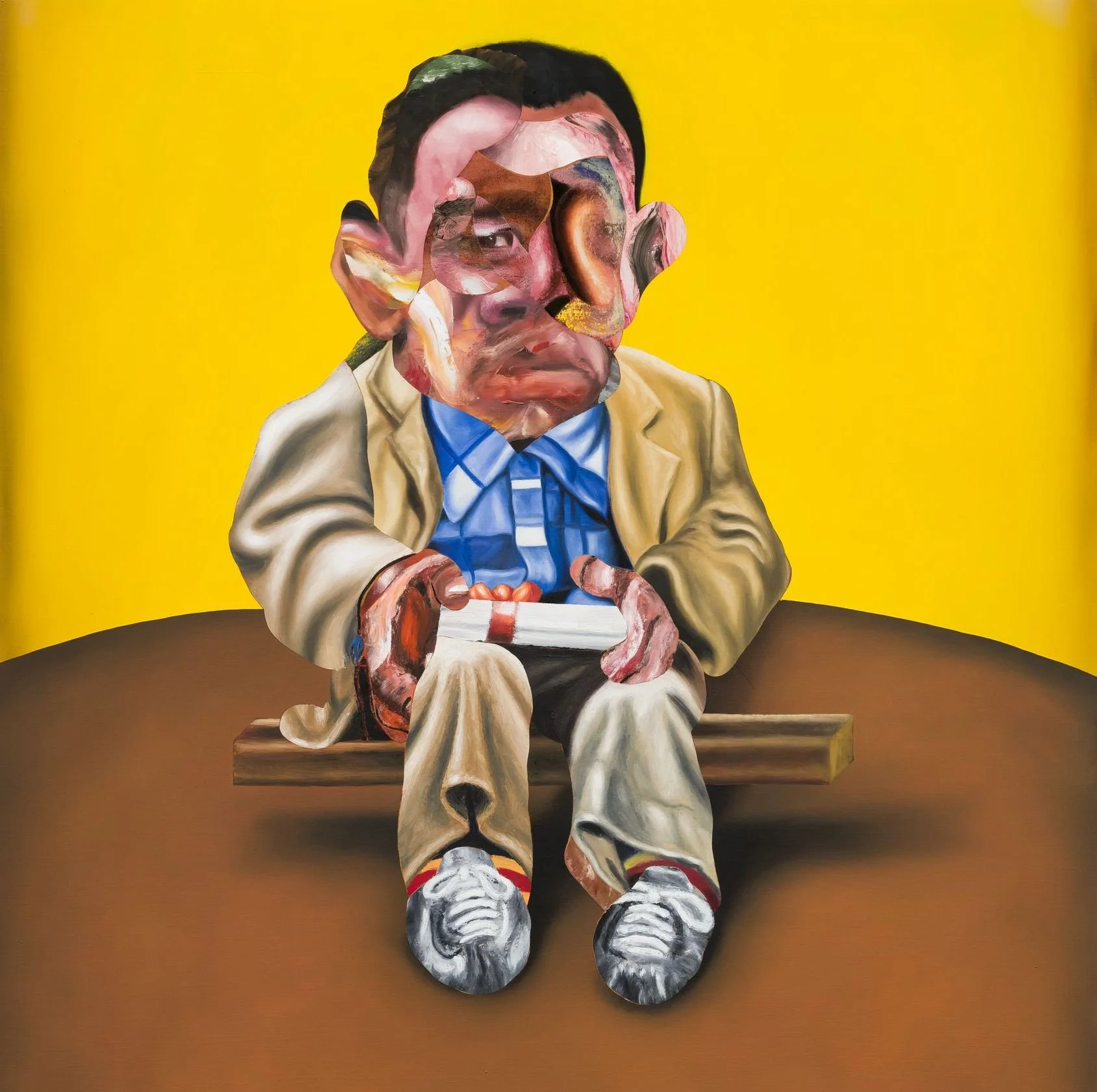
The incredible success that Quinn has found as a painter is then testament to a truly indomitable spirit , and, given his background, it is perhaps unsurprising that his works delve into a complex web of emotion – deconstructing identity in collage-like fractured portraits that reference everything from Francis Bacon to Cubism and the MCU. His large canvases tend to present identity as a composite of multiple abstract displacements, with sometimes iconic characters from pop culture, such as Tom Hank’s Forrest Gump or Captain America, clearly defined yet strangely distorted; asking us to examine not only what we are seeing, but also the resonances they engender within ourselves.
It makes him an interesting choice for what must surely be one of the last albums to be recorded by The Rolling Stones, despite the glimmer twins oft-suspected (and hoped for, certainly by this writer) immortality. The artwork brilliantly references their stature as monolithic icons of the contemporary era, while simultaneously obscuring them from view – perhaps suggesting that the whole is greater than the sum of its parts. The cover depicts Mick, Keith and Ronnie as a kind of exquisite corpse, their features seemingly folded into one battle-scarred visage that contains vestiges of lives lived at both the heights of success, and the blurred-out edges of excess. It’s an image that proves, once again, that you can never be sure what to expect from the world’s greatest rock’n’roll band, who recorded the blisteringly raw songs for the record over just a few weeks at London’s Metropolis studios. Here, the artist, who is represented by Gagosian, speaks exclusively to FUTURISTIC DRAGON about the influence of his childhood, devoting yourself to your work, and the immense satisfaction he has derived from working with legendary rockers The Rolling Stones.
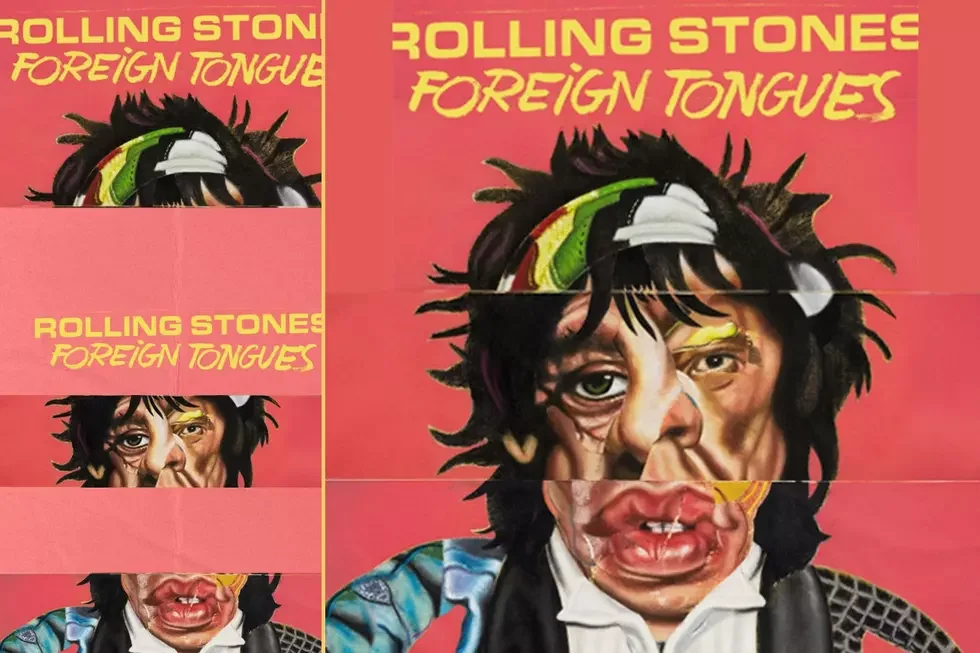
“Creating the album cover for the Rolling Stones is an artistic honour – a dialogue with one of the most enduring forces in cultural history”
You have such an interesting background, before we get to the album artwork, I want to begin by asking what you would say drives you as an artist, and what is core to your value system?
Work is core to my value system. I believe in competition, and I am just more than happy and willing to compete, you know? I don’t believe in excuses. I never bought into the construct of victimhood with regards to race, for example, because it's not real. I don't care what your skin colour is, I'm just going to outpace you, no matter what. We all have barriers in life. We all do. Everyone has struggles, everyone has challenges, and they come in many different forms. I believe in one's individual ability to pull themselves up and make something of themselves.
How did being abandoned by your family at 15 years of age shape you?
I think that experience shaped my view of the world in such a way where the significance of surviving became extremely important. It was paramount, because getting good grades meant I could keep my scholarship and keep a roof over my head. I couldn't go back home because I grew up in a very violent community, so I figured, well, let me just stay in this school and see where it takes me, because this seems to be the safest route. Then after school I kept it going, and I went to college because I had nowhere else to go. When I left college I got a job as a teacher and was making my own money. I had an apartment, and I was able to feed myself. And every night for about two hours a night, I was able to make art. I was in bliss. I was happy. I had made it. If my life would've ended up like that for the rest of my existence, I would've been happy as pecan pie.
But now you are the man painting album artwork for The Rolling Stones. How did that commission come about?
The journey to creating the latest album cover for “Foreign Tongues” began nine months ago, in September, while my solo exhibition at Gagosian Gallery was still on view in Chelsea. My wife, Donna Augustin-Quinn, read me a text from Jimmy Lovine about the possibility of creating The Rolling Stones’ album cover, which initially felt nearly unbelievable. A few days later, Andrew Watt – the superstar producer behind the new album – began texting Donna himself, and suddenly the entire affair became real. By then, the gallery had already informed me that Mick Jagger had visited my exhibition twice. Andrew Watt and Jimmy Iovine were already collectors of my work. But the prospect of creating a Rolling Stones album cover—at this juncture of their juggernaut career—was an entirely different beast altogether. A few weeks later, I found myself on a three-way phone call with Mick Jagger and Andrew Watt discussing the cover. I told Mick Jagger that the first vision that came to mind was a composite portrait of the band members' faces. Mick loved that idea, immediately responding: “That’s exactly what I was thinking!”
“Black American music exists within the DNA of The Rolling Stones. Their deep reverence forms the bedrock of the band’s artistic identity”
Presumably you were one of the first people to hear the new work then?
They played three songs from the album for me – nobody outside their circle had heard any of it yet, so the experience felt uniquely surreal and deeply special – and the songs were extraordinary. They played the songs through some special audio program over the phone – technology I was far too dense to understand – but the music came through with astonishing clarity and force. The moment came when this sublime happening compelled me to acknowledge to Mick Jagger that I was fully aware of the absurdity and magnitude of, indeed, speaking with Mick Jagger. I was standing in the kitchen of my brownstone in Bedford-Stuyvesant, Brooklyn, speaking with a man whose legend, by uncanny forces beyond us, is practically woven into the atmosphere: The Rolling Stones seem to speak into the afterlife of culture; as legends go, Mick Jagger shall have permanence. We spoke about art, museums, London, health, and the time Mick met Francis Bacon, who painted Three Studies for a Portrait of Mick Jagger in 1982. Despite working closely with the Stones, even Andrew Watt shared in my awe: “Yes, Mick, Quinn is right; take in what he’s saying; you are a legend walking amongst us.”
I can see the influence of Bacon in your work …
Yes. I went to the Royal Academy of Arts exhibtition a few years ago and I saw the Bacon exhibition Man And Beast, and that was the first time I had seen so many of Bacon’s works for real. I cried throughout the entire exhibition. I was just blown away by it. Especially the body of work he made during the 60s. Man, he was dancing. He was in his groove. That exhibition has made an indelible mark on my art practice. I learned so much from it, and I started to find ways to allow that exhibition, and his work to be almost a palpable influence in my practice.
There are few greater icons in the canon of contemporary art than Bacon. What do you think Mick thinks of his own iconic status as a musician?
Surprisingly enough, Mick Jagger, considering the immense gravitational weight of his cultural stature, was refreshingly normal. He is extremely kind, entirely uninterested in conflict or combativeness, and has a fervent zeal for life. During our first phone call, I felt I genuinely liked this man; we laughed together. It would become the first of many conversations, text exchanges, and get-togethers. Eventually, I bid both gentlemen farewell and ended the call. The Rolling Stones album cover, now, was upon me. Yet, one member of the majestic duo wanted to meet the chap entrusted with the highly coveted mantle of creating the cover. Two weeks later, I spent a late evening with Keith Richards at Soho Studio Sessions in lower Manhattan. Joining me was my dear friend, Andre Wilkins. The entire experience left him utterly blown away, and witnessing his joy only deepened my own.
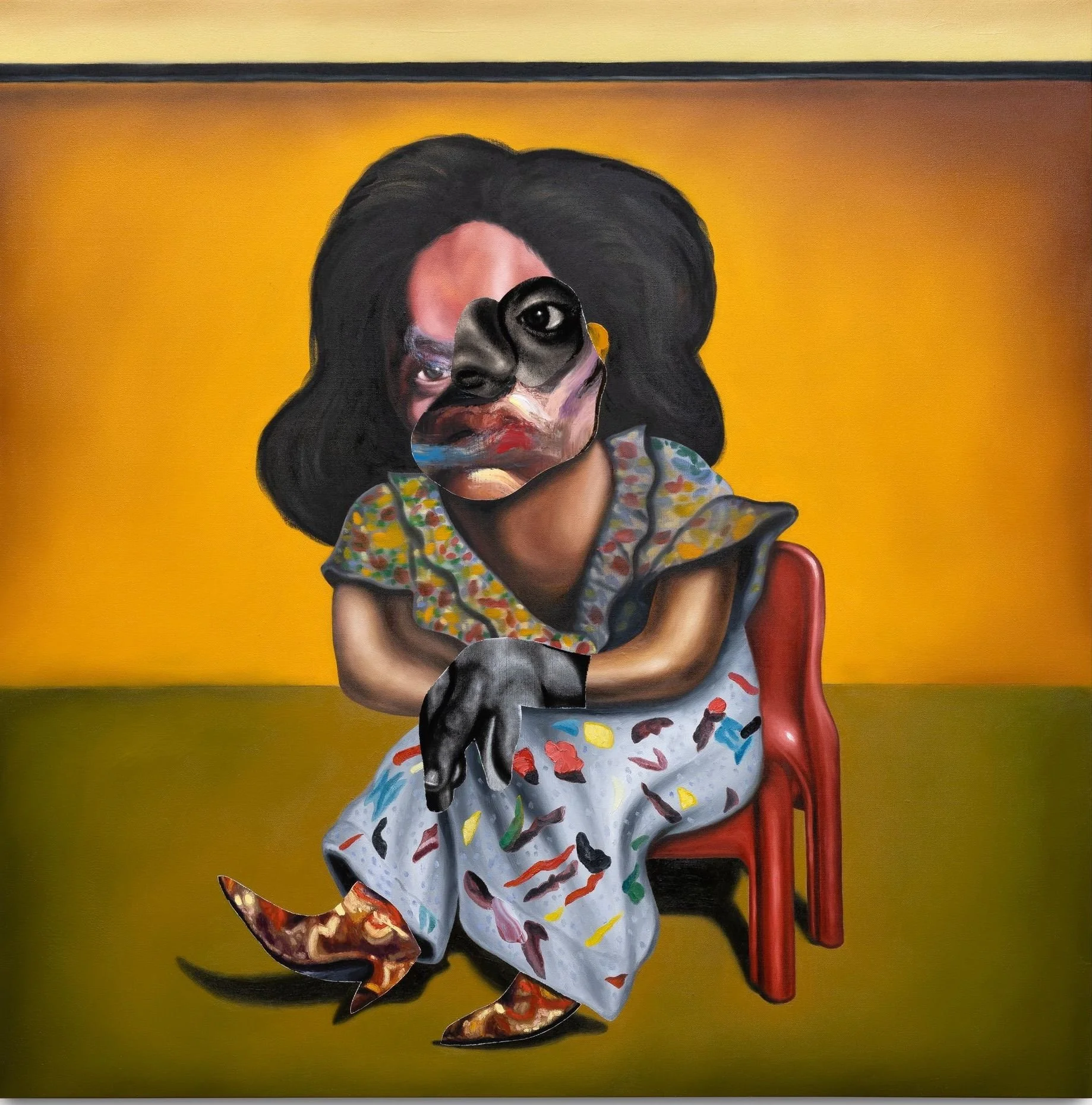
You have painted portraiture of film characters and friends. How does your approach to portraiture shift when creating portraiture of genuine icons?
It was incredibly important to me to remain committed to my genuine studio practice – to work from a place of sincerity, presence, and emotional honesty. In this way, the essence of my interactions with them – Mick Jagger, Keith Richards, the people in their orbit, and our time together – could fuel the vision for the work itself: a malleable construction in which their faces become one flesh, a union forged over decades, enduring triumph, turbulence, brotherhood, myth, and time, from which emerged some of the greatest rock songs in human history. Yet I had also sat before these men. I had watched their faces, their gestures, their body language. I witnessed, acknowledged, and embraced their humanity. Empathy is an essential instrument in my studio practice; The Rolling Stones are more than iconic rock stars – they are human beings. Navigating such a terrain is extraordinarily difficult – especially in pursuit of honesty. I wanted to tell the truth.
What would you say is the truth you discovered?
These men have lived long and astonishing lives, yet they remain remarkably wholesome and kind while, perhaps, being the greatest rock’n’roll band on earth. Yet, in their eyes, one can still detect something almost adolescent – as though they are continuing to grow accustomed to the staggering reality of what they have become. I believe the driving force lies within their genuine love for what they do. Like devoted saints surrendering themselves to ritual, they submit to the process completely. They have lived adventurous lives – lives marked by whimsy, chaos, transcendence, excess, endurance, and roads uniquely their own, as all of us possess our own roads to travel. Understanding this allowed me to work freely and trust my process completely, using whatever artistic idiom deemed necessary to achieve the visual outcome demanded by my vision, of which memory, empathy, vulnerability, lived experience, and the real-time evolution of my blossoming relationship with them are the essential tissues and fibres.
What does the music of The Stones mean to you? Do you have a favourite stones album or era?
I do not have a favourite Rolling Stones album or era. Their music, however, is profoundly meaningful to me because, as a child, I remember my brothers – each significantly older than I – playing The Rolling Stones alongside Prince and James Brown. The Stones formed in 1962, fifteen years before my birth on April 23, 1977, in Chicago; by roughly 1969 to 1972, they had been crowned the greatest rock and roll band in the world. Songs such as “Angie,” “Beast of Burden,” “Sympathy for the Devil,” “Gimme Shelter,” “(I Can’t Get No) Satisfaction,” and “Paint It, Black” remain triumphant standouts to me. Unquestionably, they have stirred their magic to soulful perfection in their latest album, “Foreign Tongues,” and I have listened to “In The Stars” numerous times already.
“The global reach has surpassed anything I have ever experienced. It is difficult to articulate the scale of it”
How would you describe the Stones’ sound?
Black American music exists within the DNA of The Rolling Stones. Their deep reverence for Black American blues, rhythm and blues, gospel, soul, and early rock traditions forms the bedrock of the band’s artistic identity. I can feel this connective tissue in the music itself – the arrangements are soulful, moving, and palpable, like enduring church songs delivered with such force and conviction that they send a shiver through the body. The Rolling Stones studied Black American musicians and their records with seriousness and devotion. Indeed, the band even took its name from a song by a man born in Mississippi, near Clarksdale – the cradle of Delta blues – who later migrated to Chicago during the Great Migration and helped electrify Chicago blues, profoundly shaping bands such as The Rolling Stones. That man was Muddy Waters, who, in 1950, recorded a song entitled “Rollin’ Stone.”
How does it feel to have The Stones to become part of your life as an artist in such a special way?
To think that The Rolling Stones came of age fifteen years before my own birth, and that fifteen years later I would endure my mother’s death and the devastation of familial abandonment, only to somehow arrive at a place in life where I would sit across from Mick Jagger and Keith Richards, feels governed by a divine orchestration beyond human comprehension. That I would ultimately create the album cover for what may very well be the final Rolling Stones album is a blessing so extraordinary that I can attribute it only to the grace of God. There is nothing in my life, nor in my own actions, that could have entitled me to such fortune. Therefore, I felt compelled to pour my humility, gratitude, and absolute commitment into creating the strongest work possible for the album cover. I executed the piece entirely alone in the studio, from conception to completion, using soft pastels on Coventry Vellum paper, guided solely by my vision and the image's formal needs. My process involved extensive research and the gathering of photographic references of the band members’ faces and bodies, allowing the work to emerge through careful study, intuition, and emotional honesty. During lunch with Mick Jagger at the Baccarat Hotel New York in Manhattan, I asked him about his musical influences, and he told me, plainly, that all of the band’s music draws on Black American music. We also spoke about his children, the schools they attend, and how, as he beautifully described it, his family resembles “the U.N.” My time with Keith Richards was equally lovely. I love all of them.
How did the band react to the portraits?
There was considerable deliberation surrounding the portrait among the band members and the record label. I created a second work during the process; ultimately, the collective excitement surrounding the first painting proved undeniable—it is the work that now graces the album cover. I suspect the question of vanity existed chiefly within Mick Jagger’s mind, though he is genuinely thrilled with the piece. Keith Richards and Ronnie Wood possess an almost high-voltage enthusiasm for it, and the record label praised it emphatically from the outset. Everybody involved is profoundly happy with the result; otherwise, believe me, the work would never have become the album cover.
How does it feel to have your work reach such a mass global audience?
Since the official press release – and, truthfully, since the initial Instagram rollout of the image – the global reach has surpassed anything I have ever experienced. It is difficult to articulate the scale of it. People from corners of the world, entirely disconnected from contemporary art or the art world itself, have reached out to express their admiration for the work. One man from the Netherlands, an avid collector of all things Rolling Stones, contacted me to ask me to sign his album cover. He intends to travel to London to meet me – while I am there supporting my wife’s acting debut in an award-winning stage production at the Royal National Theatre — so that I may sign it personally. Creating the album cover for The Rolling Stones is an artistic honour – a dialogue with one of the most enduring forces in cultural history. In that sense, the work, the album, and this moment now belong to something larger than any one individual. They have entered the canon of cultural history.
Foreign Tongues is released July 10th
Introduction & Interview by John-Paul Pryor
Find out more about the artist here.
Image Credits: Foreign Tongues album artwork, Nathaniel Mary Quinn, 2026. Portrait of Nathaniel Mary Quinn by Nicolas Brasseur, 2022; The Clash, 2022, oil paint, oil pastel, goatee on linen canvas stretched over wood panel; Sunshine, 2022; Nathaniel Mary Quinn, oil paint, black charcoal, gouache, oil pastel on linen canvas stretched over wood panel; Bubba Gump, 2022, Nathaniel Mary Quinn, oil paint, oil pastel, soft pastel, gouache on linen canvas stretched over wood panel. All art stills photography by Charles Roussel. All images courtesy of the artist.
Get up-close-and-personal with artists from all over the world and unlock the mysteries of the creative mind.
Read in-depth interviews with the most exciting cultural movers and shakers shaping the creative landscape.

Discover the actors, authors, designers, mavericks and entrepreneurs at the bleeding edge of cultural life.