PEOPLE & SOCIETY: INTERVIEW
Invisible Witness: Nick Waplington
The Renowned Image-Maker On The Nineties, Mizrahi And McQueen
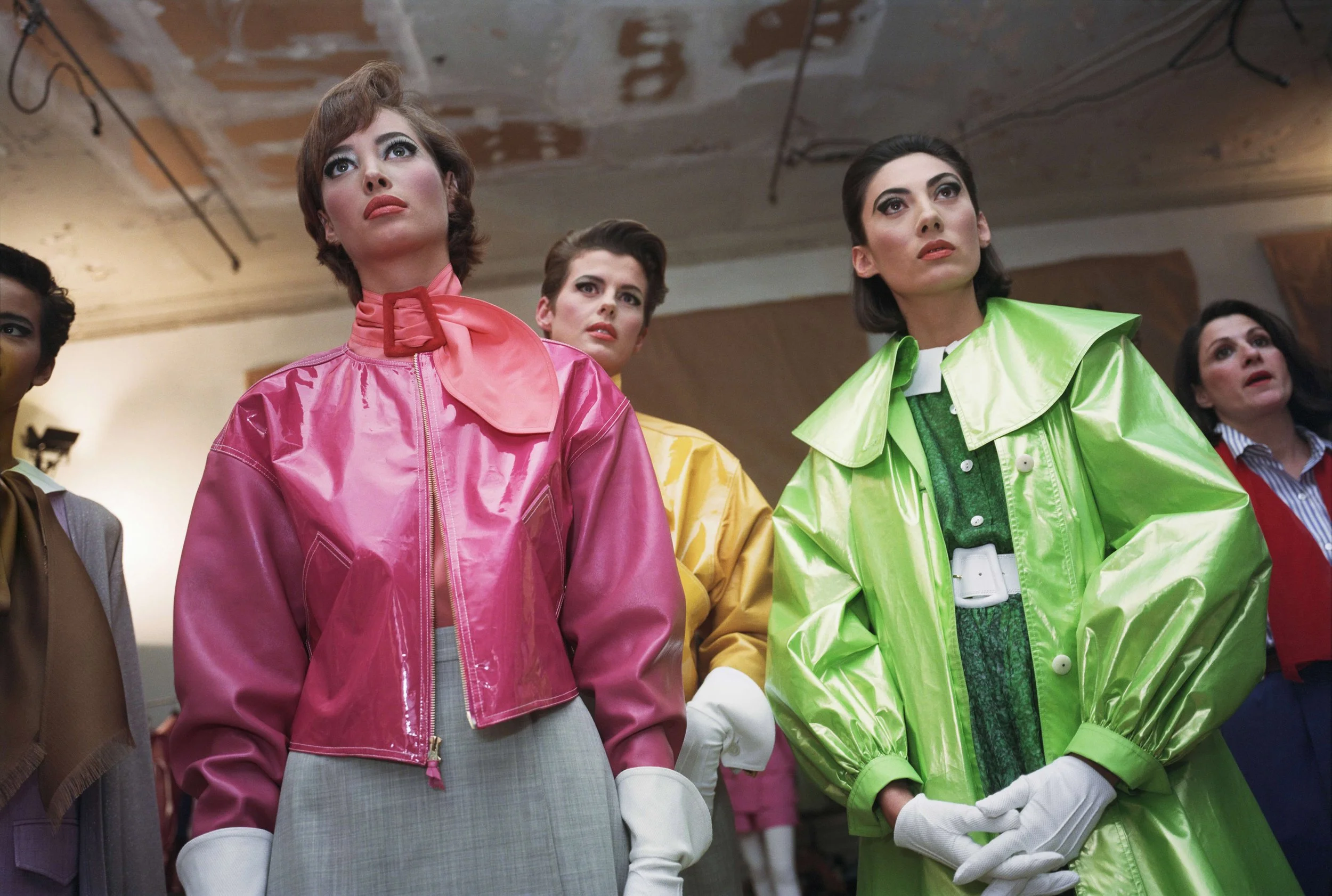
At the very edge of the 1990s, the young Royal College of Art graduate Nick Waplington arrived in the fashion sphere equipped with an introduction to a leading New York designer from Richard Avedon, which basically functioned as a kind of occult warrant. His fateful meeting with Isaac Mizrahi, who was looking for a photographer to document his work, reads, in retrospect, as one of those unlikely gestures that shape a career, one that came to define the alt-culture aesthetics of the decade in leading style magazines, such as Dazed and i-D. At the time, the idea to shoot the behind-the-scenes machinations of the fashion industry and its players was unheard of. For three heady years Waplington found himself shooting a radical experiment at the precise moment when fashion and club culture collided.
There is a particular electricity in photographing the making of glamour, and Waplington’s images for Mizrahi revealed Christy Turlington, Linda Evangelista, Naomi Campbell and Veronica Webb not posed like relics but undergoing adjustments, smoking cigarettes and drinking soda out of plastic cups. In these images the supermodel was not an icon so much as an event, and Waplington’s camera, more usually trained on those at the edges of society, candidly recorded both the choreographed and the accidental. In many ways, it was work that would become a template for his intimate work at the end of the decade with Alexander McQueen, which represented an even more striking convergence of documentary grit and cutting-edge fashion.
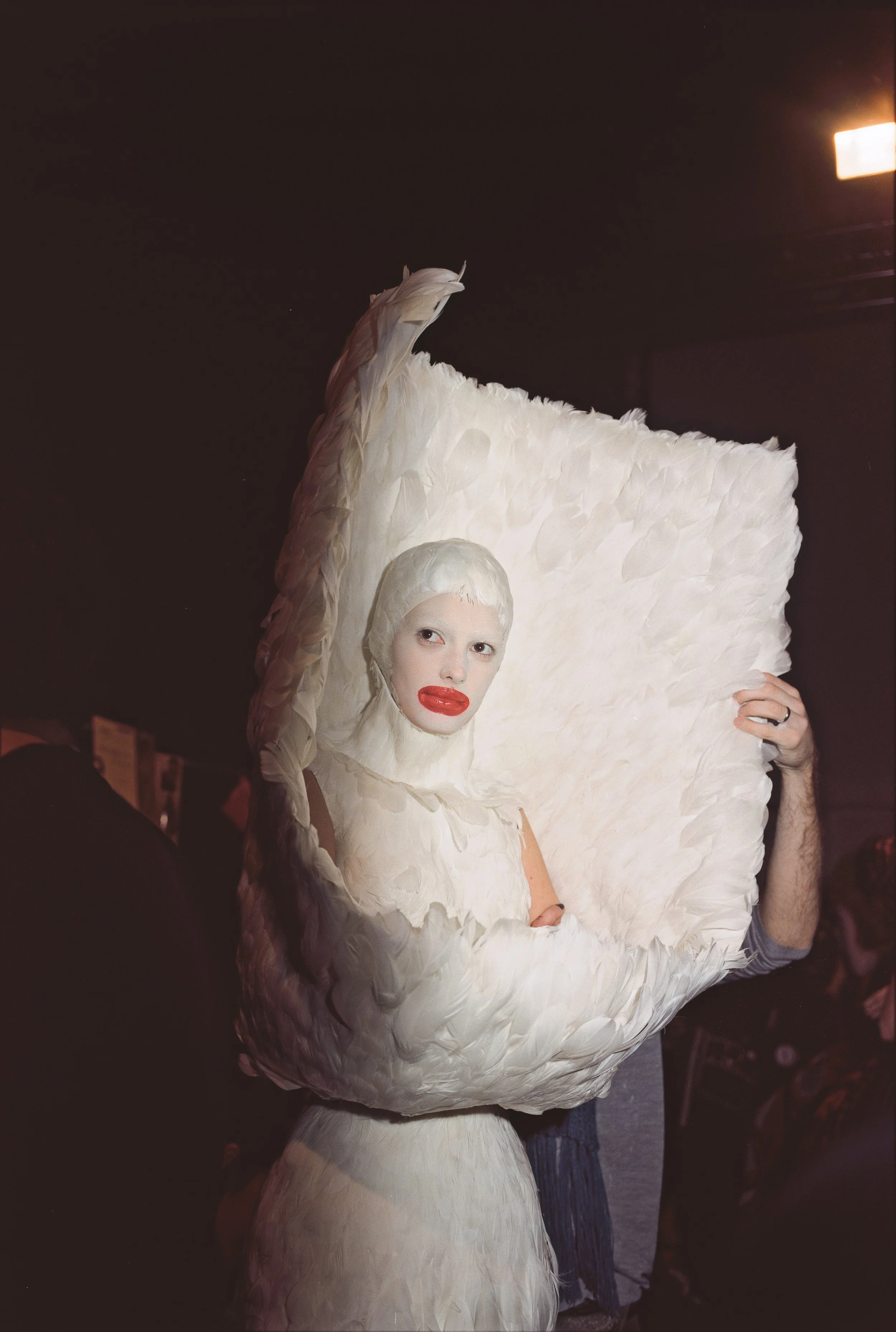
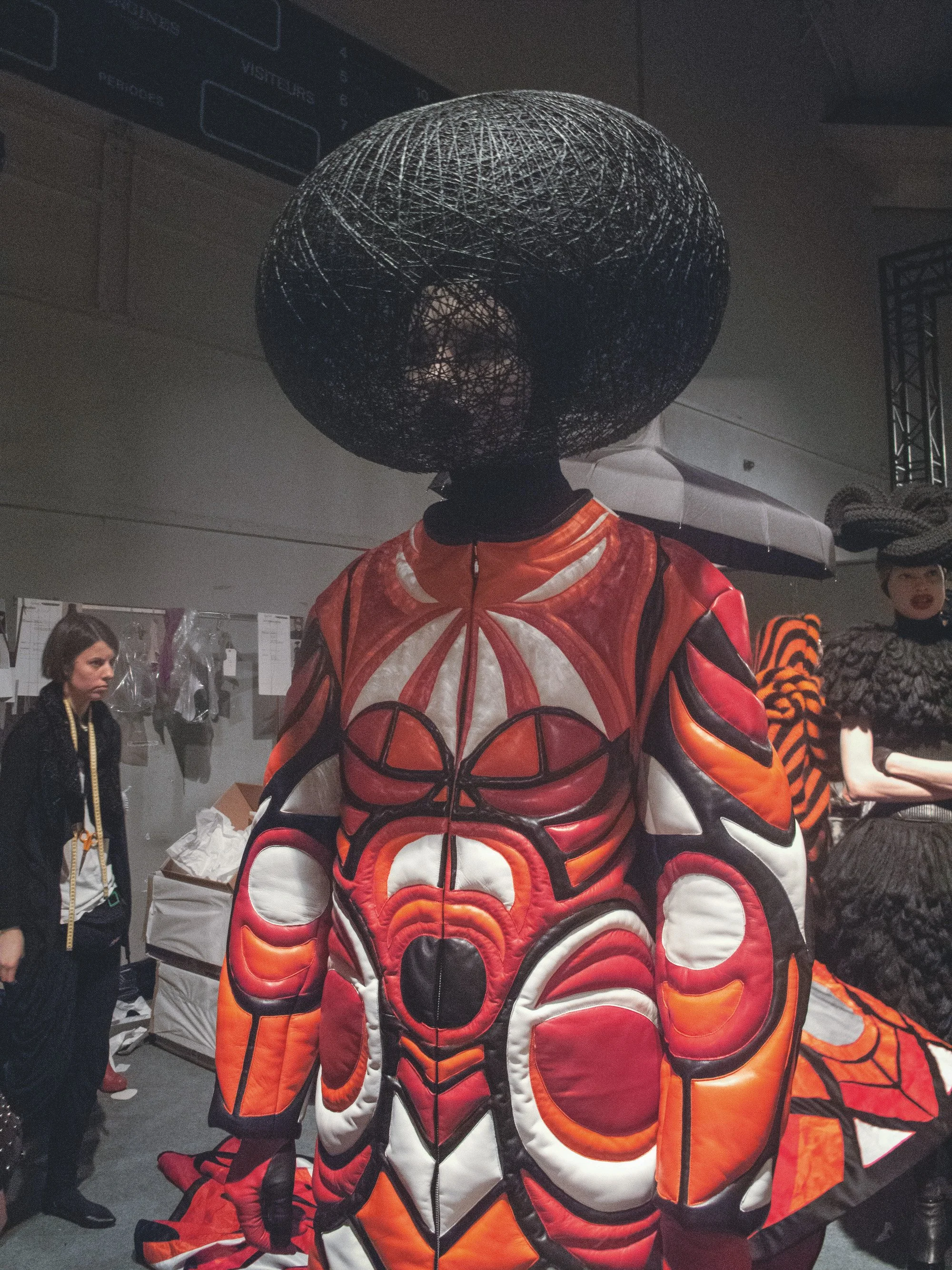
Beginning in the late 1990s and continuing into the 2000s, Waplington brought a raw, almost forensic eye to McQueen’s volatile creative world. His photographs captured backstage rituals, the fragile choreography of dressers, and McQueen’s own mercurial presence with an unvarnished immediacy that contrasted with the polished runway spectacle. His images emphasised texture and process: frayed fabrics, fleeting rehearsals, and the quiet aftermath of a show. It was a collaboration that revealed McQueen not merely as sartorial genius but as master craftsman and auteur, his brilliance mediated through toil and human vulnerability. Both bodies of work function as fashion documentation and as a poignant social portrait of two ends of one decade. Here, the acclaimed image-maker recalls his time with both designers, and tells FUTURISTIC DRAGON why life was more fun before the surveillance panopticon of the social media age.
Many artists become known for a signature style, or aesthetic, but you have surfed so many disciplines over the years – why have you never wanted to ‘stay in one lane’ as it were? And what do you consider to be the through line in all of your work?
I know there's an idea of a rigour to the process in making the same work over and over again, with very few changes, but that’s not for me. I had a formal arts education and what always most interested me was conceptual art. Therefore, if I’m thinking about something that I want to do, or that I want to say, I think about the best way of constructing that, and if I don’t know how to construct it in that way, then I’ll learn how to do it. I think to make art, you've got to have faith in your ability and a willingness to take the time to learn, and you’ve just got to kind of go with it to keep things interesting. If there is something that runs through my work it’s probably that I always want to discover and empathise with fringe or outlying communities of people, but not with the critical distance of an anthropological study. They are always things that I have somehow deeply immersed in myself, whether that’s music, family life, or fashion. There’s definitely something to do with outlying communities in there, whether that’s wondering why Russian Jews want to live in the West Bank, to families on council estates in the north of England, or club kids in New York 30 years ago. It’s definitely there with the work with Lee, because he was kind of an outsider in the world of fashion, and he ended up in the centre of everything.
“If there is something that runs through my work it’s probably that I always want to discover and empathise with fringe or outlying communities of people”
Absolutely. Lee McQueen always struck me as an outsider. What was it like to be so heavily ensconced in his creative world?
Well, it was always very interesting to watch Lee work, because there would be these inactive down times, then there would be the moments of intense creation that everyone would be waiting for. Suddenly, you would have this whirlwind of scissors and pinning and cutting and tearing, and I tried to photograph him in action. It was almost like a performance. These whirlwinds of action would be ten or 15 minutes long, and they would be very sustained, and everything would kind of fall into place. Then, when it was all pinned and tacked, it would go off and be sewn up by the ladies downstairs, and then it would come back and Lee would alter it. Then you would have more down time. I got into the rhythm of it. I learned how it all operated. He was very jealous of me being able to go to the pub in between, though – he just wanted to go to the pub and have a pint. That’s what he liked to do..
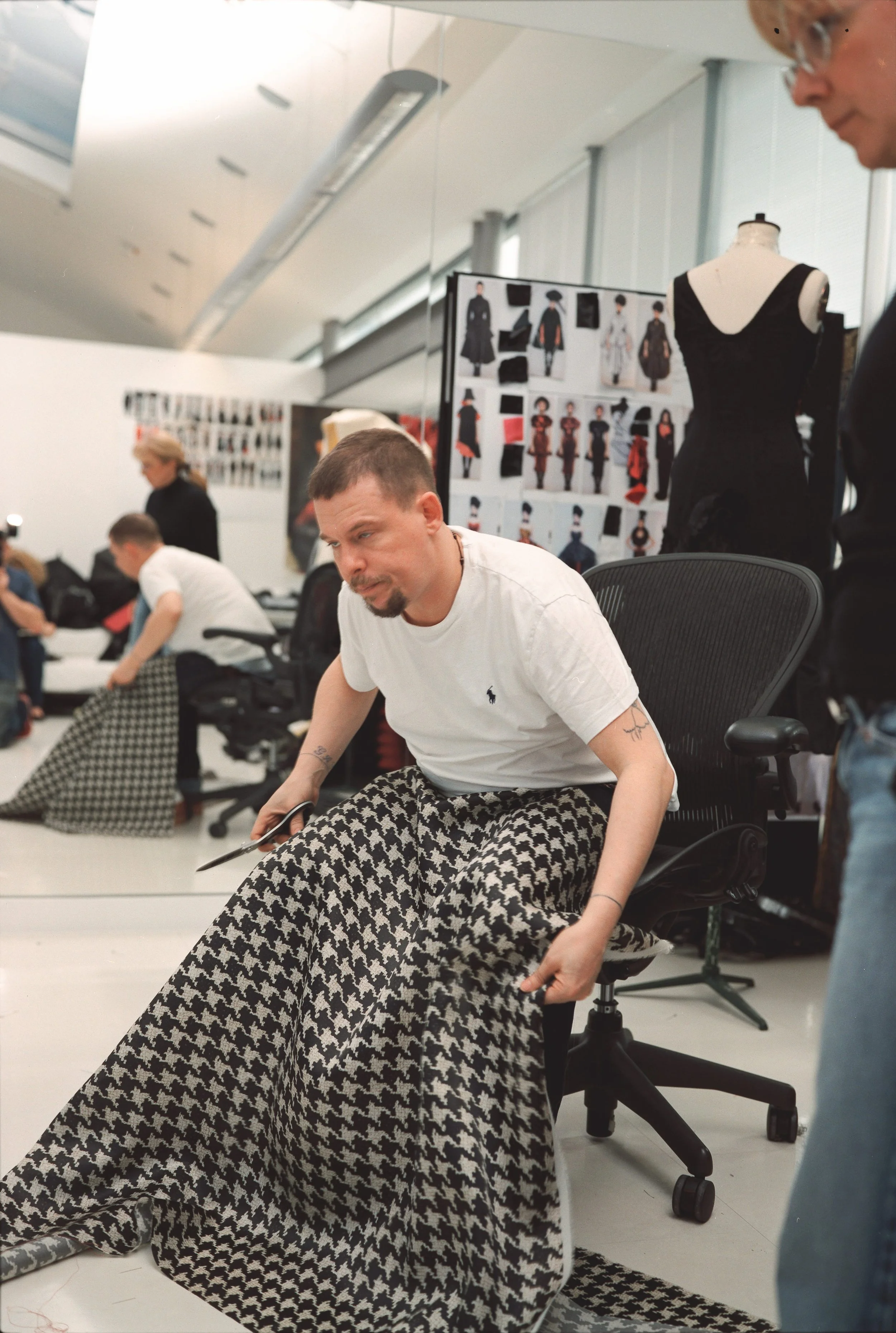
“It was always very interesting to watch Lee work, because there would be these moments of intense creation that everyone would be waiting for”
You were kind of an outsider in the fashion sphere also. Were you always drawn to fashion, or was that immersion a by-product of shooting the club scene in the 90s?
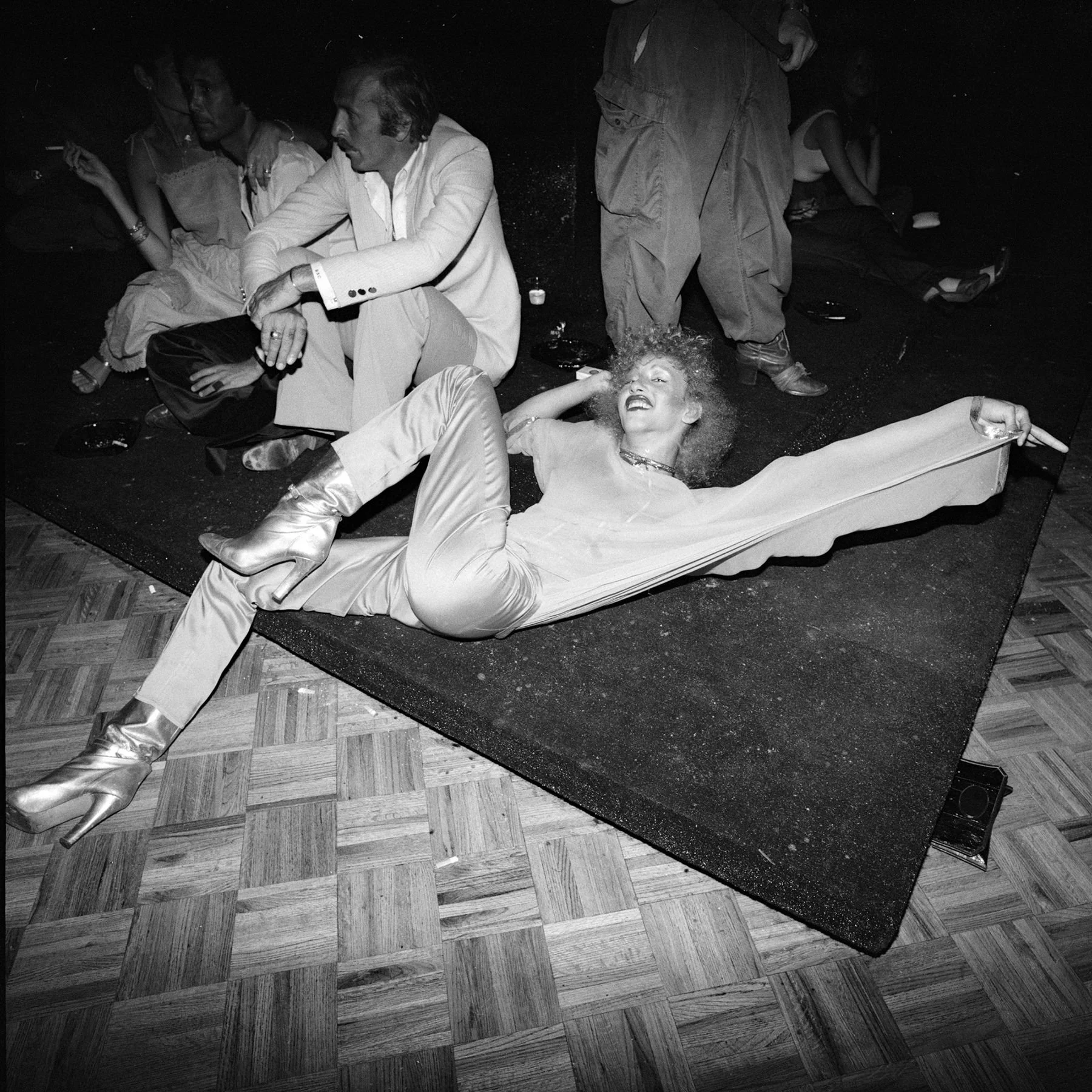
There were a lot of people from the fashion world in the clubs, but that wasn’t a draw for me – I was obsessed with the music. In the early 90s it was just something that I was really into, and I was young enough that I could work all day and be up all night and, you know, survive on a couple of hours of sleep. Actually, very often back then my sleep would just be in the evenings. When I got back from working for Isaac Mizrahi in New York in the very early 90s, I'd go to bed for a few hours, and then get up and go out clubbing. Sometimes we would wind up at these after-hours places on 42nd Street, which I couldn't photograph, because there was always illegal gambling and prostitution going on. I would go straight from there to work for him for the day.
The behind-the-scenes photographs for Isaac Mizrahi were really your introduction to fashion. How did the working relationship with him come about? You were introduced by Avedon?
Yes. I had met Richard Avedon when he had come to the Royal College of Art and seen my show. He liked my work and contacted me by letter saying that he wanted to buy some. Although I lived in London, I was always in America in the summer months, so, I said, I’ll come and see you. I went to his studio with a box of prints and he bought the box. The next thing I knew, he wanted me to meet this fashion designer, because they had this idea that I would photograph backstage at the fittings. I didn't really know anything about fashion, or the fashion world, but it was about capturing moments, which is something that I’m able to do quite easily as a photographer. Obviously, some of the women in the images were super famous then – people like Christy Turlington and Josie Borain, so I knew who they were. We were all the same age, and became friends and would go out together. I mean it was a very different time, but the Isaac thing was funny because it was the end of the 80s and it’d be like Madonna, and Spike Lee, and Linda Evangelista. And it was obviously before phones, so everything was a bit more open and free. I could go out in the evenings with the models, and they were smoking cigarettes, and letting their hair down... no one was photographing them or anything, they were just having a good time. That’s all obviously gone now for celebrities.
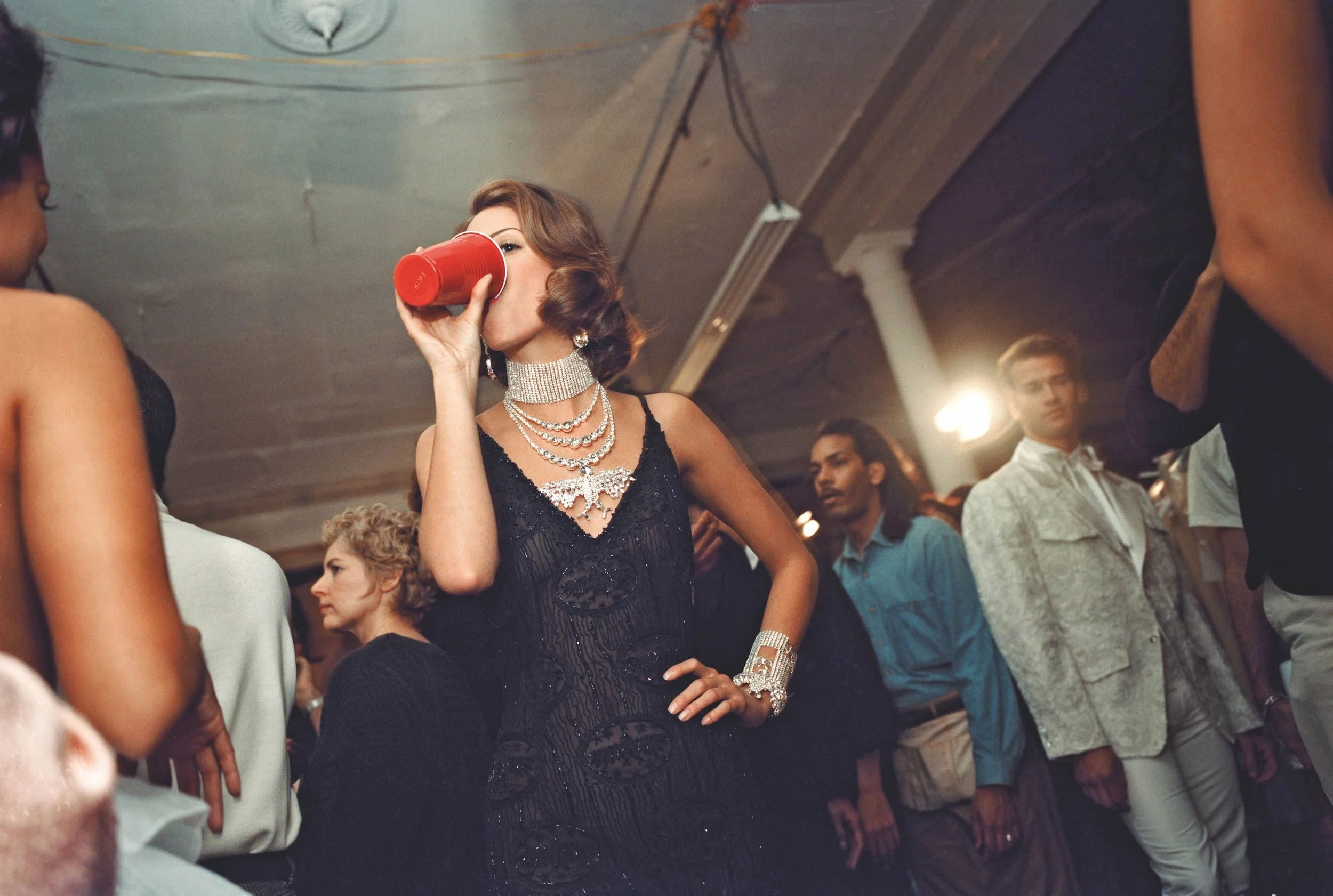
“There were a lot of people from the fashion world in the clubs, but that wasn’t a draw for me – I was obsessed with the music”
Those images are so evocative of a certain moment in culture – were you aware you were capturing something that tapped into the zeitgeist?
The early 90s were definitely interesting in the first couple of years, when you didn't know what to expect. There was no defined way of doing things when House music exploded, so it was very exciting. I have a series of pictures from Sound Factory, for example, which was where everyone would go after Boy Bar on a Saturday night. It was pitch black in there unless they had the strobe on, and it was intense. I used to go to bed early on a Saturday night and set the alarm for 5.45am on Sunday. I would drag myself out of bed and get a cab over to the club at West 27th Street, which was kind of desolate back then. You would go in this little entrance and, suddenly, it was nighttime again. I would be in there from six in the morning until whenever they closed. Then I would be straight back to the atelier.
Everyone in all of your images seems almost unaware of the camera – why do you think you have such a skill for candid reportage?
I think it’s just because people don't actually know that I'm there, and that I'm doing it. I will take photographs on the subway in New York now, and people just ignore me. I don't know how I'm able to do it, but I have an ability to be kind of invisible. I also seem to have an ability to make people feel comfortable. I don't talk to people very much. I'm just kind of there, and I’m kind of in my own head. I have a sense of when I shouldn't do it as well, and when it might be obtrusive. Especially in a situation where there are naked women around. I always used a lot of discretion. If you look at the contact sheets, you don't see lots of pictures of naked women.
“Fashion did feel a lot more fun, and it was much less self-conscious pre-social media … There were characters in fashion at that time that literally seemed to live off the scene”
This might sound nostalgic but was fashion more fun back then?
Fashion did feel a lot more fun, and less kind of sophisticated, if that is the right way of putting it. And it was much less self-conscious pre-social media. There were characters in fashion at that time that literally seemed to live off the scene. Andre Leon Talley was this real enigma in the fashion world. He used to pick me up in his huge oversize coat and we would just be going around to one place, then another place, and then another place. He had been taken on by Anna Wintour, as this kind of ‘person-at-large’, but when the huge profits of Condé Nast started to dwindle with the onset of digital, she unceremoniously dropped him. I think he ended up dying almost kind of destitute, or something, because he had managed to not even buy an apartment. He was a very flamboyant character, and extremely knowledgeable, not just about fashion, but about culture and art, and music and politics. You could have really lovely conversations with him. It was such a different time.
Speaking of different times. As an image-maker, how do you feel about AI and the arguments about copyright circulating around it?
Well, I wonder where it goes from here, because AI survives on scraping the internet of anything, and then mixing it all together and creating something new. But once everything is made of AI, then it’s going to be chasing its own tail, right? There have to be new things that are not AI, for AI to continue to copy and I think we’re gonna get to the point where people making new things are not going to allow their work to be copied by AI. Where art is concerned. Obviously in areas like science or computing or whatever, it’s gonna sort of shoot ahead. But I don’t know where it goes with art once it’s used up everything out there, and turned it into slop – that can only go on for so long.
“I didn't really know anything about fashion, or the fashion world, but it was about capturing moments, which is something that I’m able to do quite easily”
How does the discipline of painting differ from your practice as a photographer in terms of the creative drive?
I don’t see the two things differently. I’ve always painted, and as the years have gone on it’s become more central to my practice – to the point now that it’s what I do every day. The painting has changed and evolved, and one painting kind of leads to the next. I’m very interested in science and progress, and I’m interested in making paintings that have a theoretical process to them – paintings that deal with things that are both metaphysical and intuitive to my way of thinking about life, the planet, the universe, and everything. We live in a world now where most painting is of photographic history, with works based on old photographs. I feel like the cerebral side of painting has gone, and that’s why I’m more interested in the theoretical possibilities of painting.
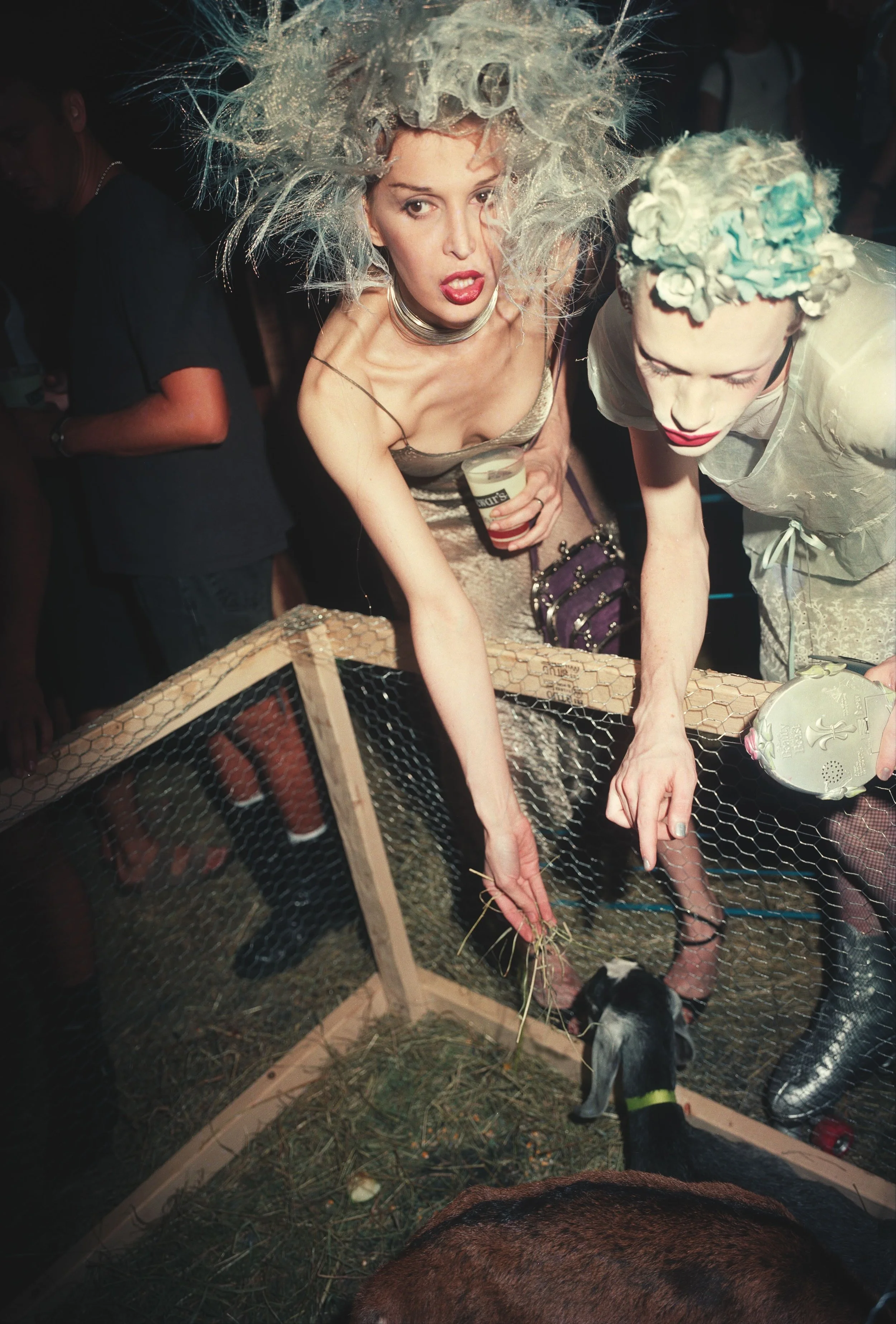
“Making work just keeps me sane, and keeps me going in life. I don’t really have any expectations of anything happening with the work after I’m dead”
What would you like your legacy to be – do you even believe in the notion of legacy?
I’ve thought about this. It’s like, everyone now has got to have their foundation, right? There are millions of artists foundations, and everyone’s archive is in a museum somewhere now, but, ultimately, the planet is overheating because we’re still burning hydrocarbons, and there’s probably not going to be as many people on the planet in the future, so who’s going to look after all these museums and all these archives? I don’t believe we're going to turn into some kind of Mad Max hell-scape overnight, but they’re planning for food shortages and water shortages in the next 20 to 25 years. It’s awful that we've got all these octogenarian leaders who just wanna plow on as normal, while the kids of today are going to have to deal with all of this in the second half of this century. For me, making work just keeps me sane, and keeps me going in life. I don’t really have any expectations of anything happening with the work after I’m dead. I mean, maybe some will survive, for a while.
Introduction & Interview by John-Paul Pryor
Images from The Isaac Mizrahi Photographs by Nick Waplington and the book McQueen: Work In Progress by Nick Waplington. All images courtesy of Nick Waplington.
Get up-close-and-personal with artists from all over the world and unlock the mysteries of the creative mind.
Read in-depth interviews with the most exciting cultural movers and shakers shaping the creative landscape.
Discover the actors, authors, designers, mavericks and entrepreneurs at the bleeding edge of cultural life