PEOPLE & SOCIETY: INTERVIEW
American Innocence: Klaus Biesenbach
The Strange World of Henry Darger
And The Vivian Girls
Klaus Biesenbach is the former chief curator of media and performance art at MoMA, New York, and the author of the much sought after Henry Darger monograph, published by Prestel. In this interview for FUTURISTIC DRAGON he talks about his continuing fascination with the strange opus of the Vivian Girls and the late Chicago-based recluse who created it: a man both revered and reviled in equal measure, and art’s most controversial outsider.
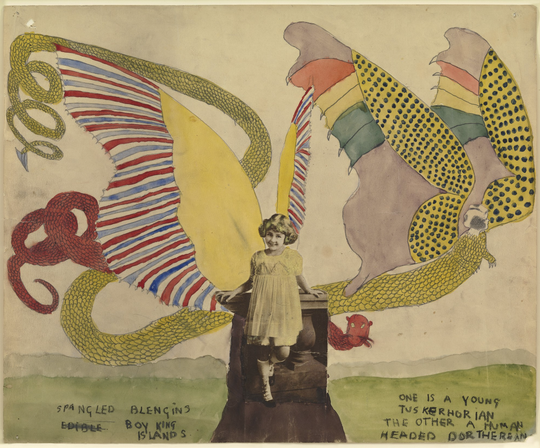
It is fair to say that Henry Darger is less an artist in the conventional sense than a cartographer of obsession, and Biesenbach approaches him with the clinical curiosity of a curator who has spent decades negotiating the porous border between spectacle and intimacy. He speaks not merely of the artworks — their stupendous scale, the obsessive pictorial reiterations, the collage of found imagery fused with an inhumanly elaborate private cosmology — but of the conditions under which they were made. Namely the grinding impoverished anonymity of Darger’s service as a janitor, and the cramped domestic interiors in which his atlases were assembled.
Biesenbach recognises the thorny politics around Darger’s posthumous fame: critics diagnosing pathology in the ravaged girls and defenders calling him a misunderstood visionary. Biesenbach avoids simple verdicts, instead tracing fault lines – class and loneliness, the afterlives of domestic labour, and collectors who, by salvaging Darger’s pages, shaped his public identity. The scandal, for him, is not Darger’s strangeness but our urge to force a single explanation on work that multiplies meaning.
Why do you think some find Henry Darger’s work so unsettling?
I think Darger is disturbing and shocking because the work is both violent and fragile at the same time. Its subtle beauty and obsessive cruelty create a captivating tension.
Do you think he felt trapped by society and that his work was an escape?
He dedicated most of his life to writing, thinking, and drawing about states of slavery and liberation, dependency and lack of freedom. He must have felt as if he were in a slave-like state for part of his life – in forced labour and institutional housing. I think his work was a sublimation and compensation – a way of dealing with the trauma he had experienced.
Are there any scenes in his work where particular traumatic events are explicitly portrayed?
I think we are all irreparably influenced and imprinted on by our early childhood. But in Darger’s case, the tension between being adopted or not, being owned or not, being taken care of responsibly or being orphaned, and especially the abuse and exploitation of children, becomes a very recurrent and nearly stencil-like motif throughout his work.
What oo you think of the violence depicted in the most transgressive scenes?
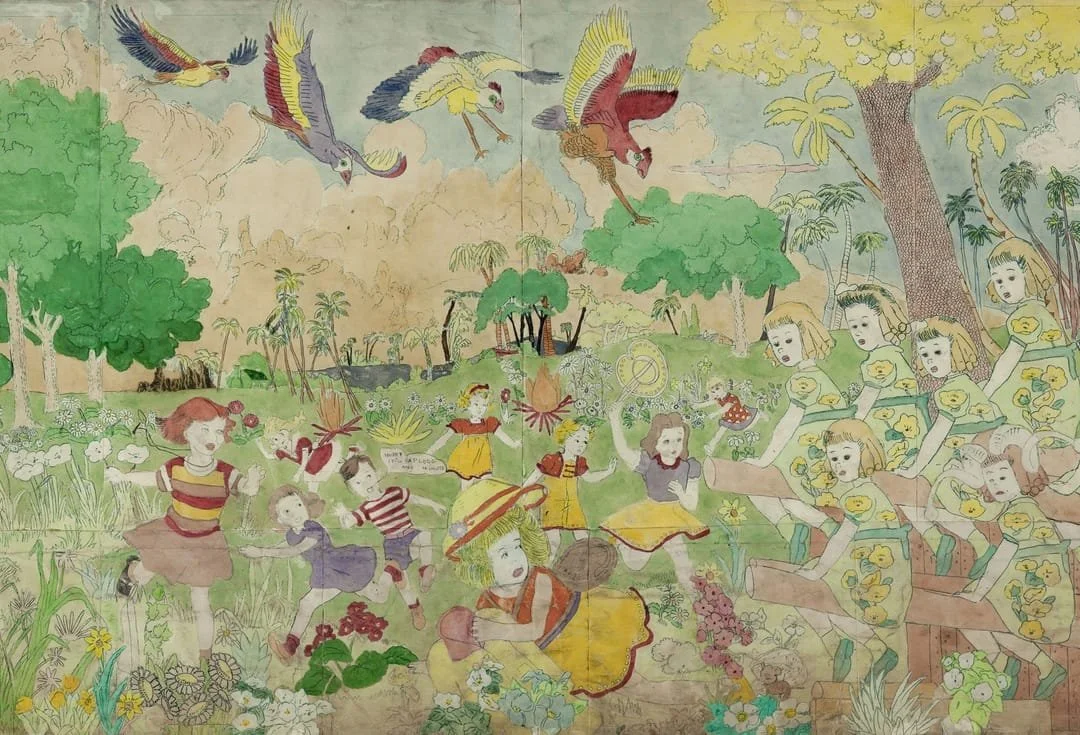
It is comparable to Goya’s attempts to visualize the brutality, murder and torture he had experienced in the Peninsular War. Darger creates a very efficient depiction of human atrocities because they really catch the viewer and make the pain an experience.
“Darger creates a very efficient depiction of human atrocities because they really catch the viewer and make the pain an experience.”
Can you talk to us a little about the gender confusion in the work?
Since all the children depicted are prepubescent, I think for Darger it was a certain state of polymorphous innocence, very similar to recent depictions of children in Japanese contemporary art. I think he depicts plural potentiality.
You draw parallels in the book with the The Wizard Of Oz. Do you think Darger’s work should be considered of equal cultural value?
The Wizard of Oz as a novel, and later a movie, went through extreme ups and downs in how it was perceived in America. For a while, it even seemed inopportune to read it in school since its utopian politics and implications didn’t match the American educational goals. I titled my essay American Innocence, an oxymoron of course, but definitely a description of a tension that Darger was fascinated by. I see him as a very American artist, like the author of The Wizard of Oz, L. Frank Baum, and Walt Disney.
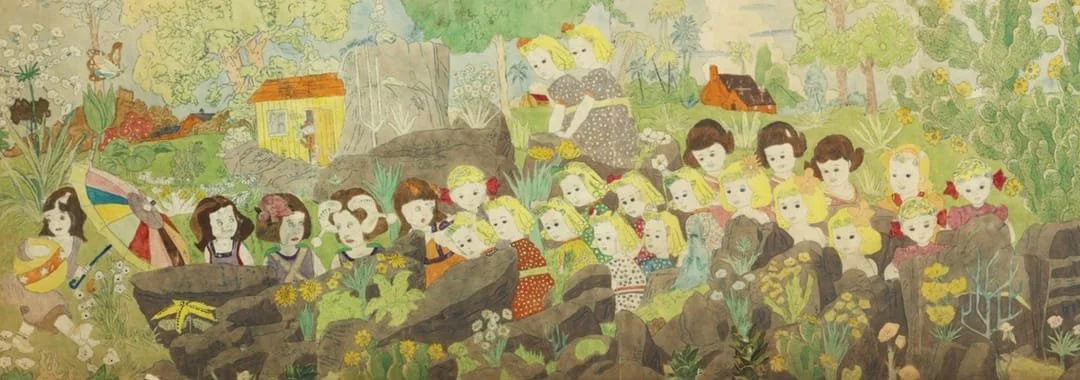
“He dedicated most of his life to writing, thinking, and drawing about states of slavery and liberation, dependency and lack of freedom.”
Finally, can you talk to us about your favourite piece by Darger?
In some artists’ cases, I look at their overall body of work. Sometimes, I go to a studio and ask the artist, ‘Am I looking at four pieces or one?’ In a certain way, I think Darger produced only one piece in his life. But, of course, when you look at it, each watercolour can stand on its own. I remember watching the movie Dancer In The Dark by Lars von Trier, where the main character is hanged at the end. I had the privilege of walking the actress who plays this character through the Darger exhibition I organised [Disasters Of War, 2000, an exhibition inspired by the cycle of etchings of the same name by Francisco de Goya, at the PS1 Contemporary Art Center, New York]. We looked at one image with the girls being hanged, which is the cover of my first Darger book: this picture still breaks my heart.
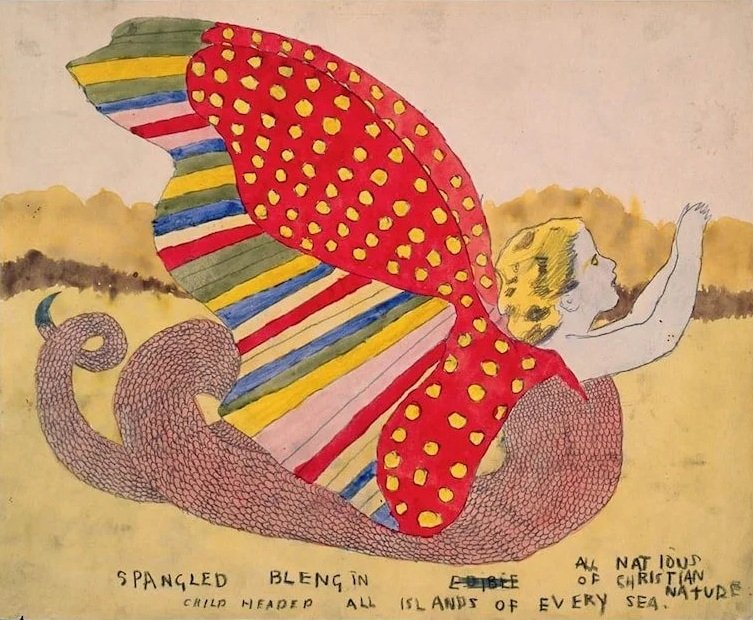
Spangled Blengin, Edible All Nations of Christian Nature. AlCollection Kiyoko Lerner From Henry Darger, by Klaus Biesenbach, published by Prestel
Get up-close-and-personal with artists from all over the world and unlock the mysteries of the creative mind.
Read in-depth interviews with the most exciting cultural movers and shakers shaping the creative landscape.

Discover the actors, authors, designers, mavericks and entrepreneurs at the bleeding edge of cultural life.