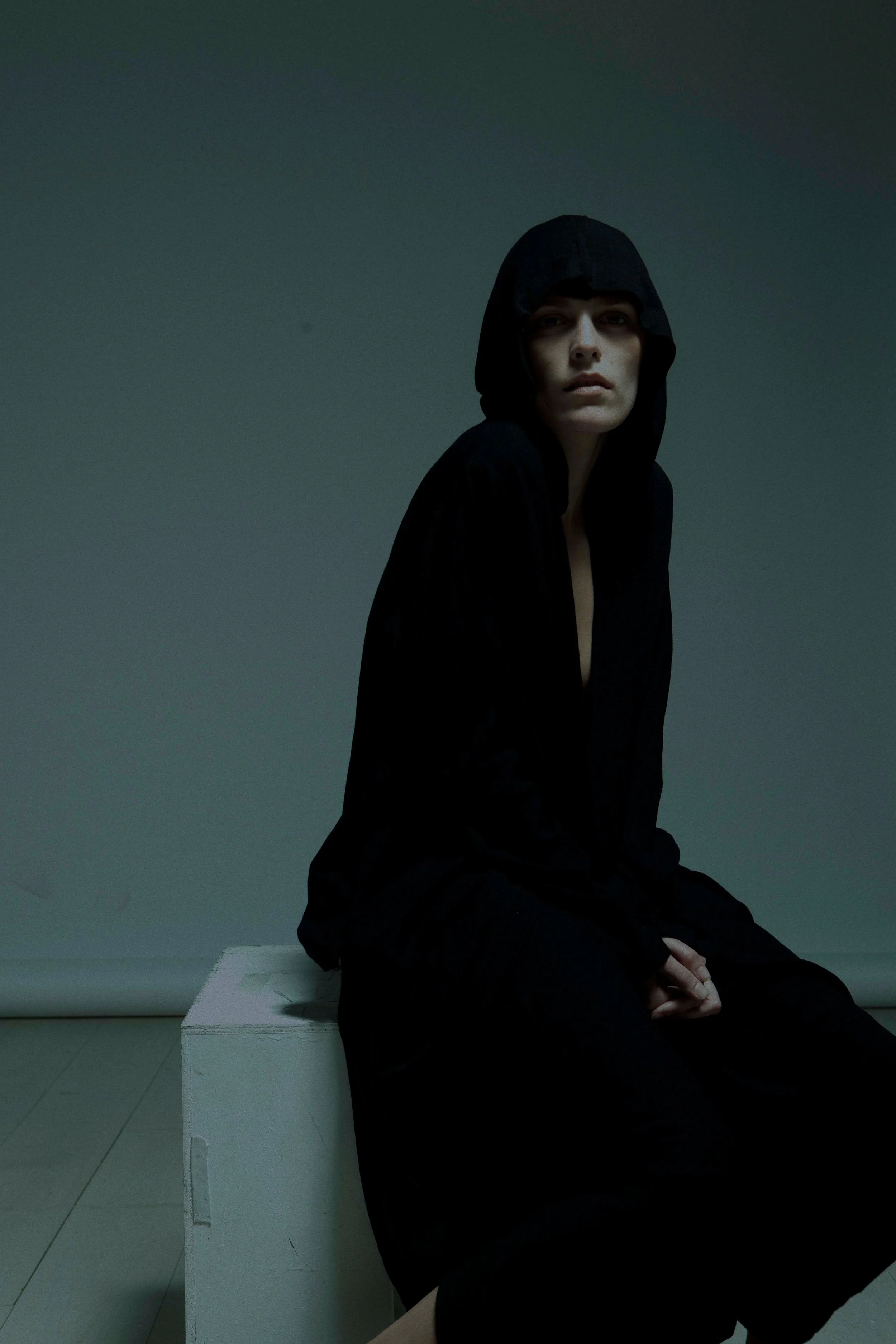
ART & IMAGE: INTERVIEW
Salvage Paradise: Robert Montgomery
Surreal Poetry, Interventionist Art And Seeking Everyday Magic
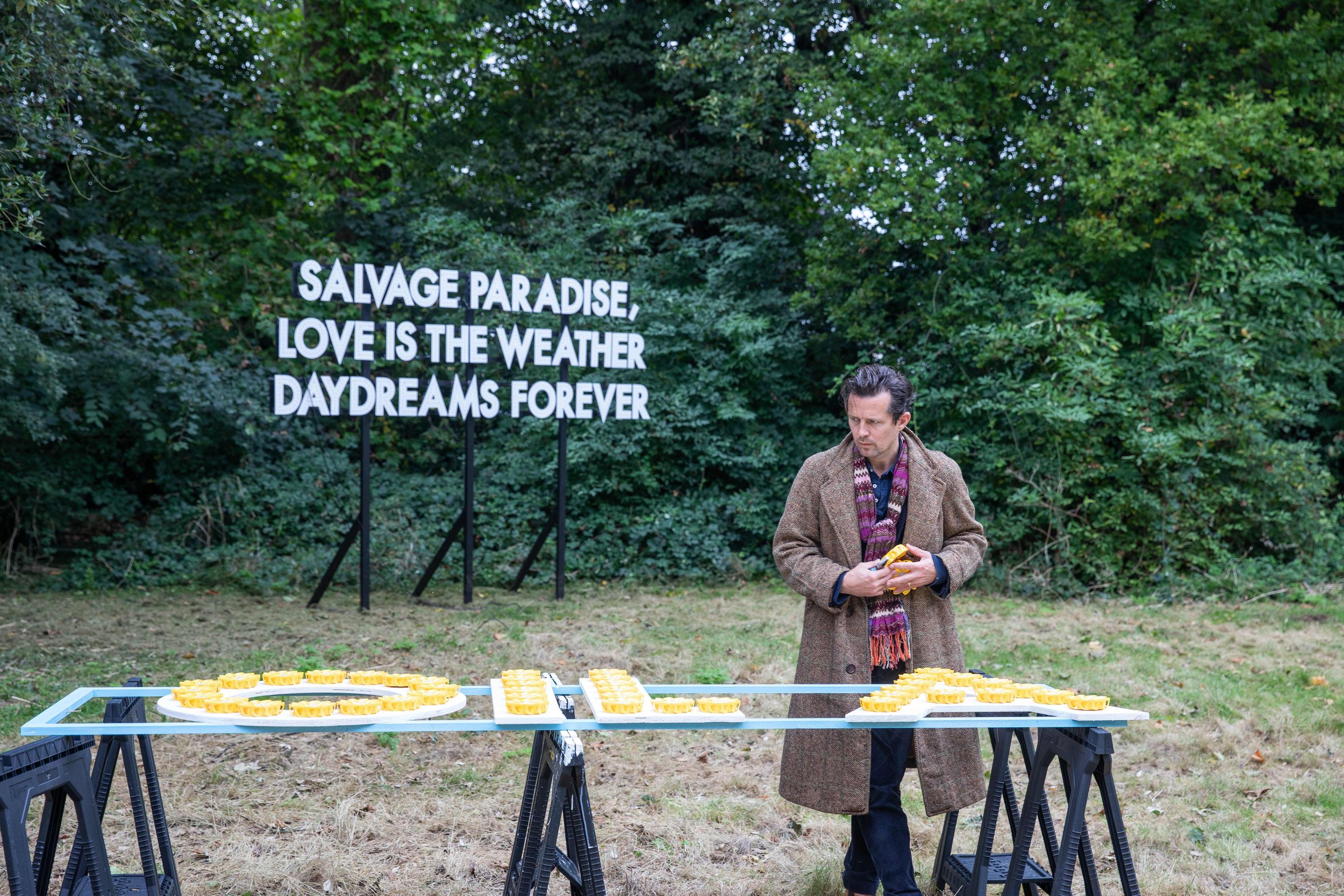
For more than twenty years, the Scottish artist Robert Montgomery has been practicing a quiet public poetry that tends to slip into the city like a half-remembered daydream. His often illuminated text-works disrupt the everyday choreography of looking and ask the random passerby to stop, register the angle of light on stone or glass, and allow a brief and intimate encounter to unfurl. John Berger, of course, taught us that seeing is never neutral but interwoven with social relations and accumulated histories, and Montgomery’s poetic interventions stage that very braiding – marrying evocative language to place, and offering a pocket of reverie in which the familiar becomes slightly uncanny.
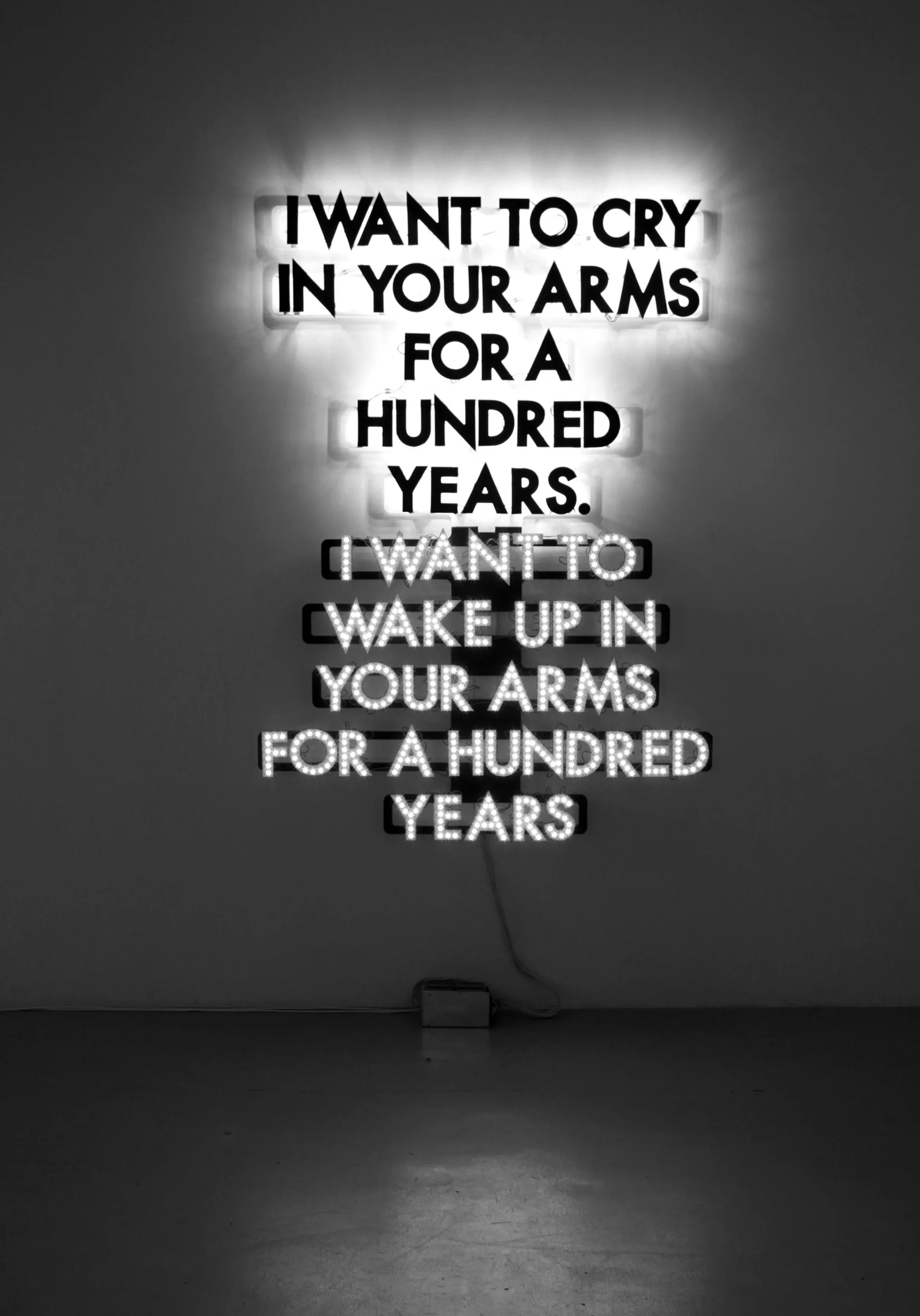
By choosing public spaces, Montgomery deliberately removes his work from the realm of the art market and returns it, briefly, to everyday life. The light of the work dissolves at dawn, or is switched off at midnight, and what remains is a trace of a moment in which the world’s given meanings were gently unsettled. The power of the work lies not in spectacle but in the small, private recalibrations it occasions in its brief life. The text presented often points to loss or desire, and demands tenderness of thought, transforming urban and remote spaces with statements that invite profound reflection. Heartfelt messages such as THE PEOPLE WE LOVE BECOME GHOSTS INSIDE US AND IN THIS WAY WE KEEP THEM ALIVE straddle a paradox of melancholy and joy, deep-diving into a Jungian notion of collective consciousness, while inviting radical contemplation of temporality and one’s place in the world.
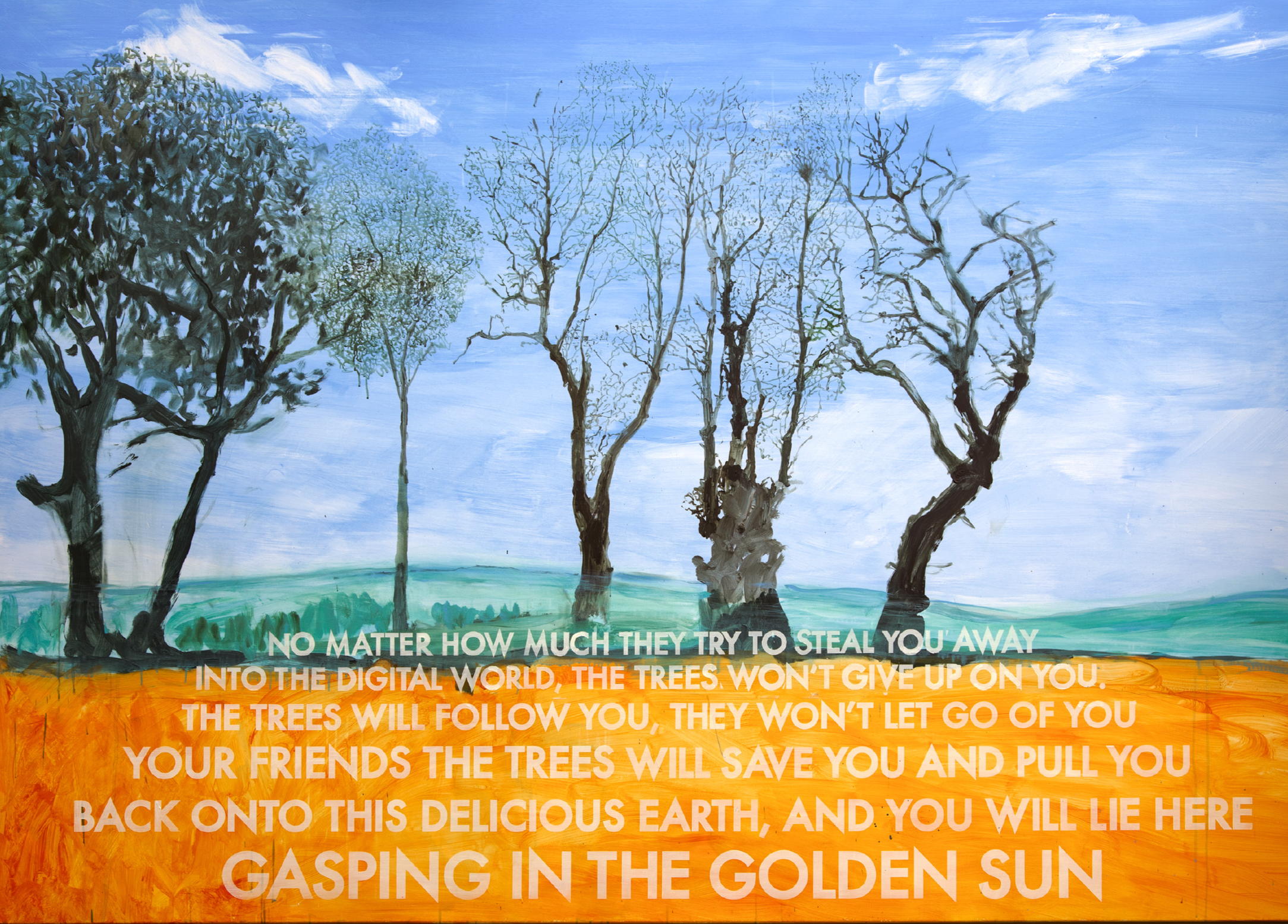
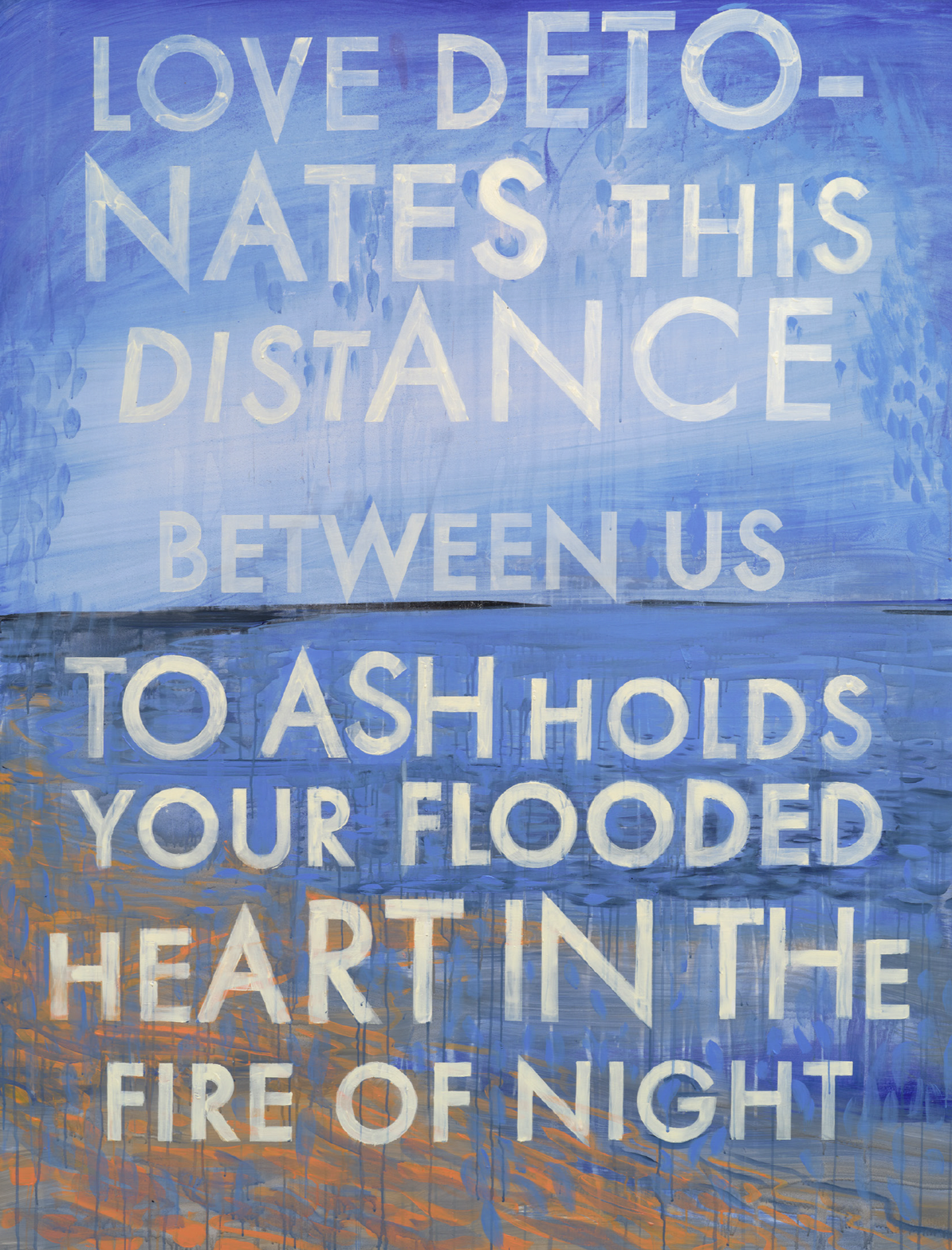
In recent years, Montgomery has returned to his painting practice, which is reminiscent of mid‑20th‑century poetic abstraction fused with contemporary text‑based conceptual art. His paintings often pair pared‑back atmospheric colour fields with stencilled or hand‑painted phrases – short, melancholic lines that read like fragments of beat poetry – and his palette leans toward dusky blues, sepias and washed-out whites, reinforcing a nocturnal, reflective mood. Many of Montgomery’s painted works extend the poetic concerns of his public light installations, namely the politics of language and the ways in which simple sentences can refract memory, longing and social unease. The result is a hybrid practice that sits somewhere between painting, signage and poetry – intimate in tone, for sure, but almost civic in address. In this candid interview with FUTURISTIC DRAGON, the outspoken artist discusses the spirituality at the heart of his creative drive and explains his desire to weave the ghost of poetry into the architecture of the city.
“If you look at what all the major religions are trying to get at, I think they are basically trying to communicate the fact that the whole of humanity has a shared soul”
Do you recall what first turned you on to art as a child? Did you always have a desire to create art?
I definitely wanted to be an artist from the age of thirteen, and I was obsessed with painting watercolours of landscapes and sunsets as a teenager – very traditional British 19th century watercolours of landscapes, also with calligraphy and lettering. I always wanted to paint the luminosity of the sky, and I suppose that's still what I wanted to paint, really. In a way, all the light pieces I create on beaches, or in a mountain landscape are contemporary re-workings of seascapes or sunset paintings in the tradition of Turner or Caspar David Friedrich. I'm always innately thinking of how to make that kind of image and activate that sensation where the luminosity of the sky carries you off into the heavens, or transmits a sense of eternity. I think that’s why I put so many of my light poem works in those kinds of landscapes.
How did that love of landscape painting align with an interest in the Situationist movement?
Well, I became interested in the Situationist movement at art college because I was reading a lot of academic writing to try and make sense of society and capitalism. I was reading a lot of the structuralists and postmodern theorists when I came across Guy Debord, who just seemed somehow more intense and truthful in that context than someone like Roland Barthes or Jean Baudrillard, both of whom I like, by the way. But Debord was different, because I felt Debord was talking about what capitalism might be doing to our hearts and to the child inside of us. What drew me to him, essentially, was that he was very much concerned with the emotions created under conditions of capitalism – how it makes us feel, how it might break our hearts, as opposed to just examining the conditions of production.

“I think the fundamental purpose of art and writing is really to keep you awake to the phenomenal and to try to remind us all that the magic of the universe is here in the now”
There is an undefined spirituality in the work, where does that stem from – what would you say are your core spiritual beliefs?
I know this might sound like a rather idealistic thing to say, but I believe that human beings have one shared soul. If you look at what all the major religions are trying to get at, then I think it’s clear they may be trying to communicate that the whole of humanity has a shared soul, and that when we sit together in peace that soul glows and grows and becomes an incredibly powerful entity. I think that’s maybe what they’re really talking about when they speak about God. I believe it’s far more likely that we have one human soul than it is that there’s a separate God outside of us, and discovering a sense of that is what’s important to me in my work. It’s about discovering the magic in the mundane and the sacred that lives in the everyday, because we tend to forget that to be living on this blue-skied planet, as it spins through space and hurtles into a fragile future, is intensely thrilling and frightening, and even slightly supernatural, in all its unlikely magic.

“I'm trying to engage the collective unconscious in public space and write about what it feels like on the inside to live in late-capitalism ”
Have you made work for the public realm since the very beginning?
Yes. I’ve been making work in the streets since I was young. Even if I look way back to when I was a student at Edinburgh College of Art, in my post grad year I was making interventionist work in the streets of Edinburgh on billboards. That is probably when I first realised I was interested in working anonymously, and having people encounter the work without knowing it was art. I like the fact that people do not need an art history degree to read it, or be touched by it. One thing that has been wonderful for me is the amount of people who now have the work tattooed in some way. I'm trying to engage the collective unconscious in public space and write about what it feels like on the inside to live in late-capitalism, so when it connects with people so deeply that is wonderful.
Is the activation of that sense of phenomenological wonder key to why you create these works?
Yes. I think it is about trying to recover the sensation of realising how magical and frightening it is to be alive. I think the fundamental purpose of art and writing is really to keep you awake to the phenomenal and to try to remind us all that the magic of the universe is here in the now – and that we live in an innately magical world. My mission to myself in the work that I make is to stay awake. I’ve also tried really hard to make my work in public space because I want people who don’t have the luxury of taking their kids to the museum on the weekend to be able to see it. I’m conscious that a lot of people can’t take their kids to museums because they’ve got far more pressing things to do like work their jobs and try to pay their bills, and I want my work to be accessible to them. It’s about presenting the work in a way that’s non-hierarchical, in the sense that the viewer doesn’t have to go to the museum or to know it is art. They can just read it and take it for what it is. I want my work to communicate with people who are standing at bus stops on the street or walking home through the city at night.
“It’s about discovering the magic in the mundane, and the sacred that lives in the everyday”
There’s a lot of spiritual motifs in your work, and quite specifically Christian motifs – why are you so drawn to the symbolism of angels, and so forth?
There’s probably quite a lot of Christian symbolism in my work because I come from a very working class part of Scotland where religion played an important role in what were very tough lives for people. My grandparents were all coal miners and where I grew up was right in the industrial belt of Lanarkshire. People worked very hard and didn’t own very much, and I think in that context, in the context of working your whole life underground in a coal mine like my grandfathers did, religion gave people a certain agency by which they could build an identity for themselves, and a community that was independent of the economic struggle of their lives. My grandparents on my mother’s side actually started a little evangelical church called Plains Mission Hall that still exists, and it was the centre of the community for my mother and her siblings. I grew up very close to my maternal grandmother who was a mystical, almost Blakean Christian, who would have mystical visions. She lived in our house and was my best friend when I was a child, so that idea of Christian spirituality was quite embedded in me I think.
Would you describe yourself as religious?
I would probably describe myself as an anarchist Christian in the Blakean tradition – a church-less Christian maybe, as well as a low church pagan. What’s important to me is discovering the sacred in the ordinary – uncovering what we so often lose sight of in the machinations of modern life. I often meditate on the idea that we are all sacred beings.
When you conceive a work, does the poetry come to you first or does the visual intent in the placement of the piece define what the words will be?
I try to treat both as one thing. It’s not always important for the work to be site specific in terms of the content, but if there is a chance to work in a place that’s got historical significance that can be resonant, then that is really interesting. The installation at Tempelhof in Germany, for example, was interesting for me because there you can really see these layers of the 20th century’s tragedies – it’s almost like a catalogue of the mistakes of the 20th century. It was, first of all, the biggest airport in Europe, then it was a very early concentration camp in the mid-30s, before being used as an airport once again by the US Army in the Cold War. It’s now a park, and has been turned over to children. I created two poems there about peace on hardware the US Army had built, as if to de-militarise and heal the space.
“ I think you can use poetry to dig yourself out of a dark place of depression and nihilism, and gradually work up towards a place of spiritual meaning”
Who would you say are the poets that have had the most profound impact upon you?
The surrealist poets influenced my work very strongly, and they actually changed the direction of my life. The first issue of La Révolution Surréaliste was published in Paris in 1924. In the 1990s, while I was studying painting at Edinburgh College of Art, I discovered the poetry of André Breton and Paul Éluard in the English translations by Samuel Beckett and Paul Auster. Those poems were actually the thing that made me decide to use text in my work. Before I read the surrealist poets, I was just a painter. After I read them I wanted to be both a painter and a poet, so these poems changed the course of my work and my life. Something special happened when Beckett and Auster tried to make English do what Breton and Éluard were doing in French – they had to push at the boundaries of English to reach what the surrealists were doing and they pushed the English language to do things it couldn’t do yet. Underpinning the way I use language in my work, and the reason I use it in the first place, is still that strong influence of Breton and Éluard via Beckett and Auster.

“Poetry speaks to the child inside of you, and then tries to rediscover the world through the eyes of that child”
Does poetry speak to a Jungian notion of the collective soul for you?
I mean, you don’t have to buy into the idea of there being one single human soul to get poetry, but I do think poetry taps into something that is genuinely soulful, and can allow you to connect to the child inside of you – poetry, for me, is an access point to live in the world with less pain. Times and cultures are defined by the type of speech that is dominant, and for us that is the language of the news media and the language of advertising. Both of those tell us things and sell us things, and what they have in common is that they describe a material world that treats us purely as a demographic or a voter, or a number – we’re trapped within these two languages, which are entirely materialist, and don’t deal with our spiritual lives at all. In the past, this language was transmitted via billboards, television and radio, but now it also lives inside our laptops and smartphones, and that means that it almost lives inside of our bodies. What Guy Debord would call ‘The Spectacle’ has become digitised at an intensely fast pace, and it is so personally invasive to our psyche now. The Spectacle is in a way now tailored via algorithms to our individual neuroses, and I think that as a culture and society it’s put us all into a state of collective trauma. I believe that poetry can provide the antidote to that, because poetry speaks to the child inside of you, and then tries to rediscover the world through the eyes of that child. I think you can use poetry to dig yourself out of a dark place of depression and nihilism, and gradually work up towards a place of spiritual meaning.
You have a very strong drive to connect with people it seems. What do you hope your legacy will be as an artist?
Well, I think people tend to connect with my work on a very personal level, and it begins to mean something to them. As I mentioned, there are people who have gotten tattoos of works like THE PEOPLE YOU LOVE BECOME GHOSTS INSIDE OF YOU AND LIKE THIS YOU KEEP THEM ALIVE and the legacy is right there. It exists in that conversation with people, and the way in which, hopefully, the work means something to them and gives them a sense of meaning, or a useful mantra that helps them live. Ultimately, art is a communication medium, and I’m proud that I’ve managed to forge a way of working that can engage with people outside of museums and galleries in a way that invites people into the conversation.
Introduction & Interview: John-Paul Pryor
Find out more about the artist here
Image Credits: Portrait of the artist by Phillip Volkers; Gasping In The Golden Sun, 2025, acrylic on canvas; Even After All This Time, Aberdeen NUART Festival (installation shot). 2026; Dylan at James Baldwin’s Party in Istanbul, acrylic on canvas, 2025; I Want To Cry In Your Arms For 100 Years, (installation shot, 2024); Love Detonates This Distance Between Us , acrylic on canvas.
Get up-close-and-personal with artists from all over the world and unlock the mysteries of the creative mind.
Read in-depth interviews with the most exciting cultural movers and shakers shaping the creative landscape.

Discover the actors, authors, designers, mavericks and entrepreneurs at the bleeding edge of cultural life.