ART & IMAGE: INTERVIEW
Metabolic Intimacy: Silke Weissbach
Exploring Matter, Technology, And The Living World.
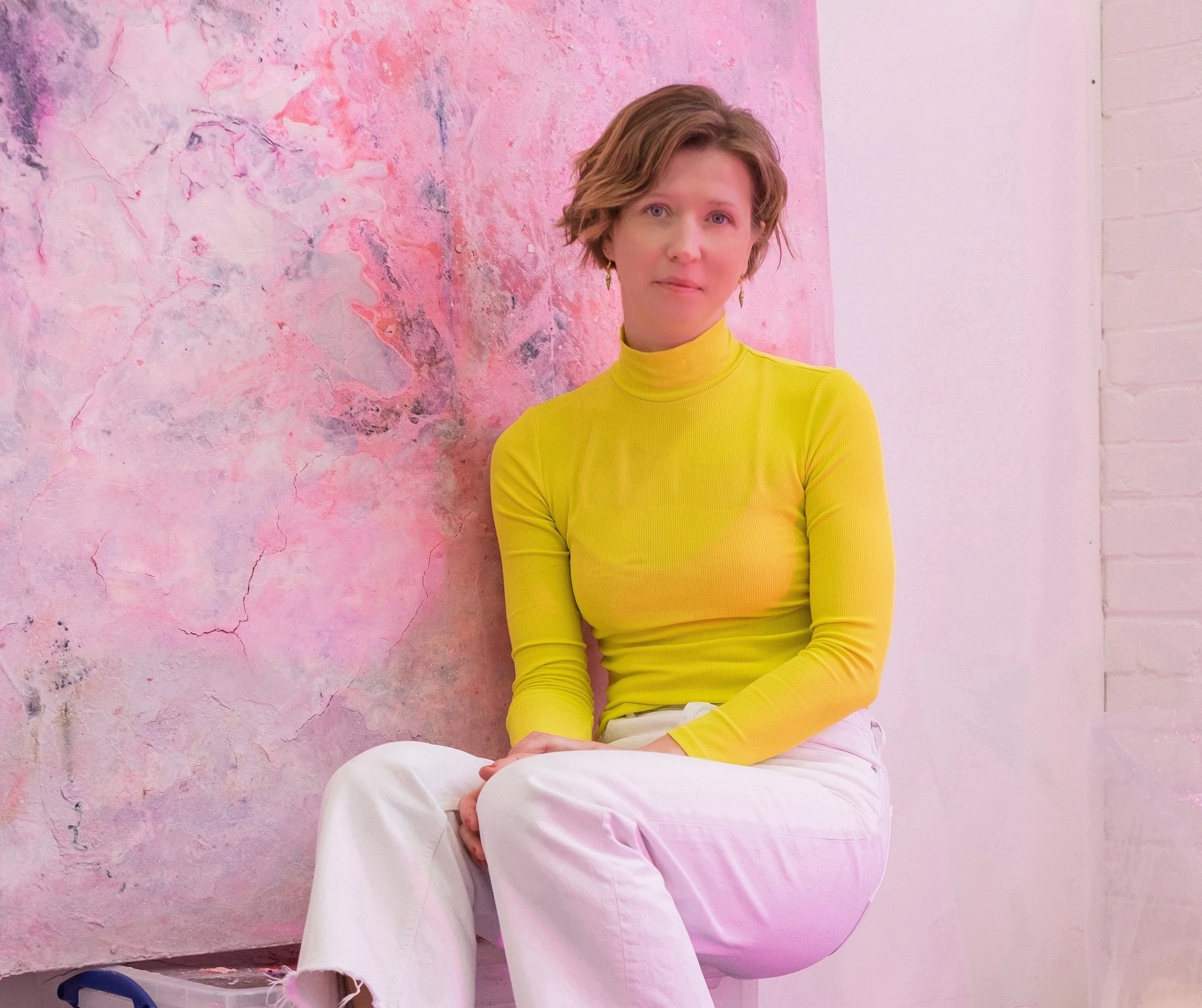
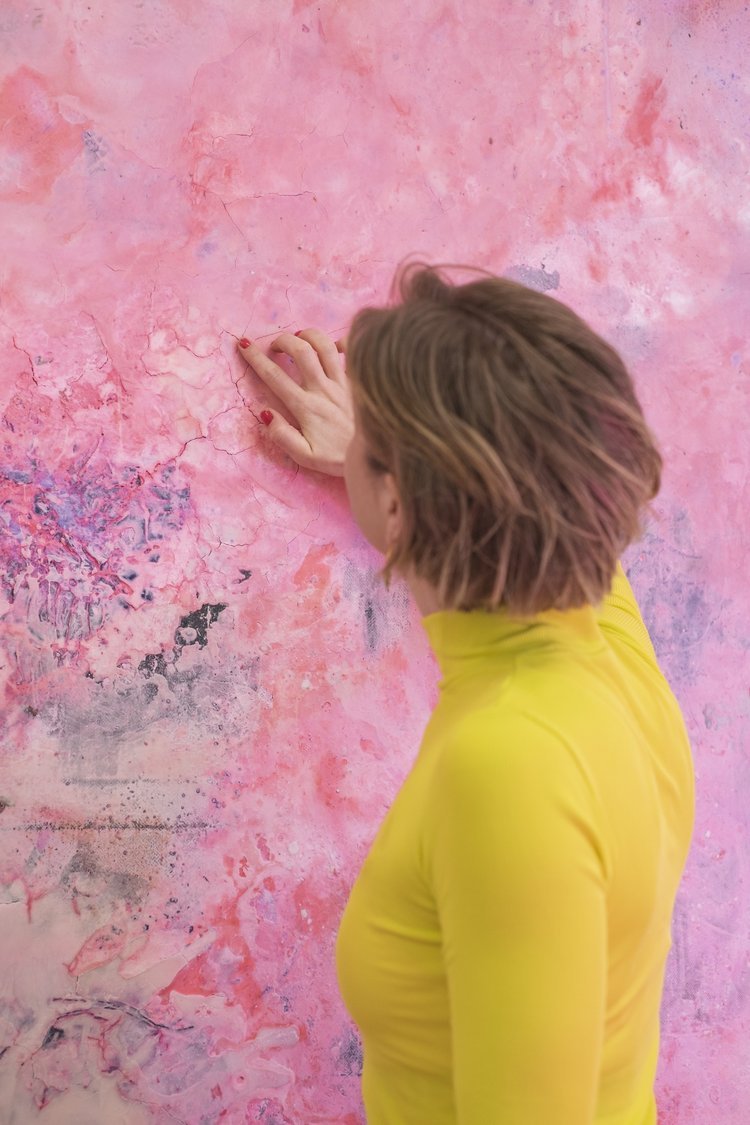
Silke Weißbach is a German artist who asks of painting something it has rarely been asked – namely, for it to be dynamically combustible, and, to all intents and purposes, alive. She readily assembles compounds, such as hyaluronic acid, collagen, and plant matter as interactive creative participants in work that looks very much like abstract painting, yet behaves like a living system – one in which materials continually metabolise one another, asserting a presence that is neither wholly synthetic, nor wholly organic. It’s an unusual approach to art-making, and Weißbach speaks of exploring emotional intelligence in matter in her practice, and revealing inherent capacities such as memory, swelling and decay. Her abstract landscapes operate as encounters where body, mind, and land are not separate registers but overlapping depths that ask us to register shifts, such as a bloom, a pallor, a gathering, as if the surface itself were breathing and pulsating. Transformation, in her hands, is not then mere metaphor but physical process – a way for the natural world to propose new relations to the viewer.
This month, she opens a new exhibition IN FOCUS at Circle, a globally renowned contemporary gallery, located in the Hawksfield artisan hub along North Cornwall's Atlantic Highway. Circle has a distinct, landscape-driven approach to the presentation of art that feels like it parallels Weißbach’s practice. Its artistic identity is profoundly shaped by creators whose own practices are deeply rooted in rural and coastal environments. Rather than presenting static representations of nature, the curated works explore our elemental and psychological connections to the physical world, emphasising texture and materiality. As such, it feels like the perfect home for works by an artist whose entire practice hinges upon the materiality of nature.
In this conversation with FUTURISTIC DRAGON the recent winner of the Winsor & Newton and Paul Smith Foundation Art Prize coins the peculiar phrase ‘metabolic intimacy’, and it’s one that resists easy translation. It insists on painting becoming a laboratory for attending to the ever-shifting ties between living matter and technological intervention, and reminds us that the world we inhabit is made of compounds that communicate, conjoin, and alter one another, proposing art as a practice for leaning into the strange chemical conversations at the root of life.
What would you say drives you creatively?
I’m interested in how our concept of nature has been shaped across different historical and cultural frameworks, and I’m drawn to the narratives of where we come from, how world-views are formed, and how they influence the belief systems we hold today. A large part of this is about finding ways to reenter the ecologies we inhabit and to understand what happens when we begin to listen to our surroundings and are more attuned to them. There is also a very personal layer that drives me, which has to do with how we respond to trauma, sudden shake-ups, and moments of crisis — how the body copes with these extreme situations and how such experiences move through generations. A family event made me attentive to these emotional transmissions. It opened a deeper curiosity about feelings such as grief and love. Another element that runs through my work is the question of longing, or maybe belonging. In German, there is a word that describes this more precisely: Sehnsucht. It relates to my lived experience of being uprooted, not only the feeling of being an expat but also a generational form of up-rootedness, something that reaches further back and is tied to place, history, and the shaping of territories
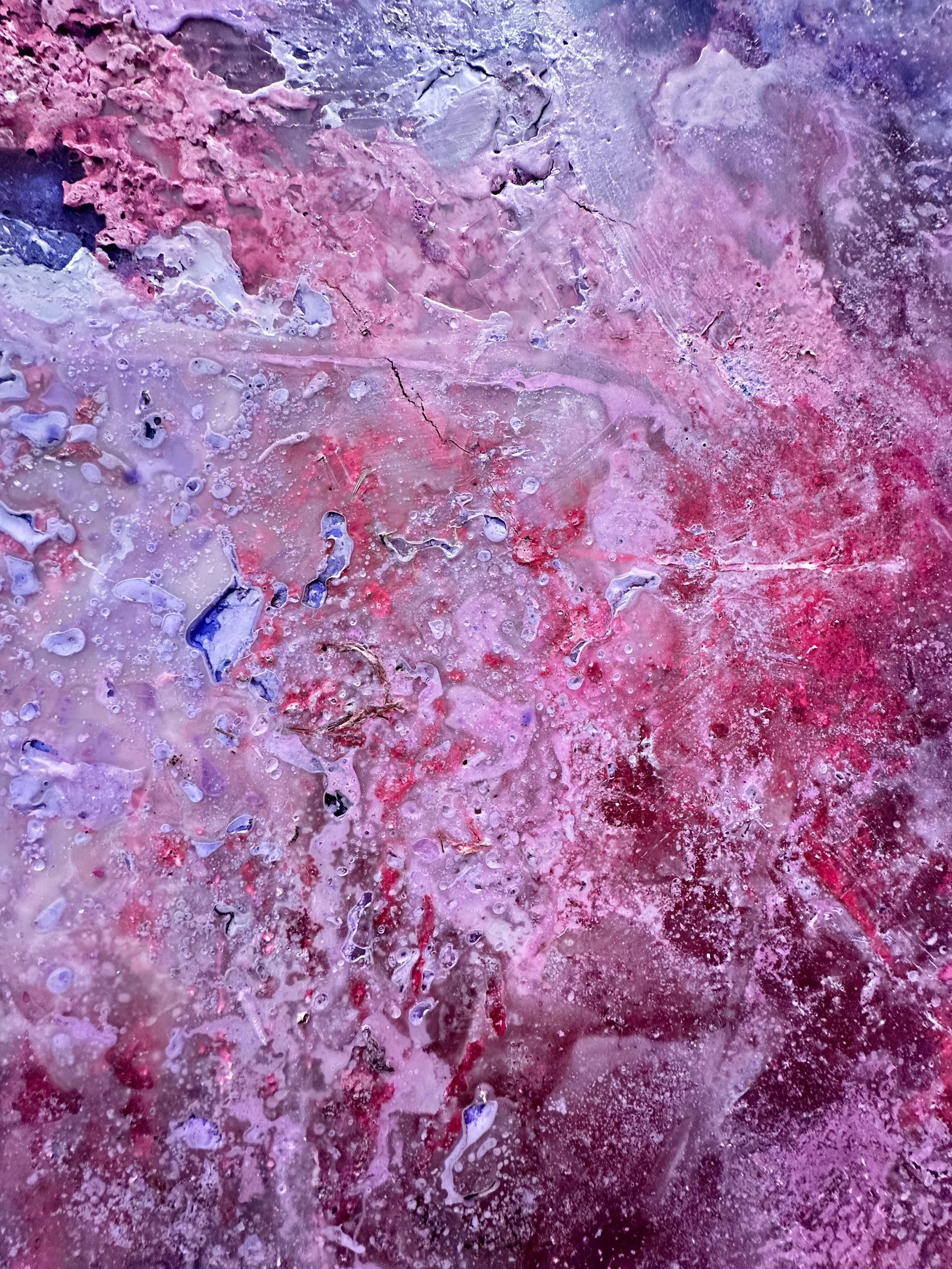
“The canvas acts less as a fixed surface and more as a membrane — porous, responsive, and metabolising. The materials behave with their own agency”
Speaking of being uprooted. You recently moved to Cornwall. How has that affected your sensibility as an artist?
The move was a necessary step – the work was asking for it. I realised that what I make requires being in direct relationship with nature, not travelling to it occasionally from a studio in the city. But it was also a call I followed from a more interior place. An introduction to shamanic practices last year opened something up, and through that, Cornwall began to make itself known to me. I'd experienced versions of this on residencies before, where the senses open up and become more available. But living it continuously is different. It compounds. My former London studio, by contrast, felt very arranged – I had to engineer immersion and travel to reach it. Here, it's simply the condition of being. The days have become much slower, and that slowness has entered the work. There's a heightened awareness of the body within these landscapes — how everything moves through you, how attunement becomes necessary rather than optional. You move differently. More carefully. Nature feels sacred here, which makes you feel protected — and also makes you want to protect. The ocean has a particularly strong pull, but also the scents, the weather, and the sheer amount of rain this year. All of it asks something of you. It has also shifted my material palette and how I approach the painting. Things feel more raw — direct encounters between ingredients and canvas, matter applied and then stripped away again. The works have become more bold, more wild.
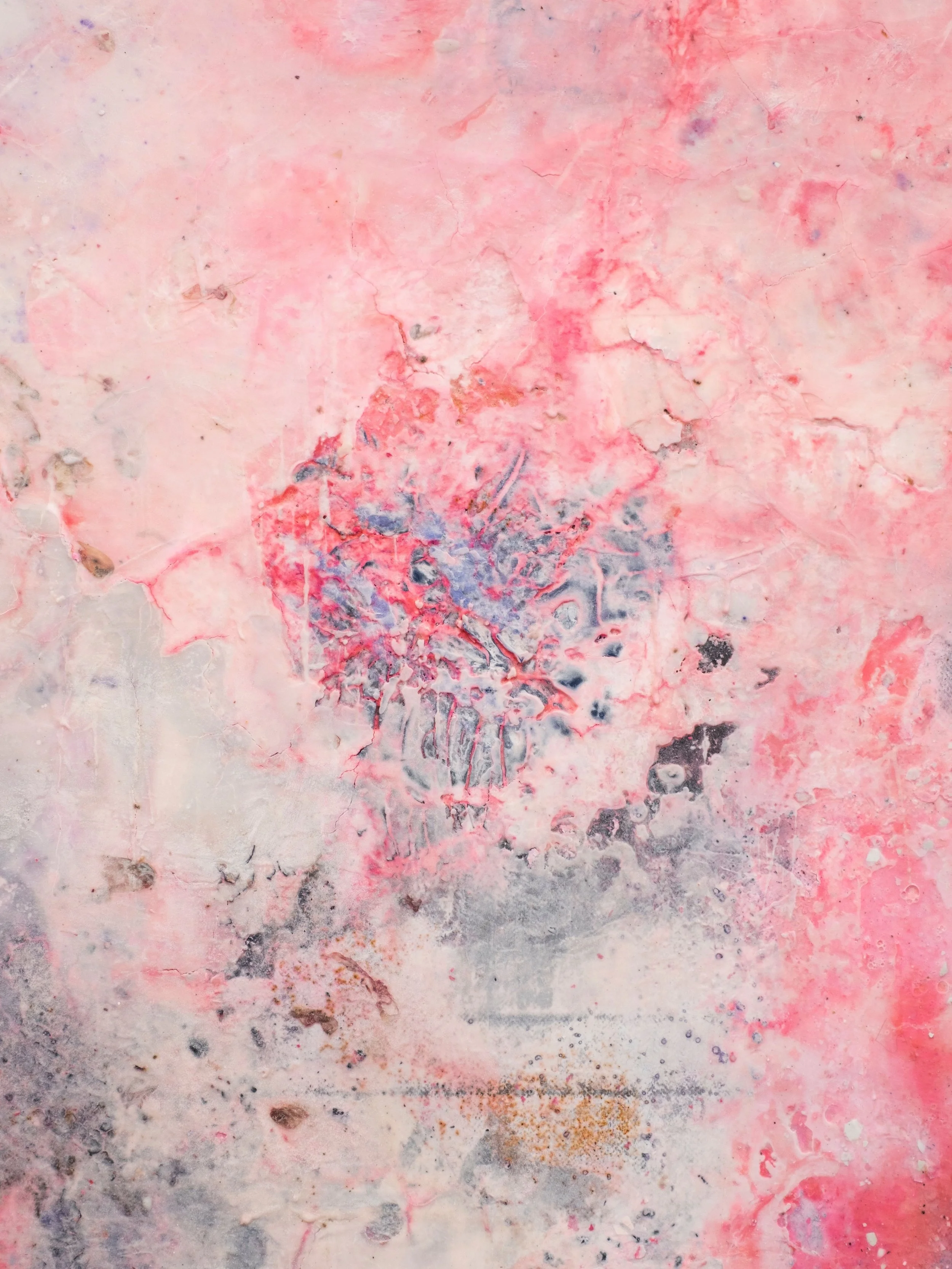
“There is a moment within my process where technology and the living world circulate through one another – where boundaries are porous, and everything is in exchange”
Tell me about working with Circle Contemporary …
The connection with Circle came naturally. I was aware they were located in Cornwall, and I find it a genuinely beautiful setting for a gallery – the relationship between the space and the surrounding landscape feels considered and real. For me, there's something important about work being encountered within the environment it came from. The show brings together works produced over the last two years in different settings, alongside new pieces made here in Cornwall later in the summer. That feels significant – it closes the cycle, brings the work back to where it belongs.
Why are you drawn to explore the possibilities of painting as a living system? Please can you unpack that concept …
My methodology is grounded in material research and began during my Master’s at the RCA. I tried to find a new way to approach canvas and wanted to understand colour more from a materialistic view: where they come from, what histories they carry, what forms of spirituality or internal DNA shape them. I eventually left the canvas entirely and moved more towards 3D. I started with plaster mixed with pigments and created my own molds from baking and cooking equipment. I mixed in everyday organic ingredients that were part of my diet – chilies, blueberries, spirulina, pomegranate, and sugar. These ingredients were already in dialogue with my system, so bringing them into the work felt like an extension of that intimacy. I transformed these substances through heating, hydration, crystallisation — all kinds of chemical or biological reactions, and I was interested in processes. The mixtures turned into hybrid materials I didn’t even have names for; they behaved, mutated, dissolved, and changed in ways I couldn’t really predict. At that point, I began reading more about interspecies relationships and biological transformation — especially Lynn Margulis and her theory of symbiogenesis, where evolution happens through collaboration, cell fusion, and the merging of different organisms
How did that investigation first begin to manifest as work?
Well, I ended up making a sugar sculpture series ‘Correspondence’, and I made them very large, body-like sculptures, and they start to drip and melt when exposed, but for me, it was more like painting, just in a 3D form. They were really sexy, alluring, but also abject. I had people leaking my sculptures. Many of those didn’t last long, so technology naturally entered my work. I started documenting different states and the process, and then pushed those experiments further in video-editing programs with filters and effects, which opened up new ways of transforming. I projected these digital transformations back onto the work, so all these shifts, formations, and collapses were translated back into the physical: ‘When We Collided, 2018’. And during the pandemic, I experimented more digitally. At some point, I chose to approach the canvas again because it offered a field where everything I had learned from the experimental phase could come together, with a clearer sense of outcome but still rooted in transformation. The scent is still present in the work. Fluids still drip over the studio floor; the paintings remain wet for long periods; surfaces decay, turn, shift, and settle very slowly until they eventually stop developing. The canvas acts less as a fixed surface and more as a membrane — porous, responsive, and metabolising. The materials behave with their own agency; they resist, seep, crystallise, collapse, or stabilise in ways I can’t fully control. The work lives in the tension between matter and the living world, which can simply be humidity, time or evolution. So sometimes I feel like it controls me more, because matter is active: it remembers, reacts, transforms.

“I believe everything exists within a field of relation – bodies, environments, emotions, and histories. And I’m interested in how things are connected”
Your website talks about a visual language of metabolic intimacy between matter, technology, and the living world. How does that relationship work?
There is a moment within my process where all of these ingredients, technology, and the living world circulate through one another — where boundaries are porous, and everything is in exchange. In earlier works, the digital came in through video and scanning; now, I draw a lot on my iPad and transform process images of the painting, so everything is in constant exchange. I’m trying to understand how these digital gestures can return to painting without being too literal and still embody the character of a digital body. The mark making is different — the pen slides over glass, not paper – very slippery. Another very fresh work is Siren Emissaries. I’m working with simulations trained on coral-reef footage, underwater imaging, and ecological data to explore how nonhuman systems communicate, sense, and shift over time. I then also fed this simulation with images from techno events, as I was drawn to the energy that is created in these spaces – an emotional cocktail of heightened states and body fluids such as body sweat and saliva. These models behave like organisms too — and drift, dissolve, glitch, and reform data — and I am thinking about how to bring this back into painting. So in the end, things always come back to the canvas, as I feel this is the place where things can happen in a very concentrated and concise way. It’s a membrane – every work is informed by the last and will inform the next. It’s a cycle.
“Abstraction carries a form of uncertainty, and surrendering to that feels right to me because it helps me to navigate the uncertainty we are living in.”
How would you describe your philosophical concerns as an artist?
I believe everything exists within a field of relation – bodies, environments, emotions, and histories. And I’m interested in how things are connected and how meaning circulates across different layers of experience, and how we shape one another through contact, attention, and sensitivity. At the moment, I read a lot of Indigenous literature and books on interspecies worldviews. Right now, I’m reading Waves of Knowing: A Seascape Epistemology by Karin Amimoto Ingersoll and Helm by Sara Hall. I am interested in oceanic literacy at the moment, and the idea that we evolved from water and how much of this knowledge we still hold in our bodies. And then I believe a painting can become a form of contact zone where you share this certain energy. Especially for me as an artist, it’s always interesting to see a painting I really admire in real life and how they used the materials. It always changes the whole perspective of the work. Sometimes, this feels frustrating, and it destroys the whole work for me, and sometimes it's more surprising. I assume it's because nowadays I consume mostly through Instagram, it's the first place and sometimes publication, but the real-life experience always hits different. So I always make sure to see a lot of work in real life.
What for you ultimately is the purpose of art in a broad sense, and how do you see your particular purpose as an artist?
I believe art is the only area that gives you the freedom to look into things from a very open perspective, and to connect ideas in ways that someone without that freedom wouldn’t be able to. I always knew I was going to be an artist. There was a lot of hesitation along the way and what-ifs, but once I decided, I went all the way. The ultimate purpose for me is that there was never anything else I wanted to do, and no other field gave me the possibility to think so freely and in so many different directions. I’m drawn to the abstract because it calms me, even though I do love landscape paintings as well. But landscapes were like the early messengers of abstraction – you see it in Turner, dissolving form into weather and atmosphere, or in Caspar David Friedrich, where the landscape becomes emotional rather than literal. And painters like Hilma af Klint or Ithell Colquhoun pushed this even further, bringing the focus away from representation and more towards spirituality – colour, flow, energy, tension. Abstraction carries a form of uncertainty, and surrendering to that feels right to me because it helps me to navigate the uncertainty we are living in.
Introduction & Interview by John-Paul Pryor
Silke Weißbach exhibits as part of the INFOCUS programme at Circle Contemporary June 01-30. Find out more about the artist here.
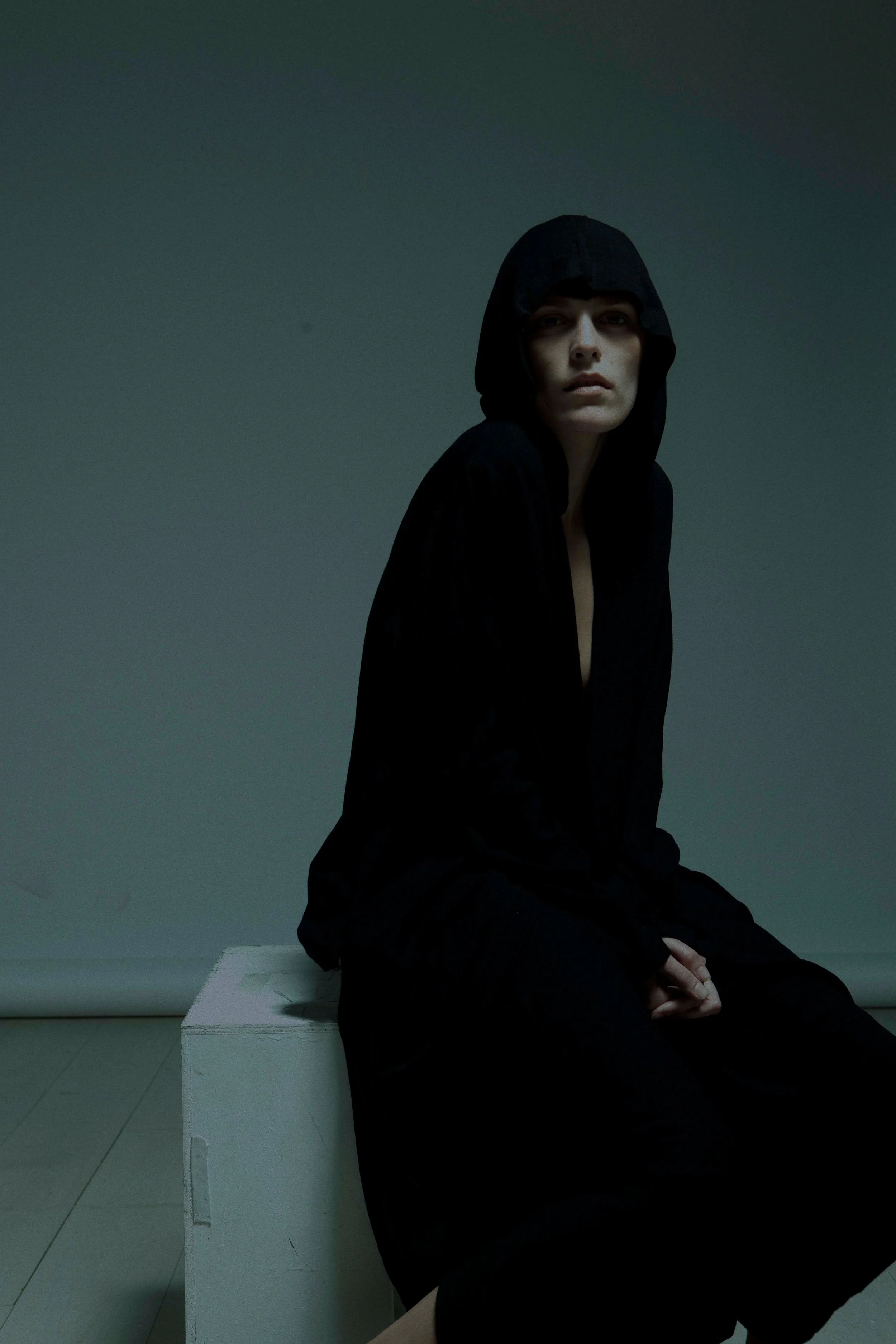
Images: Portrait of the artist by Rita Silva; Anma, 2025, oil, cochineal (Dagon’s Blood), cornflowers, wax on canvas, 152.4×101.6×3cm; High On You, 2024, acrylic, soap, shea butter, PVA, pigments, wax, Magic Bells – Mother of Thousands, comfort (lily and riceflower) on linen, 210×160cm; One More Rush, 2025, arcrylic, ink, cochineal, collagen, comfort, estrogen, glycerin, hyaluronic acid, lactose, plant sap, progestin, starch on canvas, 200×180cm. All images courtesy of the artist.
Get up-close-and-personal with artists from all over the world and unlock the mysteries of the creative mind.
Read in-depth interviews with the most exciting cultural movers and shakers shaping the creative landscape.
Discover the actors, authors, designers, mavericks and entrepreneurs at the bleeding edge of cultural life.