ART & IMAGE: INTERVIEW
The End of The Beginning: Von Wolfe
Hallucination, Oscillation And The Surreal Vistas Of Non-Human Imagination
The British painter Von Wolfe is a keen adoptee of artificial intelligence as a creative tool and makes work that leaves you suspecting that painting itself has been autonomously conspiring against you – shaking the very foundation of what one understands to be the role of the artist in the conceptualisation of the visual image. What sets him leagues apart from so many of his peers experimenting in the generative arena is the way he trains diffusion models with the slow, keenly observed patience of a zen monk, spending weeks letting them dream alongside him before painstakingly painting the results in oils with a honed style that has much in common with the Old Masters.
The final paintings read like a shared hallucination, depicting figures conjured by prompts wearing expressions that look as if psychosis and borderline personality disorder had been asked to pose for a passport photo together and, bored, decided to revolt. It’s perhaps unsurprising that Von Wolfe talks about authorship as if it were a quaint form of nostalgia, and it’s something he seems perfectly ready to let collapse. Barthes’s ‘Death of the author’ is not merely a hackneyed slogan for him but a vibrant working condition. He feeds language to networks, watches them suture images out of that language, and then sets his own hand to the task of repair. The result is a kind of distributed imagination in which agency migrates, briefly and uneasily, between silicon and skin – for his critics, it resembles a Frankenstein-like undertaking, for his fans, it represents a bold new frontier in imagination.
Von Wolfe says he isn’t afraid of the existential threat that AI supposedly poses to human creativity. For him, the arrival of generative tools doesn’t dilute the human; it displaces it and creates gaps that the human animal can then be summoned to fill. Where algorithms offer a plenitude of possibility, Von Wolfe insists on constraint. He crafts prompts like a poet composes sonnets, then paints the slippage between the machine’s surreal literalism and his own refined analogue sensibility. The work that is finally produced charts uneasy territories – characters appear who might be experiencing something like a breakdown in uncanny portraits that are at once both sympathetic and accusatory.
In his interview with FUTURISTIC DRAGON you get the impression that his embrace of generative technologies is less a triumphal announcement than an experiment in artistic humility. He does not pretend the machine is a partner – instead he treats it as a provocation that will misread, hallucinate and thereby reveal something new and unprecedented. The images that arise in his practice are, in that way, instructive, because they show us how once the author is truly dispersed, our responsibility as viewers becomes even more urgent – sure, the machine can dream the faces, but only we can teach them to feel.
We have spoken before about AI sparring with one's creativity and you have fundamentally incorporated AI into your practice over the last few years, training diffusion models on your archive. How does it feel to converse with a collaborative digital reflection of your own subconscious?
I would resist the word ‘sparring.’ It implies a distinction between the artistic process and myself, as if there were a boundary across which something external pushes back. There isn't. The process feels familiar because, in a sense, I am engaging with something like a collective unconscious – the vast tradition of image making that underwrites visual culture. That is the substrate. What I am looking for within that substrate is estrangement. There is an oddness, an uncanniness, that has been deliberately cultivated, bred almost, into training data over years of selecting for images that resist easy categorisation. And yet even the uncanny feels familiar, because it emerges from material already chosen, already approved, already internalised. I would not call this collaboration. Collaboration implies two agents meeting at a table, negotiating. What happens here is closer to Plato's cave. You stand before the wall. Shadows appear before you, shadows you recognise as human, as in some sense your own, caused by your presence and your fire. But the illusion acquires such force that it seems to gesture toward another world, a realm behind or beyond the reflection itself. The latent space is that fire. It burns behind me. The images it casts are shadows on the wall, and the question of whether those shadows are me, or whether they exceed me, is precisely the question that keeps the practice alive.
“I see the digital not as synthetic in any threatening sense, but as another paradigm of seeing”
As I understand it, by feeding your own archive into a closed machine-learning loop, you create a digital ecosystem of your own style. Does it feel like you are externalising your own human consciousness in doing so, or are you tapping into an autonomous ‘other’ that exists outside of human experience?
The premise of a ‘closed loop’ is seductive but misleading. If you place a finite set of images into training data, intuition suggests that the output should be bounded, a finite field of possible iterations that narrows toward the statistical centre of what you provided. Feed it enough source material and it should, theoretically, produce only variations of that material. That is not what happens. The parameters governing training, how intensely the model attends to the source material, how loosely it interpolates between examples, how much generative latitude it is permitted, mean that the system does not simply reproduce its inputs. It produces something larger than their sum. The whole exceeds the parts, and this excess is structural, not accidental. No matter how narrowly the training data is constrained, no matter how tightly the aesthetic boundaries are defined, there is always friction. There is always something that spills over the edge of the loop. That spillover is what I am looking for. It exceeds expectations, and that exceeding, that moment when the system returns something unanticipated is where the art resides. So, to answer the question directly: this is neither externalising consciousness nor tapping into an autonomous other. It is setting conditions under which something unforeseen can emerge from material that includes, but is not limited to one's own output, through a process that no single agent fully controls. The result belongs to neither category comfortably. Perhaps that is the point.
From myriad visual combinations, you isolate certain aesthetic manifestations to paint on canvas – what are the precise intellectual or psychological markers that elevate a digital anomaly into something worthy of being immortalised in oil paints, and does the image intrinsically have more value at the point it is painted by hand?
I want to question the framing before I answer it. There is a tendency in contemporary discourse to locate authenticity in psychology, specifically in a Lacanian or Freudian register where fragility, uncertainty, and visible failure are taken as proof of the human hand. This has become the dominant currency by which we distinguish ‘authentic’ art from mechanical production. You see it in the privileging of expressive brushwork, in the interrogation of the canvas surface, in the celebration of the abortive gesture. Artists like Matthew Armitage and Sanya Kantorovsky operate within this economy, and they do so brilliantly. But it is an economy I find myself increasingly reluctant to join. What fascinates me is the contradiction at the heart of current reception – work produced in dialogue with machines is routinely described as having profound psychological impact, precisely the kind of impact that critics claim only raw, unmediated mark making can deliver. The medium is supposed to be the message of authenticity, and yet here is a medium associated with the opposite end of that spectrum, algorithmic generation, producing work that moves people deeply. Something in that disjunction deserves attention.
“I don't accept that authenticity resides in the expressive brushstroke, any more than I accept its absence proves inauthenticity”
My own position is that psychology and authenticity inhere in the image, not in the evidence of its making. The medium can be decorative; the art is elsewhere. For roughly a thousand years of Western painting, process occupied the background. The image came forward without showing the hand. Tempera on panel, commissioned and devotional, announced itself through iconographic clarity rather than gestural intimacy. Only in the last two hundred years, since Romanticism, since the elevation of the artist's touch as guarantor of interiority, has process been dragged into the foreground. This inversion is historical, not ontological. You could draw a teleological line through that shift: Delacroix's fluidity pointing toward Matisse and Pollock, Ingres's precision pointing toward Cézanne and Picasso. But I don't hold that view. I don't accept that authenticity resides in the expressive brushstroke, any more than I accept its absence proves inauthenticity. So when you ask whether the painted image possesses greater intrinsic value than its digital progenitor, the answer is not that oil confers sanctity. It is that the two modes engage fundamentally different kinds of attention. One is curatorial and decisive – the training of models, the selection of outliers from thousands of candidates, the discrimination of which images possess that quality of uncanny intensity that makes them impossible to leave alone. This is time consuming, creative, and demanding in ways that have nothing to do with paint. The other is the phenomenology of the body before a large physical object, the movement from grisaille underpainting to hue, the negotiation of surface and depth, the accumulation of decisions that can only be made in material time. Both are real. Neither subsumes the other. They are simply different registers of attention, applied to what is, in some sense, the same image, and the tension between them is where the work becomes interesting.
The current zeitgeist is defined by hyper-acceleration and rapid-fire consumption of digital imagery. What does it mean culturally to slow down a split-second AI hallucination by spending months rendering it in painstaking, centuries-old oil techniques?
There is a limit to human attention when confronted with vast quantities of information, but this is not new. The condition of scrolling through algorithmic imagery is not qualitatively very different from confronting the encyclopaedic sprawl of Leonardo's notebooks, or the disassociated fragments of a Wunderkammer, or any sufficiently large assembly of data that exceeds the capacity of any single mind to synthesise. We have always had a limited capacity for ordering information. What has changed is the velocity at which it arrives. What interests me about AI in this context is that, despite its association with speed and immediacy, it can also be used in the opposite direction: to find order, pattern, schema. The grand narratives that structured twentieth century art history, Gombrich's The Story of Art, Kenneth Clark's Civilisation, were fascinating precisely in their shortcomings, in the way their schemata proved inadequate to the full complexity of global visual culture, to gender, to power dynamics, to economies of production. Any large scale schema will exclude. That is the nature of schemata. I don't believe that investing more attention, or granting more time, yields something more authentic or truthful. On the contrary, concentration often produces a more exclusive, more partial view. And yet there is a particular quality of closeness that emerges from sustained attention, from spending months with a single image, translating it from pixels into pigment, watching it change under your hand in ways that neither the original file nor one's intentions fully predicted. This is not about reaching truth. It is about the experience of proximity. The fulfilment lies in that proximity itself, not in any claim it substantiates about authenticity or value.
“I don't believe we are entering a ‘post truth’ world, because I don't believe it has ever been easy to define the synthetic against the real, or the authentic against the constructed”
Many would argue that we are living through a historical moment where the line between authentic reality and synthetic generation threatens to completely collapse. Do you view your work as a warning system of sorts for a post truth world, or a celebration of a new era of myth-making?
I don't accept the premise. I don't believe we are entering a "post truth" world, because I don't believe it has ever been easy to define the synthetic against the real, or the authentic against the constructed. Kant attempted exactly this in the Critique of Pure Reason, the search for an absolute, unconditioned vision of things in themselves. He failed. His own concept of the noumena admits as much – if there is an accessible absolute, we cannot reach it through the categories of human understanding. Everything we encounter is mediated. In that sense, everything is synthetic. Consider the Sistine Chapel ceiling. When it was restored in the 1980s and 1990s, revealing colours that Michelangelo himself had applied, brilliant, startling, almost garish by comparison with the version we had lived with for centuries, the reaction was outrage. Conservators were accused of having turned the ceiling into something resembling Walt Disney. What they had actually done was scientifically demonstrable: they had recovered Michelangelo's authentic palette. But the authentic Michelangelo had become the impostor, displaced by a romanticised phantom, the candle smoke darkened, varnish yellowed ceiling that centuries of accumulated time had produced. My view is that both are authentic. The original and its temporal accretion. The image as made and the image as received. There is something Proustian in this – the layers of time do not falsify each other, they compound. I see the digital not as synthetic in any threatening sense, but as another paradigm of seeing, just as the pre digital was itself a synthetic layer relative to what preceded it. Consider Jan van Eyck's introduction of oil paint and the quality of lustre it made possible: that glimpse of gold, that texture of glass, utterly foreign to the matte tempera that dominated European painting before him. That was a paradigm shift. Photography was another. Each one was, in its moment, experienced as a crisis of the real. Each one settled into convention. What may be new here is holding both paradigms in simultaneous view, maintaining oil painting alongside the digital, creating a field of tension between them that is, I think, more interesting than either mode operating in isolation.
“Truth has always been mediated, by the press, by propaganda, and by the selection of what is recorded and what is forgotten”
Jean Baudrillard wrote about the simulacrum, a copy of a copy that finally has no connection to any reality whatsoever. Since your recent paintings are physical renders of non-existent, digitally hallucinated art histories, do they serve as a monument to the era of hyperreality?
I think Baudrillard's framework, and the Popper Gombrich tradition it descends from, relies on a model of art making that I don't recognise. – the idea that representation is fundamentally an attempt to match reality, that artists construct schemas which are then tested against the world, found wanting, and corrected – make and match; schema and falsification. This is a logical positivist view of cultural production, there is a real world out there, and the history of art is the history of getting progressively better at depicting it. But if we are not matching nature, and I don't think we are, not in any straightforward sense, then the question of the simulacrum dissolves. We are not copies departing from an original. We are in a constant state of flux, developing and iterating ideas that refer to themselves as much as to anything external. The copy without original is not a catastrophe of late capitalism, it is simply the condition of image making once you abandon the illusion that images were ever straightforward reproductions of a stable reality. They weren't. They never were.
There is a huge amount of societal anxiety surrounding deepfakes and the erosion of digital truth. How does your own practice seek to engage with this cultural vertigo?
It is remarkable how quickly people adapt. The recognition that a photorealistic image might not depict something real is not, historically speaking, unprecedented. When cinema was first introduced, audiences reportedly screamed and fled the theatre because they believed the train on screen was about to crash through the proscenium and run them down. Within hours or weeks they understood conceptually that the image was a construction. Desensitisation was rapid. We have been through this threshold many times. The ancient Greeks marvelled at sculptures so lifelike they seemed about to move. Homer writes of automata, self operating figures that worked at Hephaestus's forge, effectively robots in all but name. Each technological shift in image making produces a moment of vertigo, followed by accommodation, followed by forgetfulness that there was ever any doubt. The current anxiety around deepfakes feels to me like another iteration of this pattern. Does that mean the erosion of truth doesn't matter? Not at all. But I don't think we ever possessed the clear view of political or cultural reality that the deepfake narrative assumes we have lost. Truth has always been mediated, by the press, by propaganda, by the selection of what is recorded and what is forgotten, by art itself. The present anxiety is, in my view, overstated. Not because deception is harmless, but because the deception it names is continuous with practices that long precede the technology currently blamed for them.
“I think conversations about accountability tend to serve ideological ends that have more to do with late capitalist notions of ownership and intellectual property than with any genuine inquiry into how culture actually develops”
Your archival work has a history of introducing structural tension by stripping icons, whether Disney castles or Leonardo da Vinci masterpieces, of their original context. What interests you about the oscillation between the sacred and disposable, and why have you always forced clashes between historical eras?
That was an earlier mode of working, ten, fifteen years ago. Back then, I was interested in using historical paintings themselves as raw material – taking canonical images, merging them, treating the entirety of art history as a foundry of elements to be recombined. The aim was to see how far the material could be pushed before it lost coherence. Diffusion models have rendered that approach obsolete for me, not because recombination is no longer interesting, but because the models offer something richer. They operate according to principles no one needs to fully understand mathematically, any more than Leonardo needed to understand modern fluid dynamics in order to draw water with extraordinary fidelity. He possessed operational knowledge, an intuitive grasp of how water behaved, developed through sustained observation, sufficient for his purposes without requiring theoretical formalisation. Working with diffusion models requires a similar operational knowledge, an understanding of how the system responds to prompts, parameters, and the peculiarities of training data, developed through use rather than through mathematics. This is a different kind of engagement with history than colliding old master reproductions against each other. It goes deeper, and it reaches places the earlier methods could not.
“If there is a collective cultural amnesia, it stems not from digital technology itself but from our failure to use these tools with discipline”
Arguably, these generative technologies can make the source of imagery completely anonymous, what do you think about the current debates surrounding accountability in contemporary image-making?
I think conversations about accountability tend to serve ideological ends that have more to do with late capitalist notions of ownership and intellectual property than with any genuine inquiry into how culture actually develops. Capitalism has always had a complicated relationship with culture. It wants to monetise what culture produces while ignoring the conditions under which culture grows. Those conditions are fundamentally collective, recursive, non proprietary. Would we have Raphael if he had not engaged with Leonardo, with Michelangelo, with Perugino, with Northern artists like van Eyck whose paintings he encountered and absorbed? He was, in his own way, a diffusion model, trained on the output of his contemporaries and predecessors, producing work that exceeded his inputs while remaining recognisably rooted in them. The question of accountability presupposes a model of authorship that has never accurately described how art gets made. We have never been able to trace the origins of an image to a single, sovereign source with complete confidence. Culture is collaborative by nature, accumulative, promiscuous in its borrowings.
“My interest is in depth, in pattern, in the quiet work of finding unexpected continuities across periods that prevailing narratives have taught us to see as separate”
It could be argued that our continuous digital connectedness has caused a kind of collective cultural amnesia, where we are all beginning to lose grip on deep historical context …
I would frame the problem differently. If there is a collective cultural amnesia, it stems not from digital technology itself but from our failure to use these tools with discipline. Deployed correctly, with rigour, with attention to historical depth, with respect for the material that the systems have been trained on, AI is capable of something quite extraordinary: finding patterns in visual culture that no human mind could assemble unaided, refocusing our attention on connections and lineages that existing art historical schemas have obscured or omitted. In that sense, it is the opposite of amnesia. It is an opening. A vast archive of historical data becoming newly navigable, susceptible to pattern finding on a scale we have never seen before. New schemas of art history become possible, ones that might address the exclusions and biases of prevailing art historical narratives more honestly, ones that might open dialogues between gender, politics, economics, and visual culture in ways that Paul Feyerabend would have recognised: against method, against single totalising narratives, in favour of a pluralistic and perpetually unsettled account of what culture has been and might become. I have never been interested in compressing history into single frames designed to provoke numbness into alertness. My interest is in depth, in pattern, in the quiet work of finding unexpected continuities across periods that prevailing narratives have taught us to see as separate.
Introduction & Interview by John-Paul Pryor
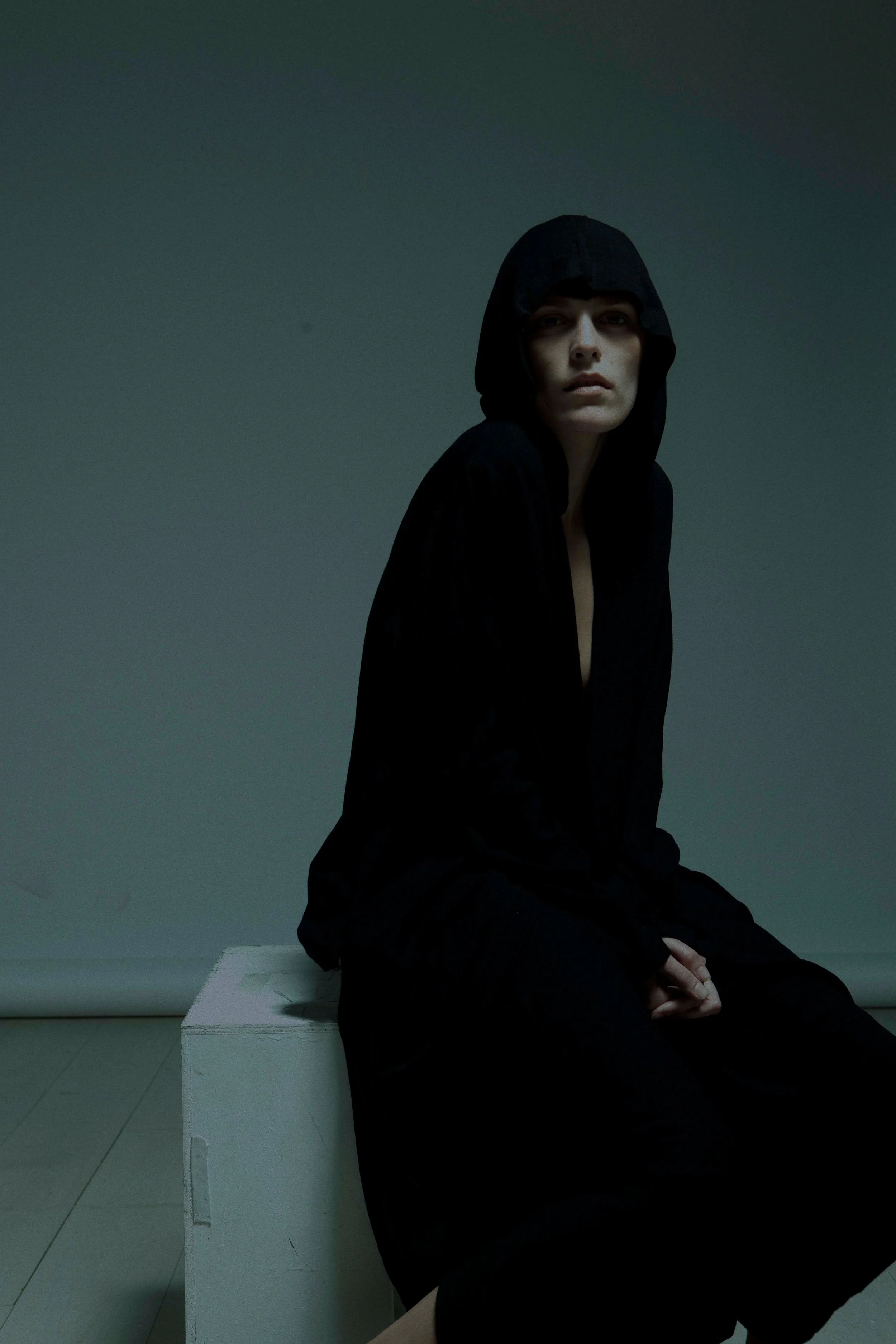
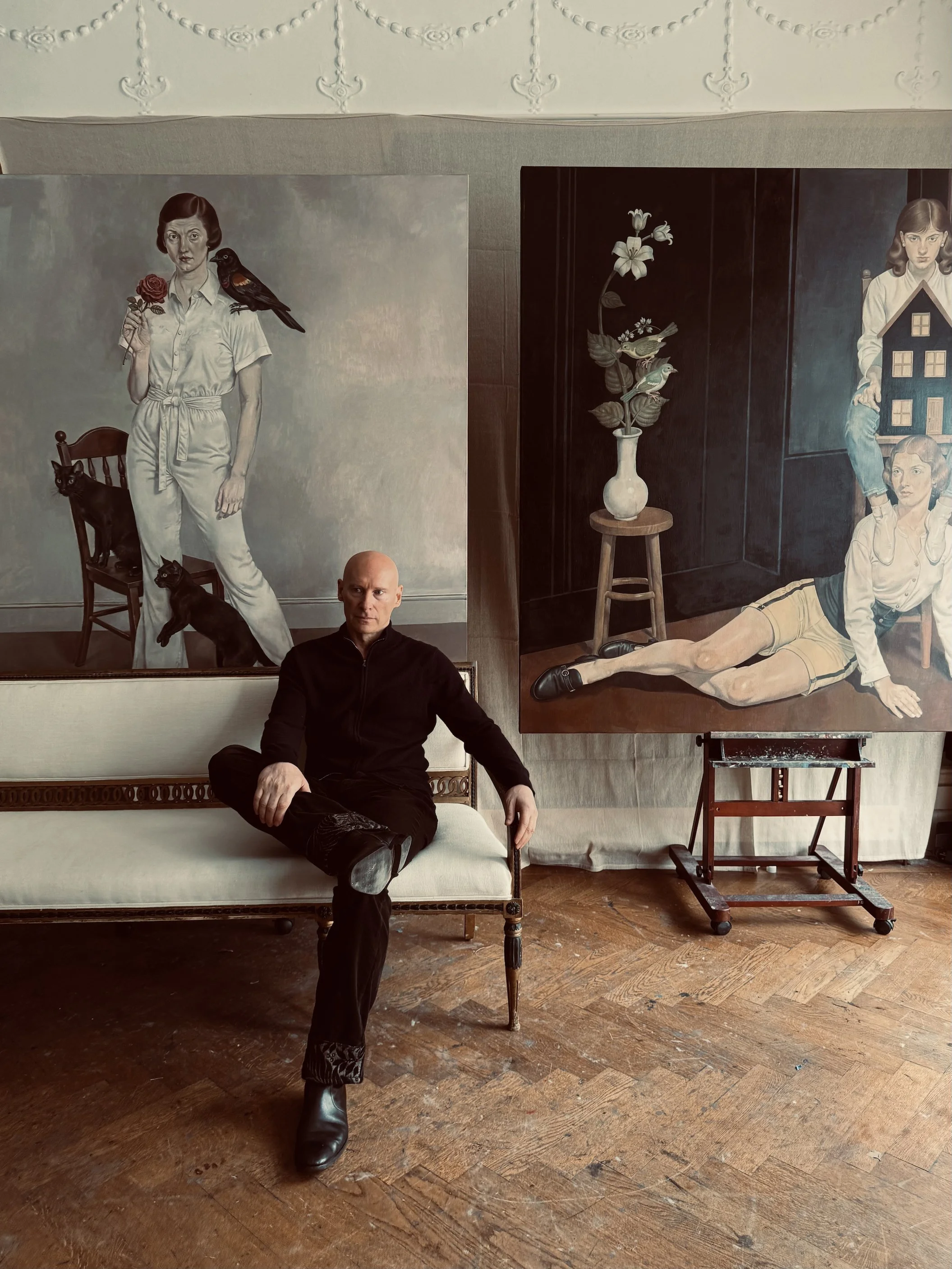
Portrait of Von Wolfe by Nick Knight.
Find out more about the artist here:
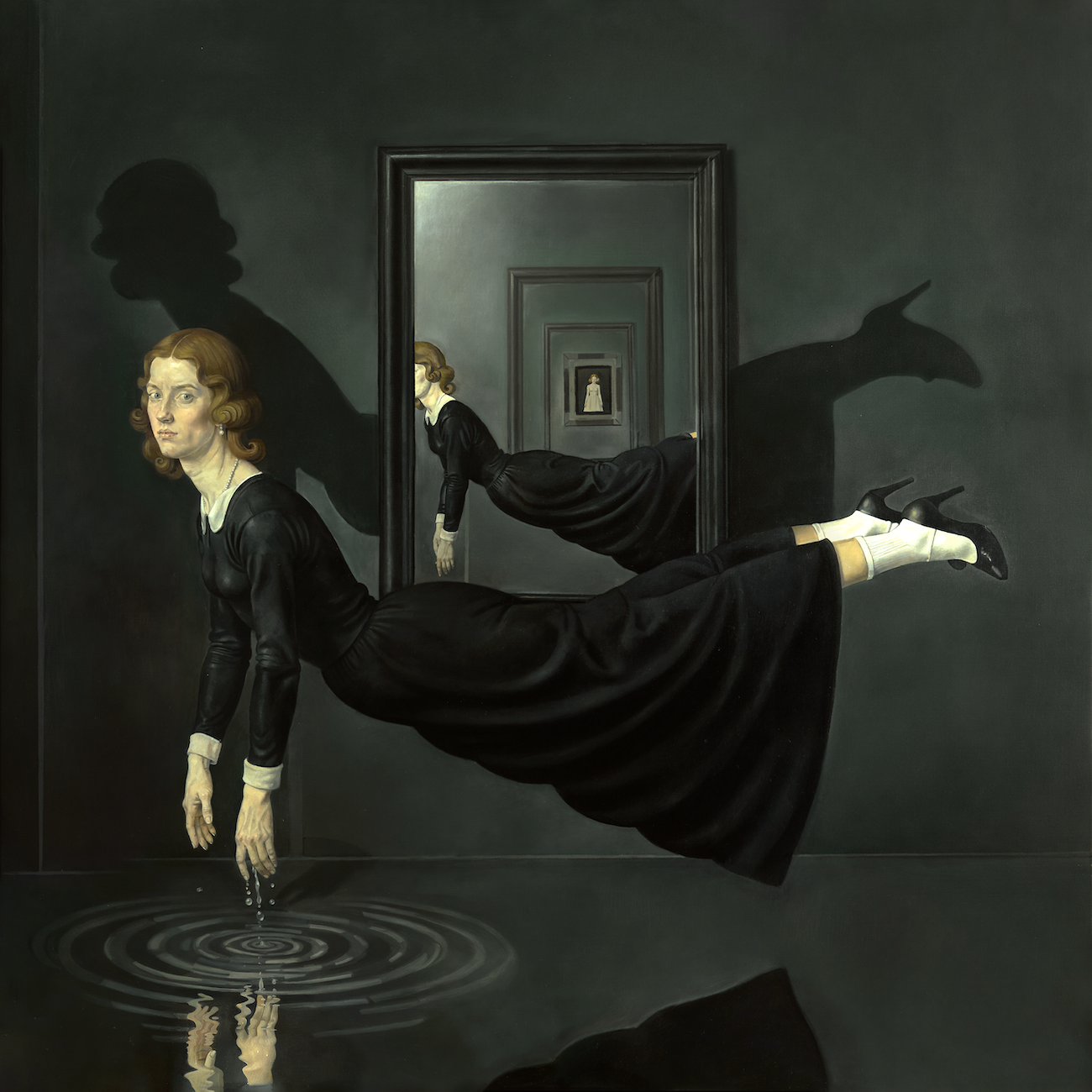
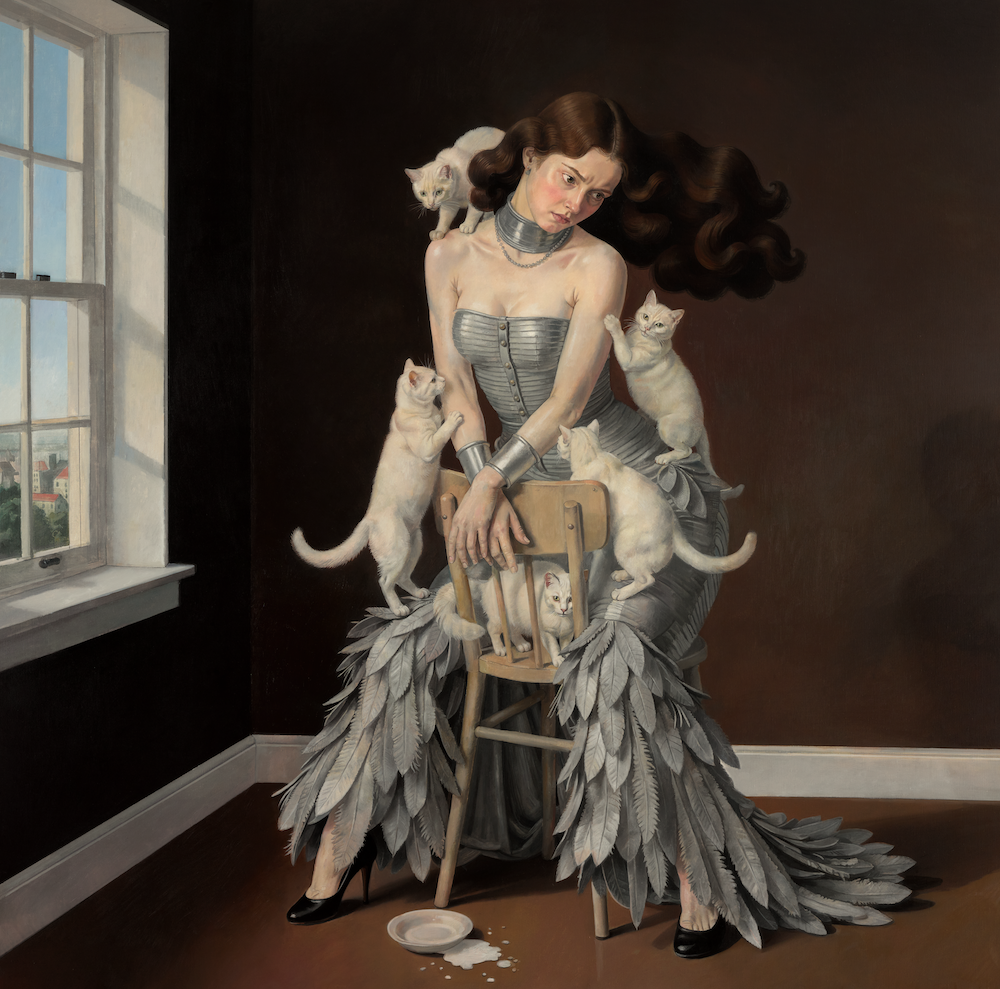
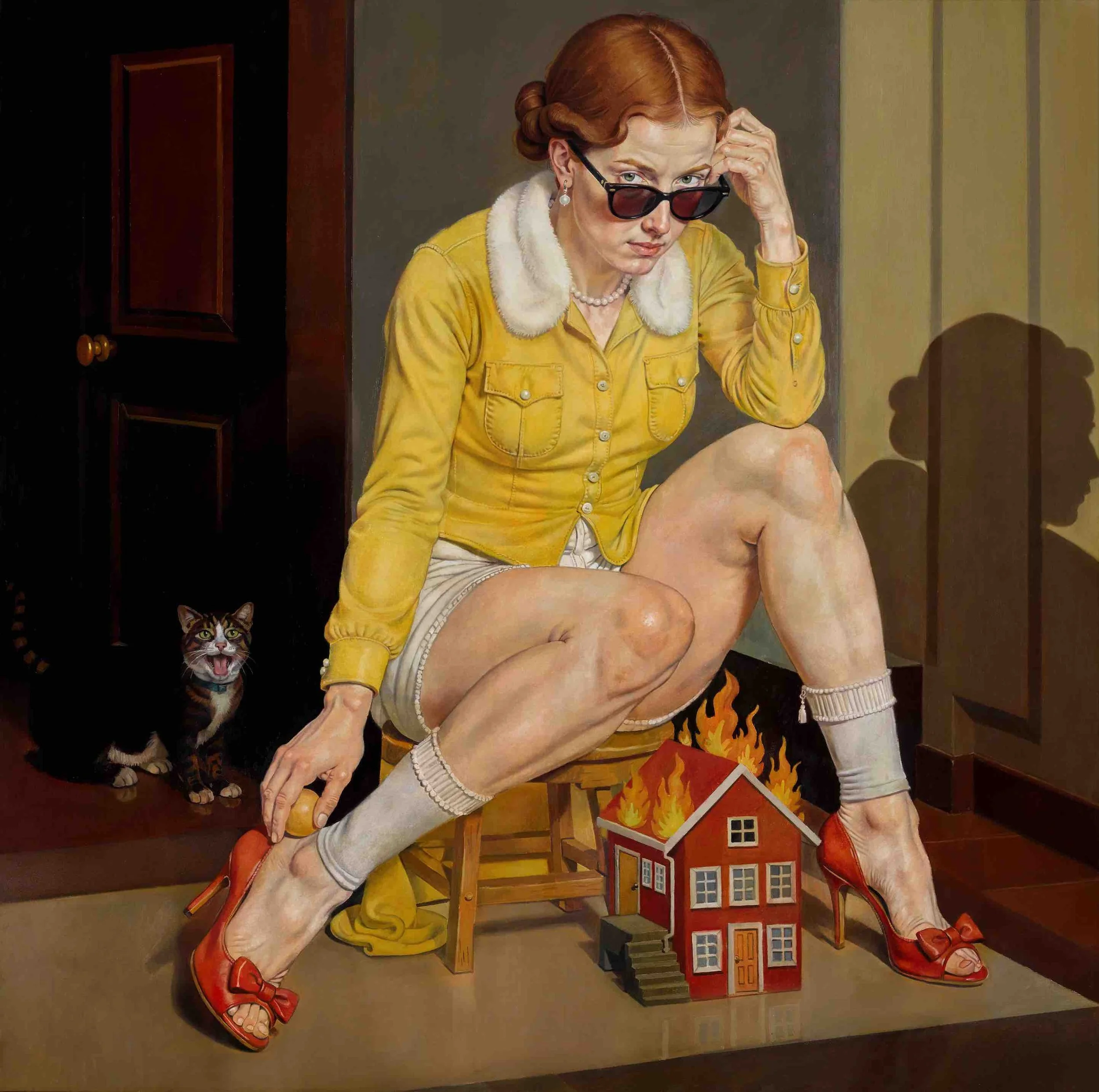
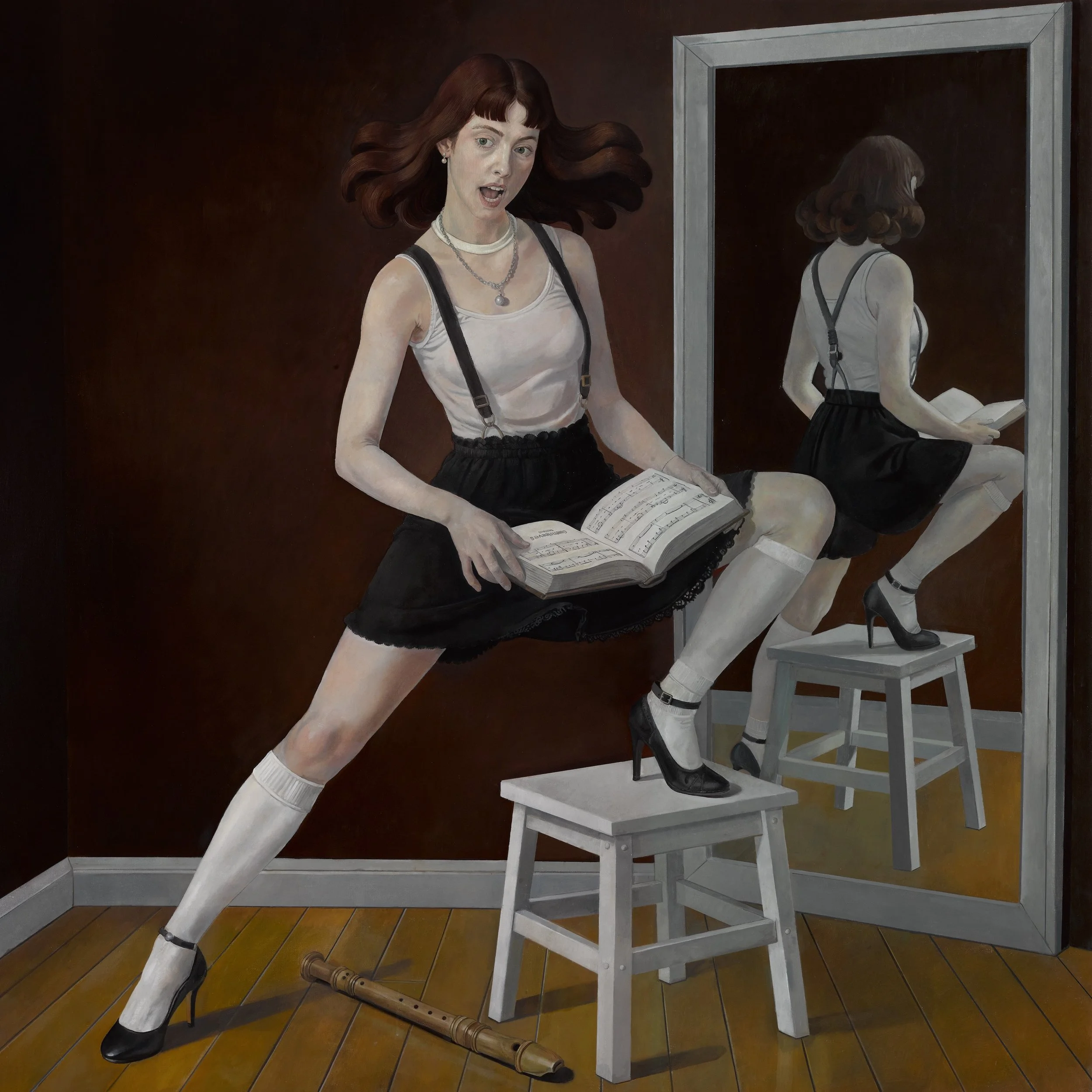
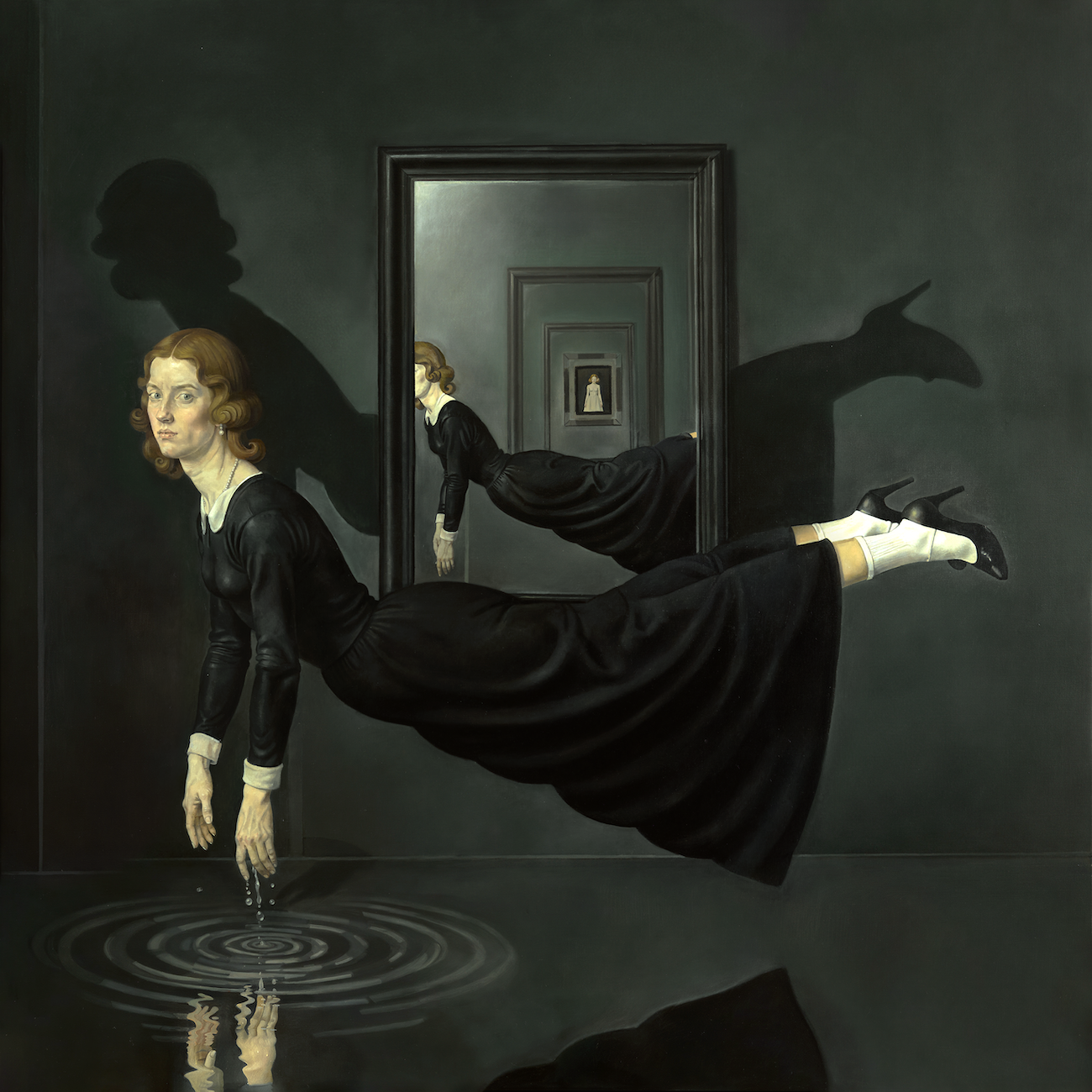
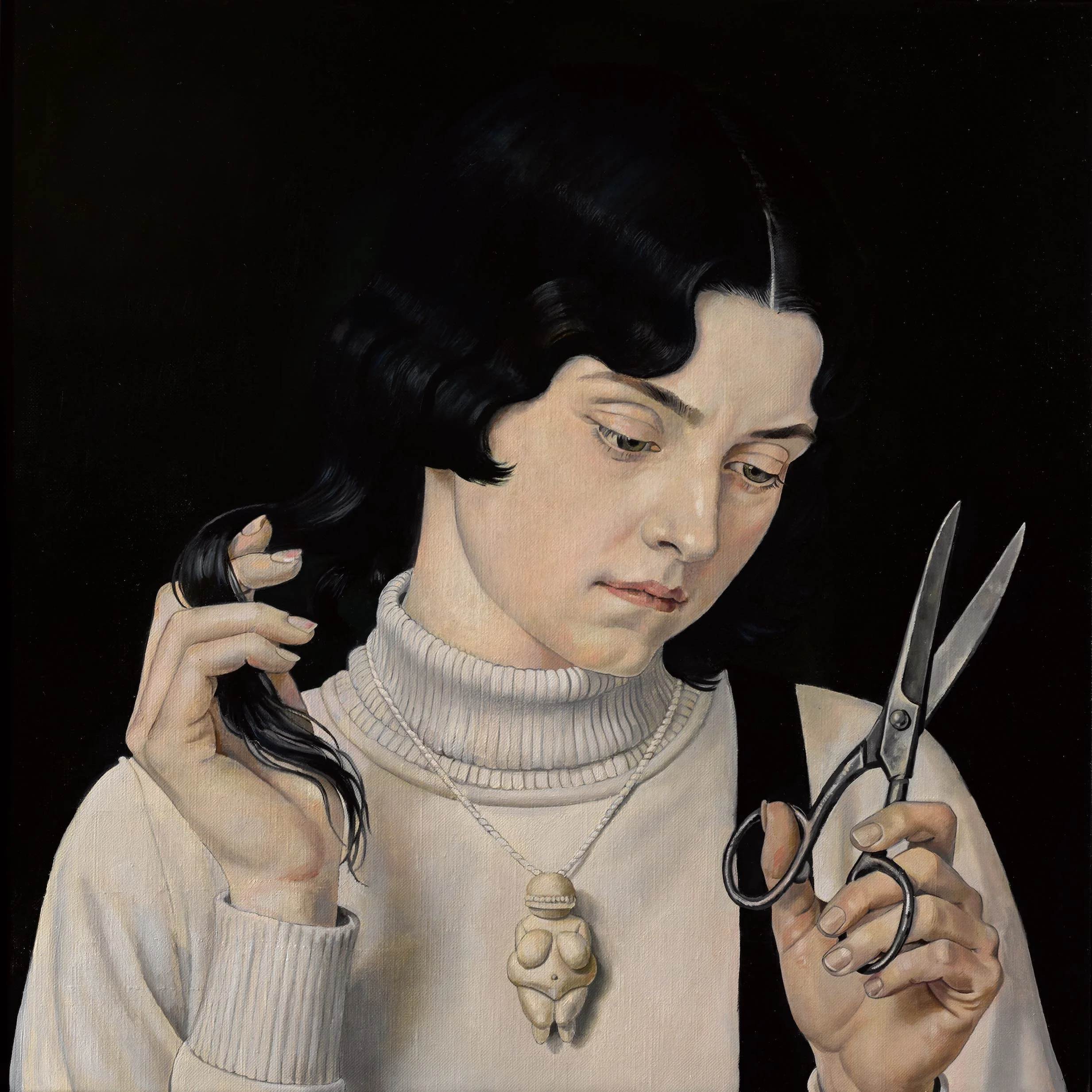
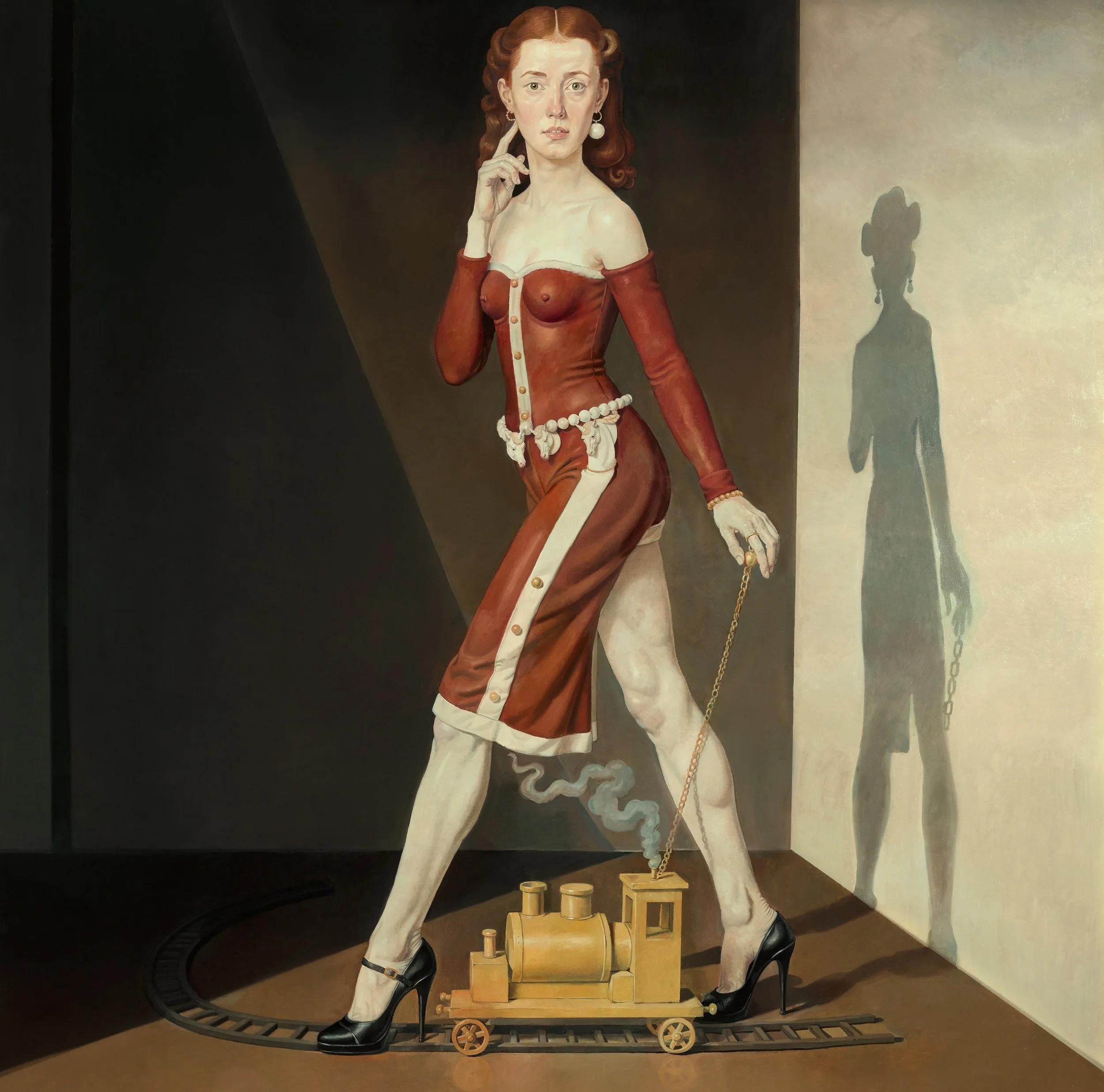
Paintings (top to bottom): Measured Silence, 2025, oil on canvas, 180×180cm (detail); Tamed Wild, 2026, oil on canvas, 180x180cm; Golden Blaze, 2025, oil on canvas, 120×120cm; The Recital, 2026, oil on canvas, 180×180cm; Measured Silence, 2025, oil on canvas;, 180×180cm; Quiet Hands, 2025, oil on canvas, 50cm x 50cm; Secret Journey, 2025, oil on canvas, 180×180cm
Get up-close-and-personal with artists from all over the world and unlock the mysteries of the creative mind.
Read in-depth interviews with the most exciting cultural movers and shakers shaping the creative landscape.
Discover the actors, authors, designers, mavericks and entrepreneurs at the bleeding edge of cultural life.