ART & IMAGE: INTERVIEW
Shining In The Darkness: Winston Branch
Solitude, Creative Autonomy And The Luminous Gesture
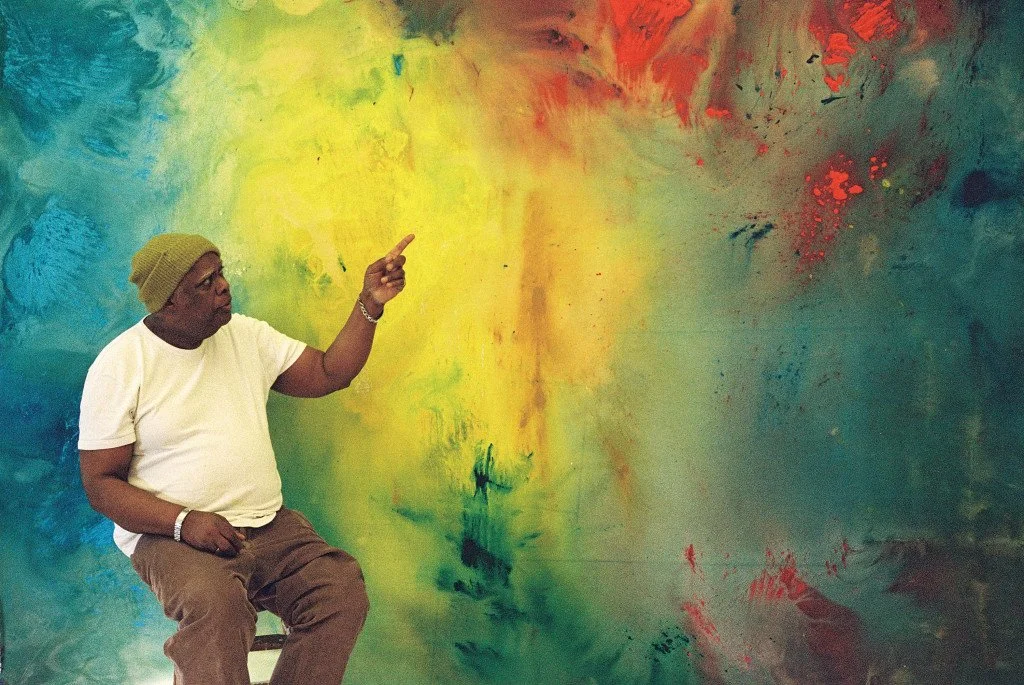
The septuagenarian British Caribbean artist Winston Branch (OBE) stands in that inevitable middle ground where personal biography and art history coalesce. He has been around long enough to acquire the sort of authority that makes you lower your voice when you talk about him, but is still energetic enough to resist the consolations of easy periodisation. Last year’s Cahiers d’Art retrospective, The Luminous Gesture, tried to marshal a lifetime of art-making into readable shape, with early 1980s canvases rubbing up against present-day works, but it was less a tidy narrative than an act of witnessing a gallery assembling evidence.
The discernible thread in Branch’s work is a persistent sense that painting is a problem solved by the intangibilities of feeling rather than logic. His sometimes urgent marks inhabit what one might call a limbic hinterland – that nervous geography between thought and expression – and he moves through it with the confidence of a man who has learned to trust impulse. The result is a frequently disconcerting, and often strangely elating experience in which colours combust and converse upon canvases that seem to insist on how feelings might be translated into surface.
What the overdue retrospective made clear is less a lesson in mastery than a portrait of persistence. Branch’s career resists tidy summaries precisely because it is made up of small rebellions – refusals to settle for the obvious, or to domesticate sensation. In this rare interview for FUTURISTIC DRAGON, the artist, who has work in the revered likes of Tate Britain and The V&A, discusses the genesis of abstraction, and provides a window into an artist's on-going quest to illuminate the paths of those who seek to understand reality.
Why as an artist were you drawn to abstraction as a mode of expression?
Well, I think the word abstraction comes from the Latin, and it means ‘taken from’ or extracted from, and, really, I'm always taking from something when I am painting. It’s not about an avoidance of representational painting, but it is about undertaking a process of unlearning, rediscovery and reinterpretation. When you look at lots of paintings, they all come back to one thing – the symmetry and the way it is designed upon the canvas. There is always a fundamental foundation, because, whichever way you put paint on the canvas, there's a lineage of structure. What I have always tried to do is use painting in its autonomy, which means you are not using painting as a vehicle for a certain canon, or as a symbolic language to illustrate a feeling. It is about the purity of the experience – there is absolutely nothing in front of you, except how you feel.
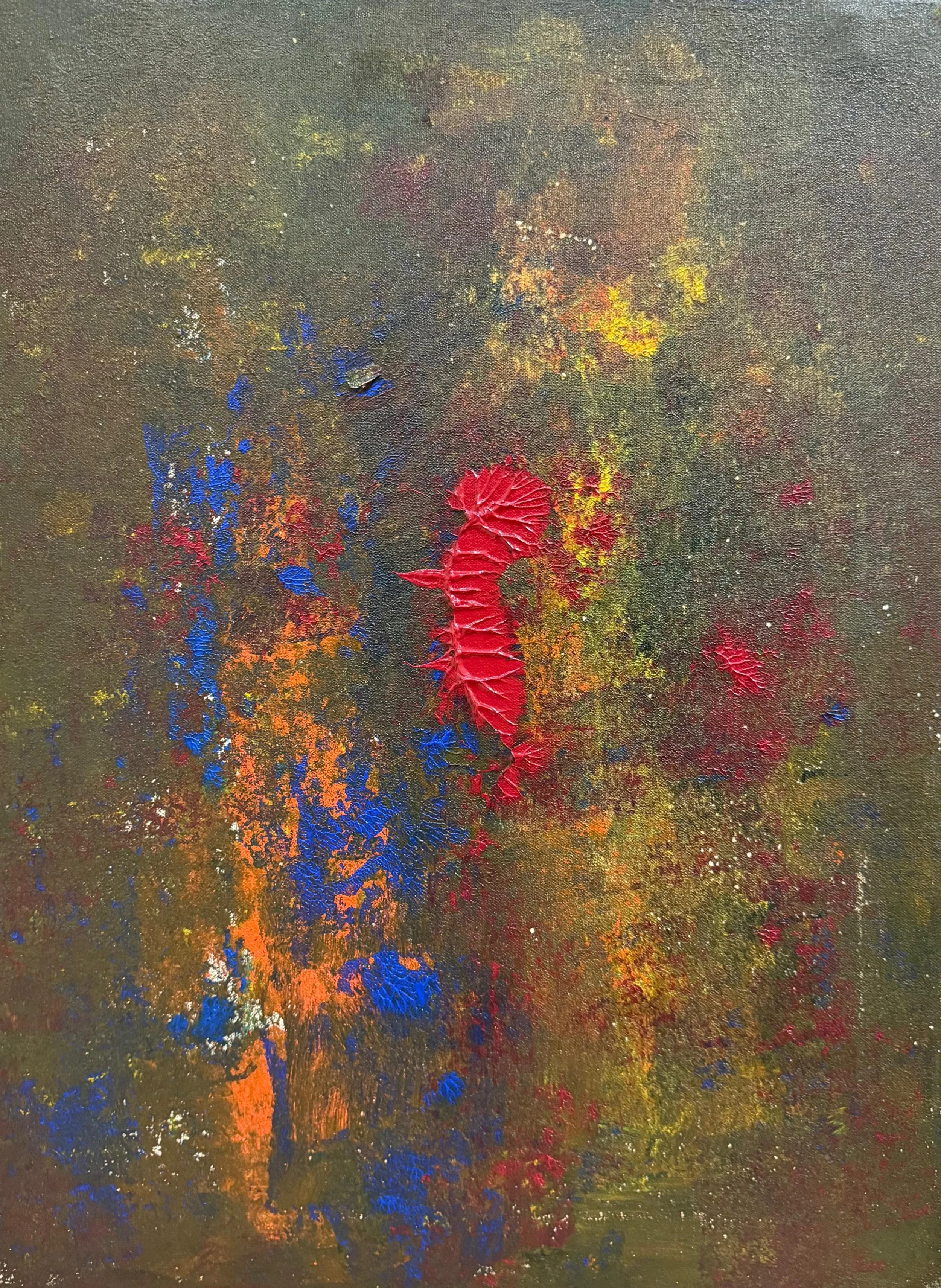
"What I have always tried to do is use painting in its autonomy – it is about the purity of the experience”
When did you first become aware of that desire for what you describe as autonomous purity?
It was when I was working in New York. I had won a Guggenheim in 1976, and, for the first time, I was around people who were really dealing with the physicality of painting. At that time, I was trying to move away from the audience projecting their own narrative onto my thing. And, you know, we would all meet and have a drink and discuss why we were painting – were we painting against war in Vietnam? Were we painting against social conditions? What was painting actually about? These were existentialist painters, dealing with the amorphousness of nothingness – for the first time, the narrative was the painting. And that was a kind of turning point, because, up until that time, most painting from the European tradition had been narrative based. It was all about ‘tell me what it's about’, rather than people actually looking and seeing. American painting was confronting all of that with, ‘What you see is what you get. How are you going to deal with it?’
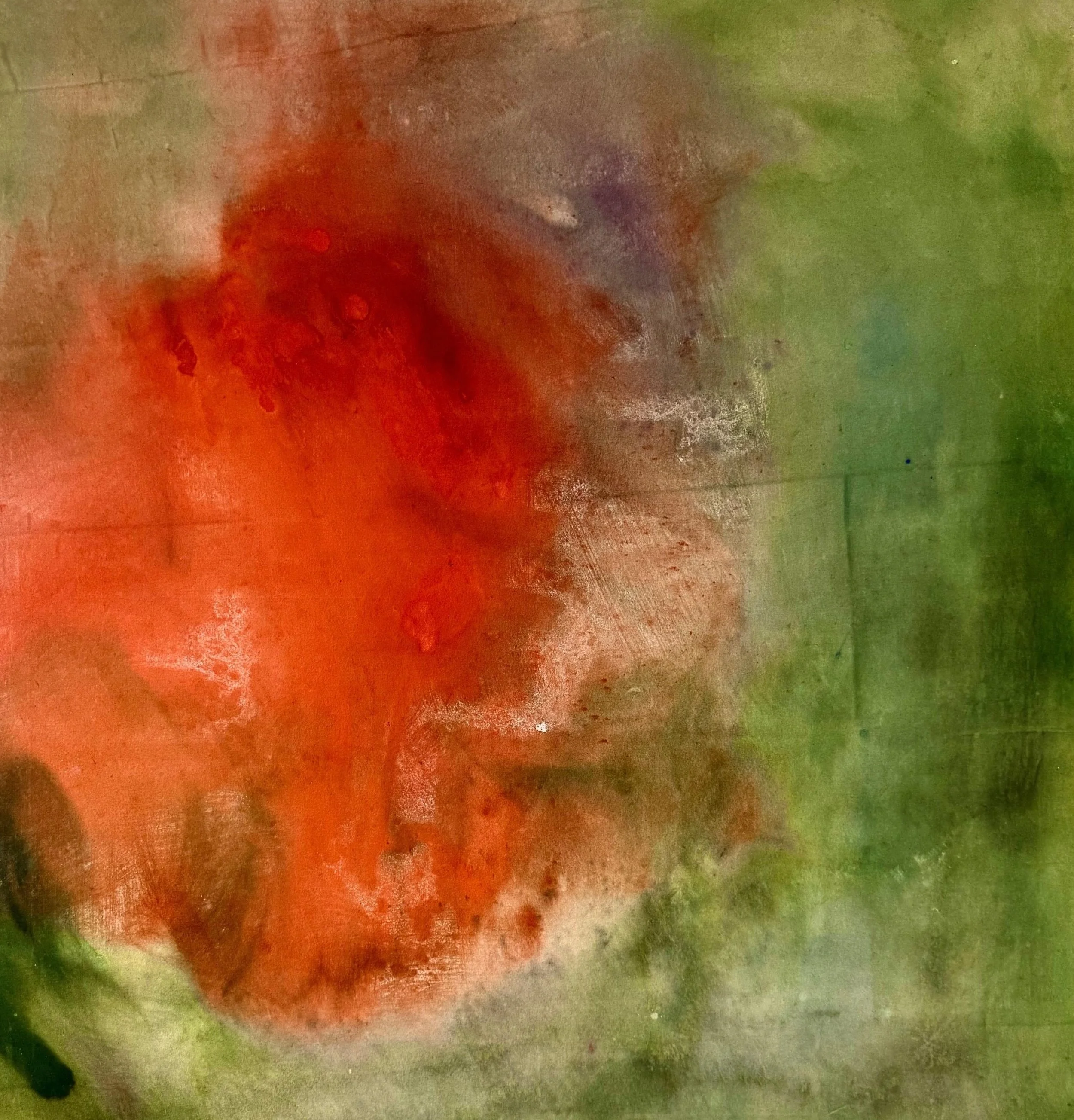
“The act of listening and reflecting is an act of beauty – it contains a sense of being the most real one can be”
Why do you think you wanted to step away from conformity?
I think I was just following a rationale of intuitiveness. One tends to make a gesture and then, much later, one rationalises it, which is a cognizant way of dealing with a situation. If I were to reflect, then I think coming from an almost dogmatic form of Catholicism in Saint Lucia provided a guidance of sorts – I was a Corpus Christi acolyte at school and was drawn to the symbolism of it all, and even considered the notion of taking holy orders. But why we do what we do is essentially always impulsive and intuitive. We have to rationalise it on reflection, of course, because we are supposedly the thinking species. But, essentially, we are animals and we have instinct, and I think it was simply the instinctiveness of exploration that propelled me to become a painter.
In the exploration of inner space, presumably you were forging your identity?
Yes, because you become a space cadet. You have to set parameters – of course – you have to find guidelines that allow you to go forward otherwise it becomes chaotic, and can even become insanity. So, you have to have some form of structure. That’s why one learned about the whole history of art, so as to have pointers and guides. And that process is always constructive, because in order to have any kind of substantial contribution towards the visual language you must begin unlearning what you have learned, and forge a new way of thinking. In the very embryonic stages you are exploring in order to find your medium, and I found that what interested me the most was exploration within the three-dimensional surface of the canvas. One then had to really learn the visual language to understand what one was looking at, before one could begin to explore it. In a sense, a painter is like a scientist and one’s studio is one’s laboratory.
“I have spent long durations of my life by myself with just paint and a piece of paper for company, and it’s always exciting”
What is your personal definition of beauty?
I don’t know. I mean, the canon of beauty? I have no idea. The act of listening and reflecting is an act of beauty, in a sense, because it contains a sense of being the most real one can be. I think beauty is probably a moment of intuitively responding to something that you have not yet defined. I have spent long durations of my life by myself with just paint and a piece of paper for company, and it’s always exciting, because I never know where it'll end up. I don't think about existentialist angst when I am painting. I don't think about the world coming to an end. I was a child of the sixties; I was at the protest marches. I've seen it all. I'm not going to pontificate about how the world should be, and should not be. What I would say, though, is that I would prefer people to be kinder to each other, to listen to each other, to try to get a better understanding of each other. Because we are all ‘of the' human race. That's what interests me. We have more in common than we have that defines us as separate. But we like to point the finger and cast the first stone, don't we? To truly embrace what we don't know takes a lot of courage.
Introduction & Interview by John-Paul Pryor
Find out more about the artist here.
Portrait of the artist by Cedric Bardawil.
Get up-close-and-personal with artists from all over the world and unlock the mysteries of the creative mind.
Read in-depth interviews with the most exciting cultural movers and shakers shaping the creative landscape.
Discover the actors, authors, designers, mavericks and entrepreneurs at the bleeding edge of cultural life.