ART & IMAGE: INTERVIEW
We Live Inside A Dream: Yifan Jiang
Conditioned Behaviours, Memories, And Haunted Nostalgia
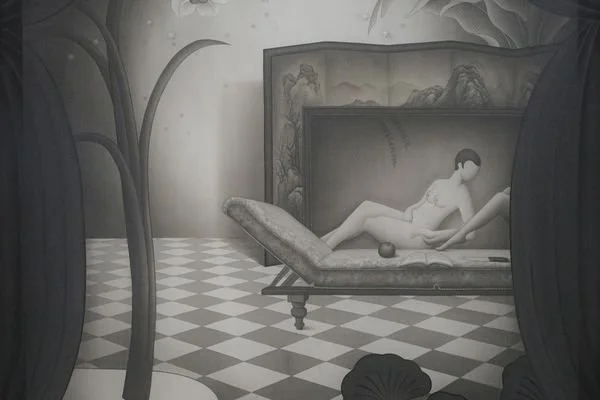
Yifan Jiang is a Chinese contemporary artist who assembles her work as if memory itself is a room one can enter into and rearrange. She brilliantly extracts and abstracts fragments of her past and employs them in an interrogation of how an image can simultaneously carry the weight both of what a culture has chosen to remember, and what it has chosen to forget.
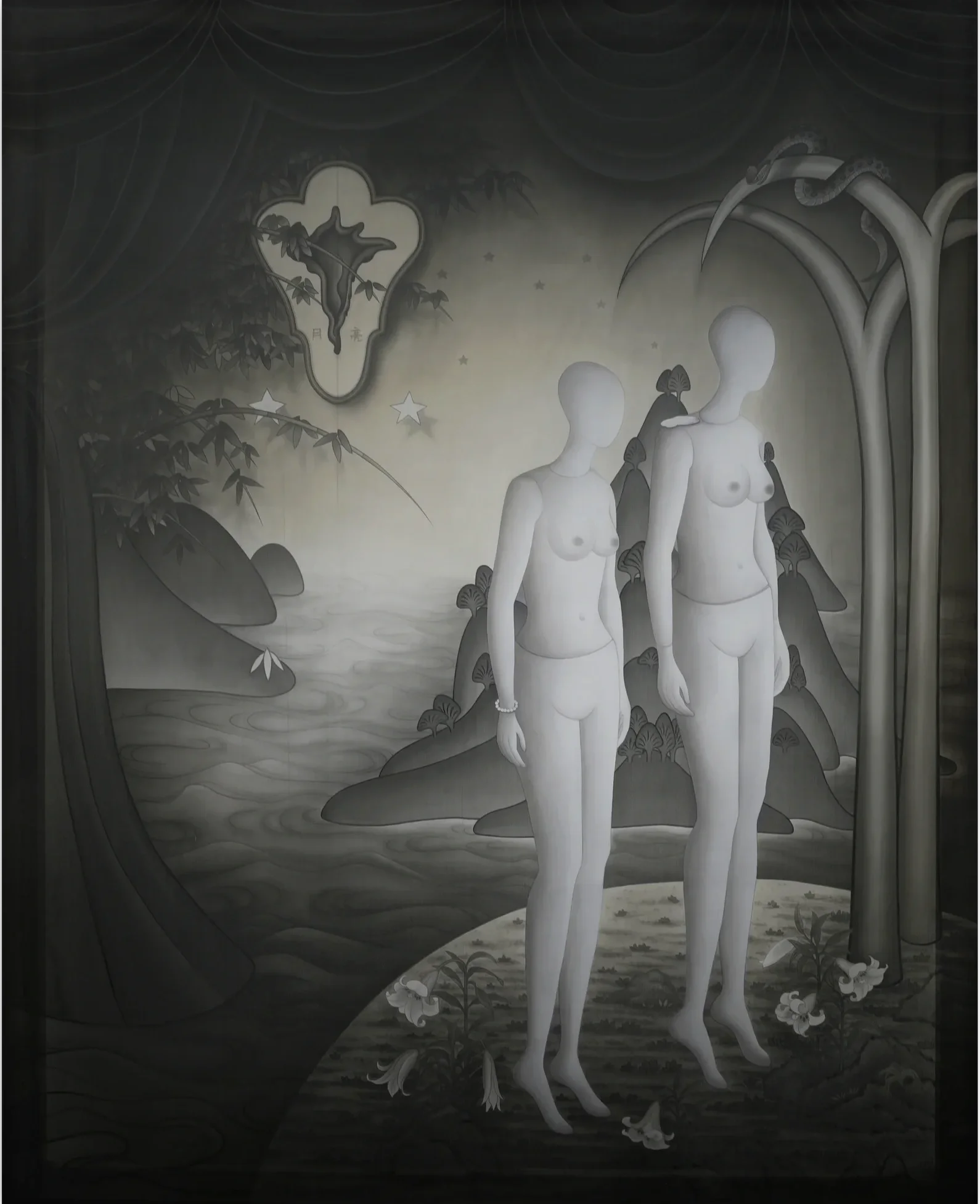
Rooted in the sensibility of traditional Chinese painting, the RCA graduate’s practice thereby moves between suggestion and revelation, forwarding a visual language of absence as much as presence, in which objects and figures hover at the border between the recognisable and the allegorical. In this suspended space Jiang’s paintings ask us to tolerate ambiguity and consider how the past persists not as a single narrative, but as a field of resonances, shaped by touch, omission, and silence. Working chiefly within the meticulous discipline of Gongbi, she returns again and again to the traditional scalings of mountain, river and sea – shapes, which, in her culture, are familiar and powerful motifs imbued with mythological resonance. Into those ordered vistas she then inserts incongruous objects that do not belong, such as a chair balanced on a wave, a microphone fixed like a lonely beacon to a reef. These intrusions are acts of disobedience, insisting on the strangeness of a present that crash lands in the language of the past.
In this conversation with FUTURISTIC DRAGON she speaks of her process as if it were a kind of itinerant practice, in which careful lines, slow washes, and an economy of gesture have been learned from long apprenticeship. And she ponders whether the world we call ‘real’ may itself be only a composition of impressions – a weird shared dream in which artifice, such as a painted sea and painted microphone, are equally valid witnesses. When she declares in our interview that all art is essentially narcissism, she does not mean mere vanity – she means that every work bears the imprint of an inward gaze, an attempt to fix the self against the relentless drift of events and time.
Can you recall what first drew you towards the path of the artist in life?
I don't know. When I look back, there were so many small things that happened that led me to where I am now, but I don't know which one was more important. Maybe it was when I was a child, reading a magazine called Little Artists, and then I used painting to overcome my fear of being alone at home throughout the summer vacation; maybe it was after adolescence, when someone very important to me left me, and I felt that there was nothing to look forward to in my life, my teacher made me feel that I was a very talented person, and then I wanted to use that to prove myself; maybe it was when I felt that I had a seemingly perfect life, but I was not happy with it, I had to use something to pierce this false shell.
“I try not to have any expectations about what the audience will take from my work”
Talk to us a little about the process and technique of Chinese Gongbi painting – what is its history?
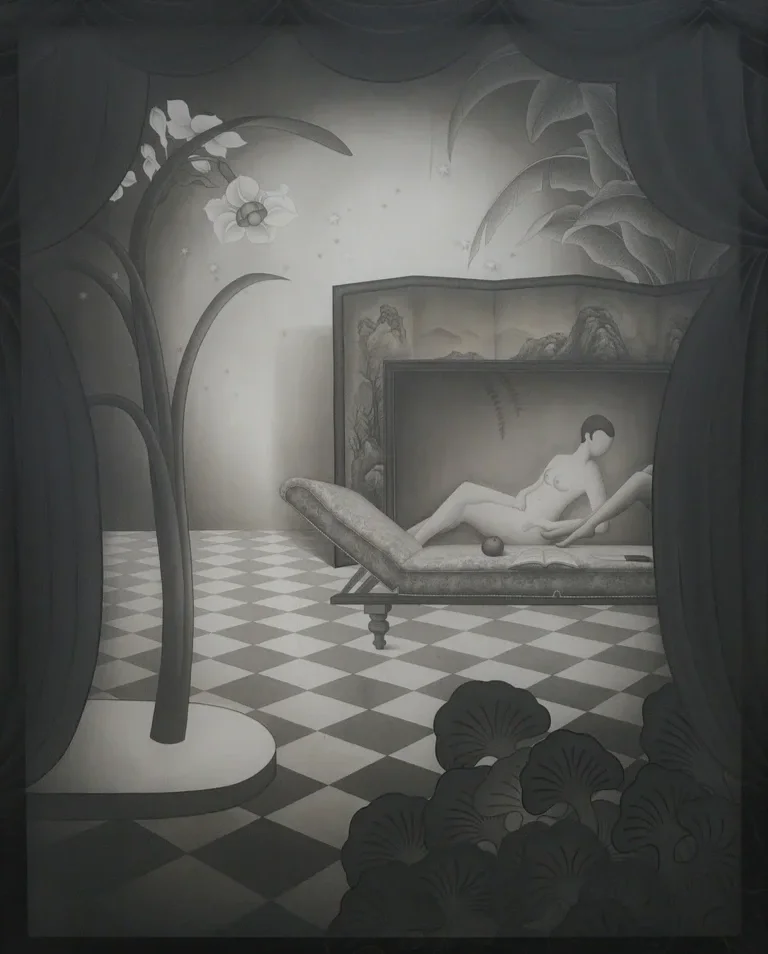
Gongbi painting requires that you cannot correct mistakes, delete or cover. The only thing you can do is to adjust by adding. It is very similar to my attitude towards my life. I do things carefully and plan carefully. If a mistake happens, I can't deceive myself or cover it up with other things. I can only do something else to make the 'wrong thing' look right. Now I hope I can learn to accept that 'mistakes' are always bound to happen.
Which artist most inspires you and why?
No one, actually. I try not to get too hung up on other artists. I can’t do that either. I have many favourite artists and painters. I admire them, but I don’t think they inspired me a lot. Some writers inspired me. One is Liu Yu, a Chinese writer and political scientist; another is Eileen Chang, a great essayist after World War II, and the mysterious Italian novelist Elena Ferrante. They are women with wisdom and freedom of expression. Perhaps for me, having the will, power and wisdom to express oneself is too strong and too desirable. At times, I was eager to say something for myself; I was trying to say it well. They showed me what it's like to be able to say something and say it well.
“Gongbi painting requires that you cannot correct mistakes, delete or cover”
Can you speak to us about the Chinese myths and literary metaphors we might see in your work?
It is very interesting that classical Chinese literature sometimes confused dreams and reality. At the beginning of the classical novel Dream of the Red Chamber, it says that this was just a dream. But it was a story of a great Chinese family in the mid-18th century with wealth of psychological realism and historical detail. Same as The Sing-song Girls of Shanghai, a novel published earlier than Red Chamber. The author says at the beginning that the protagonist thought he was awake, which means it was just a dream. In the most famous of all Zhuangzi stories 'The Butterfly Dream', Zhuang Zhou didn't know if he was Zhuang Zhou who had dreamt he was a butterfly, or a butterfly dreaming that he was Zhuang Zhou. Zhuangzi considered there must be some distinction between Zhuang Zhou and the butterfly. Sometimes I seem to give up on finding that distinction, if it would make me miserable to distinguish between fantasy and reality; if we are not sure whether life itself is just a dream.
Talk to us about the works you had in your recent London exhibition Dwelling, what do they represent?
The work I have in the exhibition is what I thought at some point in time. I made Dream of the Red Chamber was when I first arrived in the UK and started studying at the RCA. I found that the world of language and culture that I was familiar with was shrinking, and a new foreign culture surrounded me. Why did I choose this literary masterpiece as the title of this painting? I think it may be because I feel deep in my heart that it can support my spiritual strength. Another work, 'God Please Bless My Father', was the last one I made before leaving RCA. My father was in a very bad state during that time. I was also in a very helpless and sad situation. The actual situation at that time was chaos and self-contemplation of family relationships and origins.
“I think art is the ultimate narcissism of human beings – humans are so obsessed with themselves ”
What for you is ultimately the purpose of art?
I think art is the ultimate narcissism of human beings. Humans are so obsessed with themselves, and consider their feelings and lives are so important that some people called artists must record them, keep them in history and on this planet. I am also a human being, so it is inevitable for me to live in such huge narcissism. And I may be more narcissistic and arrogant than most people. I hope my art can truly benefit others. I try not to have any expectations about what the audience will take from my work, though. In the past, I expected that viewer would find that I was making a very groundbreaking painting attempt. I hope that the viewer can see the charm of Chinese art and its possibility of integration with different cultures. Now I want more.
Introduction & Interview by John-Paul Pryor
Find out more about the artist here.
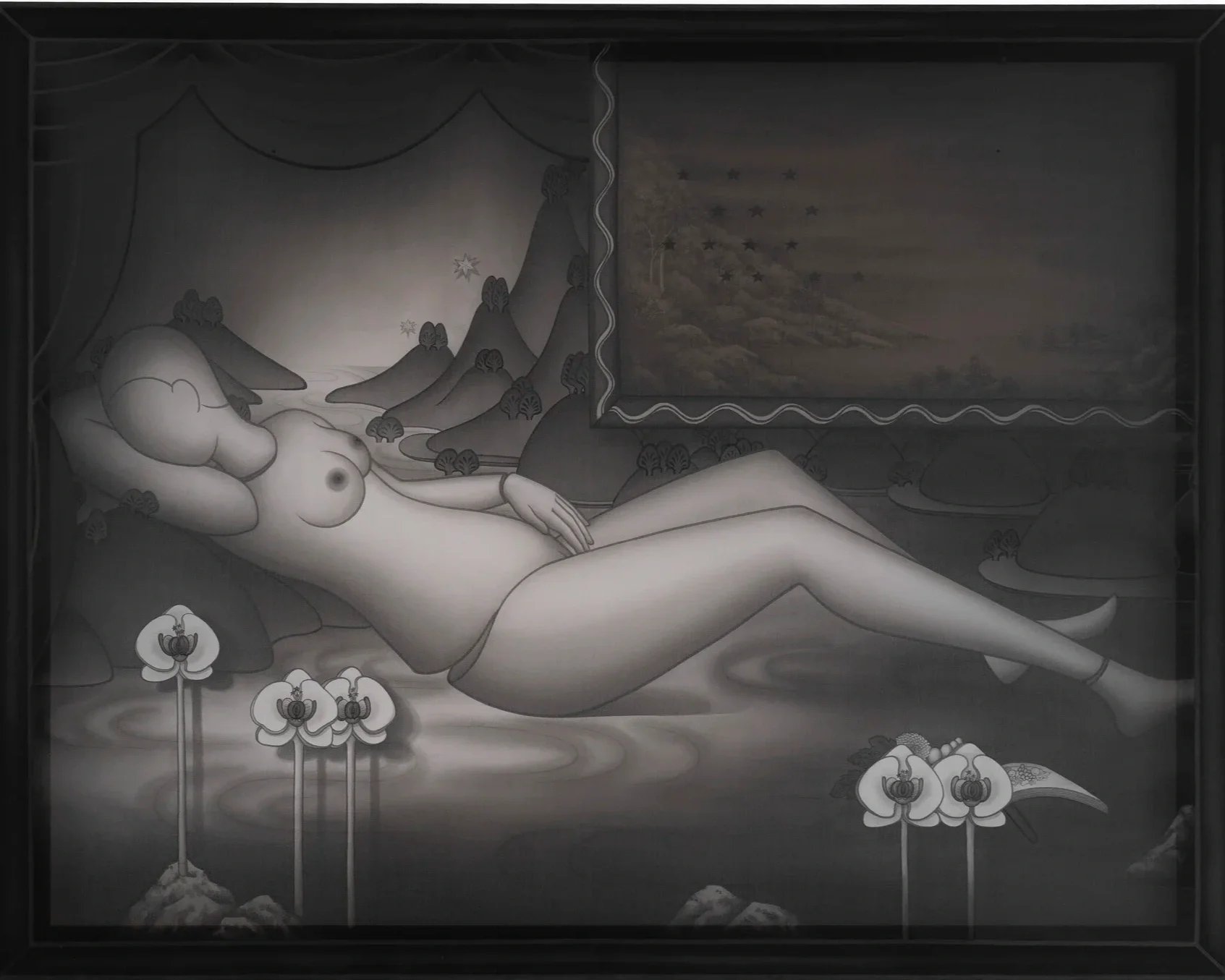
Images: Mirror Stage (detail), Chinese ink on silk, 2025; Eve & I, Chinese ink on silk, 2024. Mirror Stage (detail), Chinese ink on silk, 2025. Sleeping Venus, Chinese ink on silk, 2025. All images courtesy of the artist.
Get up-close-and-personal with artists from all over the world and unlock the mysteries of the creative mind.
Read in-depth interviews with the most exciting cultural movers and shakers shaping the creative landscape.
Discover the actors, authors, designers, mavericks and entrepreneurs at the bleeding edge of cultural life.